
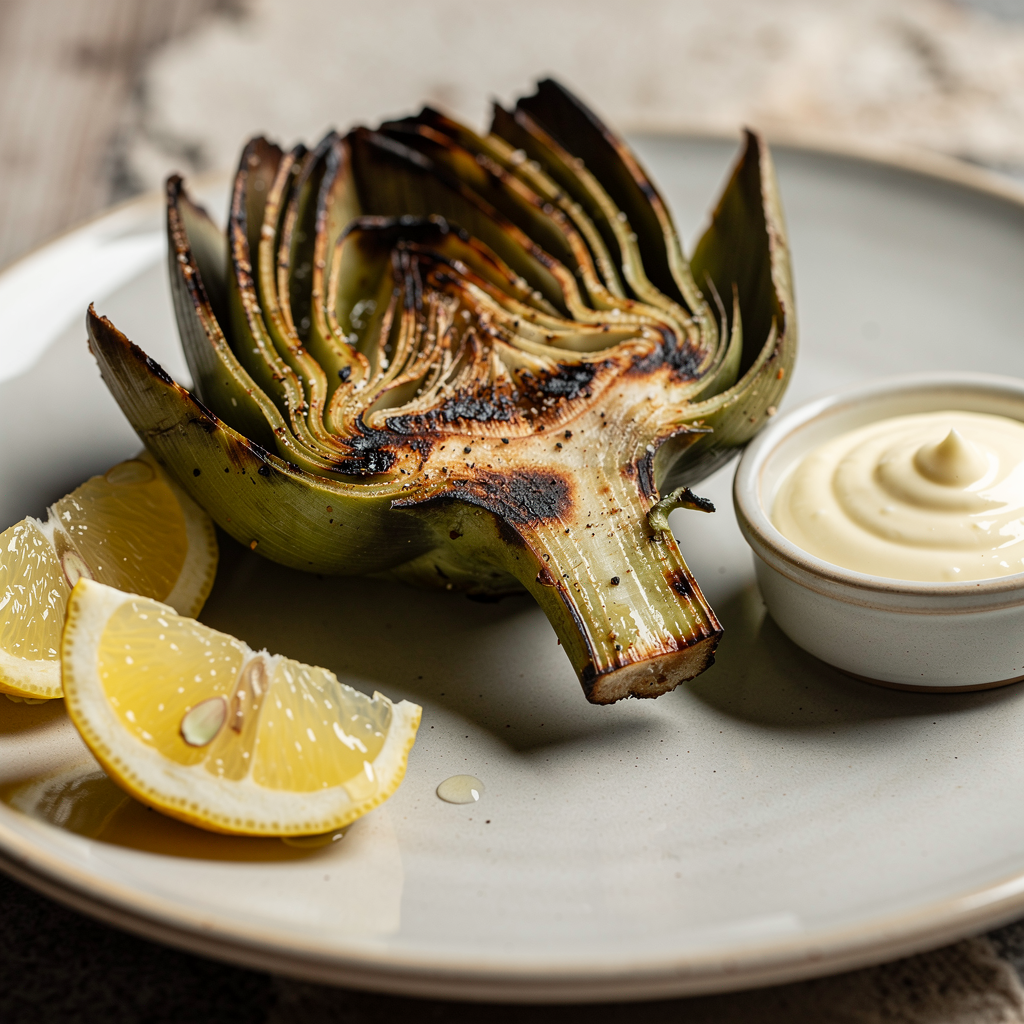
Jump to Recipe
I pull a big platter from the grill and the scent of charred leaves, lemon, and warm oil makes the kitchen feel like home. I like choosing medium artichokes so the hearts cook tender and the stems become a treat when peeled and rubbed with lemon right away.
I steam them briefly with garlic, salt, and a splash of olive oil before they meet the heat, so the outer leaves char without drying. A little Pecorino tucked between leaves brings a savory surprise, and a quick lemon-garlic aioli brightens every bite.
For a deeper dive on traditional approaches, I also reference carciofi alla romana for technique and flavor balance: carciofi alla romana.
Key Takeaways
- Pick medium artichokes for even cooking and tender hearts.
- Rub cut surfaces with lemon immediately to prevent browning.
- Par-cook with garlic, salt, and olive oil before you grill.
- Tuck Pecorino or Parmesan between leaves for extra savor.
- Serve with a lemon-garlic aioli or parsley vinaigrette warm or at room temp.
Why this smoky Italian-style side dish belongs on your grill
When the grates kiss the cut surfaces, the artichoke’s flavor concentrates and the texture sings. High, direct heat brings a faintly bitter, smoky edge that lifts every bite.
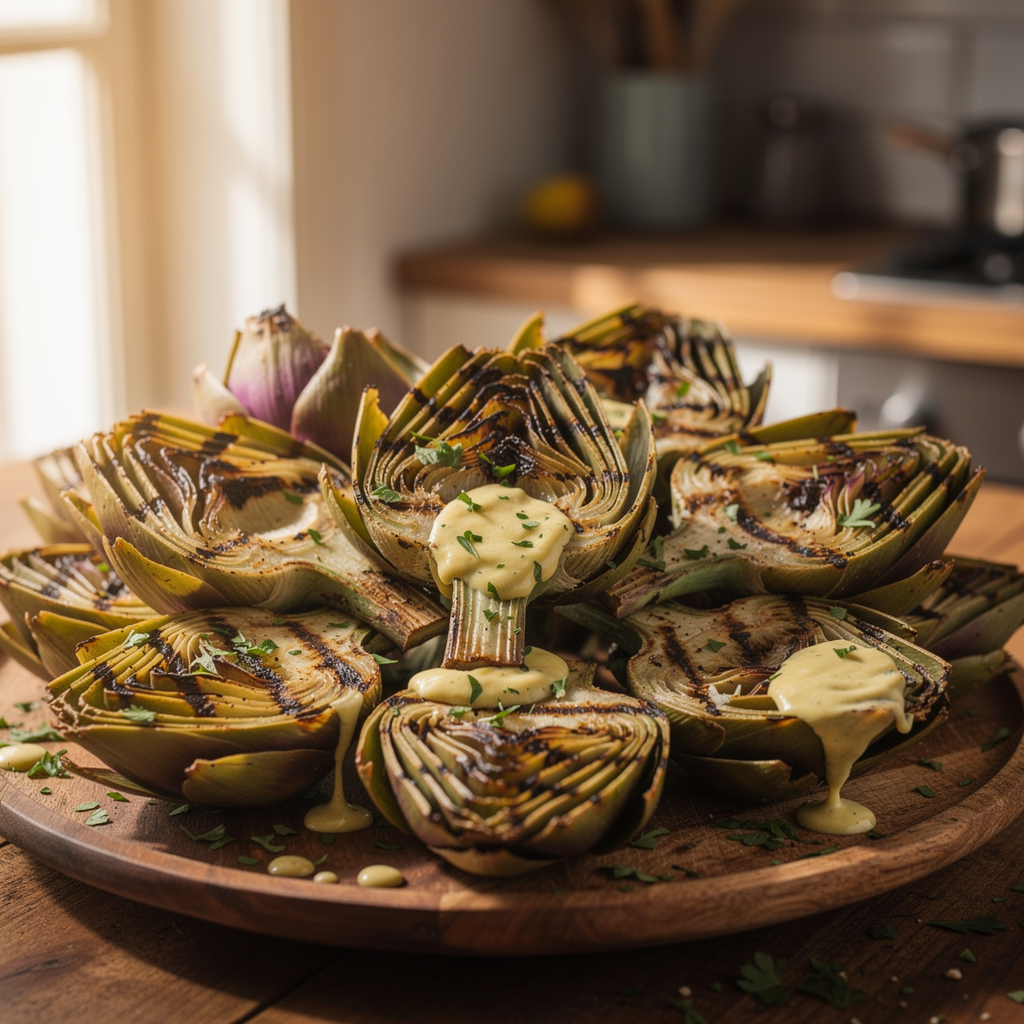
I par-cook first so the grill only builds caramelized color and char, not cook through. That protects delicate leaves and the tender heart while keeping water where it belongs—inside the vegetable.
Olive oil carries aroma, lemon adds bright lift, and parsley gives a fresh snap. Together they create a side that stands up to steaks and fish, yet feels light on the table.
There are simple ways to finish: a bright lemon-parsley drizzle for clean taste or a cheesy melt for extra savor. Serve warm or at room temp—this is a dish you can make ahead and enjoy with little fuss.
- I like medium artichokes because they cook evenly and hold together on the grate.
- A quick kiss of char keeps them juicy and full of flavor.
| Finish | Flavor | When to use |
|---|---|---|
| Lemon–parsley | Bright, fresh | Light summer menus |
| Cheesy melt | Rich, savory | Comfort dinners |
| Olive oil & salt | Pure, simple | Everyday side |
Ingredients and pantry notes for bold, bright flavor
Good flavor starts with careful shopping. I look for medium artichokes with tight leaves and firm stems; that size steams and chars evenly and keeps a generous heart. Peel the stems—the flesh is edible and tasty.
Fresh produce
Keep two lemons: one to immediately rub cut surfaces and one for zest and lemon juice. Bring garlic cloves finely grated for even flavor. Flat-leaf parsley adds a fresh, herbaceous lift.
Pantry basics and optional extras
Choose a fruity extra-virgin olive oil; neutral oil won’t sing with citrus. Salt and pepper set the base. For richness tuck Pecorino or Parmesan between leaves, or add a little butter for glossy edges.
- Plan on about a cup of marinade for a platter; a few tablespoons of lemon juice and oil balance the veg.
- Use a sturdy pot for par-cooking and a large bowl of cool water with lemon to hold trimmed halves.
| Size | Best use | Tip |
|---|---|---|
| Small | Quick snacks | May dry out; watch time |
| Medium | Ideal for even cooking | Choose dense, closed leaves |
| Large | Slow tenderizing | Trim more, add par-cook time |
| Stem | Edible when peeled | Peel then rub with lemon |
Smart prep: trimming artichokes and preventing browning
Prep begins with a sharp knife and a steady rhythm: snap, trim, and lemon everything fast. I work at the sink with a bowl of lemon water to hold trimmed pieces and slow oxidation.
Snap and trim
I tear off the small, tough outer leaves by hand so the tender inner leaves roast evenly. Then I use a serrated knife to cut about the top third away; that removes the spiky tips and gives a flat surface that sears well.
Stems and slicing
I trim the stem end and peel it with a vegetable peeler—the stem’s core tastes like the heart, so I never waste it. Next I halve or quarter each artichoke with a sharp knife so seasoning reaches the center.
Oxidation and chokes
Always immediately rub cut surfaces with lemon to preserve color and flavor. If you prefer, remove chokes after par-cooking; a grapefruit spoon slips the fibrous center out cleanly once tender.
- Place trimmed pieces in lemon water as you work to keep them bright.
- Use a sharp knife for clean cuts and a peeler for stems.
- Quick prep sets you up for even texture and a consistent finish when you grill.
| Step | Tool | Why it matters |
|---|---|---|
| Snap outer leaves | Hands | Exposes tender leaves for even cooking |
| Trim top third | Serrated knife | Removes spikes; creates a flat sear surface |
| Peel stem | Peeler | Makes the stem edible and flavorful |
| Soak in lemon water | Bowl with lemon | Prevents browning and keeps color bright |
Par-cook first: bring water to a boil with Italian aromatics
I prefer to tame the heat first—bring a pot of water to a lively boil, then lower to a simmer so the centers cook gently before the grate does its work.
Season the pot
Add lemon slices, whole garlic cloves, a pinch of salt, cracked pepper, and a drizzle of olive oil to the water. These little additions infuse flavor from the inside out as the pieces tenderize.
Boil or steam until tender
Cover the pot once it returns to a simmer. Cook until a leaf tugs away easily and the heart yields to a skewer. Quarters often take about 12 minutes; halves usually need 20–30 minutes, depending on size.
- Alternative aromatics: a splash of white wine, basil, thyme, Italian seasoning, and a drop of liquid smoke for depth.
- Lift with tongs and drain upside down so excess water leaves the core before you hit the grill.
- If the choke remains, scoop it now with a grapefruit spoon. Rub cut surfaces with lemon before chilling to keep color bright.
- Par-cook ahead: cool completely, refrigerate, and finish on the grate later for easy entertaining.
| Cut size | Typical time | Sensory test |
|---|---|---|
| Quarters | ~12 minutes | Leaf pulls away easily |
| Halves | 20–30 minutes | Heart pierced with little resistance |
| Storage | Same-day chill | Cool fully, rub cut with lemon |
Grilling for char and tenderness
A hot grate is a friend: it gives cut faces instant color and that deep, toasty note I love.
Preheat and prepare the grates
I preheat the grill to high or a steady medium-high so the metal holds heat. I brush the grates with a little oil to help release and to get a clean sear.
How to sear without shifting
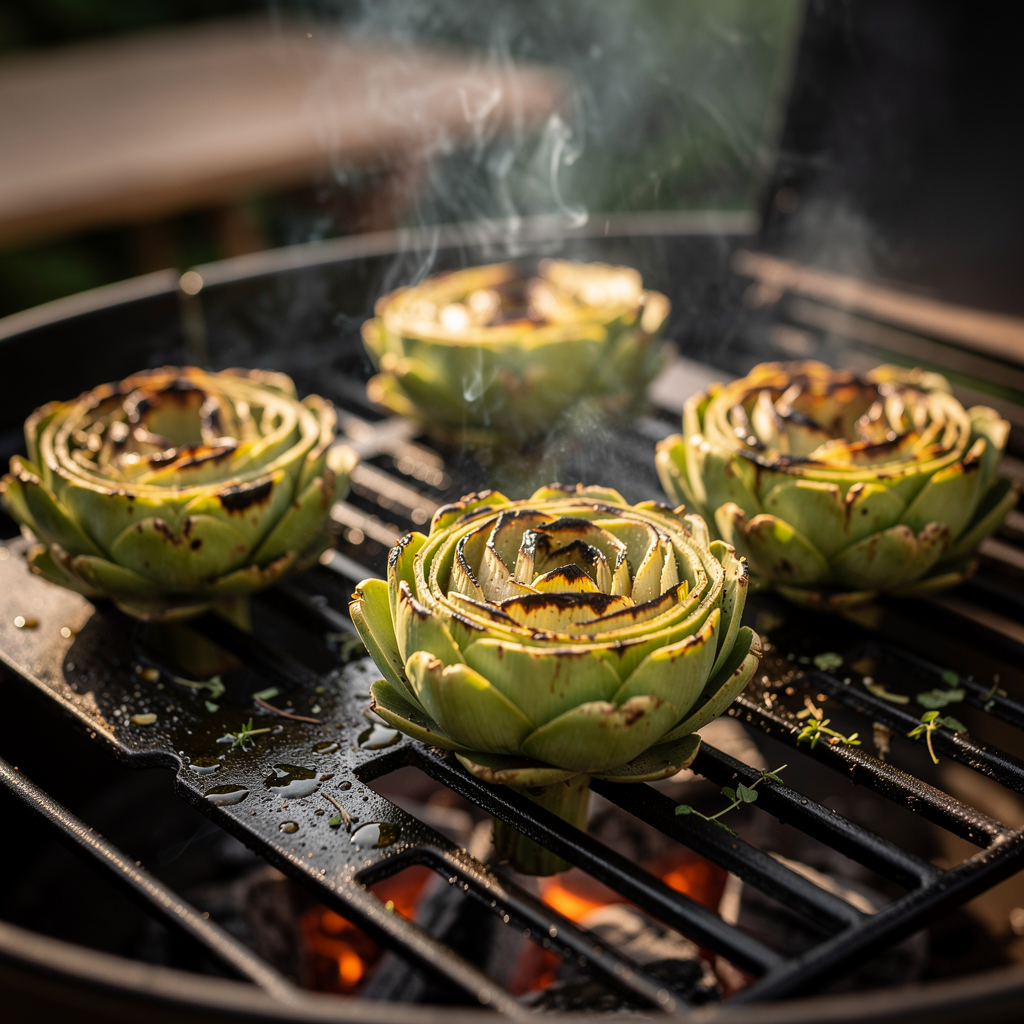
Place each artichoke cut side down and let it be. Don’t move them until deep, golden marks appear. Patience builds that smoky taste and keeps the flesh juicy.
Flip or leave alone; anti-stick cues
Because we par-cooked, you rarely need to flip. If a piece lifts easily, the sear is ready. For sticking, preheat well, oil the bars, and wait for natural release.
- Cheese tucked between leaves will melt and crisp while the cut face chars—avoid moving them.
- Season with a little pepper and a light drizzle of olive oil after grilling to finish.
- Adjust for size: larger halves need a minute or two more; small quarters get a quick kiss of heat.
| Temperature | Time at Heat | Expected Result |
|---|---|---|
| High (450–550°F) | 2–4 minutes per side | Deep char, quick color |
| Medium-high (375–450°F) | 4–6 minutes | Even sear, less risk of burning |
| Adjust by size | Small: shorter; Large: +1–2 minutes | Tender heart, crisped edges |
Grilled artichokes Italian marinade recipe
After searing, I let them rest for a minute before saucing; the steam helps the dressing cling to leaves and heart. That little pause makes the difference between a bland drizzle and a full-flavored finish.
Classic lemon-garlic-parsley olive oil mix
Whisk 1/3 cup lemon juice with 1/2 cup extra-virgin olive oil in a small bowl. Add 1–2 finely minced garlic cloves, 2 tablespoons chopped parsley, and a pinch of salt pepper. Taste and add more juice or oil so it feels bright but balanced.
Optional cheesy variation
For a richer turn, tuck a tablespoon of grated Parmesan or Pecorino between a few leaves before you put them on the grill. The cheese melts and crisps, giving a savory contrast to the citrus and herbs.
Lively dipping choices
Make a lemon-garlic aioli by whisking 1/2 cup mayo with grated garlic, lemon zest, and enough lemon juice to reach a smooth dipping consistency. Or serve the lemon-parsley vinaigrette on the side for a herbal, silky dunk.
- Spoon the vinaigrette over hot pieces so juice and oil soak into the heart.
- Serve as a side or appetizer; offer sauces for dipping so guests can choose.
- Finish with a little extra oil and a sprinkle of parsley for color and shine.
| Component | Amount | Why it matters |
|---|---|---|
| Lemon juice | 1/3 cup | Brightens and balances oil |
| Extra-virgin olive oil | 1/2 cup | Carries flavor and adds sheen |
| Parsley & garlic | 2 tbsp parsley, 1–2 garlic cloves | Herbal lift and savory aromatics |
| Aioli | 1/2 cup mayo + lemon | Creamy dipping for richness |
Pro tips, sizes, and seasoning adjustments
A steady, small set of habits in prep will save time and keep flavor bright. I choose medium size for even cooking and a generous heart; they hold together on the grill and finish with great texture.
Stem, knife, and choke basics
Use a peeler on the stems so the tender core shines. A sharp knife gives neat quarters and safer trimming; clean cuts sear better and shed fewer fibers.
If you left the choke in, remove it after par-cooking when the interior is soft. A grapefruit spoon slides under the fuzz and lifts it out cleanly without tearing the leaves.
Taste and final season
Always taste before serving. A splash of lemon and a pinch of salt and pepper balance the flavor. A drizzle of oil adds gloss and helps the dressing cling.
- Drain halves upside down so water doesn’t steam on the grate.
- If prepping ahead, refrigerate trimmed halves and finish on the heat when ready.
- If your dressing tastes flat, let it rest a minute—acidity and aromatics will bloom.
| Tip | Why it matters | Quick action |
|---|---|---|
| Medium size | Even cook, generous heart | Pick uniform pieces |
| Peel stems | More edible bites | Use a vegetable peeler |
| Taste & season | Balance richness and acid | Add lemon, salt, pepper |
How to serve, store, and reheat for weeknight sides or appetizers
A simple platter, lemon wedges, and a small bowl of sauce turn this into an easy crowd-pleasing side dish or appetizer. I set a small bowl of aioli for dipping and offer a parsley vinaigrette so guests can choose.
If you save leftovers, cool the pieces completely and store in an airtight container up to 3 days. Layer parchment between leaves to protect flavor and keep aromas clean.
To reheat gently, I use a covered skillet over low heat, a brief steam, or the grill over indirect heat until warm. If steaming, bring water boil, then lower to a gentle simmer so the texture stays tender, not soggy.
Before serving, taste and adjust seasoning. A quick whisk of a couple tablespoons lemon juice with a touch of oil wakes the dish, and a minute on the heat restores char and warmth.
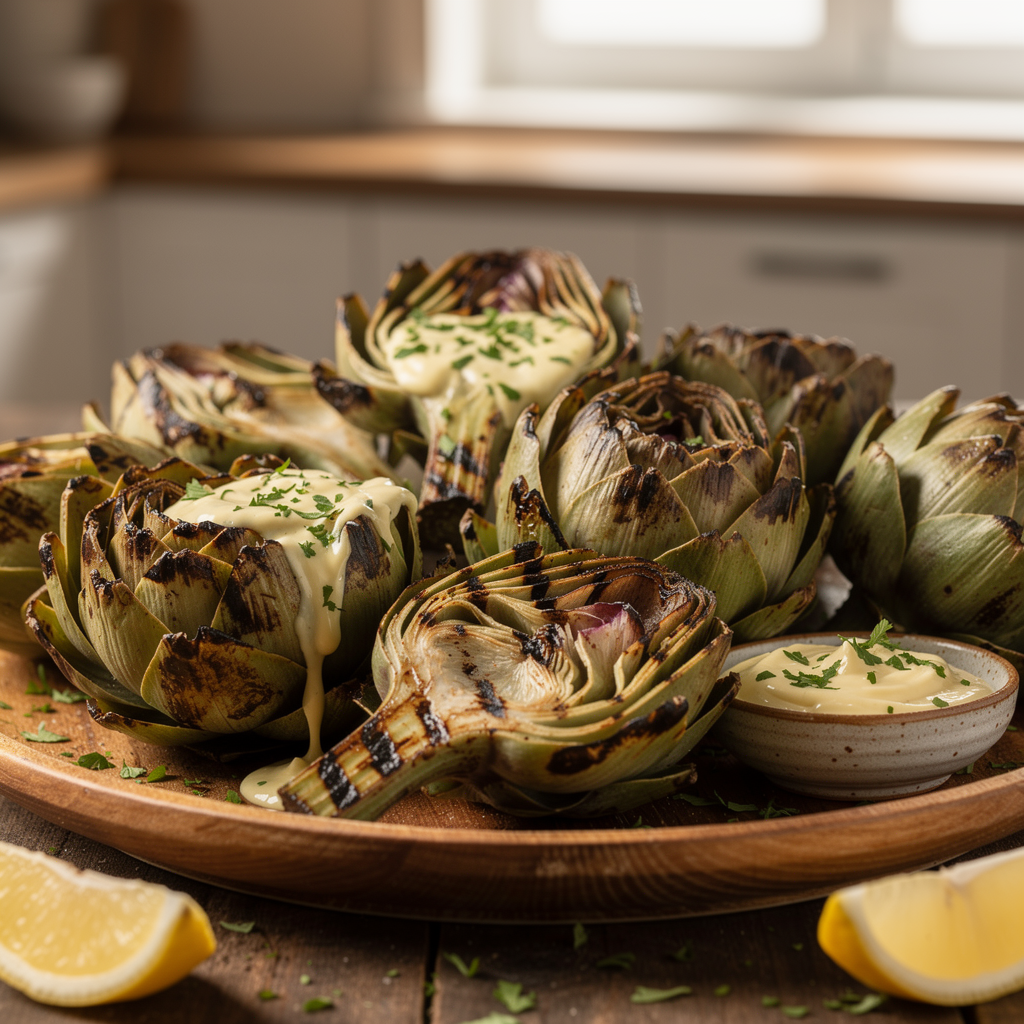
Grilled Artichokes with Lemon-Garlic Aioli
Ingredients
Method
- Snap off the tough outer leaves and trim the top third of the artichokes using a serrated knife. Peel the stems using a vegetable peeler, and rub the cut surfaces with lemon to prevent browning.
- Bring a pot of water to a boil. Add lemon slices, garlic, salt, cracked pepper, and a drizzle of olive oil to infuse flavor.
- Lower the heat to simmer and cook the artichokes until the leaves pull away easily (12 minutes for quarters, 20-30 minutes for halves). Drain upside down to remove excess water.
- Preheat the grill to medium-high heat and oil the grates. Place the artichokes cut-side down and cook for 4-6 minutes until deep golden marks form. Flip them if needed and cook for another minute or two.
- In a small bowl, whisk mayo, lemon juice, lemon zest, and grated garlic to make a smooth lemon-garlic aioli.
- Drizzle the grilled artichokes with the lemon-garlic aioli or a parsley vinaigrette. Serve warm or at room temperature with a sprinkle of parsley for extra freshness.
Notes
- Use fresh, firm artichokes for the best texture.
- If making ahead, par-cook and store artichokes in the fridge, then finish grilling just before serving.
- You can substitute the aioli with a parsley vinaigrette for a lighter option.