
Jump to Recipe
I learned to coax deep comfort from simple pantries: a pot, good spuds, and a patient hand. The kitchen fills with a warm, gentle scent as water moves from cold to a slow simmer and steam rises while I watch for a fork to slide in easily.
I prefer starchy russets or Yukon Golds for a fluffy, not gluey, finish. I always start them in cold water, bring to a boil, then lower to a gentle simmer so each piece cooks evenly from edge to center.
After draining, I return the tubers to low heat for a minute to lose excess moisture. Then I press them through a ricer or use a hand masher—never a food processor—to keep the texture light and silky.
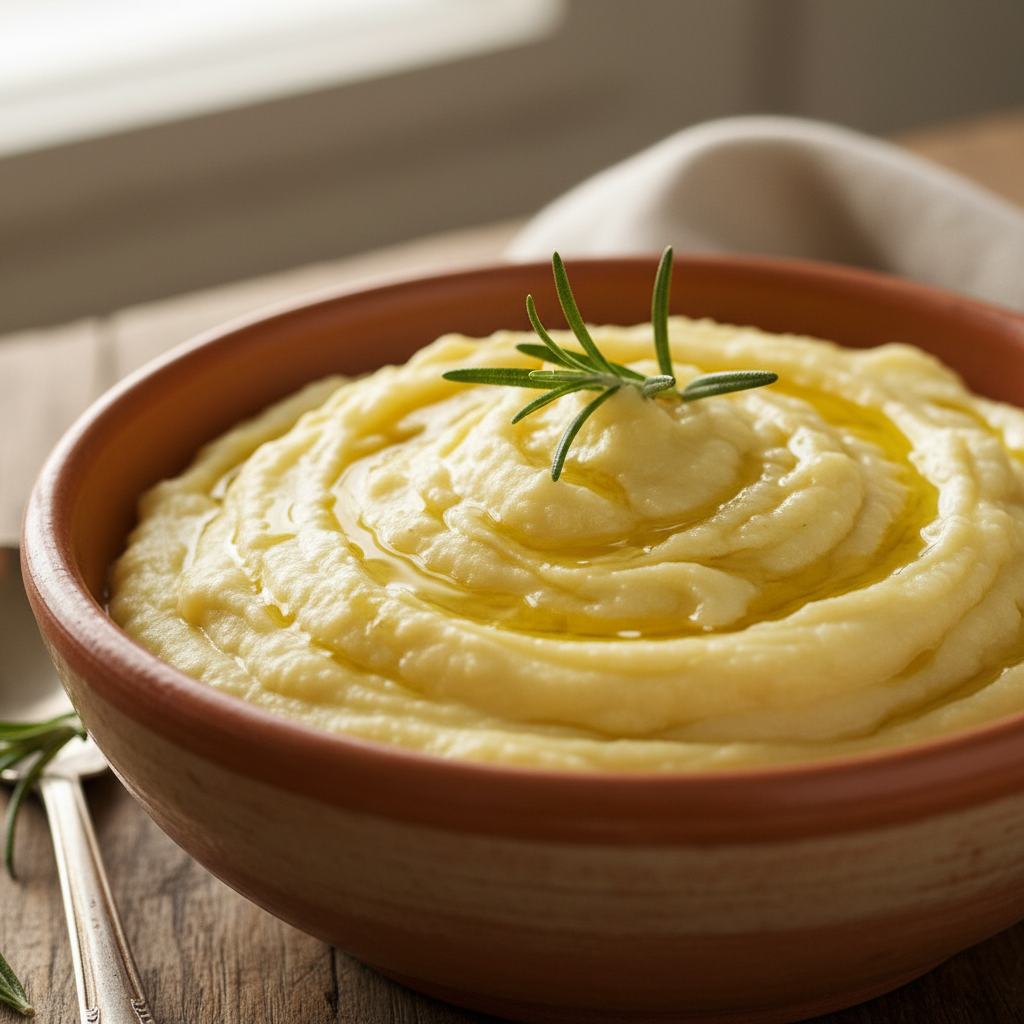
For a classic path I warm cream or milk and butter before folding them in, finishing with a splash of olive oil and a grating of Parmesan and nutmeg. For dairy-free, I whisk in salted starchy cooking water and extra virgin oil to let the sweet, earthy flavor of the potato lead.
Key Takeaways
- Start potatoes in cold water and simmer gently until fork-tender for even cooking.
- Choose russet or Yukon Gold for the right starch-to-moisture balance.
- Dry potatoes briefly over low heat after draining to avoid soggy mash.
- Use a ricer or masher; avoid food processors to prevent gumminess.
- Warm dairy or starchy water first to keep the finished texture glossy and smooth.
Why this olive oil mash tastes so purely Italian
I trust simple technique and top ingredients to let the potato sing. Good extra virgin olive changes the dish by perfume, not by force.
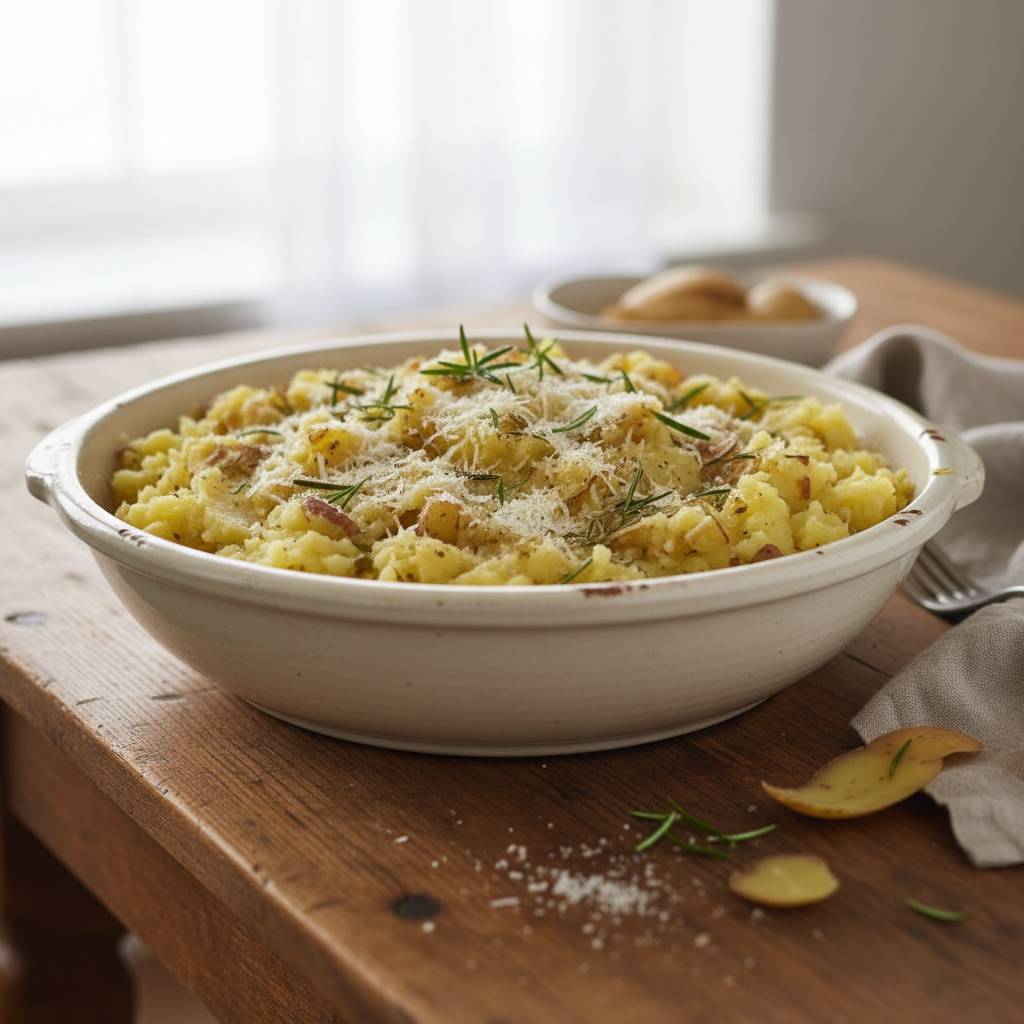
I salt the cooking water well; the tubers absorb seasoning as they cook. I save a cup of that starchy water to loosen the mash if needed—no milk required unless I want a creamier path.
Yukon Golds are my go-to. They soak up oil and flavor and give a velvety finish without being gluey. Keep skins on for a rustic bite or peel for a silkier result.
Experience-driven tips for silky, flavorful potatoes
- I taste the extra virgin before I use it; fresh, fruity oil adds balance and peppery heat.
- Use a ricer or hand masher; avoid food processors and stand mixers to prevent a gummy texture.
- Limit ingredients: olio buono, sea salt, and maybe a roasted garlic clove or a whisper of rosemary.
- Serve with a final drizzle at the table for aroma and sheen—small gestures make big flavor differences.
| Choice | Texture | Best use |
|---|---|---|
| Yukon Gold | Velvety, slightly dense | Oil-forward, smooth plates |
| Keep skins on | Rustic, toothy | Family-style sides, casual meals |
| Peel tubers | Silky, refined | Formal dishes, glossy presentation |
Ingredients and smart swaps
I keep my pantry pared back so each ingredient can speak plainly. Below I list the core items I reach for and the sensible swaps that save time without skimping on flavor.
Core ingredients
- Potatoes: Yukon Gold for a naturally creamy finish; choose Russet/Idaho if you want ultra-fluffy, absorbent results.
- Extra virgin olive oil: pick a fresh-tasting bottle you enjoy on salads; it gives a glossy finish and primary flavor.
- Salt: season the cooking water well so the tubers absorb seasoning while they cook.
- Garlic cloves: roasted cloves add mellow sweetness; a lightly smashed clove simmered with the water gives a subtle aroma.
Dairy or dairy-free paths
For a rich route, warm milk or a splash of cream with butter before adding. Hot dairy blends in more cleanly and keeps texture silky.
For dairy-free, skip butter and cream. Loosen the mash with hot, salted cooking water and stream in extra virgin olive; taste as you go.
Flavor boosters and swaps
- Cheese: grated Parmesan or Pecorino adds savory depth; finish with a pinch of nutmeg for warmth.
- Herbs: chives or parsley for brightness; rosemary pairs well for roasted mains.
- Smart swap: half-and-half for richer dairy without heavy cream; use starchy water if you want a lighter, oil-based path.
| Ingredient | Why | Swap |
|---|---|---|
| Yukon Gold | Velvety texture, gentle sweetness | Russet/Idaho for fluffiness |
| Milk + Butter | Silky, rich finish | Half-and-half or a splash of cream |
| Salted cooking water | Natural binder and seasoning | Used instead of dairy for a lighter result |
Choosing the right potatoes for texture
A single choice at the market often decides whether your side is silky or airy. Pick by texture goals and plan your cooking around that decision.
Yukon Gold vs. Russet: starch, moisture, and how they mash
Yukon Gold sits in the sweet spot: medium starch, thin skins, and a gentle sweetness that turns lush without heavy dairy. It makes a cohesive, creamy finish that loves a glossy stream of oil.
Russet (Idaho) has higher starch and lower moisture, so it flakes into light, airy spoonfuls. Take care not to overwork these tubers—they can become gluey if beaten too long.
When to keep skins on for rustic flavor
Leaving skins adds minerality and pleasant chew. For a trattoria-style side, scrub the tubers and mash them coarsely so the skins lend texture and rustic charm.
- Start pieces in cold water and simmer until fork-tender for even cooking.
- After draining, return to low heat briefly to evaporate excess water—drier spuds absorb oil evenly.
- Choose even-sized chunks so everything cooks at the same rate.
| Choice | Texture | Best use |
|---|---|---|
| Yukon Gold | Velvety, cohesive | Creamy, oil-forward finish |
| Russet/Idaho | Light, fluffy | Airy mashes; careful handling |
| Skins on | Rustic, toothy | Casual sides, bold flavors |
italian mashed potatoes with olive oil: step-by-step method
Start by prepping evenly sized pieces so every forkful finishes at the same moment. Cut the tubers into uniform chunks; this helps them cook through in the same time and keeps texture consistent.
Prep and cut for even cooking
Place equal pieces in a pot and cover with cold, well-salted water. Bring to boil, then reduce heat to a steady simmer so the outsides don’t overcook before the centers are tender.
Salted water matters: bring to a boil, then reduce heat to simmer
Cook until a fork slides in easily, about 20–25 minutes depending on chunk size. Before you drain, ladle out a cup or two of cooking water and set it aside.
Reserve that cup of starchy cooking water
Drain thoroughly, then return the drained potatoes to the pot over low heat for a minute to steam off extra water. This step tightens texture and prevents a watery finish.
Mash gently: potato masher or ricer (skip the food processor)
Work while hot using a ricer for ultra-smooth results or a potato masher for a softer, rustic fold. Avoid food processors—they overwork the starch and yield gluey mash.
Stream in extra virgin olive oil for a glossy, creamy finish
Slowly stream in virgin olive oil while folding. If needed, loosen with reserved cooking water a little at a time until glossy and creamy. Stir in roasted garlic if you like a milder, sweet garlic note. Taste and finish with another ribbon of oil before serving.
- Timing checkpoint: 20–25 minutes to cook; hold warm on the lowest heat if serving later.
| Step | Why it matters | Quick tip |
|---|---|---|
| Even cut | Consistent cook | Same-size chunks |
| Reserve water | Adjust texture | 1–2 cups saved |
| Mash tool | Texture control | Ricer or masher only |
Mastering texture: creamy, fluffy, or rustic
Texture decides whether a spoonful comforts or sings; I like to tune it by feel. Start modestly and adjust as you go. Small additions change everything.
For silky spoonability, I begin with 2–3 tablespoons of oil per pound, then add hot cooking water in teaspoon-sized splashes until the mash looks glossy and holds a soft peak. Rice while hot, fold gently, and stop when it comes together.
- Fluffy: rice hot, fold in liquid with a spatula; minimal stirring keeps air.
- Rustic: mash by hand, leave a few soft chunks, keep skins on for chew and flavor.
- Silky: peel, use a ricer, and finish with warm milk or a touch of butter if desired.
Troubleshooting: if the mash turns gluey, rescue it with more hot cooking water and a splash of fresh oil. If dry, add hot water first, then oil; dairy like warm milk smooths things quickly. Grainy results mean undercooked or waxy tubers—return to heat, add a little hot water, and mash gently.
| Issue | Fix | Quick cue |
|---|---|---|
| Gluey | Fold in hot cooking water + fresh oil | Gummy shine, stringy pull |
| Dry | Add hot water, then oil (or warm milk) | Dull, crumbly texture |
| Grainy | Cook a bit more, mash gently with water | Uneven, gritty mouthfeel |
Make it your way: classic Italian add-ins
I like to layer small flavors so every forkful tells a story. Keep additions simple so the tuber remains the star, then add a few bold notes for contrast.
Roasted garlic, cracked pepper, fresh rosemary
Roasted garlic brings a mellow sweetness. Squeeze soft garlic cloves and fold them into hot mashed potatoes for perfume without bite.
Fresh rosemary gives a woodsy lift. Chop leaves finely so each mouthful gets a hint, not a needle of herb.
A turn of cracked black pepper and a finishing drizzle of olive oil wake up the dish at the table.
Parmesan or Pecorino for savory depth
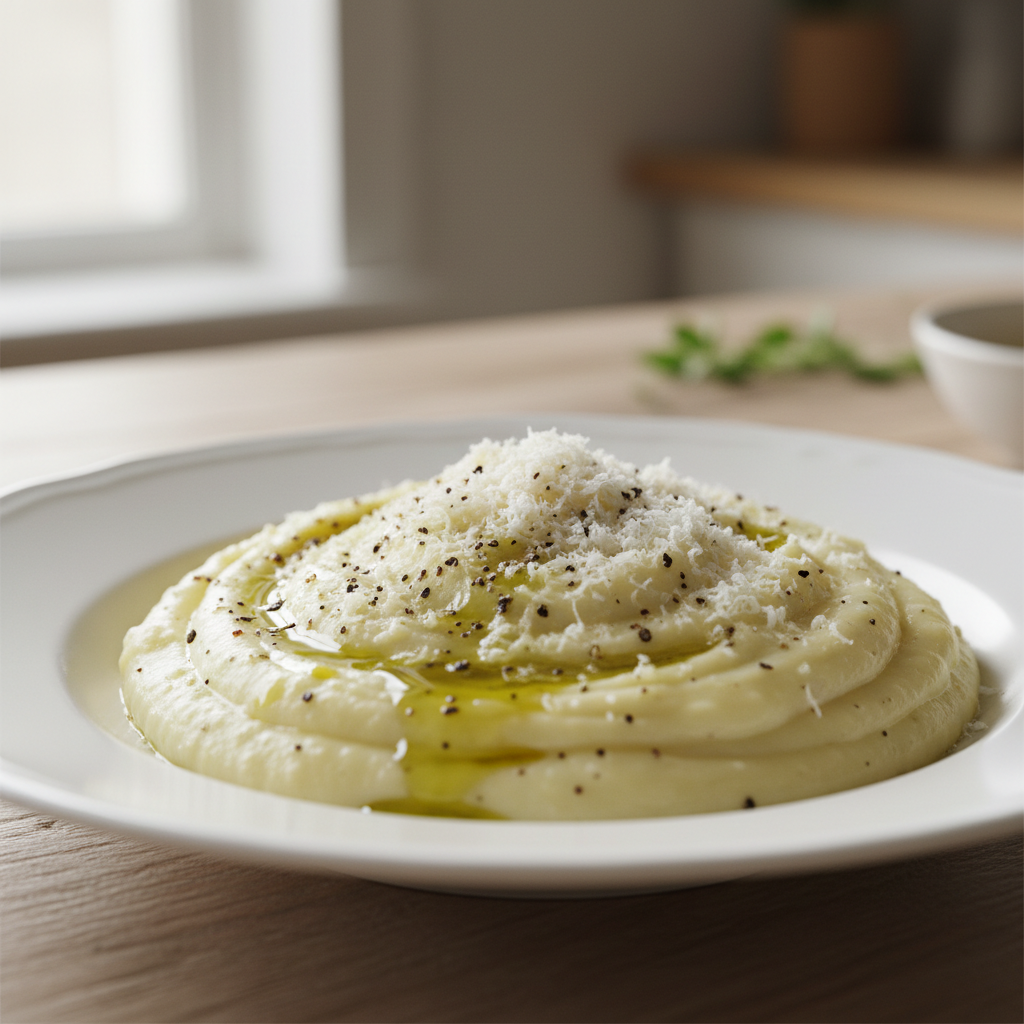
A light snowfall of grated cheese adds savory, nutty depth. Because cheese adds salt, season sparingly and taste before adding more salt.
- If you want bolder garlic, stir in a spoonful of roasted garlic oil or a tiny grate of raw clove for a gentle kick.
- Try chives or parsley for bright color and a fresh counterpoint to richer flavors.
- Fold add-ins gently at the end to keep the mash creamy and airy.
| Add-in | Why it works | Quick tip |
|---|---|---|
| Roasted garlic | Sweet, mellow depth | Squeeze from cloves, fold warm |
| Rosemary | Woodsy warmth | Finely chop; use sparingly |
| Parmesan/Pecorino | Savory, nutty lift | Grate finely; taste for salt |
Equipment notes that actually matter
Good tools make a big difference at the stove; the right gadget saves time and protects texture.
Potato masher vs. ricer vs. food mill
I prefer a ricer when I want a satin finish. It passes hot tubers gently and limits starch stress, ideal for an olive oil mashed result that shines and feels light.
A handheld potato masher makes a cozier bowl. The masher gives rustic bites and works fast when you keep the skins on. It’s forgiving and perfect for family meals.
- The food mill sits between: smooth yet airy, handy for larger batches and quick passing.
- Avoid food processors and stand mixers; they overwork starch and turn texture pasty in minutes.
- Work while hot: drain well, return to a warm pot briefly to shed water, then mash or press so the tubers absorb seasoning and oil readily.
| Tool | Best for | Quick cue |
|---|---|---|
| Ricer | Restaurant-smooth, glossy finish | Pass while hot |
| Potato masher | Rustic texture, tender bits | Mash gently; stop early |
| Food mill | Large batches; even and airy | Crank steadily |
Taste and adjust salt, then finish with a fresh drizzle of olive and a final stir. If you want more timing tips, see this patate al forno recipe for kitchen pacing and pairing: patate al forno recipe.
Serving ideas and pairings for Italian-inspired side dishes
A final ribbon of good oil and chopped rosemary wakes the mash and the whole meal. Keep the presentation simple so the texture and flavor lead the way.
Spoon the mash into a warm bowl, make a shallow well, and drizzle a thread of virgin olive oil. Scatter chopped rosemary or chives and finish with flaky salt and a fresh crack of pepper.
What to serve it alongside
- Roast chicken is classic; the mash cushions the bird and carries pan jus beautifully.
- Try honey-balsamic glazed chicken or slow-cooked meats—each sauce soaks into the mash and brightens the plate.
- For lighter meals, pair the dish with garlicky sautéed greens or roasted vegetable sides; the oil-forward profile ties flavors together.
- Use the mash under braised vegetables or mushrooms so the starchy base absorbs savory juices.
Practical serving tips
Keep plates warm so the mash stays luscious if dinner runs a few minutes late. If you serve family-style, set a small pitcher of extra virgin at the table for personal finishing touches.
| Pairing | Why it works | Quick tip |
|---|---|---|
| Roast chicken | Classic balance of fat and comfort | Pour pan juices over the mash |
| Balsamic-glazed chicken | Sweet-tangy glaze contrasts richness | Garnish with rosemary |
| Roasted vegetables | Textural contrast and brightness | Add lemon zest on a side salad |
From stovetop to table: timing, storage, and reheating
Plan your final minutes so the mash arrives warm and glossy at the table. I allow about 20–25 minutes to cook potatoes until fork-tender; larger chunks can take a few more minutes.
Before you drain, reserve a cup of cooking water — it’s the best tool to loosen texture while serving or reheating. To hold a short time, keep the pot covered on the lowest heat and stir once, adding a splash of hot water if it tightens up.
For storage, cool quickly, cover, and refrigerate up to 5 days. Reheat covered in a 350°F oven for about 25 minutes, or microwave in short bursts (2–5 minutes), stirring and adding warm water as needed.
Dairy versions benefit from gently warmed milk or cream folded in at the end. Taste and finish with a fresh drizzle of olive oil for aroma and sheen — gentle heat and light stirring protect the texture you worked for.
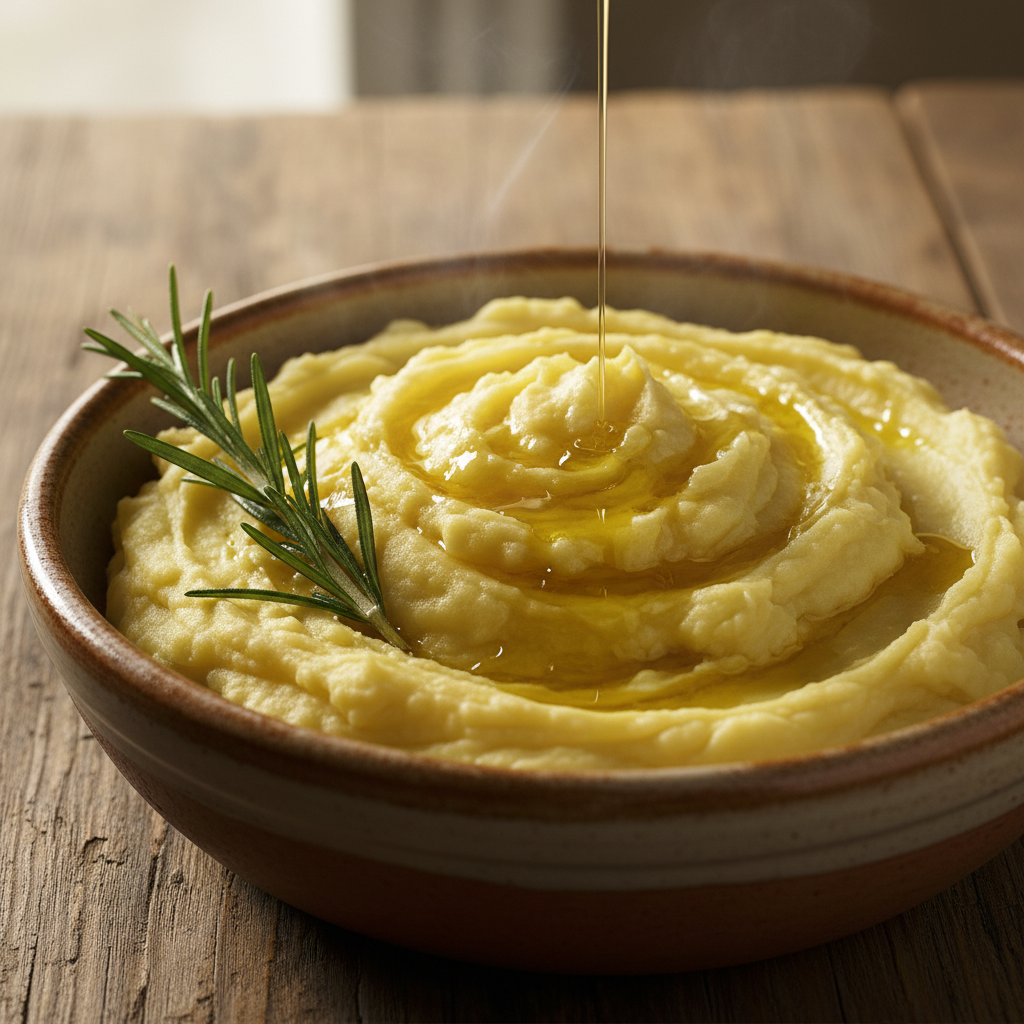
Italian Olive Oil Mashed Potatoes
Ingredients
Method
- Cut the potatoes into even chunks for uniform cooking. Start by placing them in a pot of cold, salted water.
- Bring the water to a boil, then reduce the heat to a simmer. Cook until the potatoes are fork-tender, about 20–25 minutes.
- Before draining, save about 1 cup of the starchy cooking water. Set aside for later.
- Drain the potatoes thoroughly. Return the drained potatoes to the pot over low heat for 1 minute to allow excess moisture to evaporate.
- Use a potato ricer or masher to mash the potatoes. Avoid using a food processor as it will make the mash gluey.
- Slowly stream in extra virgin olive oil, stirring gently until the mash is creamy and smooth.
- If needed, add reserved cooking water little by little until the desired texture is reached.
- Optionally, stir in roasted garlic or grated cheese for extra flavor.
- Taste and adjust salt if needed. Finish with a drizzle of extra virgin olive oil and fresh herbs for garnish.
Notes
- If you prefer a dairy-free version, skip the cheese and use only olive oil and the starchy cooking water for a lighter, oil-based mash.
- Yukon Gold potatoes give a velvety texture, but if you want a fluffier mash, use Russet potatoes.
- This dish pairs beautifully with roasted meats, grilled vegetables, or as a side to braised dishes.