
Jump to Recipe
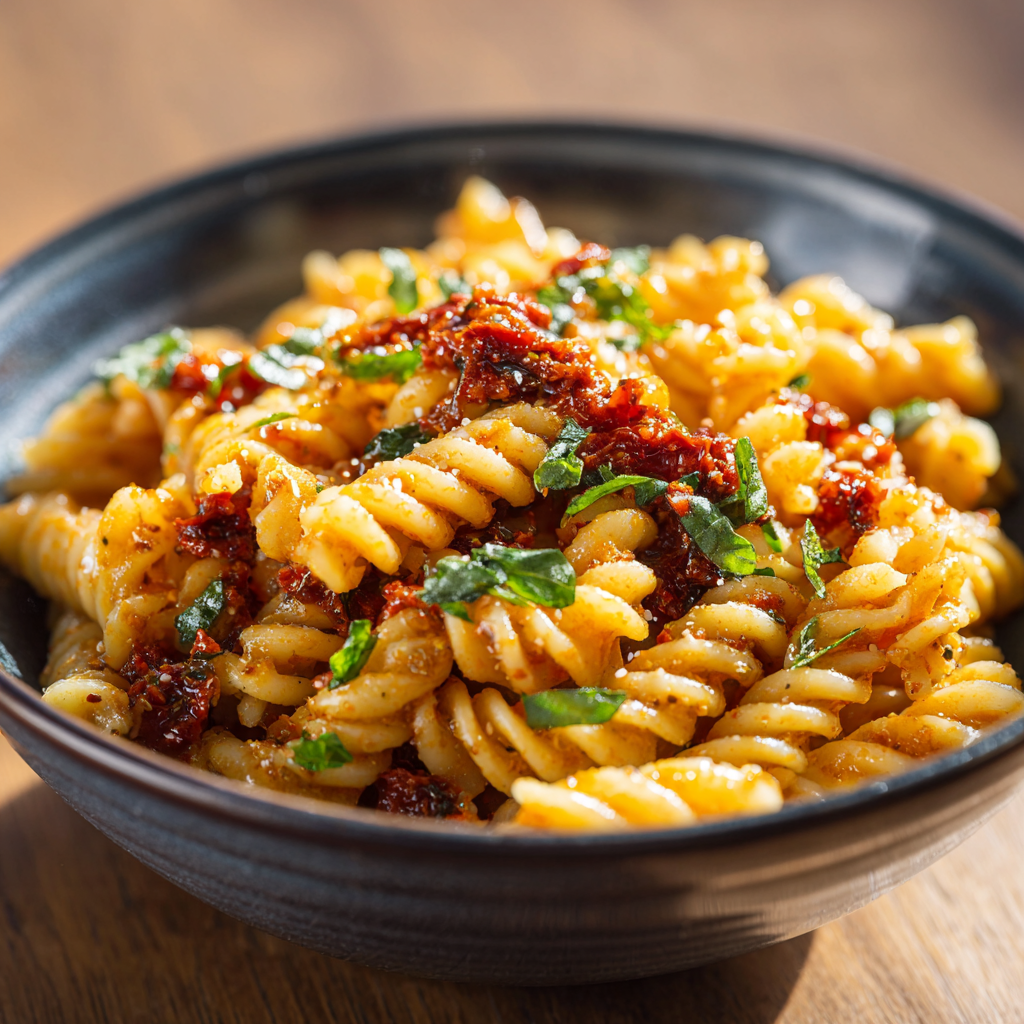
I love how a quick sauce can lift a simple piatto into something memorable, and this pasta con pesto di pomodori secchi does just that.
The scent of sun‑preserved tomatoes warmed in their oil, the crunch of pine nuts, and bright basil hit the senses right away. I start by blending the tomatoes with their oil, then add pine nuts and peeled almonds so the sauce stays slightly coarse and lively.
Bring a pot of water to a rolling boil, salt it well, and cook the pasta, saving about 150 ml of the cooking acqua. Drain the noodles two minutes before the package time, return the sauce to the pot with a splash of reserved water, then add the pasta and toss for two minutes to finish.
This ricetta is my weekday base at casa when I want bold sapore without fuss. Busiate or another semola shape clings beautifully, and I’ll note when a mortar or a food processor makes sense for texture and cleanup.
Key Takeaways
- Blend sun‑preserved tomatoes with their oil for maximum flavor.
- Use nuts and basil to keep the sauce slightly coarse and aromatic.
- Reserve about 150 ml of cooking water to finish the sauce for shine.
- Under‑cook the pasta by ~2 minutes, then finish in the pan for best texture.
- Choose busiate or a coil‑shaped pasta to help the sauce cling to every bite.
Why this sun-dried tomato pesto pasta hits that sweet-savory Italian balance
This sauce marries concentrated sun flavors with fresh herbs to create a sweet-and-savory melody in every bite. The base, a pesto pomodori secchi, supplies gentle sweetness and deep umami that play well with bright basilico and a hint of garlic.
A little of the preserving olio carries aroma and helps the sauce emulsify when we add warm water from the pot. Parmigiano or Pecorino adds salty depth and rounds the flavor so the top notes of herb and garlic stay clear.
- I keep the texture slightly coarse on purpose; the modo we build the sauce means you taste bursts of tomato and nut, not a flat paste.
- Timing matters: finish the pasta in the pan with a splash of cooking water to make the condimento glossy and cling to each noodle.
- Shapes like busiate or ridged rigatoni trap sauce for balanced bites — that is the small trick that lifts this ricetta.
Ingredients that deliver big flavor with minimal effort
A few pantry items become a dependable sauce base when used with care. I keep jars of pomodori secchi in olio on hand because they give bright, concentrated tomato flavor without extra work.
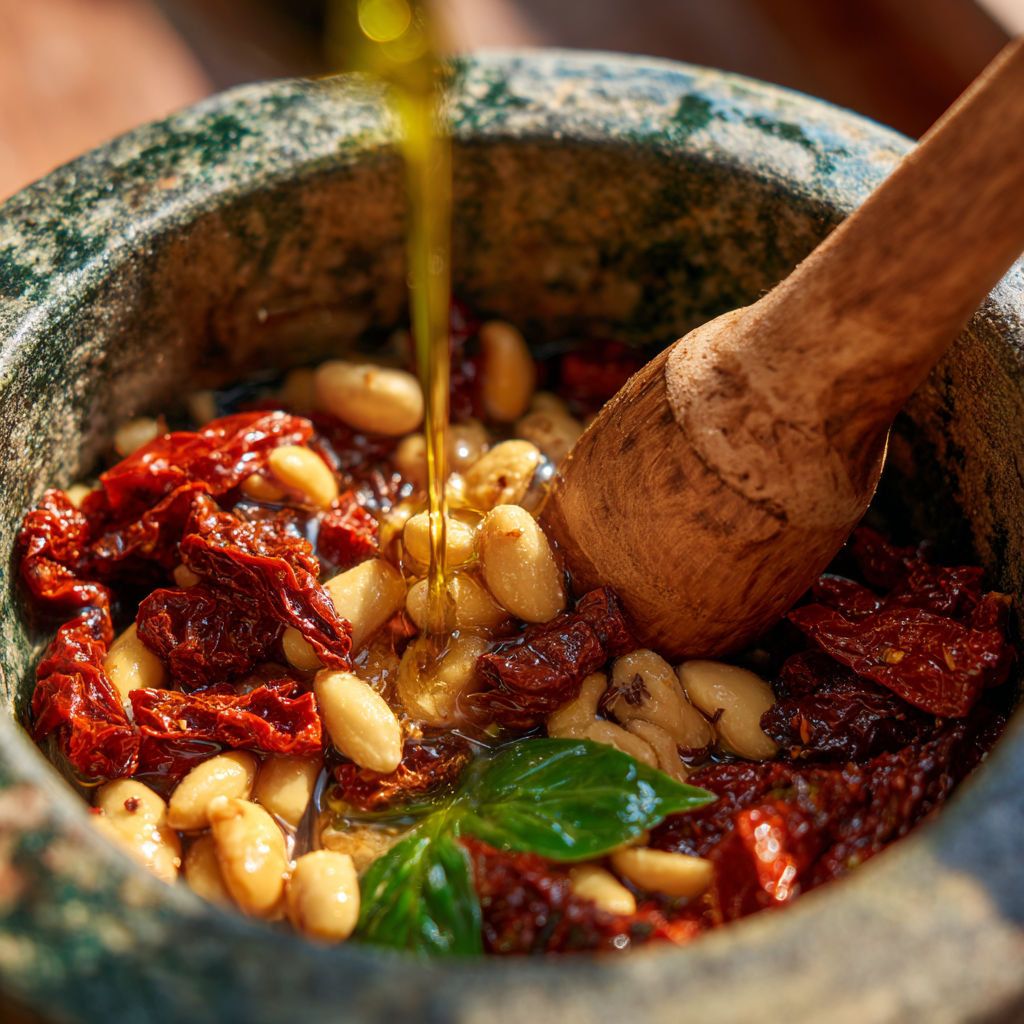
Core ingredienti: blend about 160 g drained tomatoes with their oil, a small handful of basilico, and one clove of aglio. Add 30–40 g mixed nuts (almonds plus pine nuts) for texture. Pulse until slightly coarse so bits remain distinct.
More on nuts and cheese
Use 30 g peeled almonds and 20 g pine nuts, or swap walnuts for a bitter counterpoint. Stir in 40 g grated parmigiano or Pecorino to taste. Parmigiano keeps the sauce nutty and mellow.
Picks from the pantry
Choose ridged shapes like rigatoni for quick weeknight meals, or fresh busiate (semola and water in a 2:1 ratio) for a traditional bite. Salt your water well and always reserve about 150 ml of cooking water to emulsify the sauce.
- Start with less added oil; the tomatoes bring plenty.
- Keep the texture slightly coarse for chew and aroma.
- Adjust cheese and nuts based on what you love in your ricette.
| Ingredient | Amount | Swap | Pro Tip |
|---|---|---|---|
| Pomodori secchi (in oil) | 160 g drained | Sun-dried packed dry + 40 ml oil | Use jar oil sparingly; reserve water to finish |
| Mixed nuts | 50 g (almonds + pine) | Walnuts 50 g | Toast lightly for more aroma |
| Parmigiano | 40 g grated | Pecorino for sharper flavor | Add at end to keep brightness |
| Busiate / rigatoni | Serve for 2–4 people | Other ridged short shapes | Under-cook by 2 minutes, reserve 150 ml water |
pasta con pesto di pomodori secchi: step-by-step you can trust
A steady workflow—pesto first, water ready, finish in the pot—keeps this recipe foolproof even on busy nights. Follow clear timing and small technical moves and you’ll get a glossy, balanced bowl every time.
Make the pesto: pulse or pound to a slightly chunky, cohesive sauce
Blend the jarred tomatoes with their oil, pine nuts, almonds, and basil until the mix is slightly granular. Stop before it turns into a smooth purée so texture and bursts of flavor remain.
Stir in grated cheese and taste. Adjust salt at the end after you emulsify with the cooking water.
Boil and season: salt your water, time the cottura, reserve acqua cottura
Bring a large pot to a vigorous boil and salt generously. Add the noodles and plan to drain them about 2 minuti before the package tempo.
Reserve roughly 150 ml of acqua cottura in a cup before draining so you have it ready for the finish.
Toss to emulsify: combine pasta, pesto, and pasta water for a silky condimento
Return the pesto to the warm pot, add a small ladle of acqua to loosen, then add the undercooked noodles. Toss off the heat first, then apply gentle heat for 2 minuti to marry oils and starch.
- Add water a spoonful at a time until the sauce lightens and clings in a glossy sheen.
- Taste after emulsifying; cheese and water may bring all the salt you need.
- Finish the last minuti in the pan, plate immediately, and serve warm.
Technique that changes everything: texture, timing, and acqua di cottura
The right technique brings out depth — it’s the quiet work behind a glossy, balanced sauce. I focus on simple moves that protect aroma and texture.
Mortar and pestle gives a fine yet lively grain. It releases oils and scent slowly and cleans easily on granite. A food processor is fast but can over-puré and warm the nuts and pomodori, flattening flavor.
Mortar versus processor: flavor, cleanup, and control
I keep the mix on the drier side because the cooking water will finish it. If I use a grinder, I pulse gently. If I use a mortar, I stop when bits remain distinct.
The science of pasta water: starch, emulsion, and ideal consistency
Starch in the acqua binds oil and cheese into a stable emulsion. Add a small ladle of acqua cottura, toss, then finish over low heat for about 2 minuti to reach a glossy coat.
- Watch the tempo by feel: low heat and steady stirring preserve gloss.
- If the sauce tightens, add a spoon of acqua off heat and coax it back.
- Texture is the goal: the sauce should cling, not slide.
| Focus | Mortar | Processor | Practical tip |
|---|---|---|---|
| Texture | Grainy, aromatic | Can be too smooth | Stop early to keep bite |
| Cleanup | Rinses on granite | Oils cling to plastic | Choose by energy and time |
| Finishing | Keep drier, add acqua later | May need less water | Finish 2 minuti in pan |
| Flavor | Slow aroma release | Faster, hotter extraction | Pulse to avoid overwork |
Variations inspired by Sicily and your pantry

Small changes bring strong regional voice. I lean on simple swaps that honor Trapani and make sense at home.
Start with a base idea: pesto pomodori secchi or a fresher pesto alla trapanese. Busiate were born in Sicily; their coil shape traps sauce and remembers the busa stem used long ago.
From Trapanese to a rosso riff
In Trapani, pesto alla trapanese uses raw tomatoes and almonds for brightness. A rosso version with sun jars gives deeper sweetness and a longer finish.
Smart swaps for pantry flexibility
- I rotate almonds, walnuts, or a mixed-nut blend with a few pine nuts for texture.
- Adjust aglio to taste so the mix stays rounded, not sharp.
- Choose Parmigiano for a gentle lift or Pecorino for salt and bite.
- Tighten olio if your jar is oily; loosen with warm cooking water when you finish.
| Element | Option A | Option B |
|---|---|---|
| Nuts | Almonds | Walnuts + pine |
| Cheese | Parmigiano | Pecorino Romano |
| Shape | Busiate (traditional) | Rigatoni or short ridged |
Serving, finishing touches, and make-ahead tips
A gentle finish over low heat brings shine and balance to the sauce without extra fuss. After you drain the noodles two minuti shy, return them to the pot with the sauce and a few splashes of reserved water. Toss gently for about two minuti until the mixture becomes glossy and clings to each strand.
Add grated cheese off the heat so it melts without weighing the mix down. Taste once more for salt—cheese and pasta water often supply exactly what the dish needs. A quick crack of black pepper and a few torn basil leaves brighten the piatti at the table.
Cheese, pepper, and saving leftover pesto without losing color
For make-ahead preparazione, press plastic wrap directly onto the surface of the pesto pomodori and pour a thin layer of oil on top. This slows oxidation and keeps the color vivid in the fridge for a couple of days.
- When reheating, loosen the sauce with hot cooking water, not extra oil, to preserve texture and shine.
- Keep a small cup of pasta water on hand to refresh the sauce just before plating.
- If the sauce tightens, add a spoon of hot water and toss gently—tempo and patience restore gloss.
| Action | How | Why |
|---|---|---|
| Store pesto | Press wrap on surface, cover with oil, refrigerate | Limits air contact and keeps color |
| Reheat | Use hot pasta water to loosen, toss briefly | Restores emulsion without extra oil |
| Serve | Finish in pan for 2 minuti, add cheese off heat | Creates glossy coat and balanced flavor |
Bring Italy to your table tonight with this bright, glossy bowl of pasta
In minutes you can plate a bright, silky bowl that honors simple Italian craft. This preparazione uses jarred pomodori secchi for deep flavor and a handful of pantry staples to keep things easy and true.
Undercook dried shapes by two minuti or cook fresh busiate for 3–5 minutes, then finish with about 150 ml of reserved water. That splash is the small trick that makes the sauce glossy and cling to each coil and ridge.
I promise the preparazione is reliable. Follow the heat, water, and timing cues, and each volta you’ll gain confidence. This pasta pesto ricetta fits life at casa and still tastes like a real Sicilian piatto.
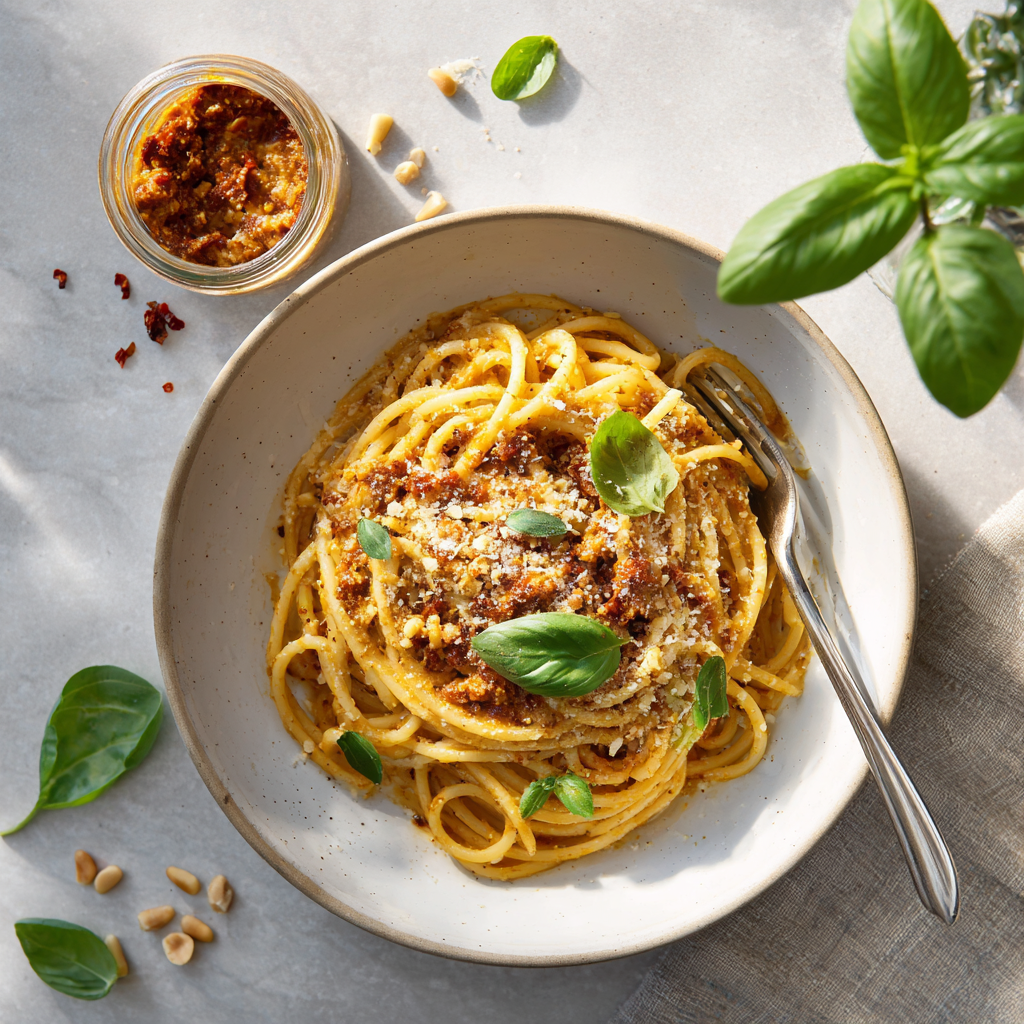
Pasta con Pesto di Pomodori Secchi
Ingredients
Method
- Blend or pound the sun-dried tomatoes, their oil, almonds, pine nuts, garlic, and basil. Stop when the mix looks slightly coarse—not too smooth. Stir in the grated cheese and taste. Add salt only if needed.
- Bring a large pot of water to a rolling boil. Salt it generously. Add the pasta and cook until about 2 minutes before the time on the package. Save about 150 ml of the cooking water before draining.
- Put the pesto back into the warm pot. Add a small splash of reserved cooking water and stir. Add the undercooked pasta, toss well, then finish cooking together over low heat for 2 minutes. Add water a spoon at a time until the sauce becomes glossy and clings to the noodles.
- Turn off the heat. Stir in more cheese if you like and taste for salt. Add a grind of black pepper and a few torn basil leaves. Serve immediately while glossy and warm.
Notes
- Keep the pesto slightly chunky—don’t blend it too smooth or it’ll lose its character.
- If your tomatoes are packed dry, soak them in hot water for 10–15 minutes first, then use about 40 ml olive oil to blend.
- For a lighter version, use less oil and loosen the sauce with more pasta water.
- Store leftover pesto in a jar, press plastic wrap onto the surface, and pour a thin layer of oil on top—it’ll keep up to 4 days in the fridge.