
Jump to Recipe
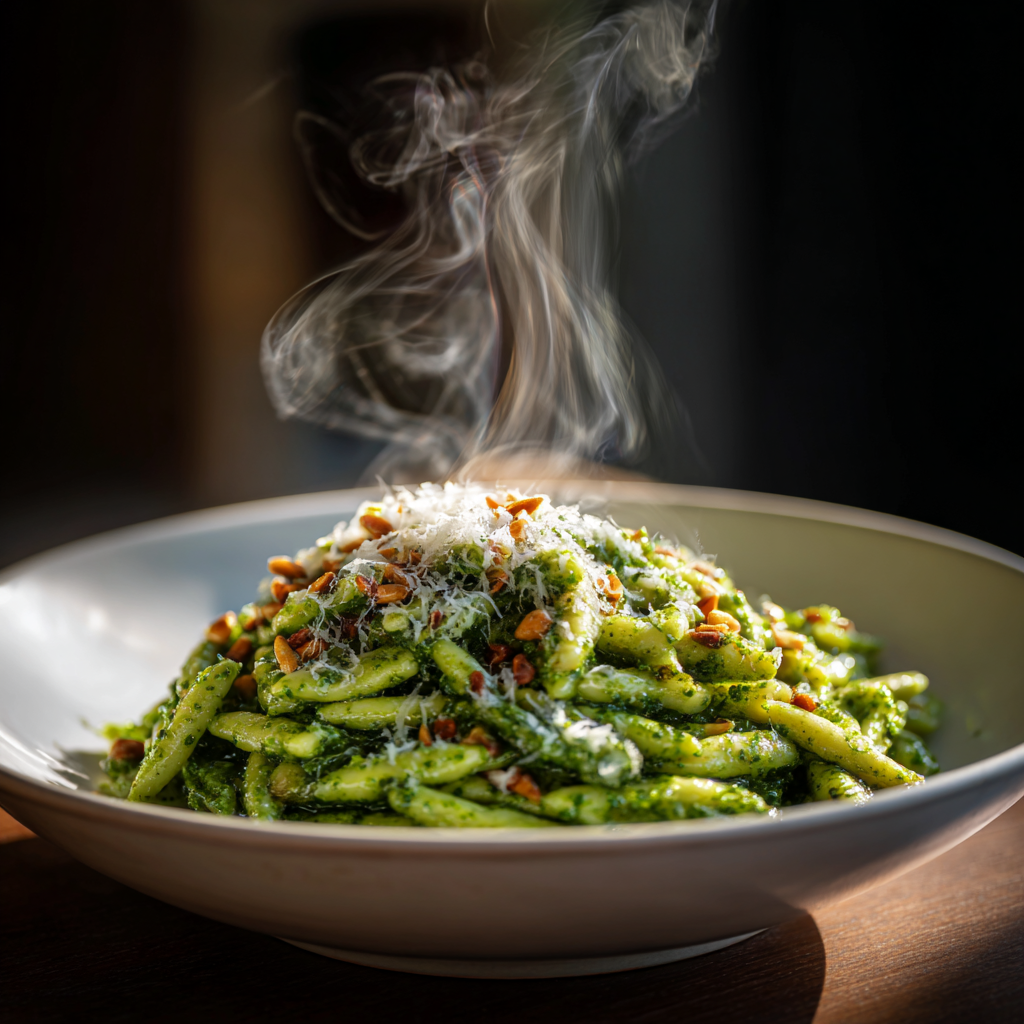
I first tasted this trofie al pesto genovese recipe on a sun-warmed Ligurian terrace, where the basil scent mixed with sea air and every bite felt like home. I cook it the same way now: fresh basil, good cheese, pine nuts, and a splash of starchy pasta water to pull the sauce into a glossy, clinging coating.
My aim is simple. I show what matters most—fresh ingredients, brisk technique, and one small cup of reserved water that transforms the sauce. Use extra virgin olive oil for shine, aim for al dente pasta, and count on about a few minutes to finish the toss. Whether you choose jarred pesto in a pinch or a ladle of homemade trofie pesto, these steps keep flavor vivid and dinner easy.
Key Takeaways
- Reserve about 1 cup of pasta water; you’ll likely use around 1/2 cup to emulsify the sauce.
- Fresh basil and extra virgin olive oil make the biggest flavor difference.
- Keep trofie pasta al dente so the sauce clings without getting soggy.
- Use quality Parmigiano and Pecorino for balance with pine nuts.
- Jarred pesto works—measure 3/4 to 1 cup if needed to save time.
A little Ligurian magic at home: what makes this dish special
What makes this plate sing is simple: top ingredients and a few precise steps done well. I rely on fresh basil, garlic, pine nuts, Parmigiano Reggiano and Pecorino for the true Ligurian flavor. Good extra virgin olive oil finishes the sauce without hiding the herbs.
Technique matters as much as what goes in the bowl. Starchy pasta water—about a cup—turns loose paste into a glossy, clinging coating in minutes. Salt your boiling water generously so the pasta tastes right from the inside out.
- I use fragrant fresh basil and garlic for bright, alive flavor, then layer nutty and tangy cheese for depth.
- A restrained hand with extra virgin oil keeps richness balanced so the herbs lead.
- The pasta’s twisted shape traps sauce, giving every forkful herby, cheesy taste.
- Warm the mixing bowl and toast pine nuts lightly if you like more aroma without losing freshness.
Handle basil leaves gently and finish quickly. Those small steps protect color, keep the sauce silky, and make the dish feel like Liguria on your plate.
Ingredients you’ll need and smart swaps for weeknights
A short shopping list and a few swaps make this dish easy on a weeknight without losing any bright, herby flavor. I keep staples ready so I can finish the pasta in minutes and still taste fresh basil at the center of the plate.
Basil pesto essentials
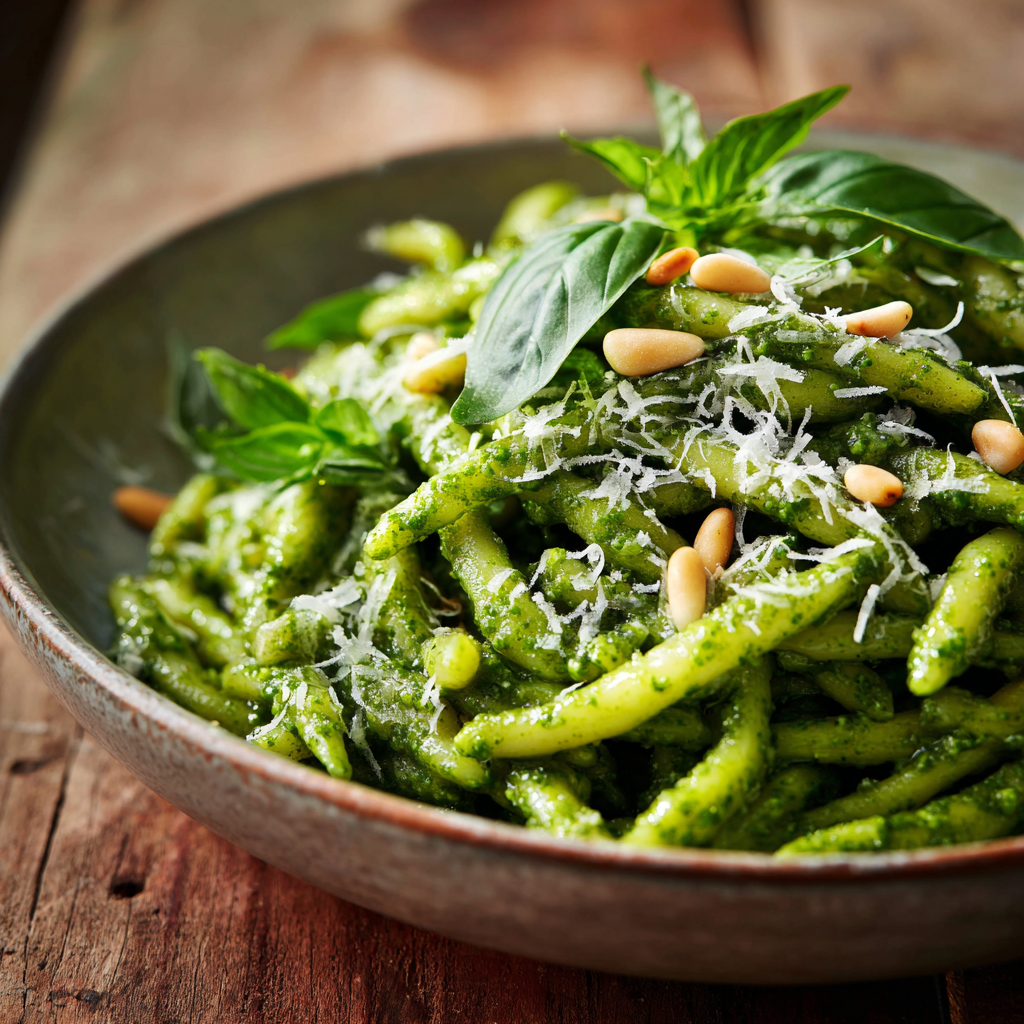
For the classic sauce, gather fresh basil leaves, a small clove of garlic, pine nuts, freshly grated Parmigiano Reggiano and Pecorino Romano, and a smooth extra virgin olive oil. Toasting the pine nuts lightly brings out more nuttiness. Use a cup measure to keep quantities steady when you’re mixing.
pasta options and semolina dough
Handmade trofie pasta starts with semolina (durum) flour, lukewarm water, and a pinch salt. The coarse dough grips sauce better. No time to roll? Buy quality trofie pasta or choose short shapes—fusilli, gemelli, or penne—so the sauce clings to every twist and bite.
Helpful substitutions
- Swap nuts: walnuts for earthiness, almonds for a touch of sweetness, or cashews for creaminess. A mix of walnuts and almonds mimics pine nuts affordably.
- Cheese swaps: use half Parmigiano and half Pecorino, or Grana Padano for a milder finish.
- Oil and flavor: if your extra virgin olive is peppery, blend with a neutral virgin olive oil to keep the sauce balanced.
- Weeknight shortcut: 3/4 to 1 cup good jarred pesto, freshened with a few chopped basil leaves and a squeeze of lemon, saves time without losing character.
trofie al pesto genovese recipe: step-by-step from dough to silky sauce
Bring a large pot of water to a rolling boil and salt it generously. This first step sets texture and flavor for the pasta that follows.
Cook the pasta and save the liquid gold
Add the pasta to the boiling water and cook until just al dente—fresh hand-rolled pasta needs about 3–4 minutes. Before you drain, ladle out and reserve a full cup of pot water; you’ll likely use around half a cup to finish the sauce.
Make vibrant basil pesto (mortar or processor)
For a mortar: crush garlic, then basil, then pine nuts and cheese; drizzle in oil until glossy. For a processor: pulse basil, pine nuts, garlic, Parmigiano and Pecorino in short bursts, then add oil by tablespoons until smooth. Work quickly to avoid heating the herbs.
Emulsify with starchy boiling water
Transfer the sauce to a warm bowl and whisk in 1/4 to 1/2 cup hot boiling water. The starch in the water binds oil and solids into a creamy pesto sauce that clings to each piece of pasta.
Toss, finish, and serve
Toss the hot pasta with the emulsified sauce immediately so heat and starch activate the emulsion. Taste and loosen with another splash of cup water if needed. Finish with extra grated cheese and a drizzle of extra virgin olive oil, then serve at once.
- Large pot, boiling water, pinch salt.
- Reserve 1 cup pot water; use ~1/2 cup to emulsify.
- Whisk pesto with hot water in a bowl, then toss with hot pasta for minutes until glossy.
| Method | Speed (minutes) | Best for |
|---|---|---|
| Mortar & pestle | 10–15 | Bright, textured sauce with traditional mouthfeel |
| Food processor | 5–8 | Quick, smooth pesto with controlled texture |
| Jarred base, freshened | 2–4 | Weeknight shortcut with added fresh basil and lemon |
Pro tips for restaurant-level results
Mastering a couple of timing and texture details makes home pasta taste like dinner out. Below are focused, hands-on tips I use to keep basil bright and sauce glossy.
Salt your water and taste for al dente timing
Salt the boiling pot until the water tastes pleasantly seasoned. This is the only chance to season the pasta from the inside.
Cook by taste, not the clock. I start checking a couple of minutes early and pull when the center still has a gentle bite. A firm core gives the best texture after tossing with sauce.
Processor vs. mortar: avoid heat and oxidation
In a food processor, pulse in short bursts and scrape the bowl often. Too much friction creates heat and dulls the basil color.
For the brightest basil flavor, use a mortar and pestle. Crushing releases oils without excess heat and yields a sweeter, greener profile.
Shaping by hand: semolina dough that holds more sauce
- Keep the dough soft and elastic; semolina’s coarse texture helps the sauce adhere.
- Hand-twisted shapes create channels that trap more sauce and nuts in each bite.
- Warm the serving bowl and toss fast—one minute or less—to keep the sauce aromatic and prevent separation.
| Issue | Quick fix | Why it works |
|---|---|---|
| Dull color | Pulse less / mortar | Reduces heat and oxidation |
| Greasy sauce | Loosen with a spoon of starchy water | Balances fat without adding more oil |
| Thin body | Add a tablespoon of nuts last | Restores texture without extra oil |
These small steps—proper salt, careful pulses, semolina dough, and quick tossing—save time and lift the dish. Use them and your plate will taste balanced, bright, and lifted like it came from a neighborhood trattoria.
Variations, add-ins, and pairings that still taste authentically Ligurian
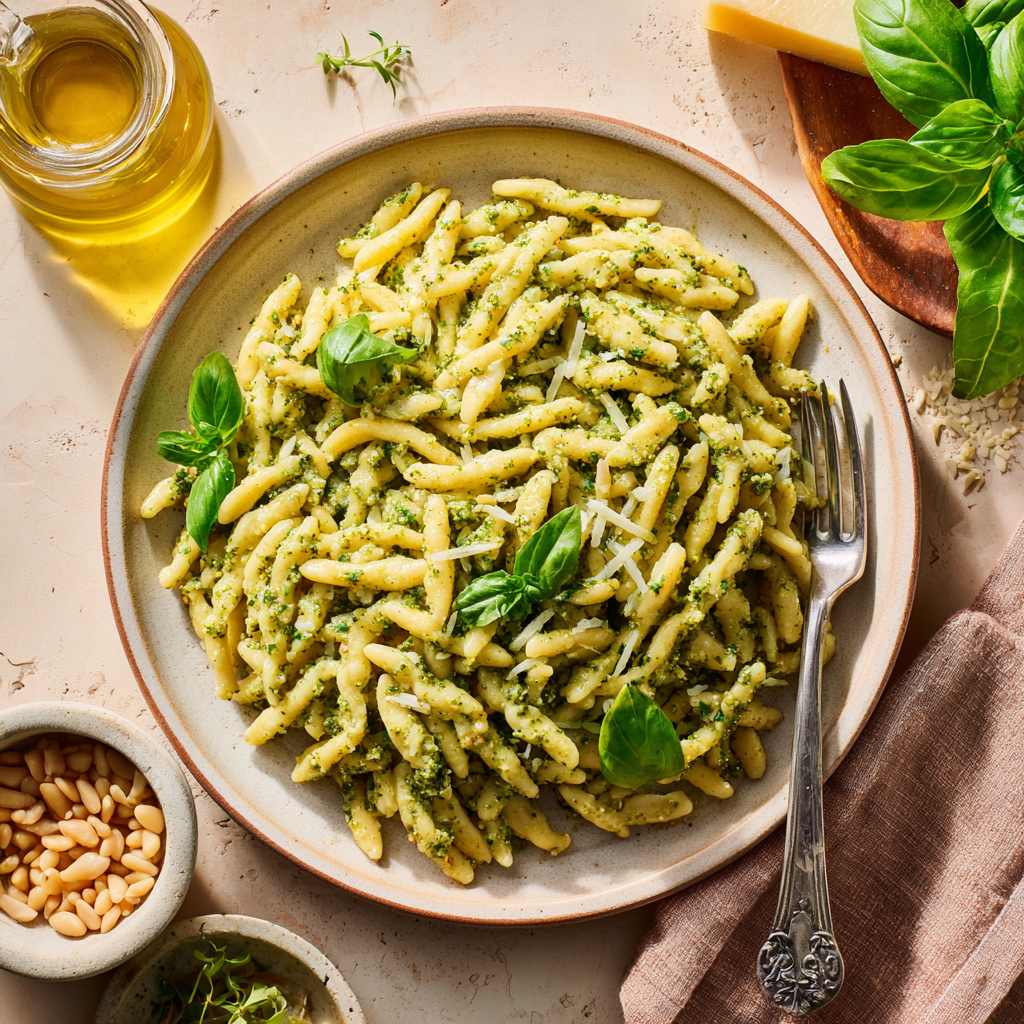
I like to stretch this dish with seasonal add-ins that keep basil leaves front and center. Small changes boost texture and make the plate sing without losing that Ligurian spirit.
Classic add-ins: tender potatoes and blanched green beans
For the true Genoese riff, blanch cubed potatoes and chopped green beans in the same pot you use for pasta. Shock them in cold water, then fold into the basil pesto and pasta so vegetables add sweetness and body.
Protein boosts: gentle, balanced additions
Add grilled chicken, quick-seared shrimp, or pan-crisped tofu for protein. Season lightly so the basil and extra virgin olive flavor stay dominant.
Wine, cocktails, and serving temperature
A Ligurian Vermentino pairs beautifully; Pinot Grigio or Sauvignon Blanc work too. For aperitivo vibes try a bright spritz—Aperol or Limoncello adds citrus lift.
- Toss a splash of cup water in the bowl before combining when add-ins absorb moisture.
- This dish travels well as a pasta salad; add a touch more olive oil to keep sheen as it cools.
- Finish with a sprinkle of pine nuts and a few fresh basil leaves just before serving.
Want a quick refresher or the full method? See my linked guide for the complete technique and tips: classic trofie pesto technique.
Storage, reheating, and freezing without losing that fresh basil aroma
A few simple steps after plating protect that fresh basil scent for days. Cool leftovers quickly, then seal them in an airtight bowl or container. Refrigerate for 3–4 days; the fresher it goes in, the brighter the leaves stay.
Short-term storage and gentle skillet reheat
For reheating, I warm a nonstick skillet on low. Add a spoon of water or a touch of oil and heat for a few minutes—no boiling, no scorching. If the pesto sauce tightened, whisk in a splash of cup water off heat to restore sheen.
Freezing notes: fresh pesto cubes; raw trofie frozen and cooked from frozen
Freeze fresh pesto in ice-cube trays for up to three months, or cover a jar with a thin layer of olive oil to slow oxidation. Raw trofie freeze well: dust with semolina, freeze on a tray, then bag. Cook straight from frozen in a large pot of boiling water; expect slightly longer cooking time and taste for doneness.
- Avoid microwaving on high; it dulls aroma and can separate fat.
- Salt lightly after reheating—seasoning concentrates in storage.
- Fold in a few fresh basil leaves off heat to revive scent before serving.
| Item | Storage | Best use |
|---|---|---|
| Fresh pesto | Freeze cubes / 3 months | Single-serve sauces |
| Leftover pasta | Fridge 3–4 days | Skillet reheat with water or oil |
| Raw trofie | Freeze on tray, then bag | Cook from frozen in boiling water |
Conclusion
Finish with a warm bowl, a quick toss, and a small ladle of starchy water to bring the sauce alive. This single step turns ordinary pasta into something glossy and clingy in minutes.
I rely on fresh basil, a whisper of garlic, and a balanced mix of Parmigiano and Pecorino so the cheese supports, never overwhelms. A final thread of extra virgin olive oil and a scatter of pine nuts add scent and texture.
If time is short, refresh a quality jarred option with basil leaves and lemon. Taste for salt, feel for al dente, and trust your senses as you finish each step.
Now it’s your turn. Make a bowl, share the first bite, and pass this little recipe on to someone you love.

Trofie al Pesto Genovese
Ingredients
Method
- Bring a large pot of salted water to a rolling boil. Add trofie pasta and cook until al dente (3–4 minutes for fresh pasta, 10–12 for dried). Before draining, scoop out 1 cup of pasta water and set it aside.
- Mortar & Pestle (Traditional):
- Crush the garlic and a pinch of salt first, then add basil leaves and grind until a green paste forms. Add pine nuts, cheeses, and slowly drizzle in olive oil while mixing until glossy.
- Food Processor (Quick Option):
- Pulse basil, garlic, nuts, and cheeses together. Add olive oil slowly until smooth. Avoid overheating the basil.
- In a warm bowl, whisk 1/4 to 1/2 cup of the reserved hot pasta water into the pesto until it turns creamy and silky.
- Toss the hot drained pasta immediately with the pesto mixture. Stir gently for about a minute until the sauce clings to each piece. Add more pasta water if needed for a glossy finish.
- Plate immediately. Drizzle with a bit of extra virgin olive oil, sprinkle with extra cheese and pine nuts, and top with a few fresh basil leaves.
Notes
- Use fresh basil and extra virgin olive oil for the best aroma.
- Always reserve pasta water — it’s key to creating a creamy, clinging sauce.
- If short on time, use jarred pesto (3/4 to 1 cup) and freshen it up with chopped basil and a squeeze of lemon juice.
- Avoid overheating pesto; heat dulls its bright green color.
- For an authentic Ligurian touch, add blanched potatoes and green beans to the pasta.