
Jump to Recipe
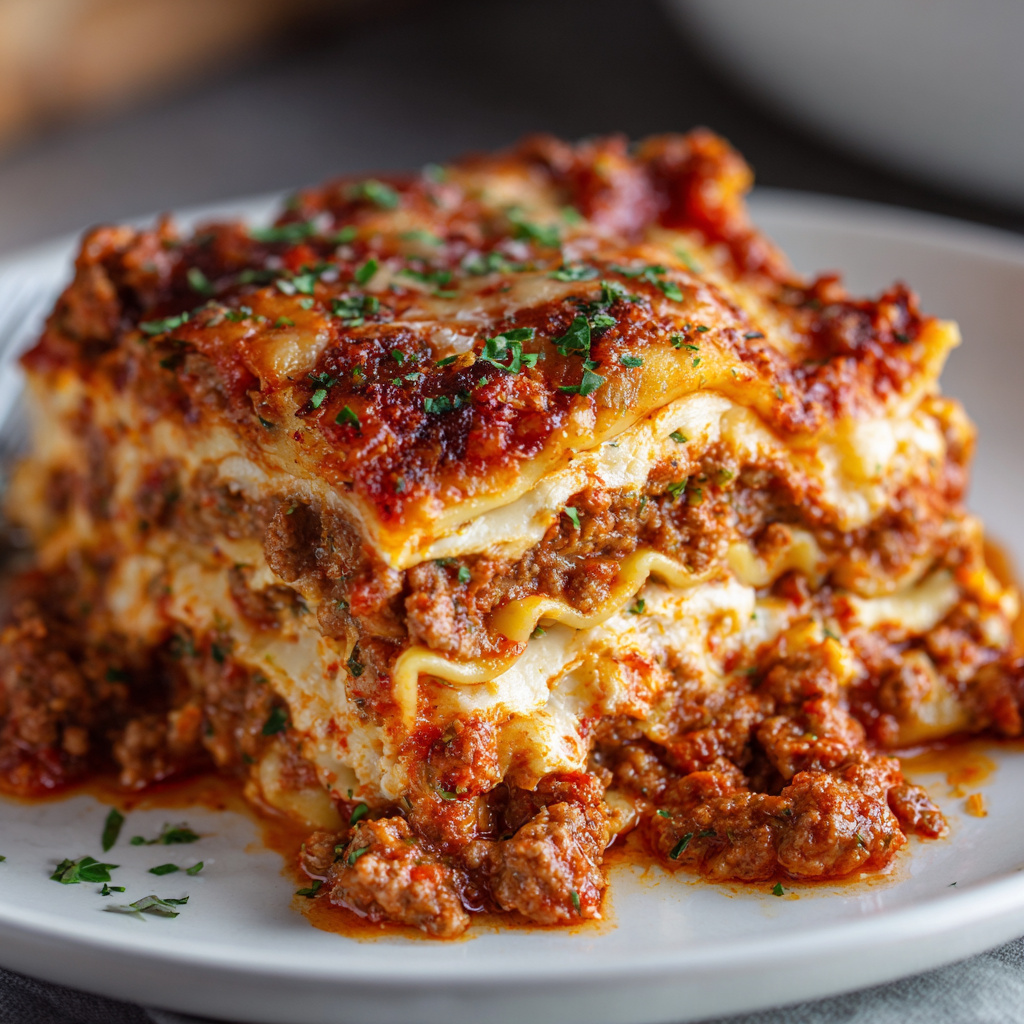
Authentic Italian gluten-free lasagna brings a promise: a rich tomato aroma from a slow pot and neat layers, not mushy. Growing up, lasagna taught me that it’s love you can slice. This gluten-free recipe keeps that love alive, safe for those with celiac. It features classic meat sauce, soft no-boil gluten-free sheets, real Parmigiano Reggiano, and stretchy fresh mozzarella.
The sauce starts with Tuttorosso crushed tomatoes, a bit of tomato paste, and sometimes smoky Muir Glen fire-roasted tomatoes. Mixing ground beef and Italian sausage, you can choose mild or hot. Add in onion, garlic, basil, and a hint of fennel seed. Instead of béchamel, we use whole-milk ricotta mixed with egg, parsley, and a pinch of salt for a gluten-free silkiness.
I use Barilla Gluten Free Oven-Ready Lasagne or brown rice sheets from Jovial or Tinkyada. They’re perfect for no-boil lasagna that keeps its shape after baking. Fresh mozzarella and real grated Parmigiano Reggiano ensure each slice melts smoothly and tastes authentic. Important: always check the labels on sausages, spices like McCormick, and pre-shredded cheese for a truly safe meal.
We bake at 375°F, first covered then uncovered, until it’s golden with bubbling center. A short wait afterwards helps the layers set, making cutting easy. It’s the comfort of Sunday, fit for holidays, and practical for weeknights, pleasing even those who usually eat gluten.
Key Takeaways
- Slow-simmered classic meat sauce lasagna flavor without béchamel, using ricotta, egg, and parsley.
- No-boil gluten-free lasagna sheets from Barilla, Jovial, or Tinkyada deliver sturdy layers.
- Use fresh mozzarella and real Parmigiano Reggiano for clean melt and authentic taste.
- Choose verified products for a truly celiac-safe lasagna; always read labels.
- Bake at 375°F, cover then uncover, and rest 10–20 minutes for neat slices.
- Brands I trust: Tuttorosso, Muir Glen, Rao’s or Thrive Market Sicilian Gravy (if jarred sauce).
What Makes This Lasagna Authentically Italian and Truly Gluten-Free
I started by trusting my pot. When making Italian lasagna gluten-free, I use real ingredients and take my time. This way, the taste reminds you of family gatherings on Sundays. The lasagna turns out slow-cooked and full of tradition, yet it’s safe for everyone to enjoy.
Time-tested Italian technique: slow-simmered meat sauce, no béchamel needed
I cook ground beef and Italian sausage with onions and garlic. Then, I add crushed tomatoes, tomato paste, and fire-roasted tomatoes from Muir Glen for a light smoky taste. I also put in dried basil, Italian seasoning, salt, pepper, parsley, and a touch of fennel seed to enrich the sauce.
Next, I simmer it slowly for at least 45 minutes, sometimes over an hour, until the ragù is glossy and thick. This process helps me create a ricotta-based lasagna without béchamel sauce. It keeps the texture soft and the taste sharp.
Three-cheese harmony: ricotta, fresh mozzarella, and real Parmigiano Reggiano
Whole-milk ricotta adds substance, fresh mozzarella becomes soft, and Parmigiano Reggiano gives a nutty depth. I grate the cheese myself for a fresh taste and good melt. Stores like Costco and BJ’s often offer good prices on authentic cheese. Together, these cheeses make the lasagna richly satisfying.
Certified gluten-free choices: reading labels for sauces, spices, and meats
Being true means being careful. I pick ingredients that are certified gluten-free and read all labels carefully. This includes sausages, ground beef, tomato products, and spices. Although McCormick is transparent, I check every item to ensure our lasagna stays gluten-free from start to finish.
Texture matters: why oven-ready noodles and proper resting create clean slices
Using no-boil GF lasagna noodles changes everything. Brands like Barilla and Jovial brown rice sheets cook perfectly in the lasagna. They soak up the sauce and layer smoothly, making it easy to cut the lasagna.
After it comes out of the oven, I let it sit for 10 to 20 minutes. This step helps the cheese firm up and the layers to settle. You then get neat squares that are saucy yet firm, just like a traditional Italian lasagna should be, made with gluten-free ingredients that hold together beautifully.
Ingredients That Deliver Restaurant-Level Flavor
I listen to my Nonna’s advice when shopping, choosing the best gluten-free lasagna ingredients. Each ingredient, from the rich sauce and tender noodles to the whole-milk ricotta filling, is key for creating silky layers. I focus on simplicity and quality, without cutting corners.
The sauce foundation: crushed tomatoes, tomato paste, and fire-roasted tomatoes
I use a 28-ounce can of crushed tomatoes—Tuttorosso is my go-to—plus a bit of tomato paste for richness. To add a slight smokiness and sweetness, I use Muir Glen’s diced fire-roasted tomatoes. A little water helps the noodles absorb moisture, making the lasagna stay moist but not watery.
My seasonings include dried basil, Italian seasoning, salt, pepper, and parsley. Adding a pinch of fennel seed enhances the flavors. I might skip sugar if the tomatoes taste just right.
Beef and Italian sausage combo for depth (mild or hot, your call)
For the meat sauce, I brown 1 pound of sweet Italian sausage (turkey or pork) and about 3/4 to 1 pound of 85/15 ground beef. Hot sausage brings some heat, while turkey lightens the dish. Adding finely minced mushrooms brings a savory taste without overwhelming.
Ricotta mixture made right: whole-milk ricotta, egg, parsley, salt
The whole-milk ricotta filling is crucial. I whisk an egg into the ricotta along with fresh parsley and some salt until it’s light and airy. A bit of grated Parmigiano Reggiano adds flavor, either mixed in or sprinkled on top. I chill the mix for easy spreading.
The cheeses to buy and why shredding fresh melts better
I use fresh mozzarella from Costco, hand-shredded for smooth melting. Parmigiano Reggiano, grated fresh, adds a nutty flavor. Pre-shredded cheese often contains additives that affect its taste and melting properties. For an extra zesty top, I sprinkle on more Parmigiano before the final bake.
Best gluten-free lasagna noodles: Barilla oven-ready, Jovial, or Tinkyada
I prefer Barilla oven-ready GF lasagna for its ease and clean slicing. Jovial’s brown rice lasagna offers a rustic chew, while Tinkyada stands up to heavy sauce layers. If the noodles aren’t oven-ready, I parboil them briefly, rinse, and then assemble with confidence.
Choosing quality ingredients, like great tomatoes and a balanced ragù, and reliable noodles, elevates homemade lasagna to restaurant comfort, layer by fragrant layer.
gluten free lasagna italian recipe: Step-by-Step Method for Perfect Layers
I learned to make this dish from my nonna. She taught me to cook with patience and a steady pace. This gluten-free lasagna method is great for busy nights but still honors Italian traditions. If you’re curious about making gluten-free lasagna the right way, here’s how I do it at home.
Build the meat sauce: brown, season, and simmer for concentrated flavor
First, I get a Dutch oven hot and brown Italian sausage and ground beef with onion and garlic. The browning brings out great flavor. Next, I add crushed tomatoes, tomato paste, and tomato sauce or fire-roasted tomatoes. I also pour in 1/2 cup water. This helps the noodles absorb moisture. To season, I use dried basil, Italian seasoning, salt, black pepper, parsley, and a pinch of fennel seed.
I let the sauce simmer covered and stir occasionally. For a weeknight meal, 45 minutes works. If I have more time, like on a Sunday, I’ll let it go for up to 1½ hours. This sauce is the foundation of the lasagna. It ensures every layer is delicious and well-seasoned.
Mix the ricotta filling: light, creamy, and structured with an egg
In a bowl, I combine whole-milk ricotta with one egg, chopped parsley, and a bit of salt. I whisk until it’s smooth. Letting it chill for a bit makes the layers firm up. This step adds lightness and creaminess to the lasagna. It helps to make the slices neat and appealing.
Layer like a pro: sauce-first, noodles, ricotta, mozzarella, Parmigiano, repeat
I start building the layers in a 3-inch deep pan measuring 9×13 inches. I add a generous amount of sauce first. Then comes a single layer of gluten-free noodles. Half of the ricotta mixture is spread over the noodles. Next, I add fresh mozzarella and a generous amount of Parmigiano Reggiano. The process is then repeated.
For the top, I ensure all noodles are covered with sauce to keep them from drying. Then, I top it with the remaining cheeses. If I’m using regular noodles, I boil them for 4 minutes first. This method keeps the lasagna neat and the texture just right.
Bake at 375°F: covered then uncovered for golden, bubbly edges
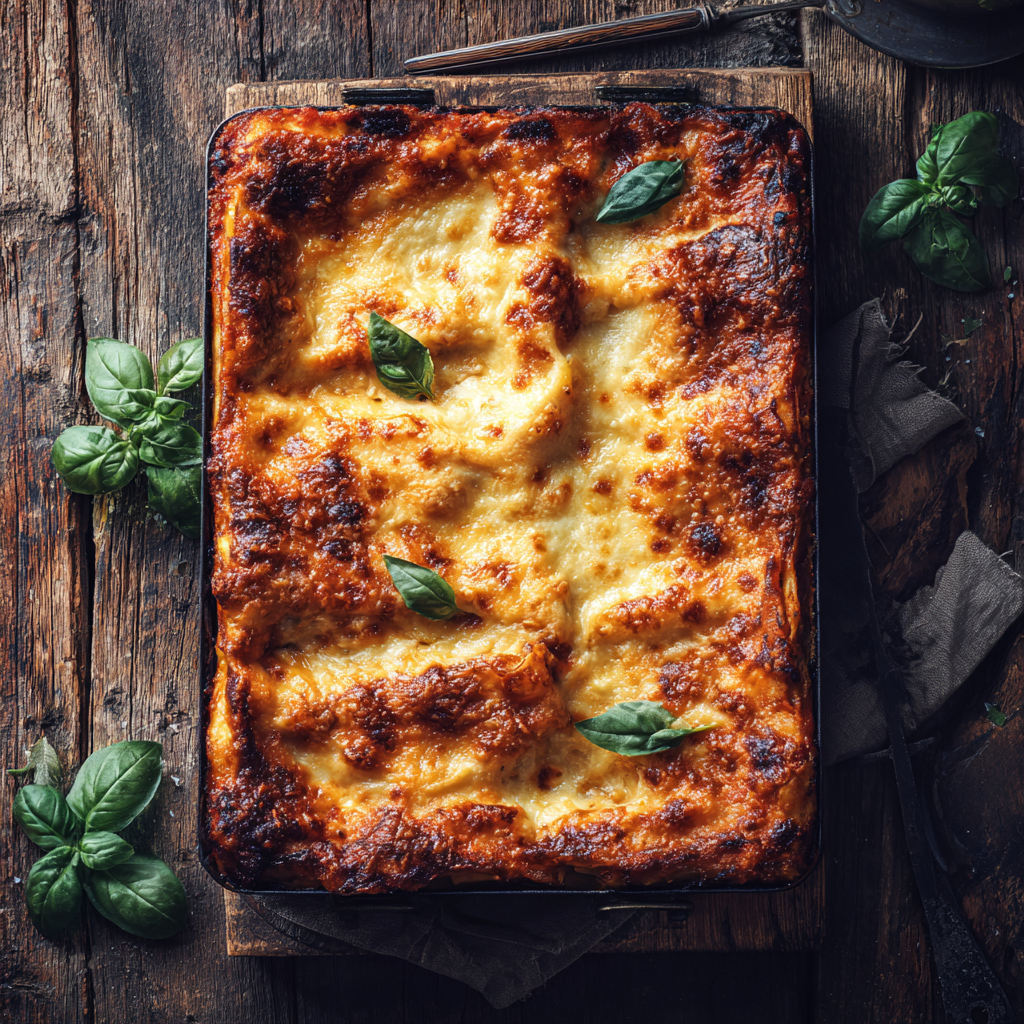
I cover the pan with foil, making sure it doesn’t touch the cheese. Then, I bake it at 375°F for 25 minutes. After that, I uncover it and bake for another 25 minutes. The edges will bubble and turn golden. If the lasagna was refrigerated before baking, I add extra time. I place a sheet pan below to catch any drips. This baking method is perfect for gluten-free lasagna. It keeps it moist and delicious.
Rest before slicing: 10–20 minutes to set the layers
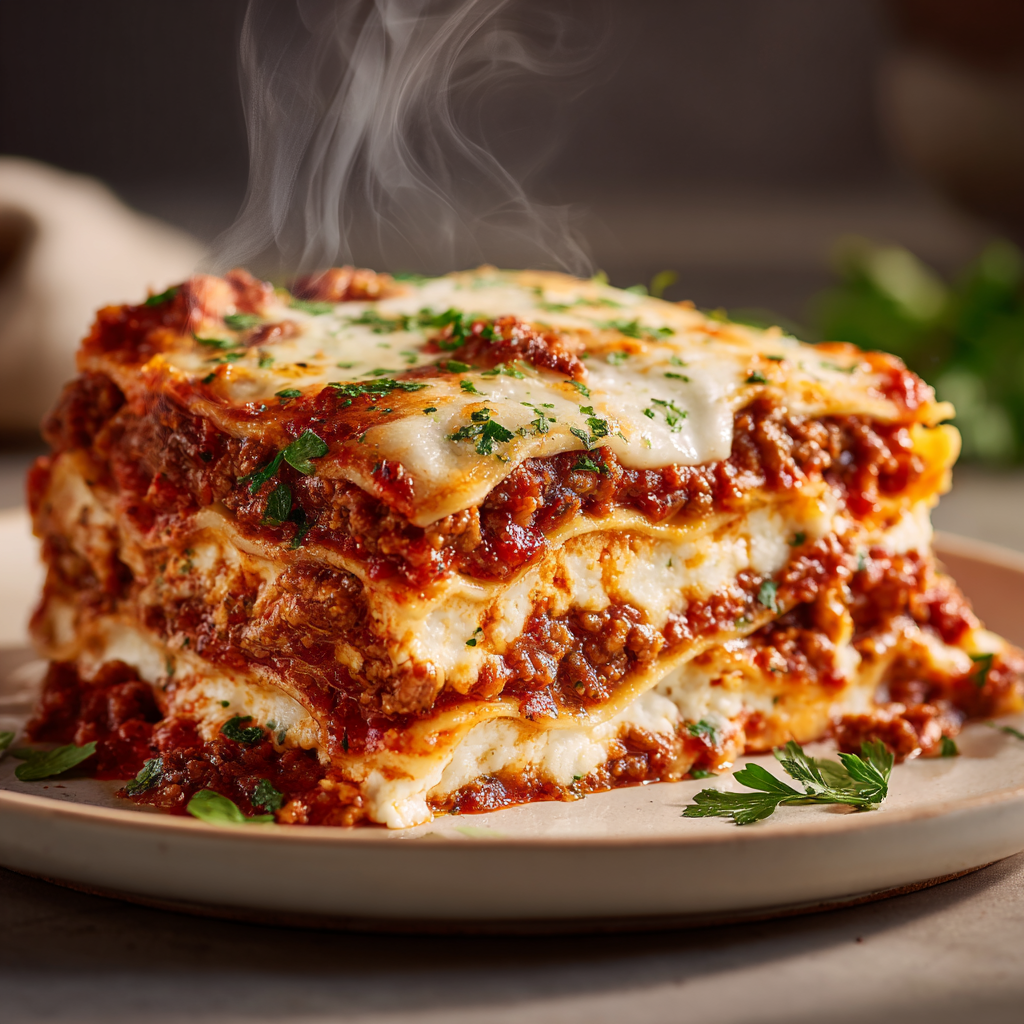
After baking, I let the lasagna cool on a rack. I wait at least 10 minutes, but 15 to 20 minutes is better. For thicker lasagna, I wait up to 30 minutes. This resting period lets everything settle. That way, each piece comes out looking great and is easy to serve.
| Step | Key Actions | Why It Matters | Timing/Notes |
|---|---|---|---|
| Sauce | Brown sausage and beef; add tomatoes, paste, water; season well | Deep caramelization builds concentrated flavor | Simmer 45–90 minutes, stir occasionally |
| Ricotta | Whisk ricotta, egg, parsley, salt; chill briefly | Light yet structured filling for tidy layers | 5 minutes prep, 10 minutes chill |
| Layering | Sauce-first, then noodles, ricotta, mozzarella, Parmigiano; repeat | Even moisture and classic layered Italian lasagna technique | Cover exposed noodles with sauce to prevent dryness |
| Bake | Foil-tent, bake lasagna at 375; uncover to finish | Tender interior, golden edges, steady melt | 25 minutes covered + 25 minutes uncovered |
| Rest | Cool before slicing on a rack | Clean slices and set structure | 10–20 minutes; up to 30 for taller layers |
From the start of cooking to the final rest, this gluten-free lasagna method is reliable. Following these steps and keeping the heat consistent results in a well-balanced and beautifully layered dish every time.
Pro Tips, Make-Ahead, and Serving for U.S. Home Cooks
I learned the hard way that a deep dish matters. Use a baking dish at least 3 inches tall to avoid messes. And make sure the foil doesn’t stick to the cheese. If spills worry you, put a sheet pan under the baking dish. Always spread a thick layer of sauce at the bottom. End with sauce on top too, so the noodles are soft. Mozzarella should be shredded from a block, or slice it if it’s fresh; if too soft, a quick chill in the freezer for 10 minutes helps. Always grate Parmigiano Reggiano just before adding it for that fresh aroma and perfect melt. For the top GF lasagna, Barilla Gluten Free Oven-Ready Lasagne is my go-to for neat slices. Jovial and Tinkyada’s brown rice sheets are also great choices. Some prefer to quickly boil GF sheets for 4-minutes. This makes them more flexible yet firm.
Reading labels is key. Pick sausage and beef without fillers, and always check tomato products and spices—policies might change. McCormick’s single herbs are mostly safe, but double-checking helps. To make gluten-free lasagna ahead of time, cook the sauce the day before for a richer taste, and prepare the ricotta early too. You can even build the lasagna and keep it in the fridge for 2 days; just bake it longer if it’s cold. For a twist, see how our method compares to classic lasagna with béchamel at this link. Our approach is lighter but still rich.
To freeze gluten-free lasagna, first cover with foil, then with plastic wrap, and freeze for up to 2 months. Let it thaw in the fridge overnight and bake covered, allowing extra time if cold in the middle. Reheating pasta is easy. Just put it in a 350°F oven until hot or microwave with a bit of sauce to keep it moist. Leftovers, especially with Barilla’s oven-ready sheets, stay in great shape.
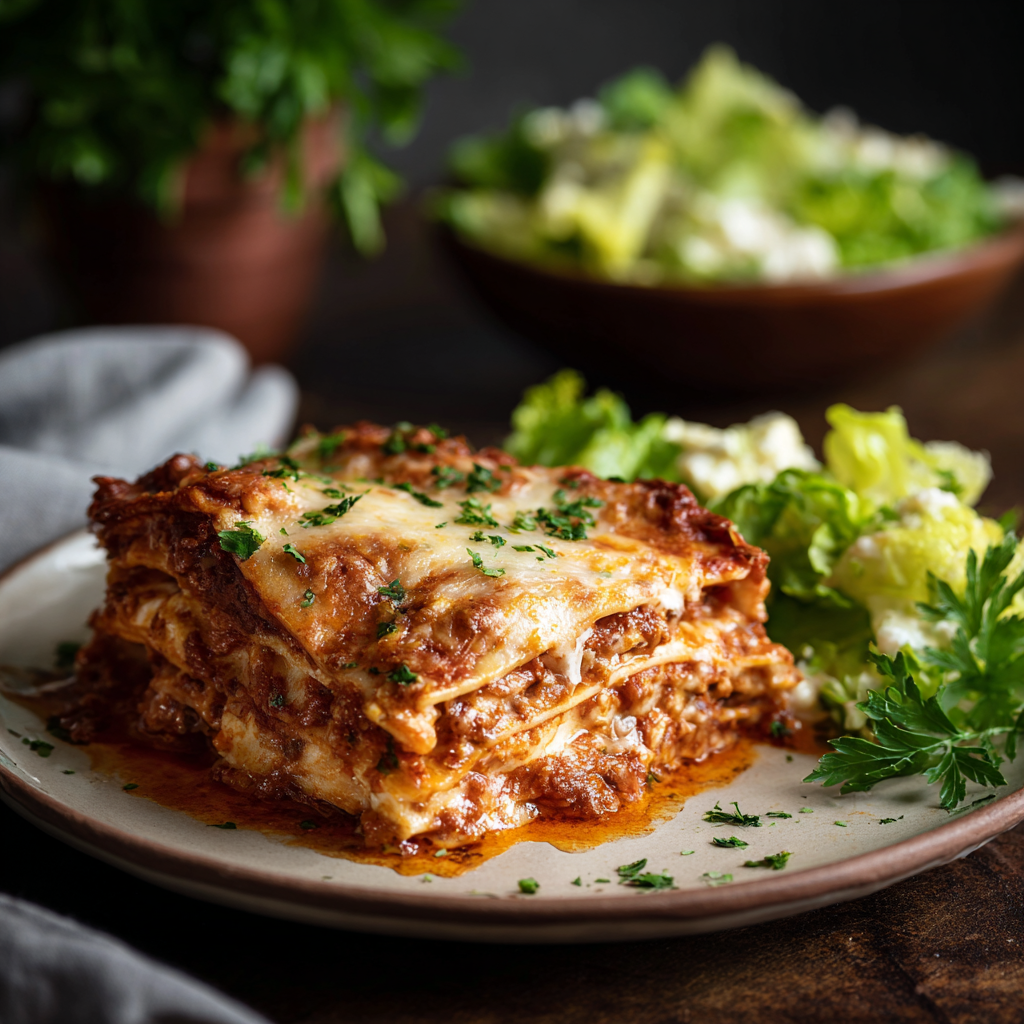
For an Italian dinner, serve this lasagna with a crisp Caesar salad, gluten-free garlic breadsticks, and some fresh basil or parsley. Warm extra sauce is great for those who like it. This dish is perfect for any occasion. It’s comforting, meets dietary needs, and has that deep Italian soul.
Authentic Italian Gluten-Free Lasagna
Ingredients
Method
- Heat a Dutch oven over medium heat. Brown the sausage and ground beef until well-colored.
- Add onion and garlic; cook until softened.
- Stir in crushed tomatoes, fire-roasted tomatoes, tomato paste, and ½ cup water.
- Season with dried basil, Italian seasoning, salt, pepper, parsley, and a pinch of fennel seed.
- Simmer covered for at least 45 minutes, stirring occasionally. If you have time, let it go 1–1½ hours until thick and glossy.
- In a bowl, whisk ricotta, egg, parsley, and salt until smooth.
- Add a little Parmigiano if you like.
- Chill for 10 minutes so it spreads nicely.
- Shred fresh mozzarella (chill it in the freezer for 10 minutes if too soft).
- Grate Parmigiano Reggiano fresh—this makes a big difference.
- Use a 9×13-inch baking dish at least 3 inches deep.
- Spread a generous layer of meat sauce on the bottom.
- Add a single layer of gluten-free noodles.
- Spread half of the ricotta mixture.
- Add mozzarella.
- Sprinkle Parmigiano.
- Repeat the whole process again.
- Make sure the top noodles are completely covered with sauce so they don’t dry out.
- Finish with mozzarella and Parmigiano.
- Cover with foil, tenting it so it doesn’t touch the cheese.
- Bake at 375°F for 25 minutes covered.
- Remove foil and bake another 20–25 minutes until the top is golden and bubbling.
- If the lasagna was refrigerated before baking, add extra time.
- Let the lasagna rest 10–20 minutes (up to 30 for taller layers).
- This is key for clean slices and stable layers.
Notes
- Always check meat, spices, tomato products, and cheese labels to keep the dish celiac-safe. Ingredients can change.
- If using Jovial or Tinkyada noodles, a quick 4-minute par-boil makes layering easier.
- A deep dish prevents spillovers; placing a sheet pan underneath helps too.
- Let the sauce cook longer when you can—slow simmering naturally reduces acidity, so sugar isn’t needed.
- Leftovers reheat well and stay firm with Barilla GF oven-ready sheets.