
Jump to Recipe
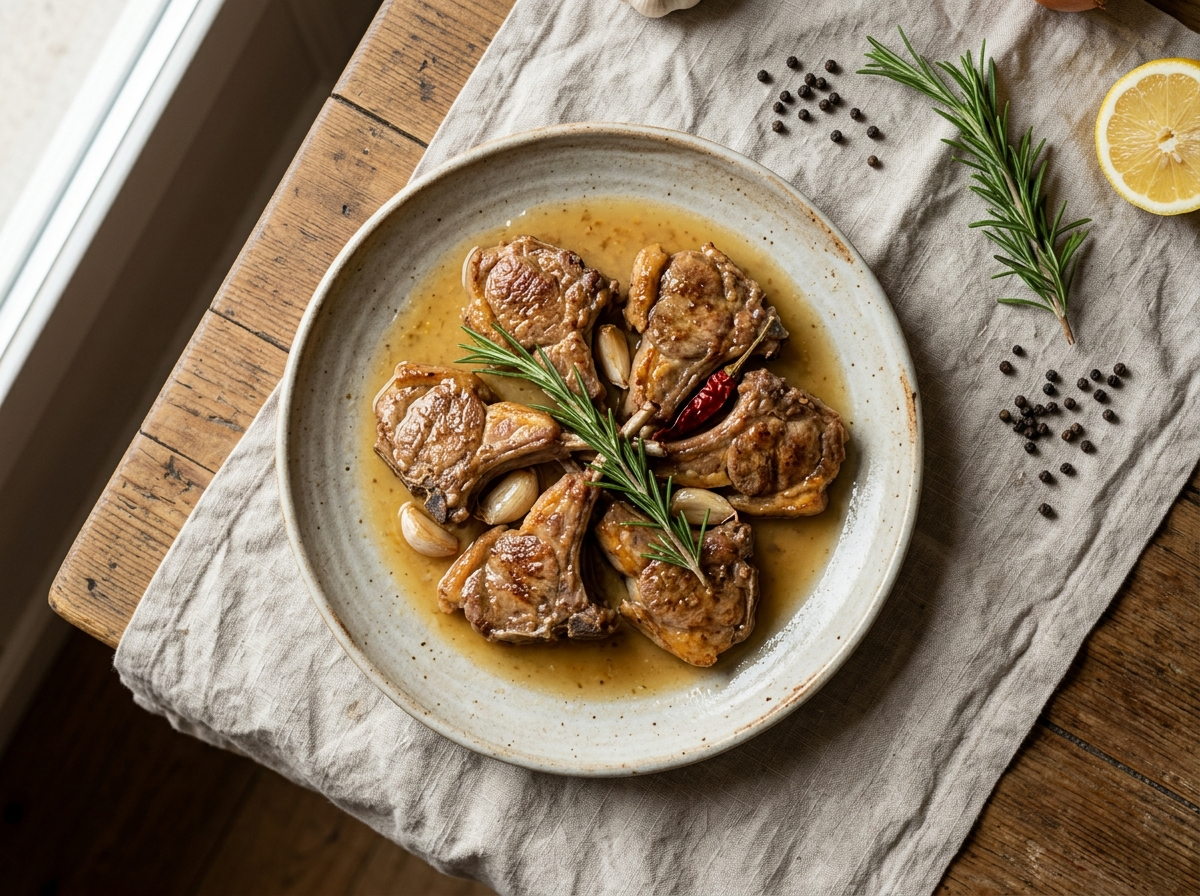
Abbacchio alla cacciatora is one of those Roman dishes that looks deceptively plain and tastes completely serious. You brown pieces of milk-fed lamb in a wide pan, then braise them slowly with garlic, rosemary, white wine vinegar, and anchovy fillets until everything melts into a sharp, savory pan sauce.
The name means hunter-style lamb, but the technique has nothing to do with hunting and everything to do with how Roman cooks have been using pantry ingredients – anchovies, vinegar, dried chilies – to season meat for centuries, the same anchovy instinct that drives a dish like pasta alla puttanesca.
Abbacchio is specifically a milk-fed baby lamb, slaughtered before it eats grass. In Rome, it appears at butcher shops from late winter through Easter. Outside Italy, you’ll use the youngest, smallest lamb chops or shoulder pieces you can find.
The anchovy question always comes up. No, you won’t taste fish. The fillets dissolve completely into the fat and act as a salt-and-umami layer that rounds out the vinegar’s edge. Skip them and the dish tastes flat.
Why You’ll Love This Recipe
- One pan, short ingredient list, big layered flavor
- Anchovies dissolve completely – no fishy taste
- Braises in 40 minutes on the stovetop
- Authentic Roman Easter dish with real culinary context
Ingredient Notes
- Abbacchio (milk-fed baby lamb): In Rome this is specifically milk-fed lamb under 4 weeks old. Outside Italy, use the smallest lamb chops or bone-in shoulder pieces you can find – ask your butcher for cuts under 1 kg total.
- White wine vinegar: Don’t substitute balsamic here – the sharpness of white wine vinegar is structural to the dish. Red wine vinegar works in a pinch but gives a slightly darker, rougher edge.
- Anchovy fillets in oil: Use oil-packed fillets, not salted anchovies (which need rinsing and are more pungent). They dissolve completely during cooking and provide salt and depth rather than a fishy note.
- Dry white wine: A simple Frascati or any dry Italian white works. Avoid anything labeled ‘cooking wine’ – the off-flavors concentrate as the liquid reduces.
- Rosemary: Fresh rosemary holds up better during the braise than dried. One medium sprig is enough – too much turns the pan sauce bitter.
- Peperoncino (dried red chili): One small dried chili adds background heat without making the dish spicy. Remove it before serving or leave it in for presentation.
Abbacchio alla Cacciatora: Roman-Style Spring Lamb with Anchovies and Vinegar
Ingredients
Method
- Pat the lamb pieces dry with paper towels on all sides. Season lightly with salt and black pepper.
- Heat the olive oil in a wide, heavy-bottomed skillet over medium-high heat until it shimmers.
- Add the lamb in a single layer, working in two batches if needed. Brown for 3 to 4 minutes per side until deep golden. Transfer browned pieces to a plate.
- Reduce heat to medium. Add the garlic, one rosemary sprig, and the peperoncino to the fat remaining in the pan. Cook for 1 minute until fragrant.
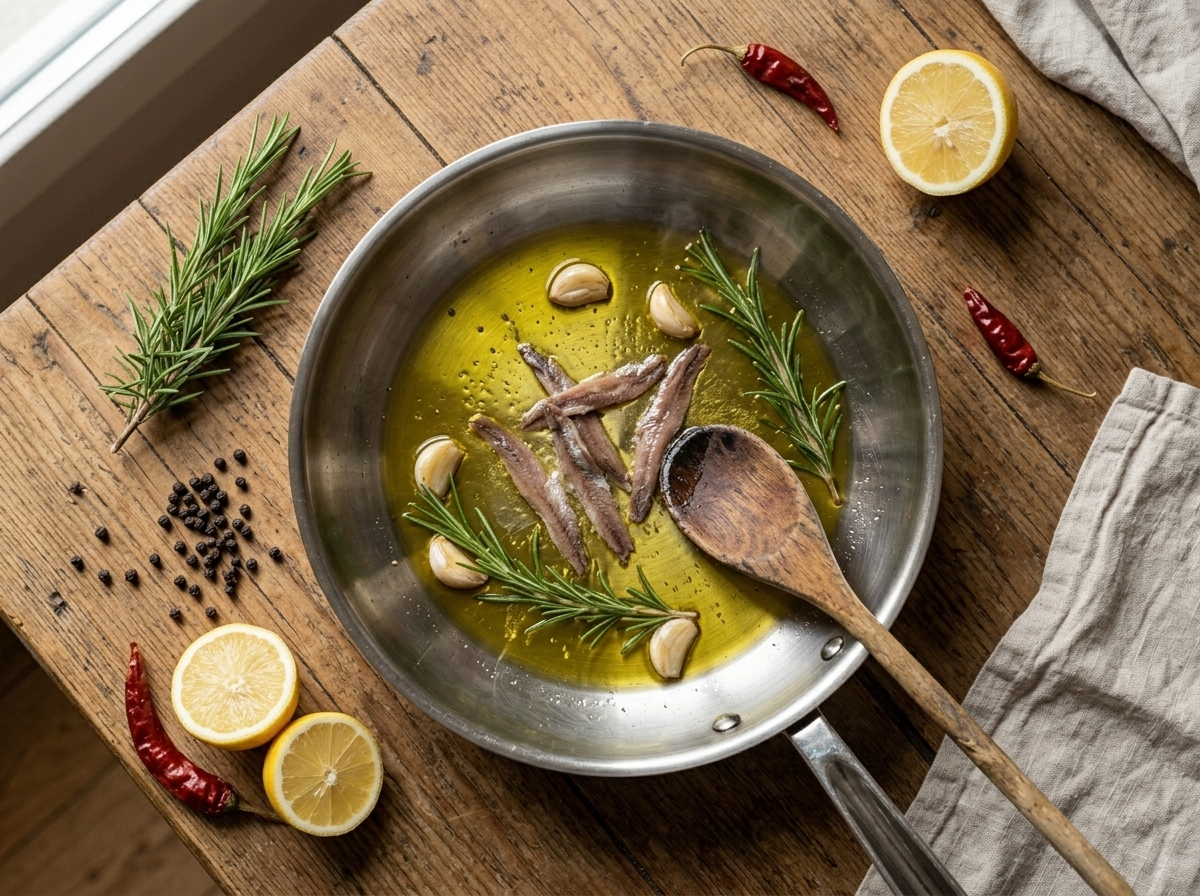
- Add the anchovy fillets to the pan and press them with a wooden spoon for 1 to 2 minutes until they dissolve completely into the oil.
- Return the lamb to the pan. Pour in the white wine and let it bubble for 2 minutes, scraping any browned bits from the bottom.
- Add the white wine vinegar and stir briefly. Cover the pan with a lid, reduce heat to low, and simmer gently for 30 minutes.
- Remove the lid and increase heat to medium. Cook uncovered for a further 10 minutes until the sauce reduces to a loose, glossy consistency and the lamb reads at least 70 C / 160 F at the bone.
- Taste the sauce. Add a small splash of vinegar if the acidity has faded. Adjust salt.
- Remove the pan from heat. Add the second rosemary sprig and rest the lamb for 5 minutes before serving.
Notes
Tips for Success
- Pat the lamb pieces completely dry before browning – surface moisture steams the meat instead of searing it.
- Brown the lamb in batches if your pan is crowded; overlap causes steaming and pale, gray meat.
- Add the anchovy fillets directly onto the hot fat and press them with a wooden spoon until they dissolve before adding liquid.
- Keep the braise at a gentle simmer, not a full boil – rapid boiling toughens young lamb faster than it tenderizes it.
- Taste the pan sauce before serving and add a small splash of vinegar at the end if the acidity has faded during cooking.
Variations
- Add 2 tablespoons of salted capers (rinsed) with the anchovies for a sharper, brinier sauce typical of some Lazio versions.
- Swap white wine vinegar for dry vermouth plus a small splash of red wine vinegar for a rounder, slightly herbal finish.
- Use lamb shoulder cut into chunks instead of chops for a longer, slower braise of 90 minutes that produces pull-apart meat.
Storage and Reheating
Store leftovers in a sealed container in the refrigerator for up to 3 days. The pan sauce thickens when cold and the flavors sharpen overnight – many cooks prefer it the next day.
Reheat gently in a covered skillet over low heat with a tablespoon of water to loosen the sauce. Avoid high heat, which dries out the meat quickly.
This dish freezes reasonably well for up to 2 months. Thaw overnight in the refrigerator and reheat as above. The texture softens slightly after freezing but the flavor holds.
Serving Suggestions
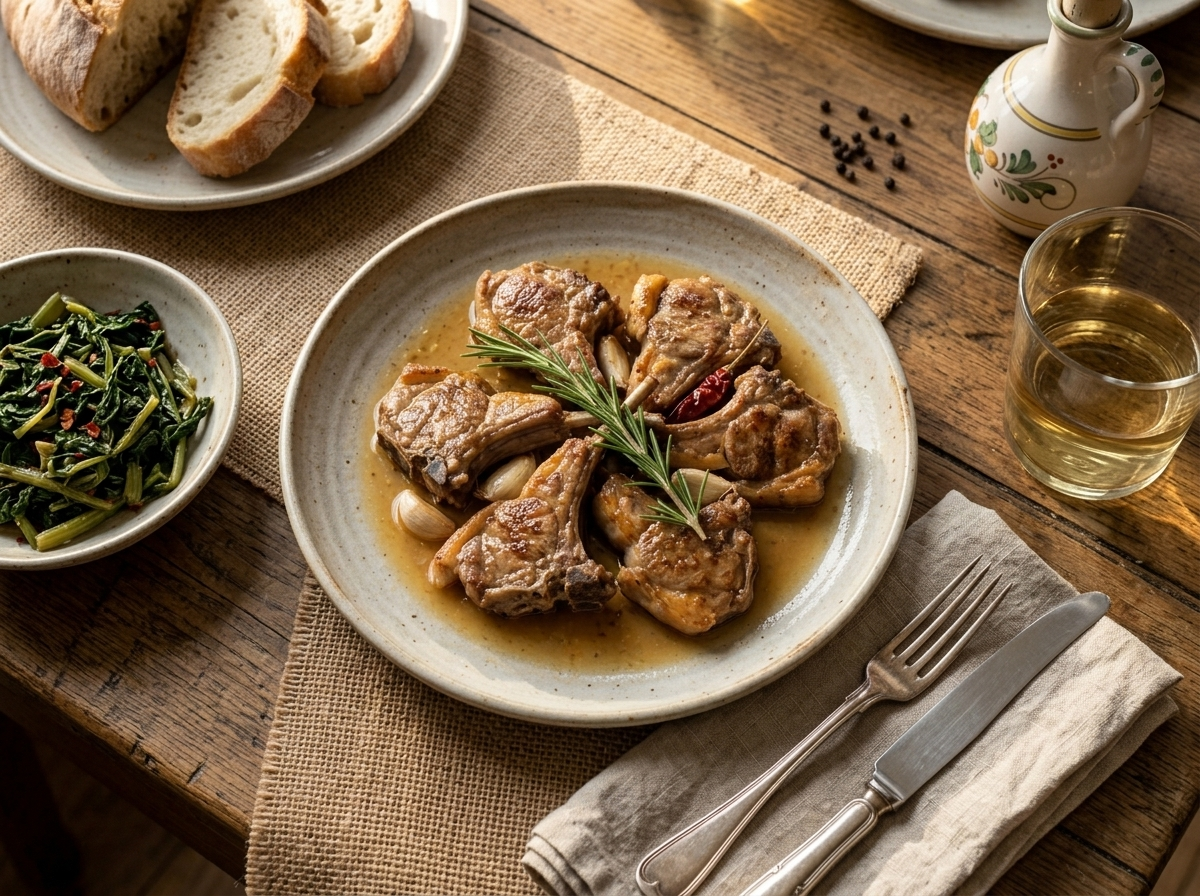
In Rome, abbacchio alla cacciatora is served as a secondo, the main protein course, after a first plate of pasta or soup, much like this Roman trattoria classic anchors its own meal. Bread is not optional – the pan sauce needs something to soak into.
Roasted or sauteed chicory, braised artichokes, or simple roasted potatoes are the most natural sides. The slight bitterness of Roman vegetables cuts through the lamb’s richness without competing with the anchovy-vinegar sauce.
For a full Roman Easter spread, start with a plate of salumi and cured olives, serve a simple pantry pasta as the primo, then bring out the lamb with a chilled glass of Frascati or Est! Est!! Est!!!
FAQ
Why do my abbacchio alla cacciatora pieces look gray instead of browned?
The pan was too crowded or the lamb was still wet when it went in. Dry the pieces with paper towels and brown them in two batches in a wide, hot pan – you need direct contact with hot fat to get color.
Can I use lamb shoulder instead of baby lamb chops for this recipe?
Yes, bone-in shoulder pieces work well but need a longer braise – about 90 minutes covered over low heat instead of 40. The result is softer, pull-apart meat with the same sharp anchovy-vinegar flavor.
Can I make abbacchio alla cacciatora the day before serving?
It’s actually better made a day ahead. The vinegar and anchovy flavors meld and mellow overnight in the refrigerator. Reheat gently covered with a splash of water or white wine.
What’s the difference between abbacchio alla cacciatora and abbacchio brodettato?
Cacciatora uses vinegar, anchovies, and rosemary with no egg. Brodettato is finished with a liaison of egg yolks and lemon juice, giving it a creamy, thickened sauce – it’s a completely different texture and flavor profile.
Is abbacchio alla cacciatora gluten-free?
The traditional recipe contains no wheat – just lamb, oil, vinegar, wine, anchovies, garlic, and herbs. Check your anchovy fillet label to confirm no additives, but the dish is naturally gluten-free.
How do I know when the lamb is done braising?
The meat should pull away from the bone with light pressure from a fork and show no pink at the thickest part. The pan sauce will have reduced to a loose, slightly glossy consistency rather than watery.