
Jump to Recipe
Maccheroncini di Campofilone al ragu is a Marche-style plate of hair-thin egg pasta dressed with a slow-simmered beef and pork sauce. The ragu takes about 2 hours on the stove, and the pasta cooks in 1 to 2 minutes.
Campofilone pasta is rolled thin and cut into ribbons barely 1 mm wide. Despite the name, there’s no hole in it. Because the strands are so fine, the texture defines the result, and the sauce has to be thick and well reduced so it clings instead of pooling.
The one thing to watch is the pasta. Campofilone goes from tender to limp in about 30 seconds, so start tasting at 60 seconds and drain as soon as the strands are soft with a slight spring.
Make the ragu a day ahead if you can. On the night, dinner is a pot of boiling water and 5 minutes.
Why You’ll Love This Recipe
- Ragu simmers on its own while you do other things
- Pasta boils in 1 to 2 minutes, so serving is quick
- Ragu keeps 3 to 4 days in the fridge, 3 months frozen
- Built from basic mince, canned tomatoes, and soffritto vegetables
Ingredient Notes
- Maccheroncini di Campofilone: Look for the IGP label and a high egg content. If you can’t find it, fresh egg tagliolini is the closest swap and cooks in about 2 to 3 minutes.
- ground beef and pork: Use 80/20 beef so the sauce doesn’t turn dry. Ground veal can replace the pork, and all beef works if that’s what you have.
- dry white wine: A Verdicchio from the Marche fits the dish. Any dry, unoaked white works, and a dry red gives a darker sauce.
- crushed tomatoes: Canned crushed tomatoes give a smoother texture than whole peeled ones. Passata is a fine substitute at the same weight.
- Parmigiano Reggiano: Grate it finely so it melts into the ragu. Aged Pecorino is a sharper, saltier alternative, so use a little less.
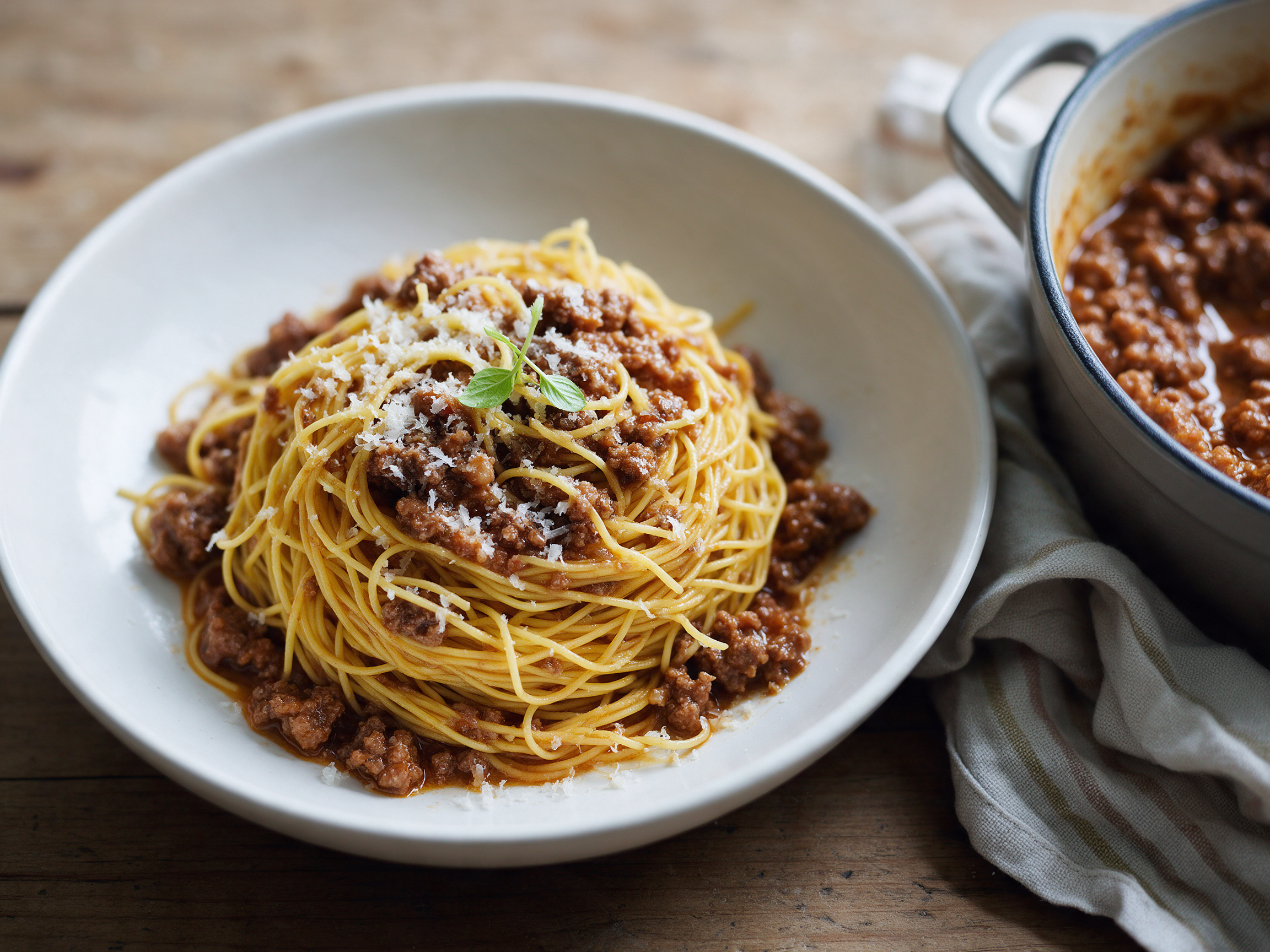
Maccheroncini di Campofilone with Slow-Simmered Ragu
Ingredients
Method
- Chop the onion, carrot, and celery into pieces about 3 mm across. Heat the olive oil in a 26 cm / 10-inch Dutch oven over medium-low heat, add the vegetables, and cook for 8 minutes, stirring, until soft and pale gold but not browned.
- Raise the heat to medium-high and add the beef and pork. Break the meat up with a wooden spoon and cook for 10 minutes, leaving it alone for 2 minutes at a time, until the liquid has evaporated and the meat is browned. Stir in the tomato paste and cook for 1 minute.
- Pour in the wine and scrape up the browned bits from the bottom. Cook for about 3 minutes until the wine has almost evaporated and the raw alcohol smell is gone.
- Add the crushed tomatoes, water, bay leaf, 1/2 tsp salt, and the pepper. Bring to a bubble, then lower the heat to the lowest setting, set the lid ajar, and simmer for 90 minutes, stirring every 20 minutes, until the ragu is thick and oil collects at the edges. If it looks dry, add 50 ml of water at a time.
- During the last 15 minutes of simmering, bring the 3 L of water to a boil in a 6-quart / 5.7 L pot and add the coarse salt. Remove the bay leaf from the ragu, taste, and adjust the salt.
- Lower the Campofilone into the boiling water and cook for 1 to 2 minutes, tasting from 60 seconds, until the strands are tender with a slight spring. Scoop out 120 ml of pasta water, then drain right away.
- Add the pasta to the ragu in the Dutch oven over low heat and toss with tongs for 30 seconds, loosening with a splash of the reserved water until the sauce clings to every strand. Divide among 4 warm bowls, top with the Parmigiano, and serve within 5 minutes.
Notes
- Finish the ragu before you boil the pasta, because Campofilone can't wait in the pot.
- Reserve 120 ml of pasta water before draining to loosen the sauce.
- Use 80/20 beef, since leaner mince gives a drier ragu.
- Serve within 5 minutes of tossing so the strands stay tender.
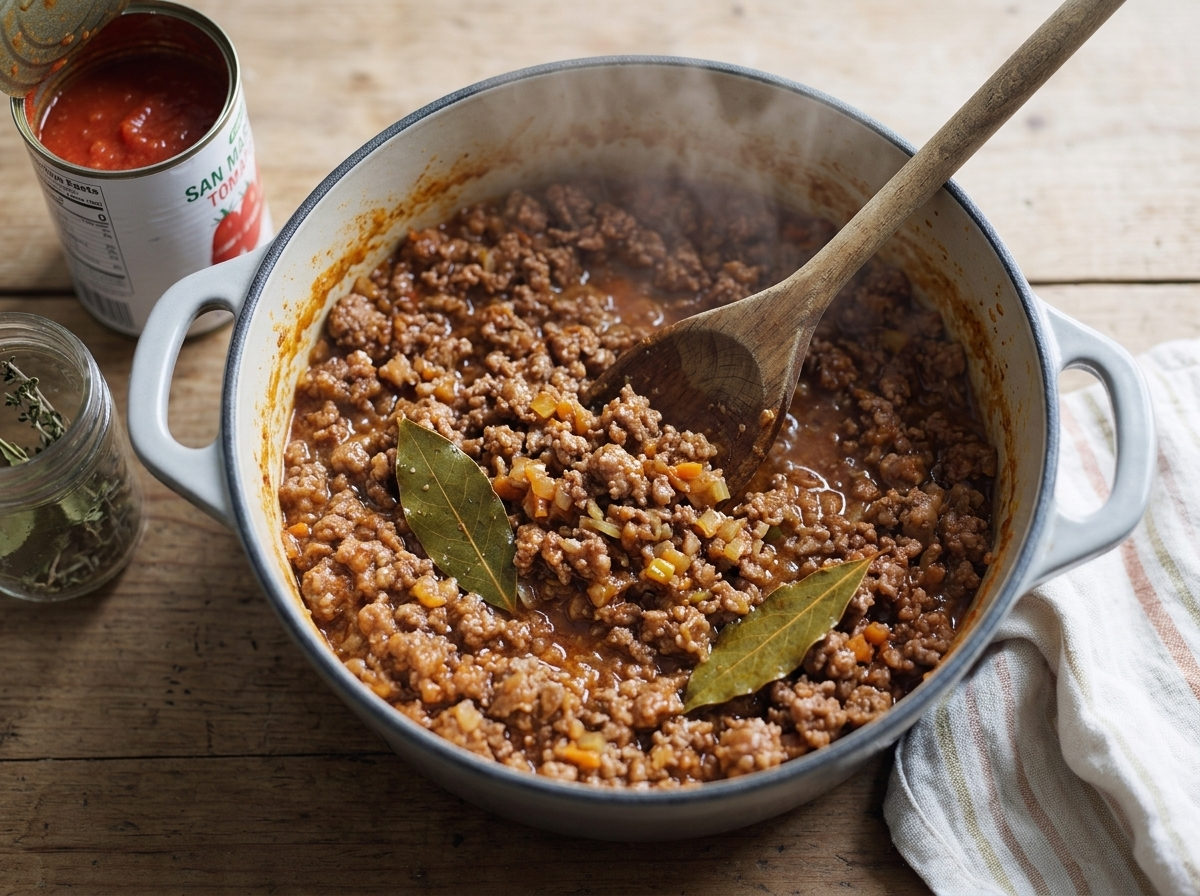
Tips for Success
- Chop the soffritto to about 3 mm so it melts into the sauce and leaves no chunks against the fine pasta.
- Leave the meat undisturbed for 2 minutes between stirs so it browns instead of steaming gray, which gives the ragu its savory base.
- Keep the simmer at a bare bubble with the lid ajar so the sauce reduces slowly without scorching on the bottom.
- Adjust the salt in the last 10 minutes, after the sauce has reduced, since the Parmigiano adds more at the table.
- Reserve 120 ml of pasta water before draining, then toss the pasta in the ragu for 30 seconds so the sauce clings.
Variations
- Soak 15 g dried porcini in warm water for 20 minutes, chop them, and add with the wine for deeper flavor.
- Use ground veal instead of pork for a paler, milder ragu with a softer texture.
- Replace the white wine with 120 ml of Rosso Conero or another dry red for a darker, deeper sauce.
Storage and Reheating
Slow-simmered ragu keeps in an airtight container in the fridge for 3 to 4 days. Cool it within 2 hours of cooking, and the flavor settles overnight.
Freeze the ragu in 1-cup / 240 ml portions for up to 3 months and thaw overnight in the fridge. Warm it in a 20 cm / 8-inch saucepan (2-quart / 1.9 L) over low heat with 2 to 3 tbsp of water, stirring, for 8 to 10 minutes until steaming hot.
Cook the Campofilone fresh each time. Dressed pasta is best served within 5 minutes of tossing, because the thin strands keep absorbing sauce and soften. Store the ragu on its own and boil only what you’ll eat.
Serving Suggestions
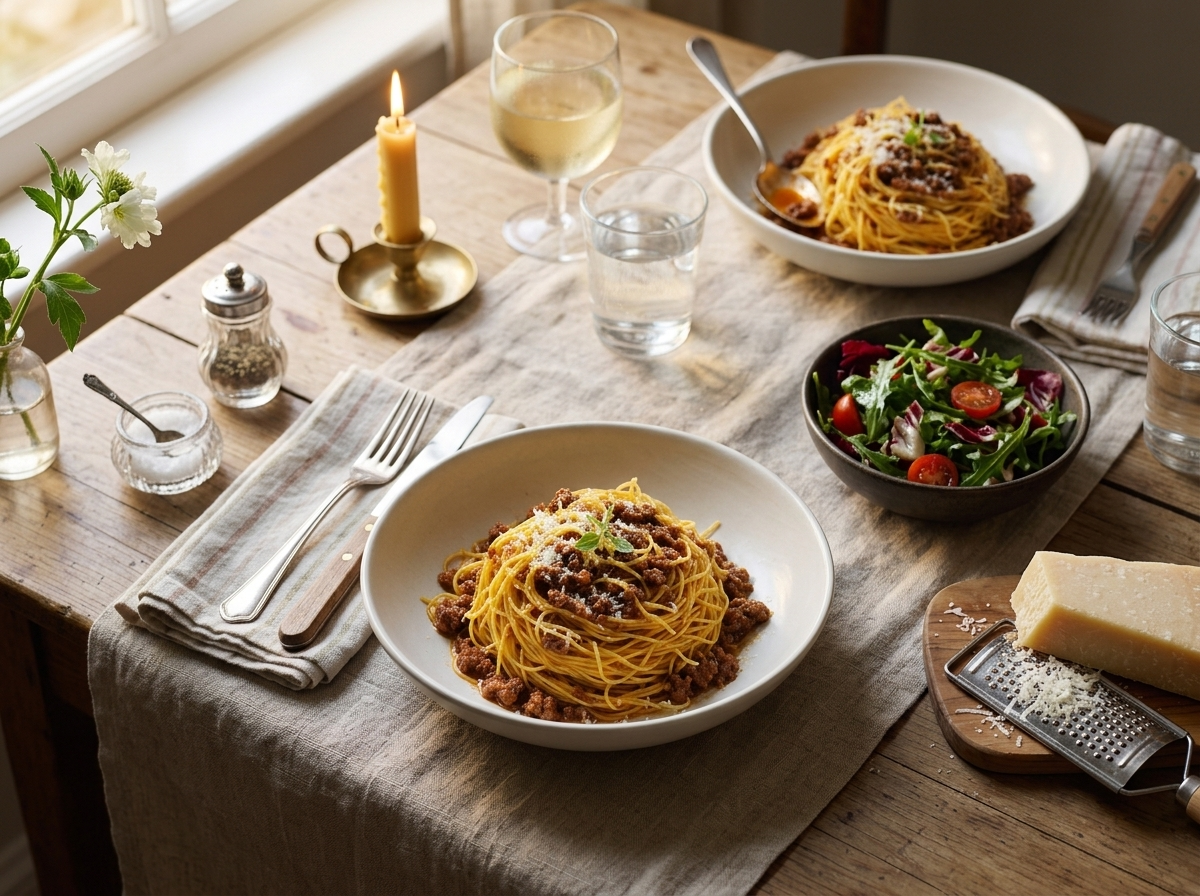
Serve Maccheroncini di Campofilone al ragu in warm bowls, with about 10 g of finely grated Parmigiano Reggiano per bowl. Warm bowls matter here, since thin pasta cools fast.
A bitter salad of radicchio or chicory with lemon and olive oil is a clean counterpoint to the rich sauce. Put crusty bread or a flaky crescia sfogliata from Le Marche on the table for what’s left in the bowl.
For wine, pour a Verdicchio dei Castelli di Jesi or a medium-bodied red such as Rosso Conero.
FAQ
How do I know when Maccheroncini di Campofilone are done?
Taste a strand at 60 seconds. Maccheroncini di Campofilone are done when they’re tender with a slight spring and no raw flour taste, usually between 1 and 2 minutes. Start tasting early, because the strands soften fast and go limp within another 30 seconds.
Can I use tagliolini or regular spaghetti instead of Maccheroncini di Campofilone?
Fresh egg tagliolini is the closest swap and cooks in about 2 to 3 minutes. Dried egg tagliatelle also holds this ragu well, but cook it by the package time and expect a chewier bite. Dried spaghetti works in a pinch, though the sauce clings less to its smooth surface.
Can I freeze the ragu for Maccheroncini di Campofilone?
Yes, the ragu freezes well for up to 3 months, but the pasta should always be cooked fresh. Cool the ragu fully, portion it into containers, and thaw overnight in the fridge. Reheat gently with a splash of water, then boil the pasta for 1 to 2 minutes while the sauce warms.
What wine goes with Maccheroncini di Campofilone al ragu?
A medium-bodied Marche red such as Rosso Conero or Rosso Piceno suits the beef and pork ragu. Verdicchio dei Castelli di Jesi, the local white, works if you want something crisp, since its acidity cuts through the meat sauce. Cooking with a splash of the same Verdicchio ties the pairing together.
What’s the difference between Maccheroncini di Campofilone and tagliatelle?
Maccheroncini di Campofilone are egg pasta ribbons cut barely 1 mm wide, while tagliatelle runs about 6 to 8 mm wide. That thinness means 1 to 2 minutes in boiling water instead of 3 to 4 for fresh tagliatelle. The name is misleading, since there’s no hole and it isn’t macaroni.
Is Maccheroncini di Campofilone al ragu dairy free or gluten free?
The ragu is dairy-free if you skip the Parmigiano, but the dish isn’t gluten-free because Campofilone pasta contains wheat and eggs. For a gluten-free version, use a gluten-free egg tagliolini, though the texture will differ. The ragu itself contains no gluten as written.