
Jump to Recipe
Cartellate pugliesi are fried pastry rosettes made from a thin dough of flour, white wine, and olive oil, the same trio behind tarallini pugliesi ring crackers, then dipped in warm vincotto, the dark cooked grape must of Puglia. This version makes about 30 rosettes in 110 minutes, including a 30-minute dough rest.
The texture defines the result. Roll the dough to about 1 mm and the rosettes blister and turn crisp, with pockets that hold the syrup. Roll it thicker and they turn dense and bready, which is the mistake I see most often.
In Puglia they’re a Christmas tradition, made a week or two ahead and kept in a tin, much like Neapolitan hard almond roccocò Christmas rings. That makes them a good project for a quiet afternoon, since nothing needs to be served the day you fry.
You’ll need a pasta machine or a long rolling pin, a fluted pastry wheel, and a heavy pot for frying.
Why You’ll Love This Recipe
- Keeps 7 to 10 days in a tin, so make ahead
- Four-ingredient dough with no eggs, butter, or yeast
- Pockets in each rosette hold the vincotto glaze
- A pasta machine makes rolling the dough thin fast
Ingredient Notes
- flour: Use 00 or all-purpose flour. Skip bread flour, since the extra gluten makes the dough fight back when you roll it thin.
- dry white wine: Any dry, unoaked white works, and a Puglian Bombino bianco is a good pick if you can find one. The wine adds light acidity and helps the surface blister in the oil.
- vincotto: Vincotto is grape must cooked down slowly until dark and syrupy. Buy a bottle with grape must as the only ingredient. Saba or reduced grape juice is a fair substitute.
- frying oil: Sunflower or peanut oil keeps the flavor clean at 170 C / 340 F. Extra-virgin olive oil works too, but it costs more and tastes stronger.
- honey: Honey rounds out the glaze and helps it cling. Leave it out for a vegan version and simmer the vincotto 2 minutes longer.
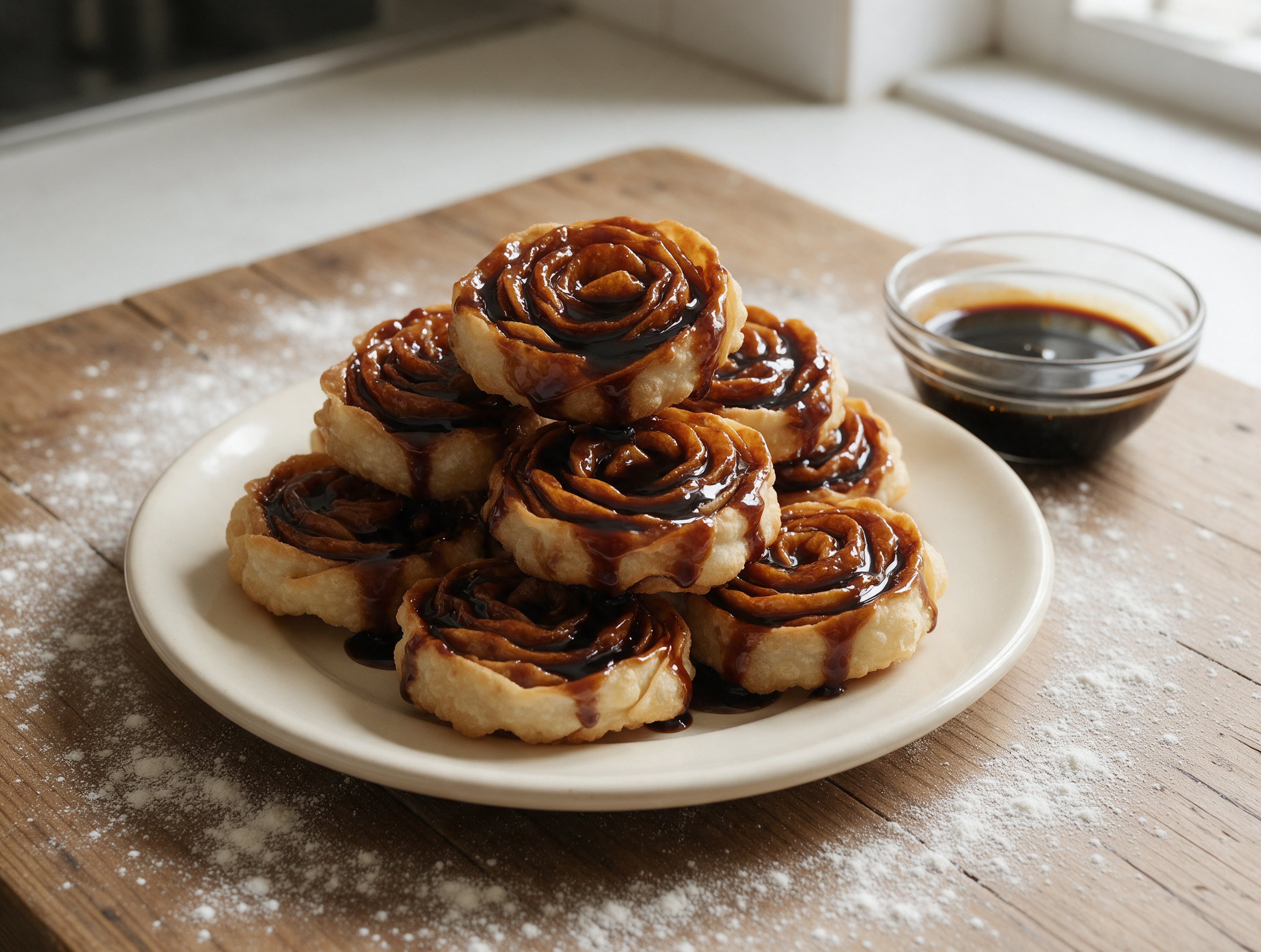
Cartellate Pugliesi: Fried Pastry Rosettes with Vincotto
Ingredients
Method
- Stir the flour and salt together in a 30 cm / 12-inch bowl. Add the olive oil and wine and mix with your hands until crumbly clumps form, then knead on the counter for 8 to 10 minutes until the dough is smooth and firm, not sticky.
- Wrap the dough in plastic and rest it at room temperature for 30 minutes. This relaxes the gluten so the dough rolls thin without springing back.
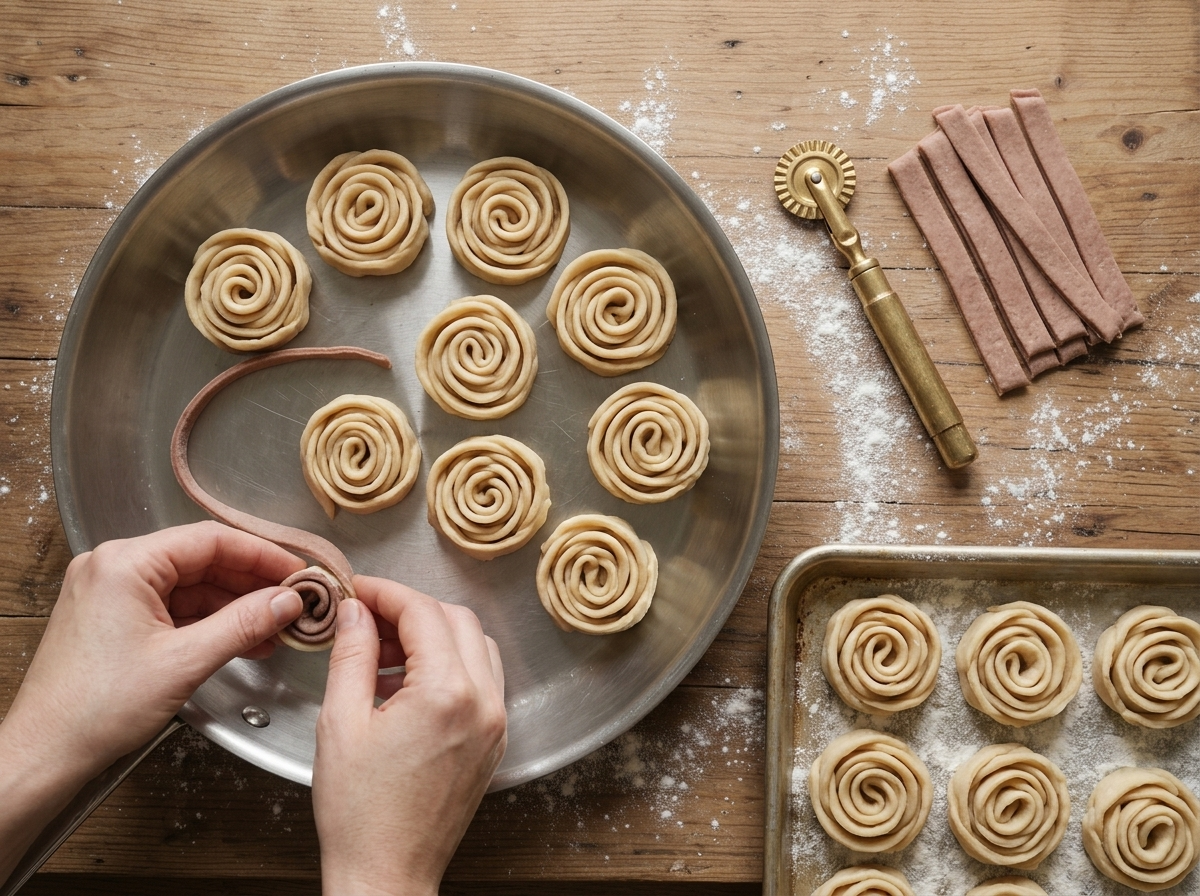
- Cut the dough into 4 pieces and keep 3 covered. Flatten one piece, pass it through the pasta machine at the widest setting a few times, then thin it to about 1 mm, where you can see your hand's shadow through it. A long rolling pin works too. Cut the sheet into strips about 4 cm wide and 40 cm long with the fluted wheel. Repeat with the remaining pieces.
- Fold each strip in half lengthwise. Press the two layers together at 3 cm intervals to form small pockets. Coil the strip into a rosette about 6 cm wide and press the tail against the base so it holds. Set the rosettes on a floured tray and cover with a towel.
- Pour the frying oil into the 24 cm / 9.5-inch pot and heat it to 170 C / 340 F. Fry 4 to 5 rosettes at a time for 2 to 3 minutes, turning once, until pale gold with small bubbles on the surface. Lift them with a slotted spoon onto the wire rack. Let the oil return to 170 C / 340 F between batches, about 6 or 7 batches in all.
- Warm the vincotto and honey in the 20 cm / 8-inch saucepan over low heat for 3 to 4 minutes, stirring, until the honey dissolves and the syrup is loose enough to coat the back of a spoon.
- Dip each rosette in the warm glaze for a few seconds, turning it so the pockets fill. Lift it out with tongs and set it back on the rack. Dust with the cinnamon if using, and let the glaze set as the rosettes cool.
Notes
- Rest the dough 30 minutes so it rolls thin without springing back.
- Fry at 170 C / 340 F, 4 to 5 rosettes per batch, and let the oil recover between batches.
- If your vincotto is very thick, thin it with 1 tbsp water so it coats instead of clumping.
- Cool the glazed rosettes completely before packing them in a tin.
Tips for Success
- Roll the dough to about 1 mm, thin enough that you can see the shadow of your hand through it, before cutting strips.
- Cover rolled sheets and shaped rosettes with a clean towel so the dough doesn’t dry out and crack while you work.
- Hold the oil at 170 C / 340 F with a thermometer and fry only 4 to 5 rosettes at a time so the temperature doesn’t drop.
- Warm the vincotto for 3 to 4 minutes and dip the rosettes while it’s still loose, before it cools and thickens.
- Drain fried rosettes on a wire rack, not paper towels, so the underside stays crisp until you glaze them.
Variations
- Warm 250 ml honey with 2 tbsp water for about 2 minutes and use it instead of vincotto for a lighter, amber glaze.
- Add the finely grated zest of 1 orange to the dough with the wine for a faint citrus note that suits the vincotto.
- Finish the glazed rosettes with 30 g toasted, chopped almonds and a pinch of cinnamon, which is common in some Puglian homes.
Storage and Reheating
Cartellate pugliesi keep 7 to 10 days in an airtight tin at cool room temperature, around 18 to 20 C / 64 to 68 F. Layer them with parchment so the glaze doesn’t glue the rosettes together.
Skip the refrigerator, because the cold makes the glaze sticky. Serve them at room temperature straight from the tin.
For longer storage, freeze the fried rosettes before glazing, in a single layer in an airtight container, for up to 1 month. Thaw them uncovered at room temperature for about 1 hour, then dip them in warm vincotto as usual.
Serving Suggestions
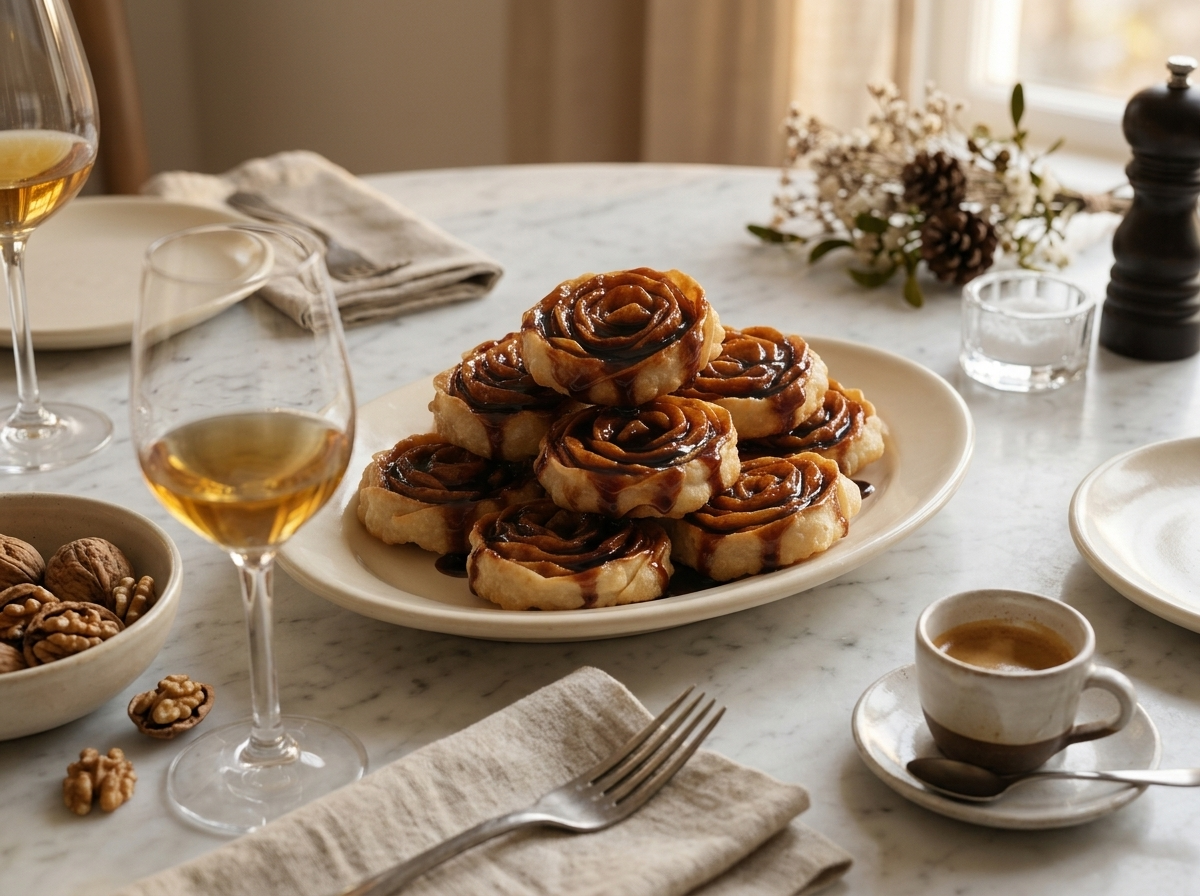
Cartellate pugliesi are served at room temperature as a Christmas sweet, piled on a platter so guests help themselves. Three per person suits a dessert course, since the glaze is sweet.
Pair them with a small glass of Primitivo dolce naturale or Vin Santo, or with espresso. A bowl of unsalted walnuts on the side balances the sugar.
Packed in a tin lined with parchment, they also make a good gift. They travel well because the glaze is set and the pastry is dry.
FAQ
Why are my cartellate hard instead of crisp and flaky?
Cartellate turn hard when the dough is rolled thicker than about 1 mm or fried past pale gold. Thin dough blisters and shatters, while thick dough stays dense in the middle. Pull them from the oil when they’re pale gold with small bubbles on the surface, and they’ll crisp further as they cool.
Can I use honey or balsamic instead of vincotto on cartellate?
Yes, warm 250 ml honey with 2 tbsp water until loose, about 2 minutes, and dip the rosettes in it. The result is lighter in color and sweeter. Balsamic vinegar is too sharp, but saba or reduced grape juice works because both are cooked grape syrups close to vincotto.
Can I freeze fried cartellate before dipping them in vincotto?
Yes, freeze the fried rosettes before glazing, in a single layer and then in an airtight container, for up to 1 month. Thaw them uncovered at room temperature for about 1 hour, then dip them in warm vincotto. Freezing after glazing makes the surface sticky and dull.
Which wine goes with cartellate pugliesi dipped in vincotto?
A sweet red or fortified wine suits them best, such as Primitivo di Manduria dolce naturale or Vin Santo. The dried-fruit notes echo the vincotto, and the wine’s sweetness keeps pace with the glaze. Espresso or a small glass of amaro also works if you’d rather skip wine.
Are cartellate pugliesi vegan or dairy free?
Cartellate contain no dairy, eggs, or nuts, and the dough itself is vegan. The honey in the glaze isn’t vegan, so leave it out and simmer the vincotto 2 extra minutes to thicken it. They do contain gluten from the wheat flour, and I haven’t found a swap that holds the thin rosette shape.
What is the difference between cartellate and chiacchiere?
Cartellate are wine-and-oil dough shaped into pocketed rosettes, fried, then dipped in vincotto or honey, and they’re a Puglian Christmas pastry. Chiacchiere are flat ribbons of dough that usually contain eggs, fried and dusted with powdered sugar, mostly made at Carnival. Cartellate take longer to shape and keep much longer.