Jump to Recipe
Coda di aragosta napoletana is a Neapolitan pastry shaped like a lobster tail: a crisp, ridged shell filled with vanilla-lemon cream. The name describes the shape only. There’s no seafood anywhere near it.
The traditional shell uses sfogliatella dough, stretched thin and layered with lard. This version uses a butter rough puff with four folds, which gives the same shatter without the stretching.
You’ll need six cone moulds, about 12 cm / 4.7 inches long. Plan on 3 hours start to finish, with about 65 minutes of hands-on work and the rest spent chilling.
Fill the shells right before serving. The texture, not the cream, defines the result.
Why You’ll Love This Recipe
- Four folds of rough puff replace stretched lard dough
- Shells keep 2 days and cream keeps 3, so assembly takes minutes
- Lemon and vanilla cream stays clean-tasting, not heavy
- Cone moulds give the signature ridged lobster tail shape
Ingredient Notes
- Flour: Italian 00 or plain all-purpose both work. Avoid bread flour, which makes the layers chewy instead of crisp.
- Butter: Use unsalted butter straight from the fridge. A European-style butter with higher fat gives cleaner layers, but standard butter works.
- Cone moulds: Metal cream horn or lobster tail moulds, 12 cm / 4.7 inches long. Without them, shape cones from sturdy foil around a card core and grease well.
- Vanilla bean paste: Vanilla extract works at the same amount, though the cream will look paler without the seeds.
- Lemon zest: Peel with a vegetable peeler and skip the white pith, which turns the milk bitter. Orange zest is a fair swap.
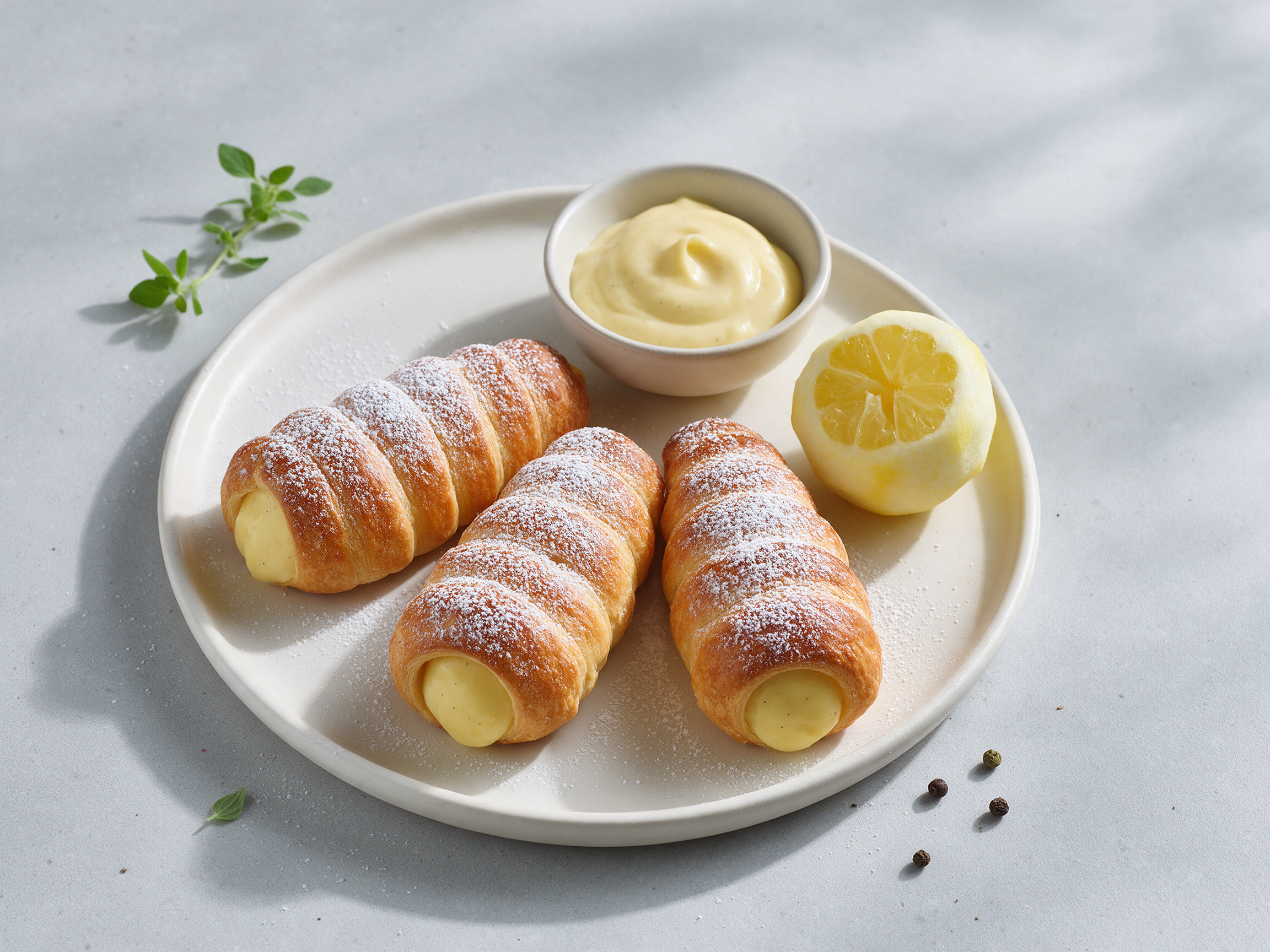
Neapolitan Coda di Aragosta Pastry with Vanilla Cream
Ingredients
Method
- Heat the milk, lemon strip, and vanilla paste in a 3-quart / 2.8 L heavy saucepan over medium heat for about 4 minutes, until steaming at the edges. Don't let it boil.
- Whisk the yolks, sugar, cornstarch, and salt in a bowl for 1 minute, until pale and thick. Pour in half the hot milk in a thin stream while whisking, then scrape everything back into the pan and remove the lemon strip.
- Cook over medium heat, whisking constantly, until the cream thickens and bubbles slowly, then keep whisking for 1 more minute. Off the heat, whisk in the butter. Spread into a shallow dish, press cling film onto the surface, and refrigerate for at least 2 hours while the dough rests.
- Whisk the flour and salt in a bowl. Toss in the cold butter cubes, then press each cube flat between your fingers into thick flakes. Add the ice water and mix with a fork until shaggy, then press together without kneading. You should still see butter streaks.
- Roll the dough on a floured surface into a 15 x 40 cm / 6 x 16 inch rectangle. Fold it in thirds like a letter, turn it 90 degrees, then roll and fold once more. Wrap and chill for 30 minutes.
- Do two more rolls and folds the same way, then wrap and chill for another 30 minutes. If the butter smears or the dough feels greasy, the layers are fusing and the shells will bake up dense, so chill it for 15 minutes before continuing.
- Roll the dough into an 18 x 50 cm / 7 x 20 inch rectangle about 3 mm thick. Trim the ragged edges and cut six strips 3 cm / 1.2 inches wide.
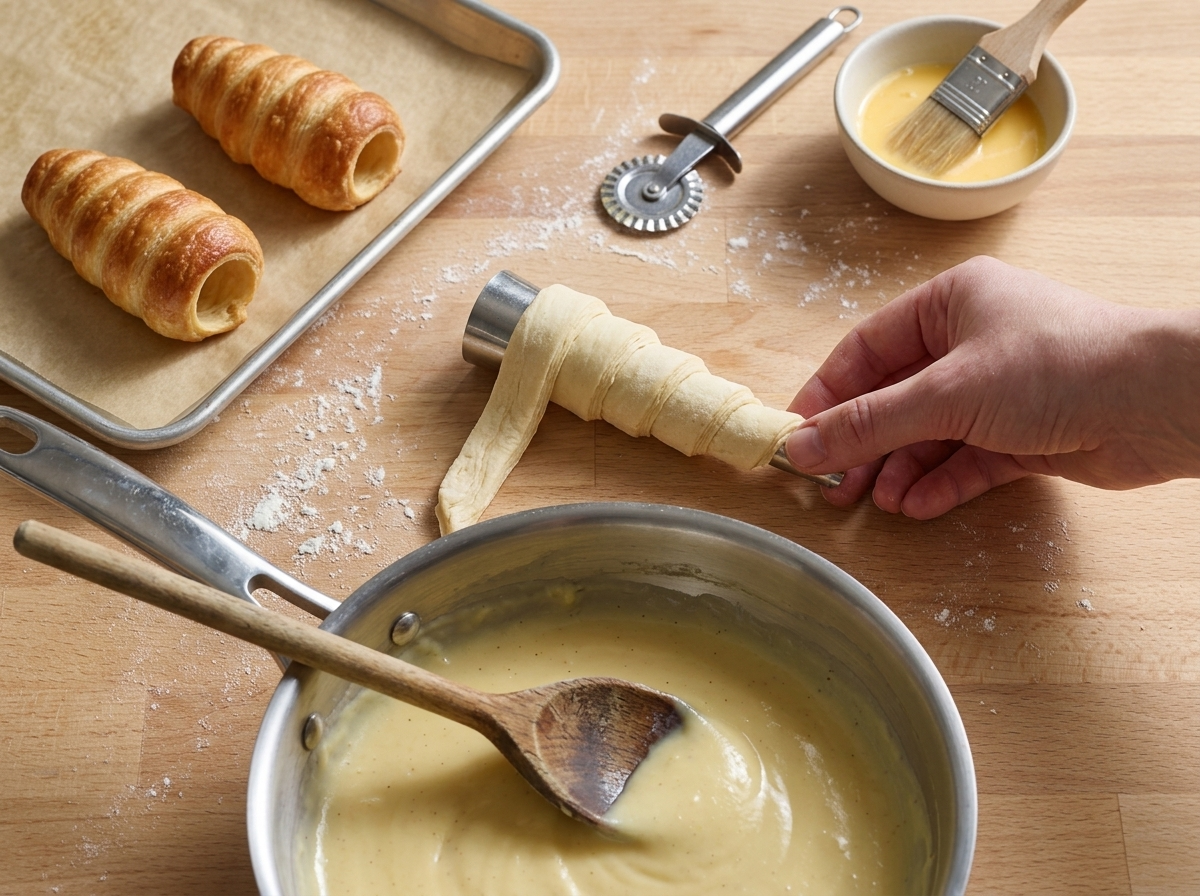
- Brush six moulds with the soft butter. Starting at the narrow tip, wind each strip around a mould, overlapping the edges by half and keeping the dough loose. Tuck the end underneath and set the shells seam side down on a 33 x 46 cm / 13 x 18 inch parchment-lined sheet pan, 3 cm apart.
- Chill the shaped shells for 20 minutes. Meanwhile, heat the oven to 200 C / 390 F with a rack in the middle.
- Brush the shells with the egg wash and sprinkle with the sugar. Bake for 20 minutes, rotating the pan after 10 minutes, until deep golden and the ridges look crisp.
- Cool on the pan for 5 minutes, then gently twist the moulds out while the shells are still warm. Cool completely on a rack for 15 minutes.
- Whisk the chilled pastry cream until smooth and spoon it into a piping bag with a 1 cm plain tip. Pipe into each shell from the wide opening until the cream reaches the tip. Dust with powdered sugar and serve within 30 minutes.
Notes
- Chill the dough 15 minutes any time the butter feels soft or greasy.
- Grease the cone moulds lightly so the baked shells slide off.
- Twist the moulds out while the shells are still warm.
- Fill the shells no more than 30 minutes before serving.
Tips for Success
- Leave the butter in visible flakes after mixing, because fully blended butter gives a bready shell instead of crisp layers.
- Cut the strips with a sharp knife or pizza wheel so the cut edges stay open and the layers lift evenly.
- Wind each strip loosely and overlap by half its width, since stretched dough shrinks back and slides off the mould.
- Keep cooking the cream for a full minute after the first bubbles, otherwise the cornstarch tastes raw and the cream thins out.
- Pipe the cream from the wide opening until it reaches the tip, so no air pocket collapses into a hollow shell.
Variations
- Fold 100 ml of cold whipped cream into the chilled pastry cream for a lighter chantilly filling, then pipe it the same way.
- Dip the open end of each cooled shell in melted dark chocolate and roll it in chopped pistachios before filling.
- Swap the lemon strip for orange zest and stir 1 tsp of orange blossom water into the finished, cooled cream.
Storage and Reheating
Filled coda di aragosta are best fresh, so don’t store them assembled. The moisture in the cream softens the shell within about 30 minutes, and the crisp layers are the whole point.
Store the parts instead. Cooled, unfilled shells keep 2 days in an airtight container at room temperature, and a 5-minute pass in a 160 C / 320 F oven refreshes them before filling. Pastry cream keeps 3 days in the fridge with cling film pressed onto the surface.
Shaped, unbaked shells freeze on their moulds, wrapped well, for up to 1 month. Bake them from frozen at 200 C / 390 F, adding 3 to 5 minutes. Don’t freeze the pastry cream, which turns watery when thawed.
Serving Suggestions
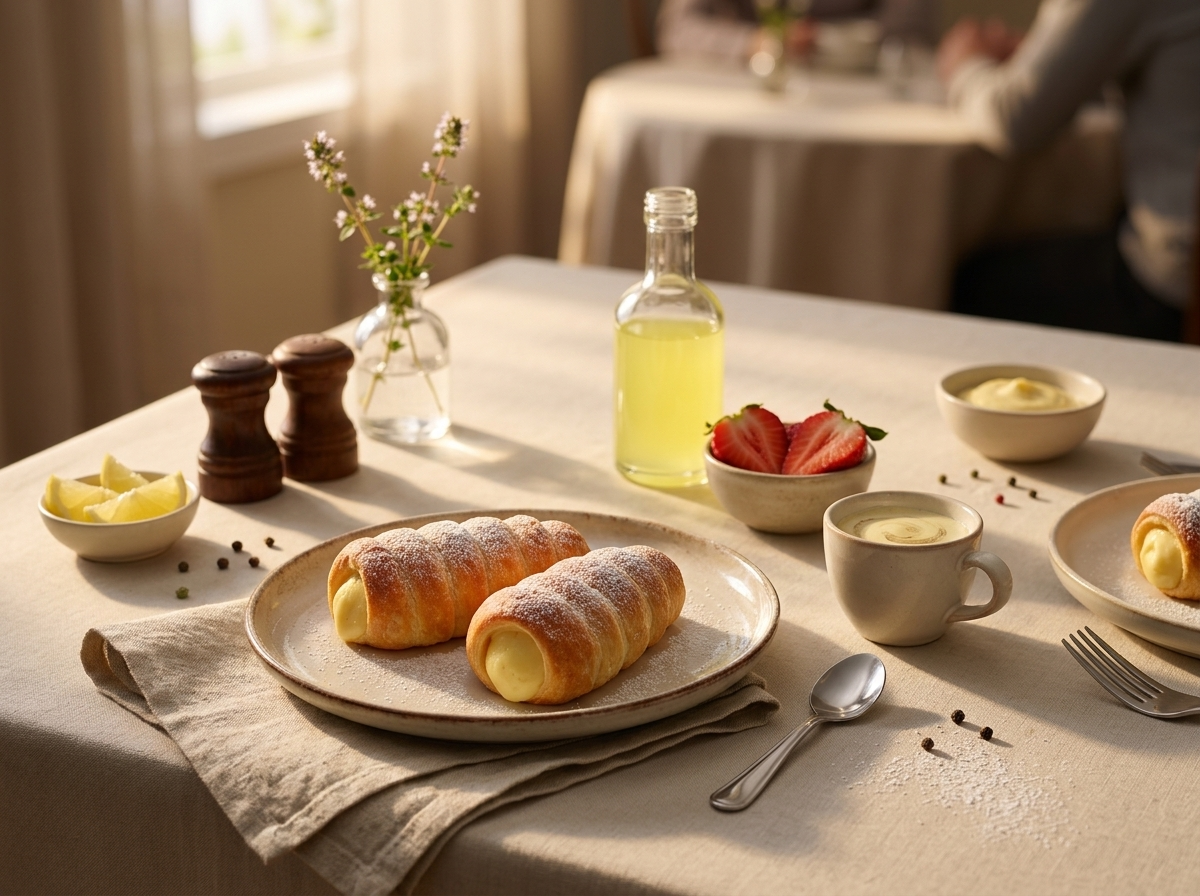
Serve coda di aragosta napoletana within 30 minutes of filling, dusted with powdered sugar at the last second. Put them on a plate with a small fork, since the shell shatters when you bite.
A short espresso is the usual Neapolitan partner and the bitterness balances the sweet cream. For an after-dinner plate, add a small glass of chilled limoncello.
On a brunch table, set out halved strawberries or a few segments of blood orange. Their acidity works with the lemon in the cream.
FAQ
Why did my coda di aragosta shells unwind or leak butter in the oven?
The butter melted before the dough set, or the strips were stretched while winding. Chill the wound shells for 20 minutes before baking, overlap each turn by half the strip width, and tuck the end under the pastry. A 200 C / 390 F oven sets the layers fast enough to hold the shape.
Can I use store-bought puff pastry for coda di aragosta?
Yes, all-butter puff pastry works. Thaw about 320 g, roll it to 3 mm, cut six strips 3 cm wide, and wind them as written. You skip about 85 minutes of folding and chilling, though the homemade rough puff bakes up with more crackle.
Can I fill coda di aragosta the night before?
No, fill the shells no more than 30 minutes before serving. The cream’s moisture softens the crust and you lose the shatter. Bake the shells up to 2 days ahead and keep them airtight at room temperature, and keep the pastry cream covered in the fridge for up to 3 days.
What do you drink with coda di aragosta napoletana?
A short espresso is the classic Neapolitan match, because its bitterness cuts through the sweet vanilla cream. A small glass of chilled limoncello also works and echoes the lemon zest in the filling. For a lighter option, try unsweetened iced tea with a slice of lemon.
What is the difference between coda di aragosta and sfogliatella?
Both are Neapolitan laminated pastries, but the fillings and timing differ. Sfogliatella riccia is baked with a ricotta, semolina, and candied citrus filling inside. Coda di aragosta is a larger, tapered shell baked empty, then filled with pastry cream or chantilly afterward.
Does coda di aragosta napoletana contain lobster?
No. The name means lobster tail in Italian and refers only to the ridged, tapered shape of the shell. The pastry is vegetarian. It contains wheat flour, butter, eggs, and milk, so it isn’t gluten free or dairy free.