
Jump to Recipe
Crescia sfogliata marchigiana is a laminated flatbread from Le Marche, made by rolling out dough, smearing it with lard, coiling it into a spiral, then rolling it flat again before cooking it on a hot griddle. The lamination is what separates it from a plain piadina – you get distinct layers that peel apart, crisp at the edges and soft in the middle.
The technique looks fussier than it is. You’re not making puff pastry with dozens of folds, just one coil-and-roll cycle per piece, which takes maybe two minutes once the dough is rested.
I use lard because that’s what gives the layers their snap and the classic flavor this bread is known for. Softened butter works if you’d rather skip it, though the layers come out slightly less crisp.
A dry cast-iron griddle does the cooking. No oven needed, no yeast, no waiting overnight – just a rested dough, a hot surface, and about four minutes a side.
Why You’ll Love This Recipe
- No yeast and no oven, just dough, lard, and a hot griddle
- The coil-and-roll step gives real flaky layers in one pass
- Cooks in under 20 minutes once the dough has rested
- Works as bread, sandwich base, or torn alongside cured meats
Ingredient Notes
- Flour: Type 00 flour gives the smoothest, most elastic dough, but all-purpose flour works fine and produces a slightly sturdier bite.
- Egg: Adds structure and a pale golden crumb. You can leave it out and add 30 ml more water, though the dough will be a touch less tender.
- Lard: Traditional and what gives the layers their crispness. Softened unsalted butter is the closest swap if you want a version without pork fat.
- Olive oil: Goes into the dough for suppleness and again for brushing the griddle. Use a mild olive oil here, not an aggressive extra virgin.
- Black pepper: A pinch mixed into the dough and again into the lard layer is traditional in Le Marche. Skip it if you want a plainer flatbread.
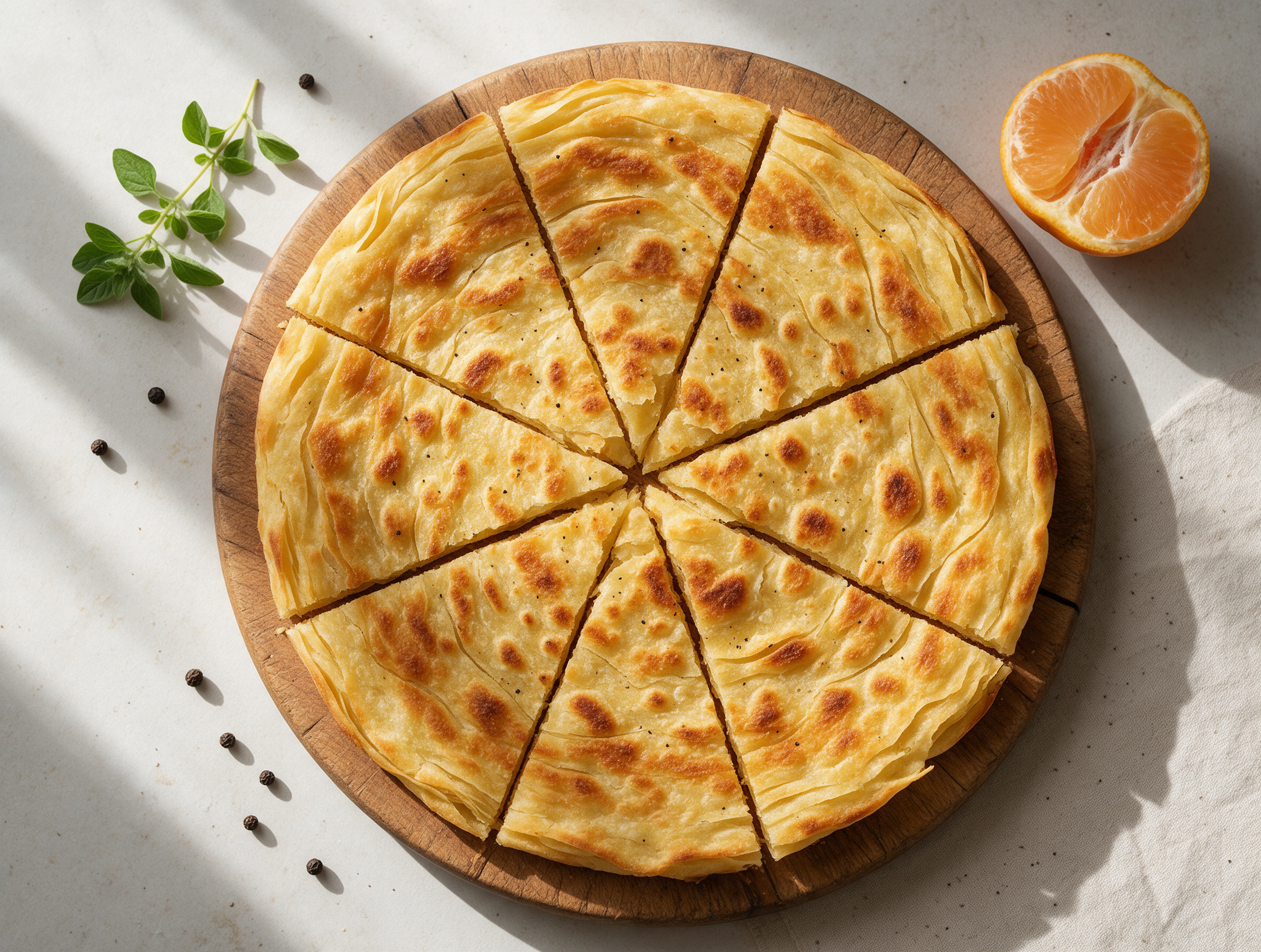
Crescia Sfogliata: Marche’s Flaky Layered Flatbread
Ingredients
Method
- In a large mixing bowl, whisk together the flour, salt, and black pepper.
- In a separate bowl, whisk the egg with the water and 50 ml olive oil until blended. Pour into the flour and stir with a fork until a shaggy dough forms.
- Turn the dough onto a lightly floured counter and knead for 8 to 10 minutes until smooth and elastic. It should spring back when you press a finger into it.
- Shape into a ball, cover with a kitchen towel, and let it rest at room temperature for 30 minutes.
- Divide the dough into 4 pieces, about 200 g each. Roll one piece at a time into a thin round, about 30 cm / 12 inches across and 2 mm thick.
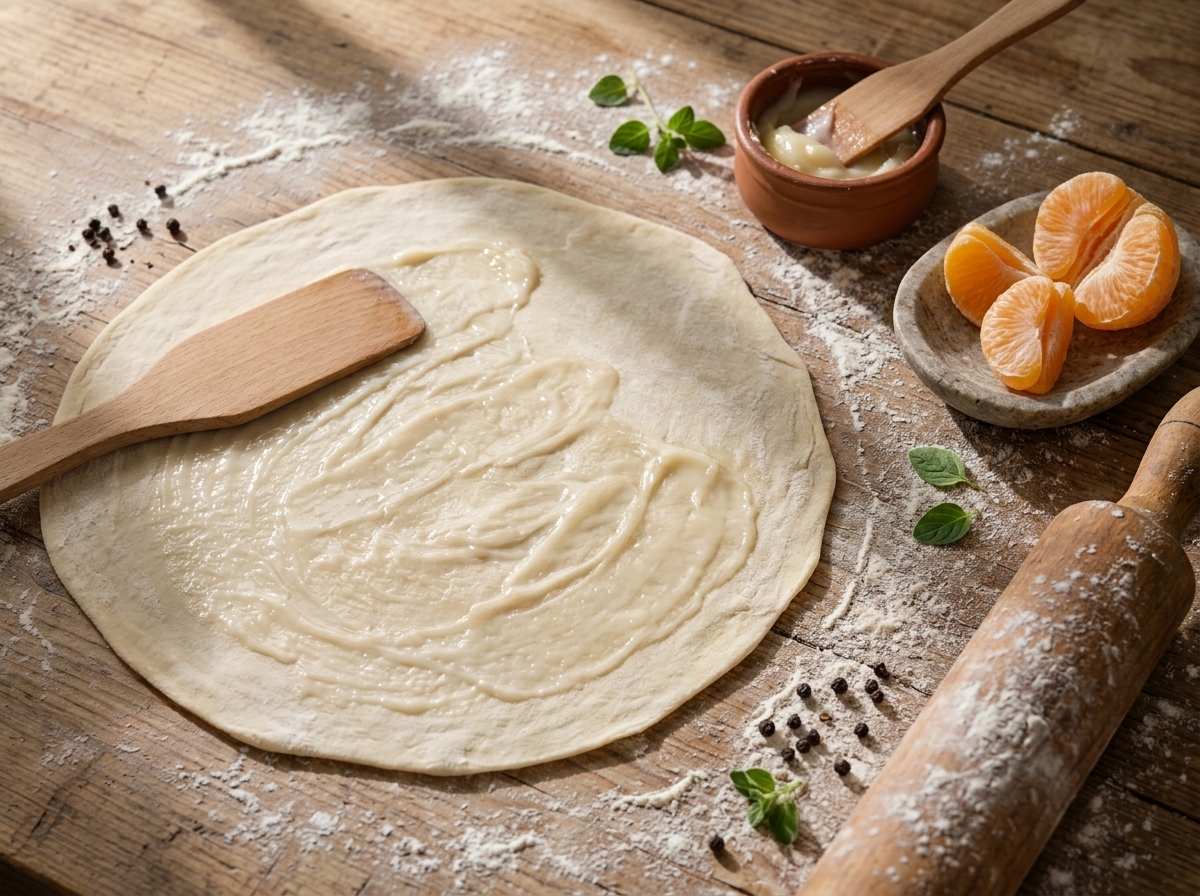
- Spread a thin, even layer of softened lard over the surface with your fingers, leaving a 1 cm border. Sprinkle lightly with salt.
- Roll the sheet up tightly into a log, then coil the log into a spiral, tucking the end underneath. Repeat with the remaining pieces.
- Cover the spirals with the towel and rest 15 minutes so the dough relaxes before the second roll.
- Flatten each spiral with your palm, then roll it out again into a disc about 20 cm / 8 inches across and 5 mm thick.
- Heat a 30 cm / 12-inch cast-iron griddle or heavy skillet over medium-high heat until a drop of water sizzles on contact. Brush lightly with olive oil.
- Cook one flatbread at a time, 3 to 4 minutes per side, pressing gently with a spatula, until dark blistered spots appear and the layers puff.
- Transfer to a wire rack and tent loosely with foil to keep warm while you cook the rest. Slice into wedges and serve warm.
Notes
- Knead until the dough passes the poke-back test, roughly 8 to 10 minutes by hand.
- Don't skip the 15-minute rest after coiling, or the second roll will tear.
- Cook one flatbread at a time so you can watch for blistering and adjust heat as needed.
- Freeze uncooked spirals flat before the final roll for a make-ahead option.
Tips for Success
- Knead the dough a full 8 to 10 minutes so it springs back when poked, or the layers won’t separate cleanly.
- Spread the lard right to the edges but leave a 1 cm border so it doesn’t squeeze out when you roll the spiral.
- Rest the coiled spirals a full 15 minutes before re-rolling, or the dough will fight back and tear.
- Keep the griddle at a steady medium-high heat. Too hot and the outside chars before the layers cook through.
- Press gently with a spatula while cooking to help the flatbread puff and the layers lift apart.
Variations
- Swap the lard for softened butter for a milder version that’s easier to find ingredients for.
- Fold shredded pecorino or a handful of chopped rosemary into the lard layer before rolling for extra flavor.
- Cook the flatbreads slightly thinner and use them as a wrap for grilled sausage or sautéed greens.
Storage and Reheating
Crescia sfogliata keeps well for 2 to 3 days at room temperature, wrapped in a clean towel or paper bag so the layers don’t turn soft. Avoid sealing it in plastic while it’s still warm, or condensation will make the crust chewy instead of crisp.
To reheat, warm each flatbread in a dry 30 cm / 12-inch skillet or griddle over medium heat for 1 to 2 minutes per side, just until the layers crisp back up. Skip the microwave, it turns the flaky layers gummy.
You can also freeze the uncooked spirals before the final roll. Freeze them flat on a tray, then bag them once solid, and thaw in the fridge overnight before rolling and griddling fresh.
Serving Suggestions
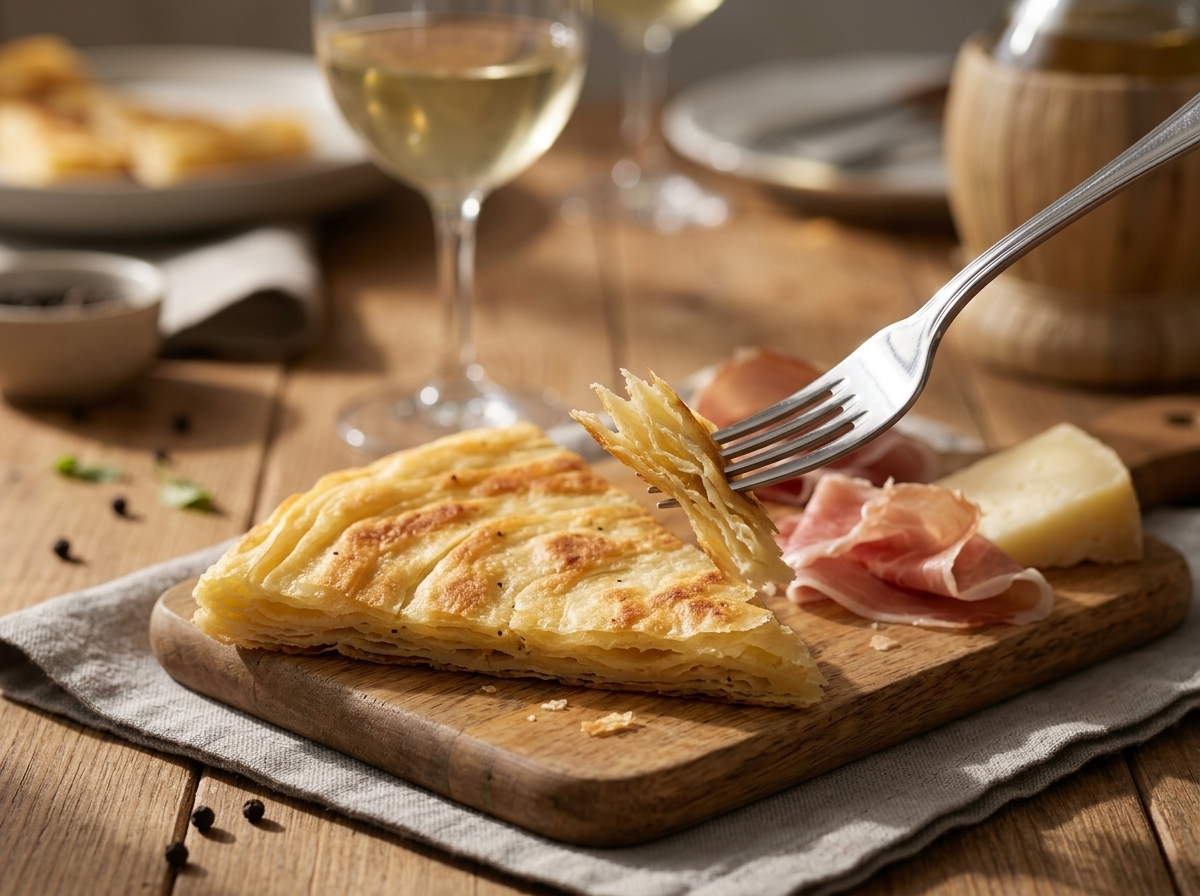
Crescia sfogliata is built for tearing apart alongside a board of cured meats. In Le Marche it shows up next to prosciutto, salami, and soft cheeses, with the warm flatbread doing the work a plain slice of bread would.
It also works split open like a sandwich, stuffed with grilled vegetables, soft cheese, or a fried egg for a heartier lunch.
A glass of dry white wine, a light Sangiovese, or a classic Cynar Spritz cuts through the richness of the lard nicely, especially if you’re serving it as part of an antipasto spread.
FAQ
Why is my crescia sfogliata not puffing up in layers when I cook it?
This usually means the dough was under-rested or the lard layer was spread unevenly before coiling. Give the dough a full 30-minute rest and the coiled spirals another 15 minutes before rolling, and spread the lard right out to the edges so every layer gets fat between it.
Can I use butter instead of lard in crescia sfogliata marchigiana?
Yes, softened unsalted butter works as a direct swap for the lard in the lamination step. The layers will be slightly softer and less crisp at the edges than the traditional lard version, but the flavor and structure still hold up well.
Can I make the crescia sfogliata dough ahead and refrigerate it overnight?
Yes, wrap the rested dough tightly and refrigerate it for up to 24 hours before rolling and laminating. Let it sit at room temperature for 20 to 30 minutes before you divide and roll it, since cold dough is stiffer and tears more easily.
What goes well with crescia sfogliata marchigiana at the table?
Cured meats and soft cheeses are the classic pairing, since the warm flatbread is meant for tearing and wrapping around them. It also works split as a sandwich or served alongside a simple green salad if you want it as a light lunch.
Is crescia sfogliata marchigiana dairy free?
Yes, the traditional version made with lard contains no dairy at all, only flour, egg, water, olive oil, and lard. If you swap in butter for the lamination step, it will no longer be dairy free, so stick with lard or a neutral oil to keep it that way.
What’s the difference between crescia sfogliata and piadina?
Romagna’s classic piadina is a single flat sheet of dough with no lamination, while crescia sfogliata is rolled, layered with lard, coiled, and re-rolled before cooking. That extra step is what gives crescia its flaky, separable layers instead of piadina’s uniform, dense texture.