
Jump to Recipe
Torta di verdura ligure is a baked Ligurian greens pie: a thin olive oil crust wrapped around chard, spinach, ricotta, Parmigiano and marjoram. It bakes at 190 C / 375 F for 45 minutes and slices cleanly after a 20-minute cool-down.
The crust is flour, water, olive oil and salt. No butter, no egg. It rolls thin and bakes crisp at the edges.
The filling decides the result. Chard gives the earthy base, spinach softens it, and marjoram is the Ligurian note you shouldn’t skip. Squeeze the cooked greens hard. Wet greens leak into the bottom crust and leave it pale and damp, which is the one way this pie goes wrong.
I bake it on a Sunday and eat it through the week, warm, at room temperature, or cold from the fridge.
Why You’ll Love This Recipe
- Crisp olive oil crust with no butter or eggs in the dough
- Chard and spinach cost little and feed eight
- Bakes ahead and tastes as good cold as warm
- Slices clean for lunchboxes, picnics and antipasto platters
Ingredient Notes
- Swiss chard: Use the stems too, sliced 1 cm thick and cooked first so they soften. Beet greens swap in one for one.
- ricotta: Choose whole-milk ricotta and drain it in a sieve for 10 minutes if it looks wet. Prescinseua is the traditional Ligurian cheese, but it’s hard to find outside Genoa.
- fresh marjoram: Marjoram is the signature herb in Ligurian greens fillings. If you only have dried, use 1 tsp. Oregano is a weaker but workable substitute.
- extra-virgin olive oil: Use a mild, fruity oil, since it flavors both the dough and the crisp top. A very peppery oil can dominate the greens.
- flour: Italian 00 or plain all-purpose flour both work. The dough only needs enough gluten to roll thin without tearing.
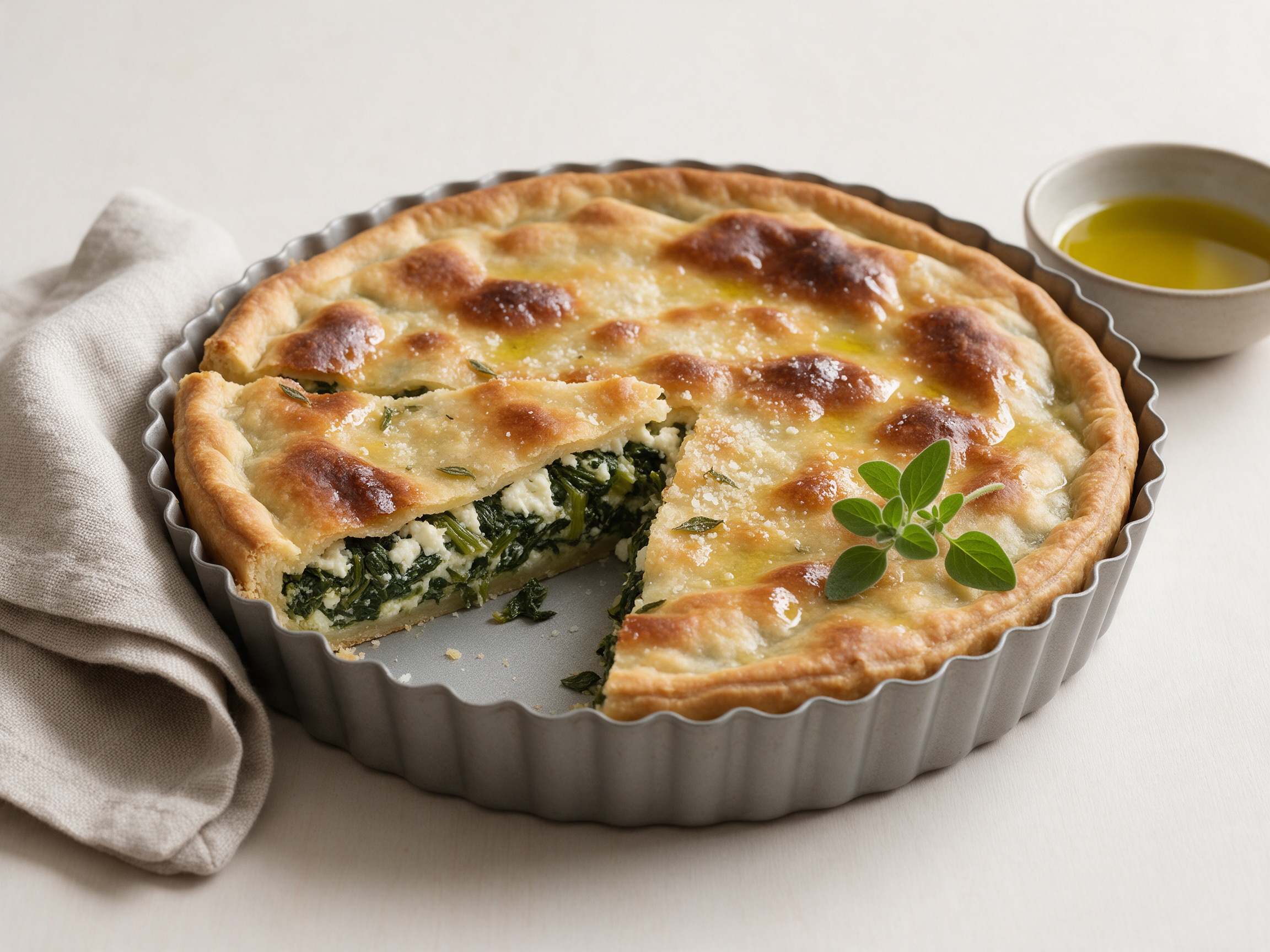
Baked Torta di Verdura Ligure with Chard and Ricotta
Ingredients
Method
- Stir the flour and 1/2 tsp salt together in a bowl. Add the water and 3 tbsp olive oil, then knead on the counter for 8 minutes until smooth and elastic. Divide into one piece of about 330 g and one of about 160 g, cover, and rest for 30 minutes while you make the filling.
- Slice the chard stems 1 cm thick and roughly chop the leaves. Roughly chop the spinach.
- Warm 2 tbsp olive oil in a 5-quart / 4.7 L pot over medium heat. Cook the onion for 4 minutes until soft and pale. Add the chard stems and cook 3 minutes, then add the chard leaves and spinach in handfuls and cook 5 minutes until collapsed and tender.
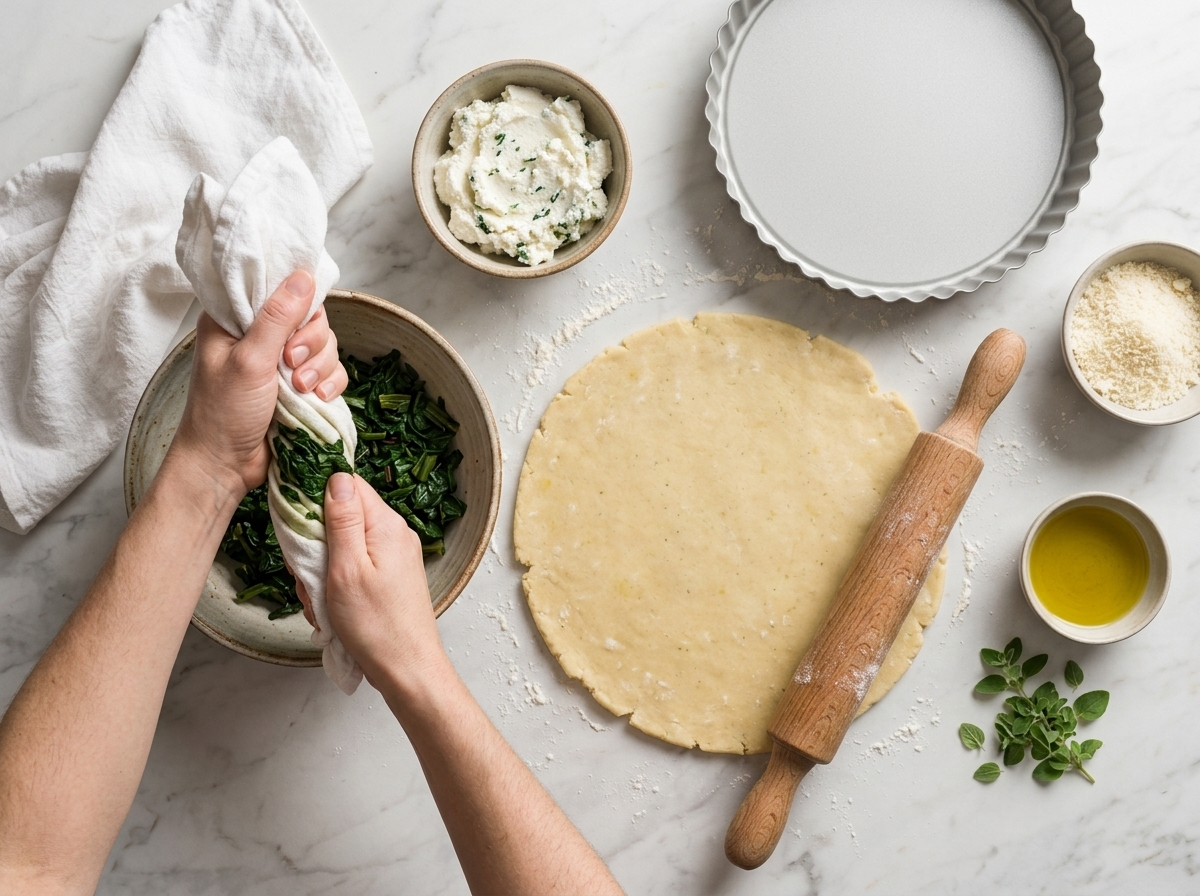
- Tip the greens into a colander and cool for 15 minutes. Squeeze them hard in a clean kitchen towel until almost no liquid drips out. You should have about 300 to 350 g. Chop them finely.
- Mix the ricotta, Parmigiano, eggs, marjoram, nutmeg, 3/4 tsp salt and pepper in a large bowl. Fold in the greens until evenly combined.
- Heat the oven to 190 C / 375 F with a rack in the lower third. Brush a 24 cm / 9.5-inch tart pan with 1 tbsp olive oil. Roll the larger piece of dough to a 34 cm round about 3 mm thick, drape it into the pan, press into the corners and leave the overhang.
- Spoon in the filling and smooth the top. Roll the smaller piece to a 26 cm round, lay it over the filling, then fold the bottom overhang over the edge and crimp with your fingers. Prick the top 6 to 8 times with a fork and brush with 1 tbsp olive oil.
- Set the pan on a 33 x 46 cm / 13 x 18-inch sheet pan and bake for 45 minutes, until the top is deep gold, the edges are crisp and the filling feels set when pressed.
- Cool on a rack for 20 minutes. Unmold, cut into 8 wedges and serve warm or at room temperature.
Notes
- Rest the dough 30 minutes, covered, so it rolls thin without shrinking back.
- Squeeze the greens twice: once in a colander, then again in a towel.
- Bake in the lower third of the oven so the bottom crust browns.
- Cool 20 minutes before unmolding so the filling sets and slices cleanly.
- Brush the top with olive oil just before baking for a blistered gold finish.
Tips for Success
- Squeeze the cooked greens in a clean kitchen towel until almost no liquid drips out. You’re aiming for about 300 to 350 g of dry greens.
- Rest the dough for the full 30 minutes so the gluten relaxes and the sheet rolls to 3 mm without snapping back.
- Cool the squeezed greens for 15 minutes before adding the eggs, so the residual heat doesn’t scramble them into the ricotta.
- Roll the dough with just enough flour to prevent sticking, and keep the bottom sheet at 3 mm so it crisps instead of turning tough.
- Let the baked pie cool for 20 minutes before unmolding and slicing, so the egg and ricotta filling sets and cuts in clean wedges.
Variations
- Torta pasqualina style: make four wells in the filling before adding the top sheet, crack in 4 eggs, and bake about 5 minutes longer.
- Stir 100 g cooked short-grain rice into the filling, a common Ligurian addition that makes each slice firmer and more filling.
- Replace the chard with wild or bitter greens such as beet tops, dandelion or borage, and keep the spinach for balance.
Storage and Reheating
Torta di verdura ligure keeps for 4 days in the fridge, covered with foil or in an airtight container. Cool it fully first so condensation doesn’t soften the crust.
Reheat slices on a sheet pan at 160 C / 325 F for 15 minutes, until the center reaches 165 F / 74 C and the crust crisps again. Skip the microwave, which turns the crust soft. Cold slices straight from the fridge are also good.
To freeze, wrap cooled slices individually and freeze for up to 2 months. Reheat from frozen at 160 C / 325 F for 30 minutes. At room temperature, serve within 2 hours of baking.
Serving Suggestions
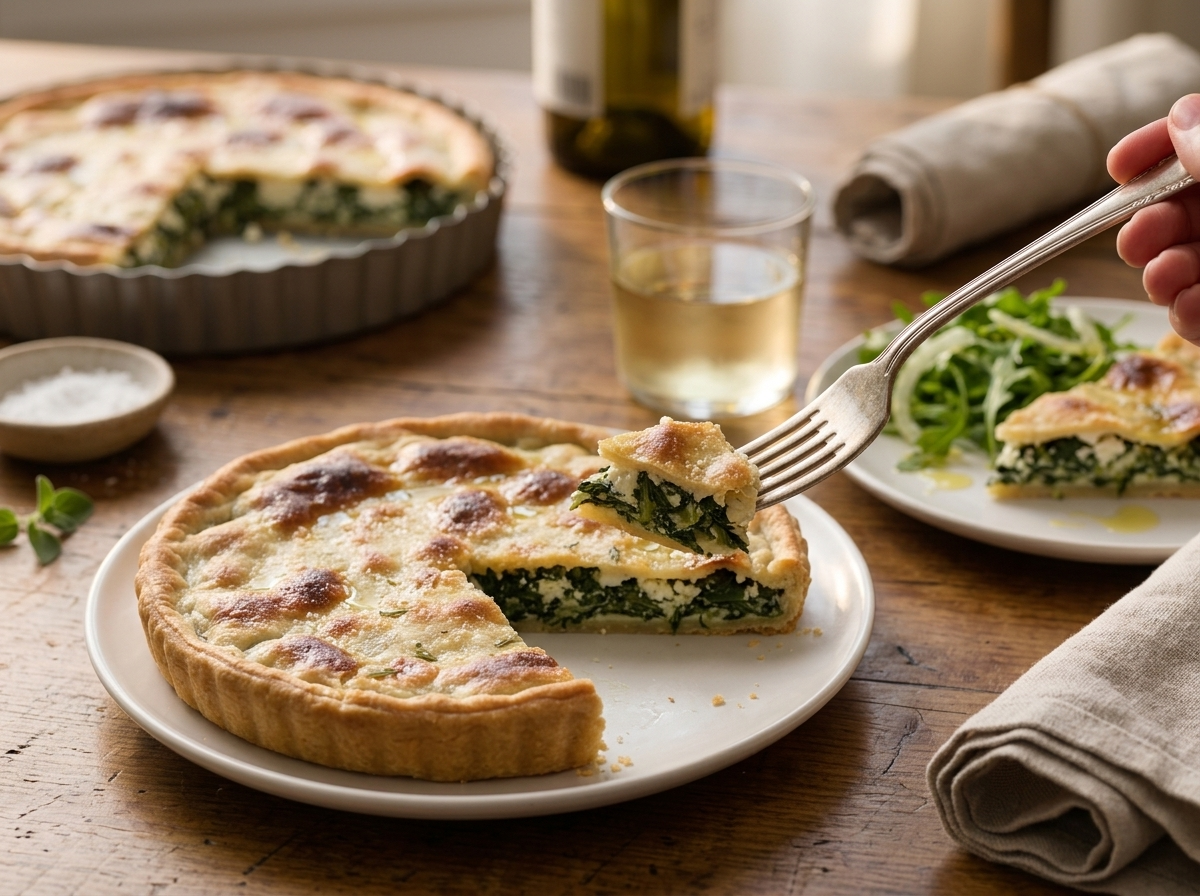
Serve torta di verdura ligure warm or at room temperature, cut into 8 wedges. In Liguria it works as antipasto, lunch or picnic food, so there’s no pressure to serve it hot.
For a light dinner, put a wedge next to an arugula and shaved fennel salad dressed with lemon and olive oil. The acid cuts the richness of the ricotta.
A chilled Vermentino fits well. A few olives and sliced prosciutto cotto on the side round out the plate.
FAQ
Why is my torta di verdura ligure soggy on the bottom?
Wet greens are almost always the cause. Squeeze the cooked chard and spinach in a clean towel until almost no liquid comes out, then cool them before mixing in the ricotta and eggs. Also bake the pie on the lower third rack at 190 C / 375 F so the base crisps.
Can I use kale instead of Swiss chard in a Ligurian greens pie?
Yes, kale works, but cook it longer. Strip the tough stems and cook the leaves for 8 to 10 minutes before squeezing, since chard softens in about 5 minutes. Kale tastes stronger and slightly bitter, so keep the spinach and marjoram. Beet greens swap in one for one with no timing change.
Can I freeze torta di verdura ligure, and how do I reheat it?
Yes, it freezes well. Wrap cooled slices individually and freeze for up to 2 months. Reheat from frozen on a sheet pan at 160 C / 325 F for 30 minutes, until the center reaches 165 F / 74 C. The oven keeps the crust crisp, which a microwave won’t.
What goes well with a Ligurian greens pie for dinner?
A salad of arugula or shaved fennel with lemon and olive oil goes well, because the acid cuts through the ricotta. Pour a chilled Vermentino, the classic Ligurian white. For a heavier meal, add sliced prosciutto cotto and a few olives next to a wedge.
Is torta di verdura ligure dairy free?
Not as written, because the filling uses ricotta, Parmigiano and eggs. The crust is already dairy-free and egg-free. For a dairy-free filling, replace the ricotta with 300 g crumbled firm tofu mixed with 1 tbsp lemon juice, and swap the Parmigiano for 2 tbsp nutritional yeast. Expect a denser slice.
What is the difference between torta di verdura and torta pasqualina?
Torta pasqualina is the Easter version, built from many paper-thin dough layers, traditionally 33, with whole eggs baked inside the filling. Torta di verdura is the everyday pie, usually two sheets of dough with the eggs mixed into the filling. Both come from Liguria and rely on greens, ricotta or prescinseua, and olive oil.