
Jump to Recipe
Tortelli d’erbetta is Parma’s answer to a filled pasta: a square of hand-rolled egg dough wrapped around ricotta, Parmigiano Reggiano, and sautéed chard, then finished in melted butter and sage.
The filling looks simple but the ratio matters. Too much wet chard and the pasta turns soggy at the seams, so you squeeze it hard, then squeeze again.
I make this on a slow Sunday, rolling dough by hand while the chard steams down in a skillet. It’s not a fast weeknight dish, but it holds well and freezes uncooked, so a double batch pays off later.
This version keeps the classic Parma treatment: no meat, no tomato, just butter, sage, and more Parmigiano at the table.
Why You’ll Love This Recipe
- Classic Parma filling with no meat and no fuss
- Freezes well uncooked for a fast dinner later
- Butter and sage sauce comes together in 5 minutes
- Filling balances earthy chard with rich ricotta and Parmigiano
Ingredient Notes
- Swiss chard (erbette): Erbette is a mild chard grown in Emilia-Romagna. Regular green or rainbow chard works fine, just strip the ribs before cooking.
- ricotta cheese: Use whole-milk ricotta and drain it in a sieve for 20 minutes. Wet ricotta makes the filling slide out of the seams when boiled.
- Parmigiano Reggiano: Buy a wedge and grate it yourself. Pre-grated cheese is drier and doesn’t bind into the filling the same way.
- 00 flour: 00 flour gives the smoothest, most elastic dough. All-purpose flour works too, just knead 2 to 3 minutes longer.
- eggs: Use eggs at room temperature so the dough comes together faster and rolls thin without tearing.
- fresh sage: Fresh sage is worth seeking out here. Dried sage turns musty in hot butter and won’t crisp the same way.
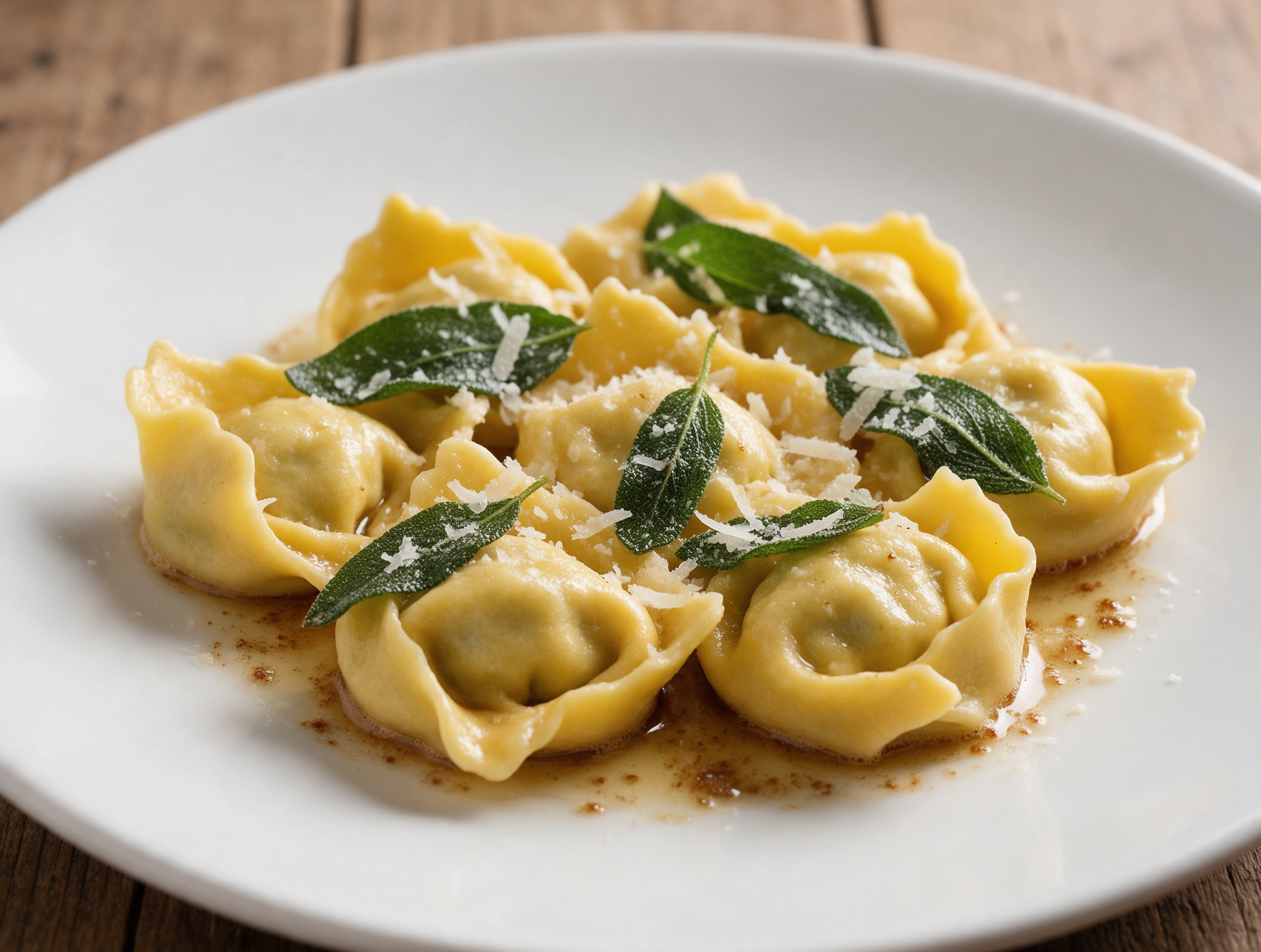
Tortelli d’Erbetta with Ricotta, Parmigiano and Chard
Ingredients
Method
- Wash the chard and wilt the leaves in a 26 cm / 10-inch skillet with a splash of water over medium heat for 4 to 5 minutes, until fully collapsed.
- Drain, cool, then squeeze the chard very dry by hand, twice if needed. Chop it finely.
- In a large bowl, combine the chopped chard, ricotta, 100 g Parmigiano, egg yolk, nutmeg, salt, and pepper. Mix until uniform and chill while you make the dough.
- Mound the flour on a work surface with a well in the center. Crack in the eggs with a pinch of salt and whisk, gradually pulling in flour from the edges.
- Knead the dough for 8 to 10 minutes until smooth and elastic. Wrap in plastic and rest at room temperature for 30 minutes.
- Divide the dough into 4 pieces. Roll each through a pasta machine or by hand to about 1 to 2 mm thick, keeping the rest covered.
- Lay a sheet on a floured surface and spoon teaspoon-sized mounds of filling, about 12 to 15 g each, in a row 5 cm apart.
- Fold the dough over the filling, press out any air, and seal the edges firmly. Cut into squares with a pastry wheel. Repeat with the remaining dough, makes about 36 to 40 tortelli.
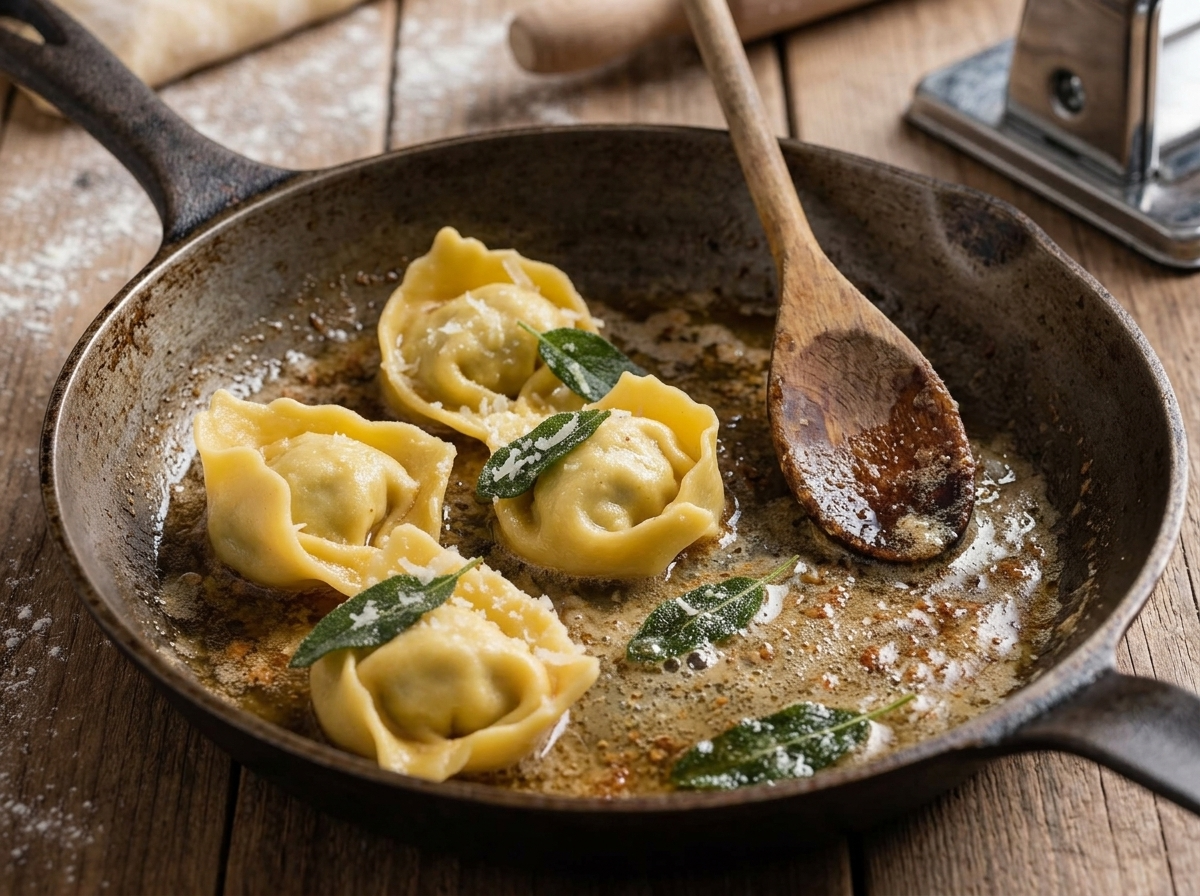
- Bring a 5-quart / 4.7 L pot of well-salted water to a boil. Melt the butter with sage in the 26 cm skillet over low heat for 3 to 4 minutes, until the butter smells nutty and the sage crisps slightly. Watch closely, it burns fast once it starts foaming.
- Cook the tortelli in two batches so the pot doesn't crowd, 3 to 4 minutes each, until they float and the pasta at the seams is tender.
- Lift the tortelli with a slotted spoon straight into the sage butter and toss gently, adding a splash of pasta water if needed.
- Plate immediately, topping with the extra Parmigiano and black pepper.
Notes
- Drain ricotta for 20 minutes before mixing or the filling turns watery.
- Keep unused dough covered with a towel so it doesn't dry out while you work.
- Seal tortelli edges firmly, air pockets cause them to burst open in the pot.
- Salt the pasta water generously, it's the only seasoning the dough itself gets.
Tips for Success
- Squeeze the cooked chard by hand until no more water drips out, twice if needed.
- Rest the dough the full 30 minutes or it will fight back when you roll it.
- Roll the pasta thin enough to see your hand through it, about 1 to 2 mm.
- Watch the butter closely once it foams, it goes from nutty to burnt in under a minute.
- Boil tortelli in two batches so the pot stays at a steady boil and cooks them evenly.
Variations
- Swap chard for spinach or a mix of chard and nettles for a milder, less mineral filling.
- Finish with a light tomato sauce and torn basil instead of butter for a brighter version.
- Add a pinch of lemon zest to the filling for sharper contrast against the rich Parmigiano.
Storage and Reheating
Store uncooked tortelli in a single layer on a floured tray in the fridge for up to 24 hours, covered loosely. Once cooked, leftover tortelli keep for 2 to 3 days in an airtight container in the fridge.
Reheat gently in a 26 cm / 10-inch skillet with a knob of butter and a splash of water over low heat for 3 to 4 minutes, turning once, until warmed through. Skip the microwave, it toughens the pasta seams.
For longer storage, freeze uncooked tortelli in a single layer until solid, then move to a freezer bag for up to 2 months. Cook straight from frozen, adding 1 to 2 minutes to the boiling time.
Serving Suggestions
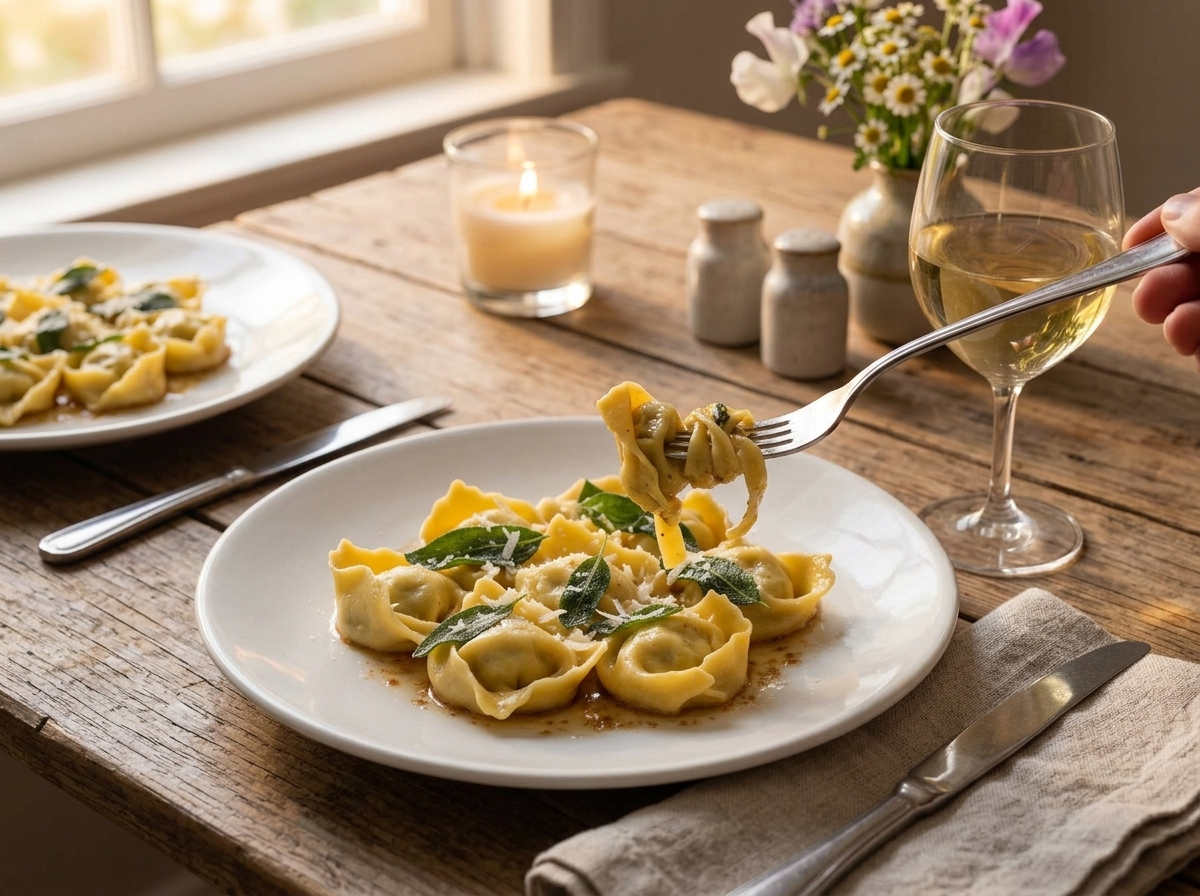
Serve tortelli d’erbetta as a first course, about 6 pieces per plate, with extra Parmigiano and a crack of black pepper.
A glass of dry Lambrusco or a light Pinot Bianco cuts through the butter well. For a full meal, follow with a simple roast chicken or a green salad dressed with lemon.
Leftover tortelli also work at room temperature, tossed with olive oil, for a packed lunch the next day.
FAQ
How do I know when tortelli d’erbetta are done boiling?
They’re done when they float to the surface and the pasta at the seams feels tender, about 3 to 4 minutes in well-salted water. Fish one out and bite through the edge, it should give with no raw flour taste. Cook in batches so the water stays at a steady boil.
Can I use spinach instead of chard in the filling?
Yes, spinach works, though it’s wetter than chard and needs a firmer squeeze before mixing in. Chard, or erbette, is the traditional Parma choice and has a milder, slightly mineral flavor. Either way, the filling should hold together without weeping liquid.
Can I freeze tortelli d’erbetta before cooking them?
Yes, freeze them uncooked in a single layer on a tray until solid, then move to a freezer bag for up to 2 months. Boil straight from frozen, adding 1 to 2 minutes to the cooking time. Don’t thaw first or the seams can split.
What sauce goes with tortelli d’erbetta besides butter and sage?
Butter and sage is the classic Parma treatment, but a light tomato sauce with torn basil also works and lightens the dish. Skip heavy cream sauces since the ricotta filling is already rich. A drizzle of good olive oil with Parmigiano works too.
Is tortelli d’erbetta vegetarian?
Yes, tortelli d’erbetta is vegetarian since the filling is ricotta, Parmigiano, and chard with no meat. It isn’t vegan, though, because the dough uses eggs and the filling relies on dairy. Reducing the finishing butter is the only easy adjustment.
What’s the difference between tortelli d’erbetta and tortellini?
Tortelli d’erbetta are larger, square-folded pasta filled with ricotta and chard, typical of Parma. Tortellini are smaller, ring-shaped, and traditionally filled with a meat mixture, more associated with Bologna and Modena. The shapes, sizes, and fillings mark them as distinct regional dishes.