
Jump to Recipe
Frittata di cipolle is an Italian onion frittata made with 700 g of thinly sliced onions cooked in olive oil until soft and pale gold, then set in eight eggs with Parmigiano. It takes about 57 minutes start to finish and slices into four clean wedges.
The onions are the whole point. Cooked over medium-low heat for 25 minutes, they turn jammy and sweet, and they make up about half the volume in the pan. The eggs are just the binder.
Keep the heat low. If the edges of the onions brown, they turn bitter and the frittata loses its clean sweetness. Pale gold is the target.
I finish it in the oven for 10 minutes instead of flipping it, which keeps the top even and the center tender. It’s good warm, good at room temperature, and holds up well for lunch the next day.
Why You’ll Love This Recipe
- Costs about $2 per serving using pantry staples
- Slices cleanly, so it travels well in lunchboxes
- Tastes good warm, at room temperature, or cold
- Naturally gluten free with no flour or breadcrumbs
Ingredient Notes
- yellow onions: Yellow onions give the best sweetness after a long, gentle cook. Red onions work but turn a duller color, and sweet onions hold more water, so cook them until the pan is dry.
- extra-virgin olive oil: Use a mild, fruity oil rather than a peppery one. Three tablespoons is enough to soften the onions and keep the frittata from sticking.
- Parmigiano Reggiano: Grate it finely so it melts into the eggs. Pecorino Romano works too, but use 40 g and taste before adding extra salt, since it’s saltier.
- eggs: Eight large eggs (about 400 g) fill a 26 cm / 10-inch skillet to roughly 2.5 cm deep. Fewer eggs gives a thinner frittata that sets faster and dries out sooner.
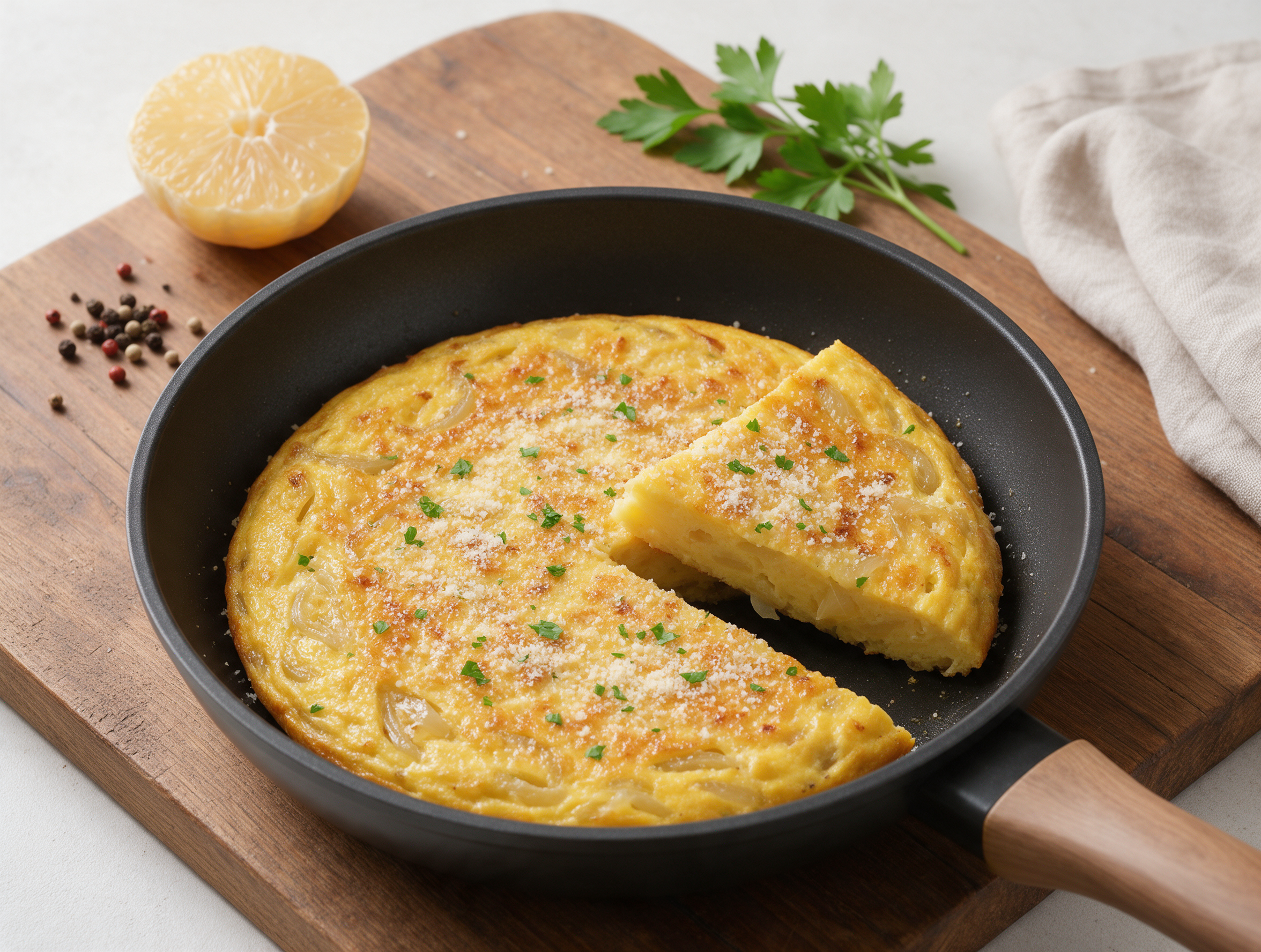
Frittata di Cipolle with Parmigiano and Sweet Onions
Ingredients
Method
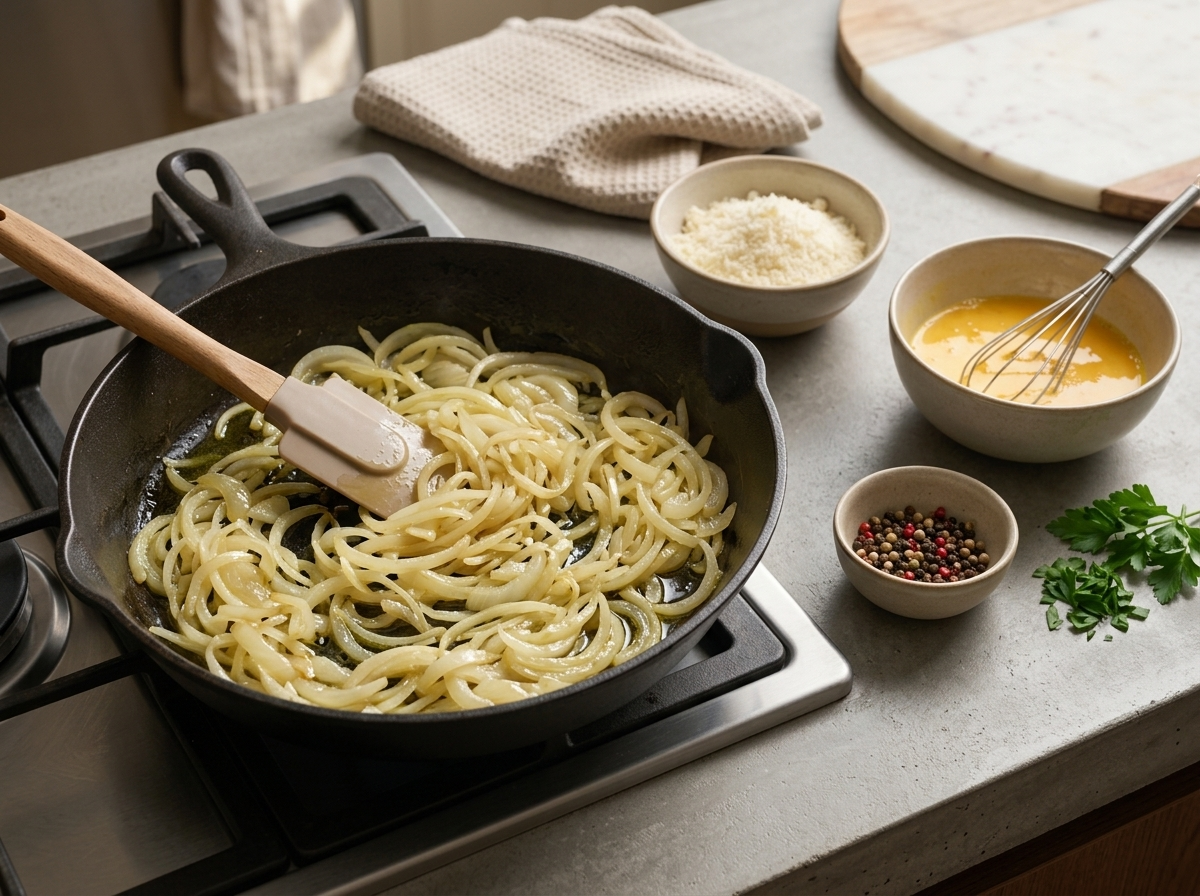
- Heat the olive oil in a 26 cm / 10-inch oven-safe nonstick skillet over medium-low heat. Add the sliced onions and 1/2 tsp salt, and cook for 25 minutes, stirring every 3 to 4 minutes, until they're soft and glossy and pale gold at most. If the edges start to brown, lower the heat and stir in 1 tbsp water.
- While the onions cook, heat the oven to 180 C / 350 F with a rack in the middle. Whisk the eggs, Parmigiano, parsley, remaining 1/2 tsp salt, and pepper in a large bowl until no streaks of white remain.
- Spread the onions in an even layer and drop the heat to low. Pour the eggs over the onions and tilt the pan so the eggs flow through. Cook for 2 minutes without stirring, until the edges just begin to set.
- Slide the skillet onto the middle rack and bake for 10 minutes, until the center doesn't jiggle when you nudge the pan and the top is lightly golden. An instant-read thermometer in the center reads 160 F / 71 C.
- Set the skillet on a trivet and drape a towel over the hot handle. Rest the frittata for 5 minutes, then run a silicone spatula around the edge, slide it onto a board, and cut it into 4 wedges.
Notes
- Cook the onions the full 25 minutes, since they shrink to roughly a third of their raw volume.
- Wrap a towel around the skillet handle after baking so nobody grabs it hot.
- Let the frittata rest 5 minutes in the pan before cutting so the wedges hold together.
- Taste the Parmigiano before salting the eggs, since aged cheese varies in saltiness.
Tips for Success
- Slice the onions pole to pole, about 3 mm thick, so they soften evenly and melt instead of turning stringy.
- Stir the onions every 3 to 4 minutes and add 1 tbsp water if the pan looks dry, so they soften without coloring.
- Use a 26 cm / 10-inch oven-safe nonstick skillet so the frittata releases cleanly and sets about 2.5 cm thick.
- Pull the frittata when the center stops jiggling, then rest it 5 minutes in the pan so carryover heat finishes the cook gently.
- Grate the Parmigiano finely with a rasp-style grater so it dissolves into the eggs instead of clumping in the middle.
Variations
- Render 100 g diced pancetta in the pan before adding the onions, then use the fat in place of 1 tbsp of the olive oil.
- Swap the Parmigiano for 40 g Pecorino Romano and add plenty of black pepper for a sharper, cacio e pepe style frittata.
- Fold in 2 tbsp chopped fresh sage with the parsley, or dot the top with 100 g ricotta before baking for a creamier slice.
Storage and Reheating
Frittata di cipolle keeps in the fridge for 3 to 4 days in an airtight container. Let it cool to room temperature first, and don’t leave it out longer than 2 hours.
To reheat, wrap a wedge in foil and warm it in a 150 C / 300 F oven for 10 minutes, or heat it in a covered nonstick skillet over low heat for 6 to 8 minutes. It’s also fine eaten cold or at room temperature.
Freezing works for up to 1 month, though the eggs turn slightly spongy after thawing. Wrap wedges individually in parchment and foil, thaw overnight in the fridge, then reheat the same way.
Serving Suggestions
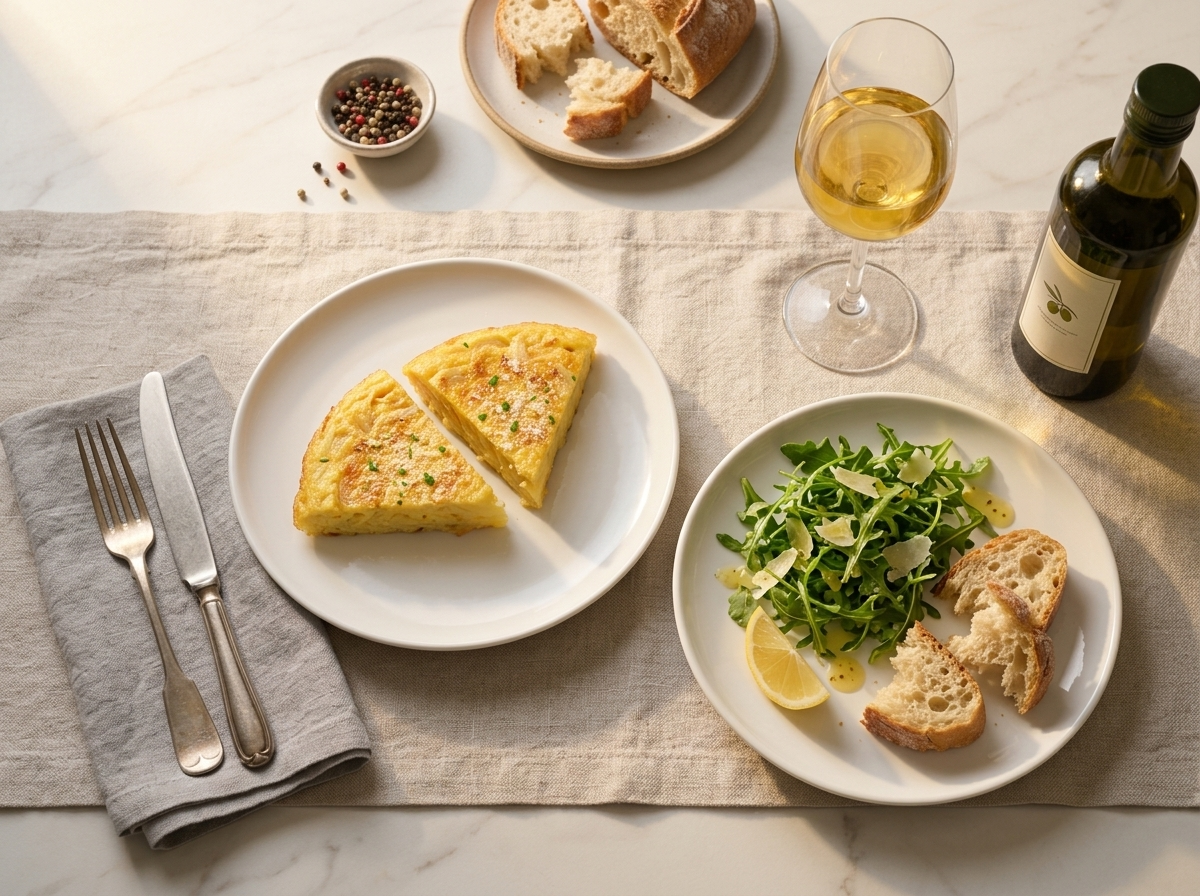
A crisp green salad dressed with lemon juice and olive oil is the usual partner. The acidity cuts through the sweetness of the onions. Arugula or shaved fennel both work.
For a heartier dinner, add crusty bread and a plate of pan-fried potatoes or sliced tomatoes with oregano. A glass of dry white wine such as Vermentino fits well.
Cold wedges also make a good panino. Tuck one into a split roll with a few arugula leaves and a swipe of mustard for a packed lunch.
FAQ
How do I know when frittata di cipolle is done?
Frittata di cipolle is done when the center no longer wobbles as you nudge the pan and the top is lightly golden. The edges pull away slightly from the skillet. If you want a number, an instant-read thermometer in the center should read 160 F / 71 C.
Can I use red onions or sweet onions instead of yellow onions in an Italian onion frittata?
Yes. Red onions work, though the frittata turns a duller gray-pink color and tastes a bit sharper. Sweet onions such as Vidalia are milder and hold more water, so cook them until the pan looks dry again before adding the eggs. White onions are fine too.
Can I make frittata di cipolle ahead, and does it freeze?
Yes, bake it up to a day ahead, cool it fully, cover it, and refrigerate. It keeps 3 to 4 days. Freezing works for up to 1 month, but the eggs turn slightly spongy after thawing, so refrigerate and eat it within 3 to 4 days when you can.
What do I serve with an Italian onion frittata for dinner?
A crisp green salad with lemon and olive oil is the usual partner, since it cuts the sweetness of the onions. Add crusty bread or roasted potatoes for a heartier plate. Cold wedges also work tucked inside a roll as a panino for lunch.
Is frittata di cipolle gluten free, and how do I make it dairy free?
It’s naturally gluten free, since the recipe uses no flour or breadcrumbs. For a dairy-free version, leave out the Parmigiano and add an extra 1/4 tsp salt to the eggs. The texture stays tender, though the flavor is milder and less savory.
What’s the difference between frittata di cipolle and a Spanish tortilla?
A frittata di cipolle is built on onions cooked in a few tablespoons of oil, with cheese in the eggs, and it sets in the oven or on low heat. A Spanish tortilla is built on potatoes cooked in much more oil and is flipped onto a plate. The frittata is lighter and looser.