
Jump to Recipe
Cianfotta napoletana is a Neapolitan vegetable stew built from eggplant, potatoes, peppers, and zucchini, braised slowly in olive oil and their own juices until each piece turns soft but still holds its shape. No stock, no added water. Just a low flame and patience.
I first made this the way my nonna’s neighbor did it, layering the vegetables by how long they take to soften and letting the pot sit on the lowest burner for close to an hour. The eggplant breaks down just enough to thicken the juices into a light sauce, while the potatoes stay whole and creamy inside.
This is a summer dish in Naples, built around whatever the garden gives you that week. I keep the classic four vegetables here, since that’s what makes it cianfotta and not just a mixed vegetable side.
It’s naturally vegan and gluten free, and it tastes better the next day once the flavors settle into each other.
Why You’ll Love This Recipe
- One pot, no stock needed, just vegetables and olive oil
- Tastes even better the next day, ideal for meal prep
- Naturally vegan and gluten free with no substitutions needed
- Uses whatever summer vegetables you already have on hand
Ingredient Notes
- eggplant: Salt the cubes for 20 minutes and pat dry if the eggplant is large and seedy, to cut any bitterness before cooking.
- potatoes: Waxy potatoes hold their shape better than starchy russets, which can break down too far in a long simmer.
- bell peppers: A mix of red and yellow gives more sweetness than green, which can taste a bit bitter after long cooking.
- zucchini: Add it last, it cooks fast and turns to mush if it goes in with the potatoes at the start.
- tomatoes: Ripe summer tomatoes work best, but canned whole peeled tomatoes, crushed by hand, are a fine swap off season.
- olive oil: It’s the only fat in the dish, so use one you’d happily drizzle raw over bread.
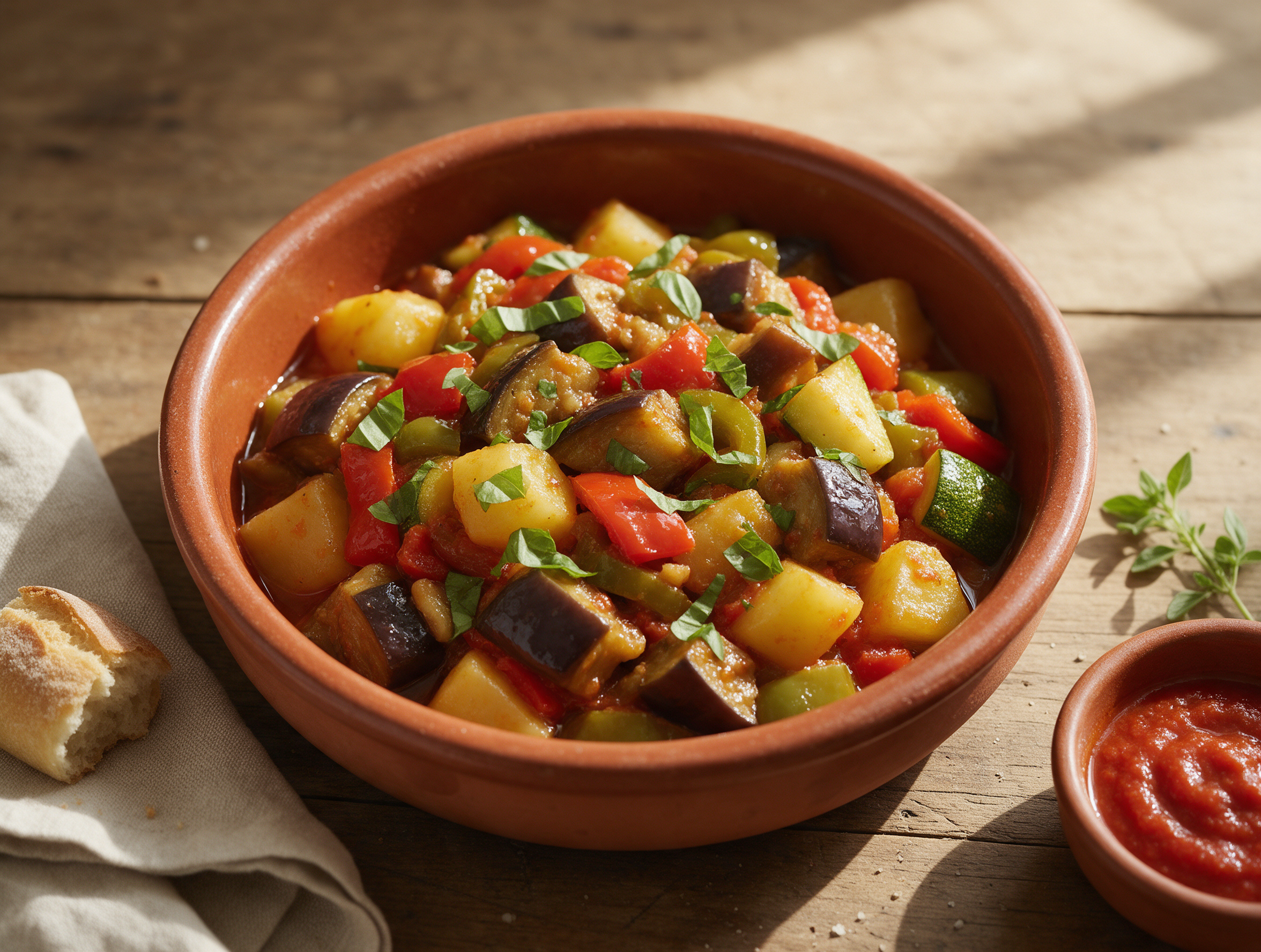
Cianfotta Napoletana: Slow-Cooked Vegetable Stew
Ingredients
Method
- Put the eggplant cubes in a colander, salt lightly, and let sit for 20 minutes to draw out bitterness. Pat dry with a towel.
- Heat the olive oil in a 30 cm / 12-inch heavy-bottomed pot over medium-low heat. Add the onion, celery, and garlic, and cook 6 to 8 minutes until soft and translucent.
- Add the potatoes, stirring to coat them in the oil. Cook for 5 minutes, stirring occasionally.
- Add the peppers and eggplant. Stir, cover, and cook on low heat for 10 minutes, stirring once or twice.
- Add the tomatoes, salt, and pepper. Stir, cover, and simmer on low for 25 minutes, stirring occasionally, until the potatoes are almost tender when pierced with a knife.
- Add the zucchini, cover, and cook 12 to 15 minutes more until all the vegetables are tender but still hold their shape.
- Remove the lid for the last 5 minutes if the stew looks watery, to let the juices reduce into a light sauce.
- Take the pot off the heat and stir in the torn basil. Rest for 10 minutes, taste and adjust salt, then serve warm or at room temperature.
Notes
- Salt eggplant cubes 20 minutes ahead if large and seedy.
- Cut vegetables to a consistent 2 cm size for even cooking.
- Keep heat low and lid on, this braises in its own juices.
- Add zucchini last so it doesn't turn to mush.
- Rest 10 minutes off heat before serving.
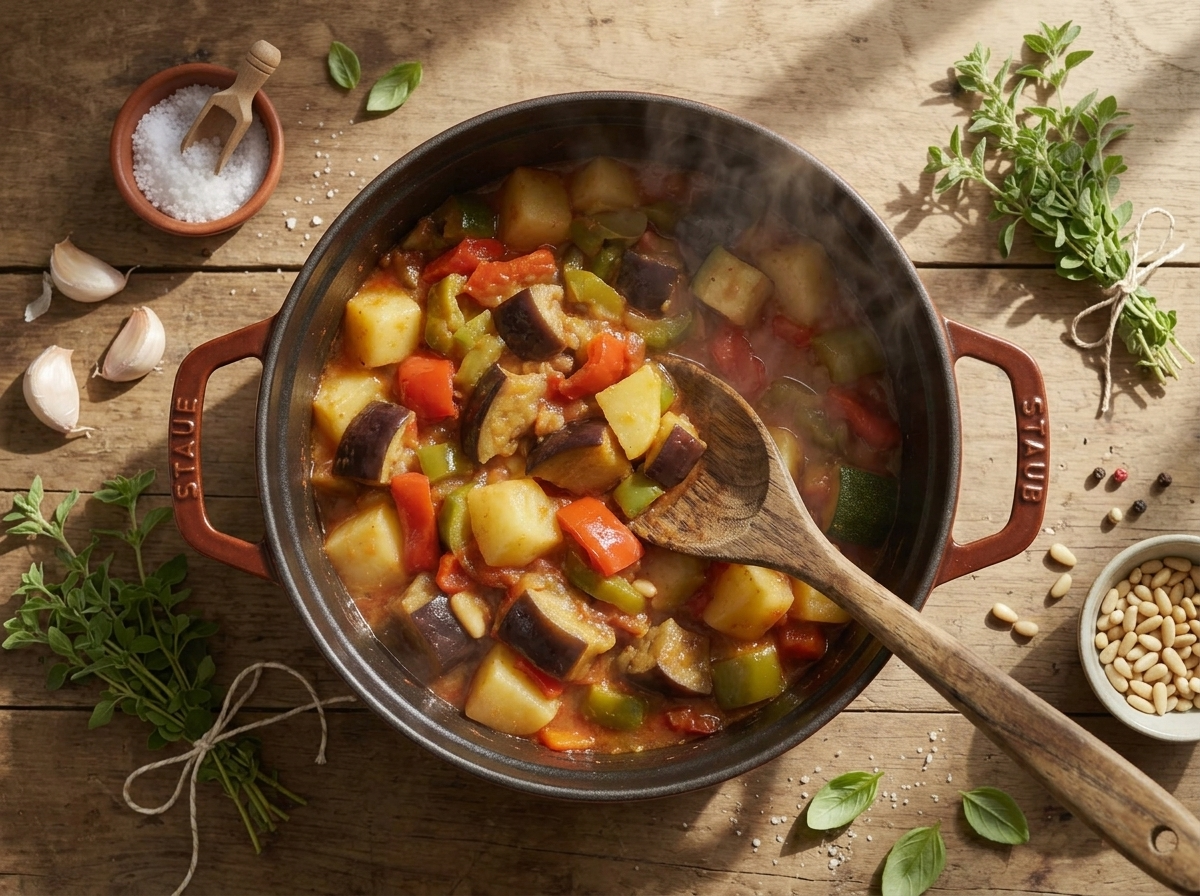
Tips for Success
- Cut all vegetables to roughly the same 2 cm size so everything cooks at an even pace.
- Salt the eggplant cubes for 20 minutes and pat them dry to cut bitterness before they hit the pot.
- Layer vegetables by cook time, potatoes and peppers first, zucchini last, so nothing turns to mush.
- Keep the lid on and the heat low, this stew braises slowly in its own juices, not added water.
- Rest the stew off heat for 10 minutes before serving so the sauce settles and thickens slightly.
Variations
- Swap eggplant for extra zucchini if you’re not a fan, though it changes the texture balance quite a bit.
- Add a handful of pitted olives or capers near the end for a saltier, more southern-coast profile.
- Stir a spoonful of tomato paste into the soffritto for a deeper, more concentrated sauce base.
Storage and Reheating
Cianfotta napoletana keeps well and honestly tastes better after a day in the fridge, once the flavors have had time to settle. Store it in an airtight container for 4 to 5 days.
Reheat gently in a skillet over medium-low heat with a splash of water or olive oil, stirring for 5 to 7 minutes until warmed through. A microwave works too, covered, in 90-second bursts, stirred between each.
It freezes reasonably well for up to 3 months, though the potatoes and zucchini soften further on thawing. Thaw overnight in the fridge before reheating.
Serving Suggestions
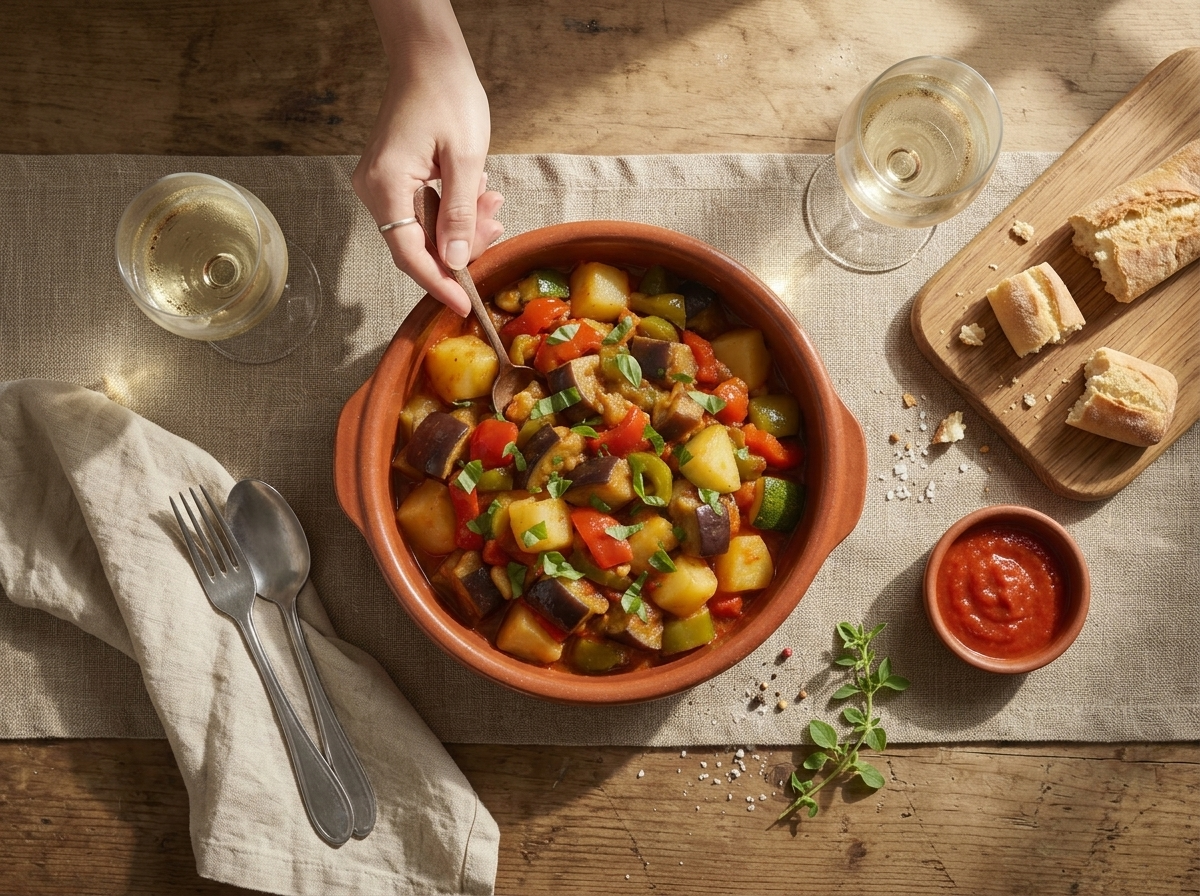
Cianfotta napoletana works as a main dish with crusty bread for mopping up the juices, or as a side next to grilled fish or crispy roasted chicken legs. A fried egg on top turns leftovers into a full meal.
Finish each bowl with torn basil and a drizzle of raw olive oil. Traditional versions stay dairy-free, but a little grated pecorino won’t hurt if that’s not a priority for you.
Pour a chilled glass of Falanghina or Greco di Tufo alongside it, both hold up well against the sweetness of the peppers and tomato.
FAQ
Why is my cianfotta napoletana watery instead of thick?
Too much liquid usually comes from very juicy tomatoes or keeping the lid on for the whole cook. Remove the lid for the last 5 to 10 minutes of simmering to let the juices reduce, and use slightly fewer tomatoes if yours are especially watery.
Can I use canned tomatoes instead of fresh in cianfotta napoletana?
Yes, canned whole peeled tomatoes work well, especially outside summer when fresh ones lack flavor. Crush them by hand as you add them to the pot, and use the same 300 g amount called for in the recipe.
Can I make cianfotta napoletana a day ahead and keep it in the fridge?
Yes, it actually improves after a day resting in the fridge, as the vegetables absorb more of the tomato and olive oil. Store it airtight for up to 4 to 5 days and reheat gently before serving.
What goes well with cianfotta napoletana besides bread?
Grilled fish, roast chicken, or eggs poached in spicy tomato sauce on top all work well alongside it. A chilled glass of Falanghina or Greco di Tufo balances the sweetness from the peppers and tomato nicely.
Is cianfotta napoletana vegan and gluten free?
Yes, it’s naturally both, since the only ingredients are vegetables, olive oil, salt, and basil. No dairy, meat, or wheat-based products go into the pot at any stage.
What’s the difference between cianfotta napoletana and French ratatouille?
Cianfotta cooks everything together in one pot low and slow, while ratatouille often sautés each vegetable separately before combining them. Cianfotta also skips herbes de Provence, keeping the flavor to just olive oil, tomato, and the vegetables themselves.