
Jump to Recipe
Fagioli con le cotiche is a Roman and Umbrian bean stew built on dried borlotti beans and cured pork rind, known as cotiche. The rind simmers low for close to two hours, releasing collagen that thickens the broth without any flour or cream.
This is a farmhouse dish, the kind that used almost every part of the pig. Pork rind was cheap, and a slow simmer turned a tough scrap into something soft and gelatinous, worth eating on its own.
The one thing that trips people up is rushing the rind. If you pull it off the heat too early, it stays chewy and rubbery instead of soft, so give it the full simmer time even if the beans look done sooner.
I make a big pot on a Sunday and eat it through the week. It only gets better by day two, once the broth has had time to settle into the beans.
Why You’ll Love This Recipe
- One pot, minimal cleanup, and reheats well
- Pork rind thickens the broth naturally, no flour needed
- Feeds a crowd for the cost of a few ingredients
- Tastes better the next day, good for meal prep
Ingredient Notes
- dried borlotti beans: Soak overnight in plenty of cold water. Cannellini beans work as a substitute if borlotti aren’t available.
- pork rind (cotiche): Ask your butcher for pork rind or skin with a thin layer of fat attached. It’s the ingredient that gives the broth its body.
- canned crushed tomatoes: San Marzano style tomatoes give a cleaner, less acidic base, but any good crushed tomato works.
- fresh rosemary: Use a whole sprig so you can pull it out easily before serving. Dried rosemary works in a pinch, use half the amount.
- chili flakes: Optional, but a small pinch adds background heat without making the stew spicy.
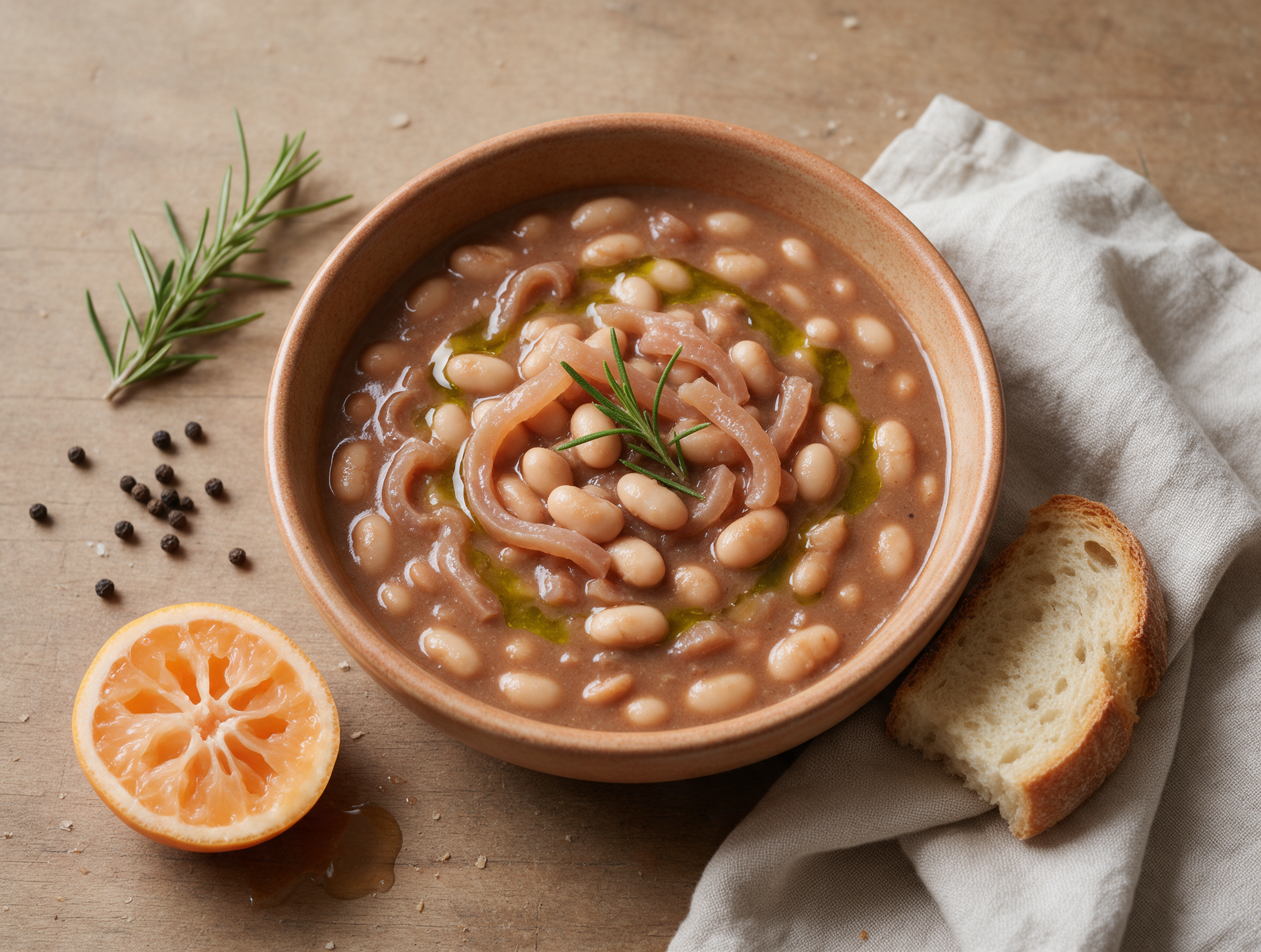
Fagioli con le Cotiche: Slow-Simmered Pork Rind Beans
Ingredients
Method
- Drain the soaked borlotti beans and rinse under cold water. Set aside.
- Scrape any remaining hair or bristle off the pork rind with a paring knife, then cut it into 2 cm / 3/4-inch strips.
- Bring a pot of water to a boil and blanch the pork rind strips for 5 minutes to remove surface fat and impurities. Drain and rinse.
- Heat the olive oil in a 5-quart / 4.5L Dutch oven over medium heat. Add the onion, carrot, and celery, and cook for 7 to 8 minutes, stirring occasionally, until softened and pale gold.
- Add the garlic, rosemary, and chili flakes if using. Cook for 1 minute until fragrant.
- Stir in the blanched pork rind and tomato paste, coating everything in the fat for about 2 minutes.
- Add the crushed tomatoes, bay leaves, drained beans, and water. Bring to a boil, then reduce the heat to a low simmer.
- Cover partially and simmer for 1.5 to 2 hours, stirring every 20 minutes, until the beans are creamy and the pork rind is soft and gelatinous. Add more water if the stew looks too thick before the beans are fully tender.
- Remove the bay leaves and rosemary sprig. Season with salt and pepper to taste.
- Ladle into bowls, drizzle with olive oil, and serve with crusty bread.
Notes
- Blanch pork rind first to strip excess fat and residual bristle.
- Simmer low and slow; a hard boil breaks the beans apart.
- Stew tastes better the next day once the broth settles.
- Add water gradually near the end if broth thickens too fast.
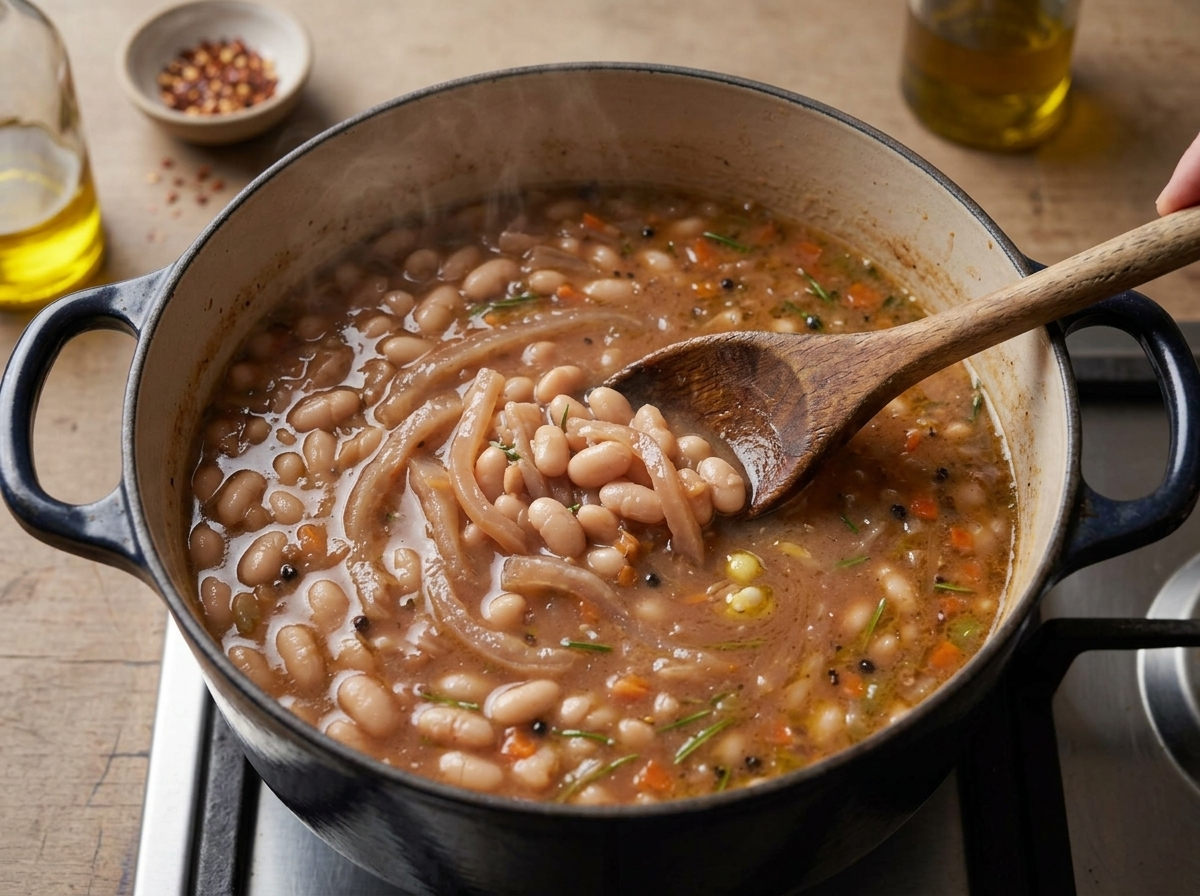
Tips for Success
- Blanch the pork rind for 5 minutes before simmering to strip surface fat and rinse away residue.
- Soak dried borlotti beans overnight in cold water so they cook evenly during the long simmer.
- Keep the pot at a low simmer, not a rolling boil, or the beans break apart before the rind turns tender.
- Scrape any hair or bristle off the pork rind with a paring knife before blanching for cleaner flavor.
- Stir in a splash of water if the stew thickens too fast in the last 30 minutes of cooking.
Variations
- Swap borlotti for cannellini beans for a paler stew with a milder, creamier bite.
- Add a chopped chunk of pancetta with the soffritto for extra richness alongside the pork rind.
- Stir in cooked ditalini pasta at the end for a heartier, pasta e fagioli style dish.
Storage and Reheating
Fagioli con le cotiche keeps in the fridge for 4 days in an airtight container. The broth thickens as it sits, which is normal since the gelatin from the pork rind sets when cold.
Reheat gently on the stove over medium-low heat for 8 to 10 minutes, stirring in a splash of water or broth to loosen it back to a spoonable consistency. A microwave works too, in 1-minute bursts, stirred between each.
This stew freezes well for up to 3 months in an airtight container. Thaw overnight in the fridge before reheating on the stove.
Serving Suggestions
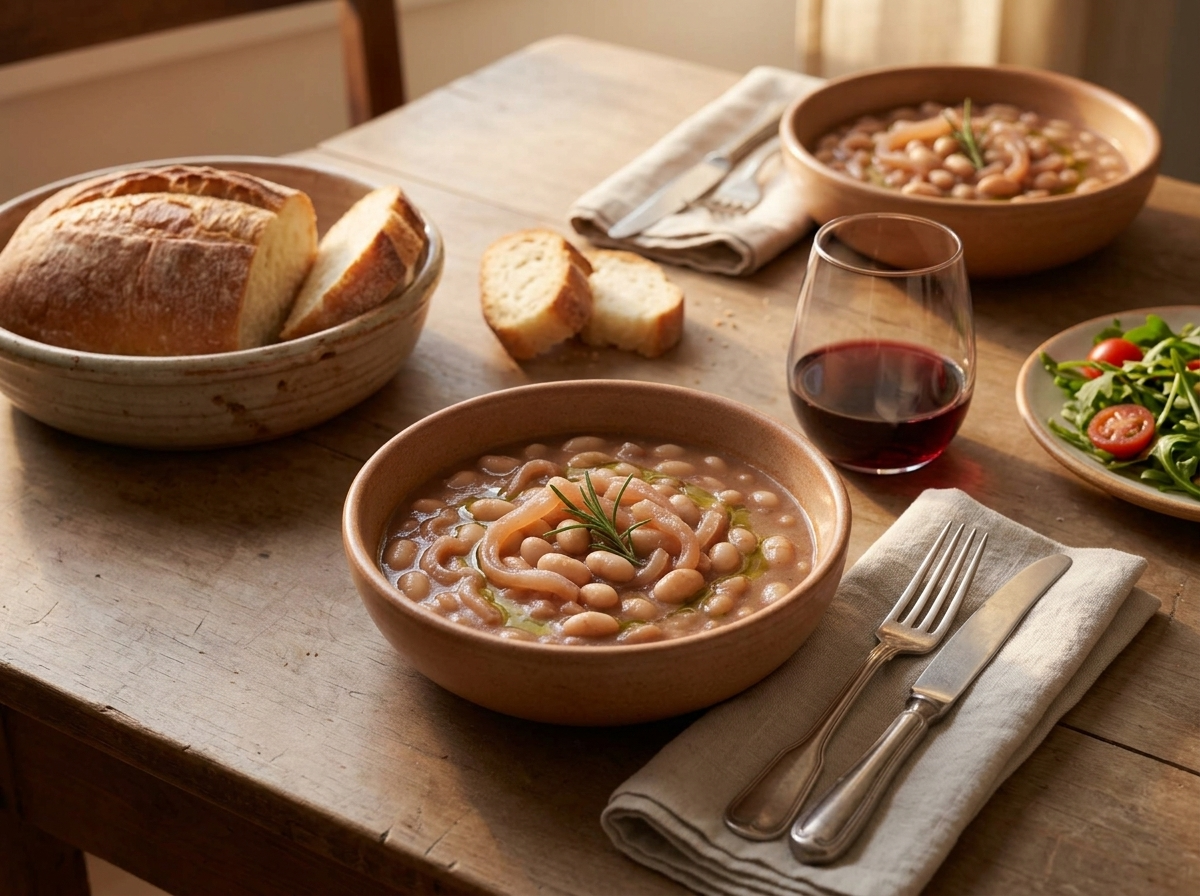
Crusty bread is the natural partner here, good for scraping the thick broth off the bottom of the bowl. Toast it first if you want crunch against the soft beans.
A bitter green salad, like radicchio or escarole with a lemon dressing, cuts through the richness of the pork rind. Grated pecorino and a drizzle of raw olive oil finish it at the table.
For a bigger meal, serve small bowls as a starter before roasted meat or grilled sausages.
FAQ
Why is my fagioli con le cotiche broth thin instead of thick?
Thin broth usually means the pork rind hasn’t simmered long enough to release its collagen. Cotiche need 1.5 to 2 hours at a low simmer before the broth turns glossy and coats a spoon. If it’s still thin, uncover the pot for the last 15 minutes and let some liquid reduce.
Can I use pancetta instead of pork rind in fagioli con le cotiche?
Pancetta won’t give the same result since it lacks the collagen that makes this stew’s broth thick and silky. Use it alongside pork rind for extra flavor, not as a full swap. If you can’t find cotiche at all, a ham hock simmered the same way gets you closer to the right texture.
Can I freeze fagioli con le cotiche?
Yes, this stew freezes well for up to 3 months in an airtight container. The gelatin from the pork rind actually helps it hold together after thawing. Thaw overnight in the fridge and reheat gently on the stove with a splash of water or broth to loosen the broth back up.
What do you serve with fagioli con le cotiche?
Crusty bread is the classic pairing, good for mopping up the thick broth at the bottom of the bowl. A simple bitter green salad with lemon cuts through the richness of the pork rind. Grated pecorino and a drizzle of raw olive oil on top round it out.
Is fagioli con le cotiche gluten free?
Yes, fagioli con le cotiche is naturally gluten free since it’s built from beans, pork rind, and vegetables with no flour or pasta added. Check your canned tomatoes and any broth you use, since some brands add gluten-based thickeners. Serve it with gluten-free bread if that’s a concern.
What’s the difference between fagioli con le cotiche and pasta e fagioli?
Fagioli con le cotiche is a straight bean and pork rind stew, thick from the rind’s own gelatin rather than pasta starch. Pasta e fagioli adds small pasta shapes and often skips the pork rind entirely. Both are Roman-Umbrian in spirit, but cotiche gives a heavier, more gelatinous broth.