
Jump to Recipe
Uova in purgatorio is a Neapolitan dish of eggs poached directly in a spicy tomato sauce, named for the fiery red color that looks like purgatory’s flames. The eggs cook right in the simmering sauce until the whites set and the yolks stay soft, so you get a saucy, spoonable dinner in about 30 minutes.
I make this when the fridge is nearly empty. A can of tomatoes, a few cloves of garlic, chile flakes, and eggs get you there, and one skillet does the whole job.
The soffritto of garlic and chile in olive oil, the same base that flavors a Tuscan tomato sauce with chili flakes, is what gives the sauce its backbone. Skip that step and the sauce tastes flat, no matter how good the tomatoes are.
Serve it straight from the skillet with bread for scooping. That’s the whole point of this dish, and it’s the reason it’s stayed on Neapolitan tables for generations, alongside classics like Neapolitan pizza with anchovies.
Why You’ll Love This Recipe
- One skillet start to finish, minimal cleanup after dinner
- Ready in about 30 minutes with pantry staples
- Spicy tomato sauce doubles as a base for other quick meals
- Soft yolks make their own sauce when you break them
Ingredient Notes
- canned whole peeled tomatoes: Crush them by hand for a chunkier sauce. San Marzano style gives the cleanest, least acidic flavor.
- garlic: Slice it thin instead of mincing so it softens in the oil without burning during the quick saute.
- red pepper flakes: Start with 1 tsp and taste the sauce before adding more, the heat builds as it simmers.
- eggs: Use the freshest eggs you have, fresh whites hold their shape better in the wells instead of spreading thin.
- pecorino: Optional but adds a salty edge. Parmesan works as a milder substitute.
- crusty bread: A toasted sourdough or warm baguette is the right texture for scooping sauce and yolk.
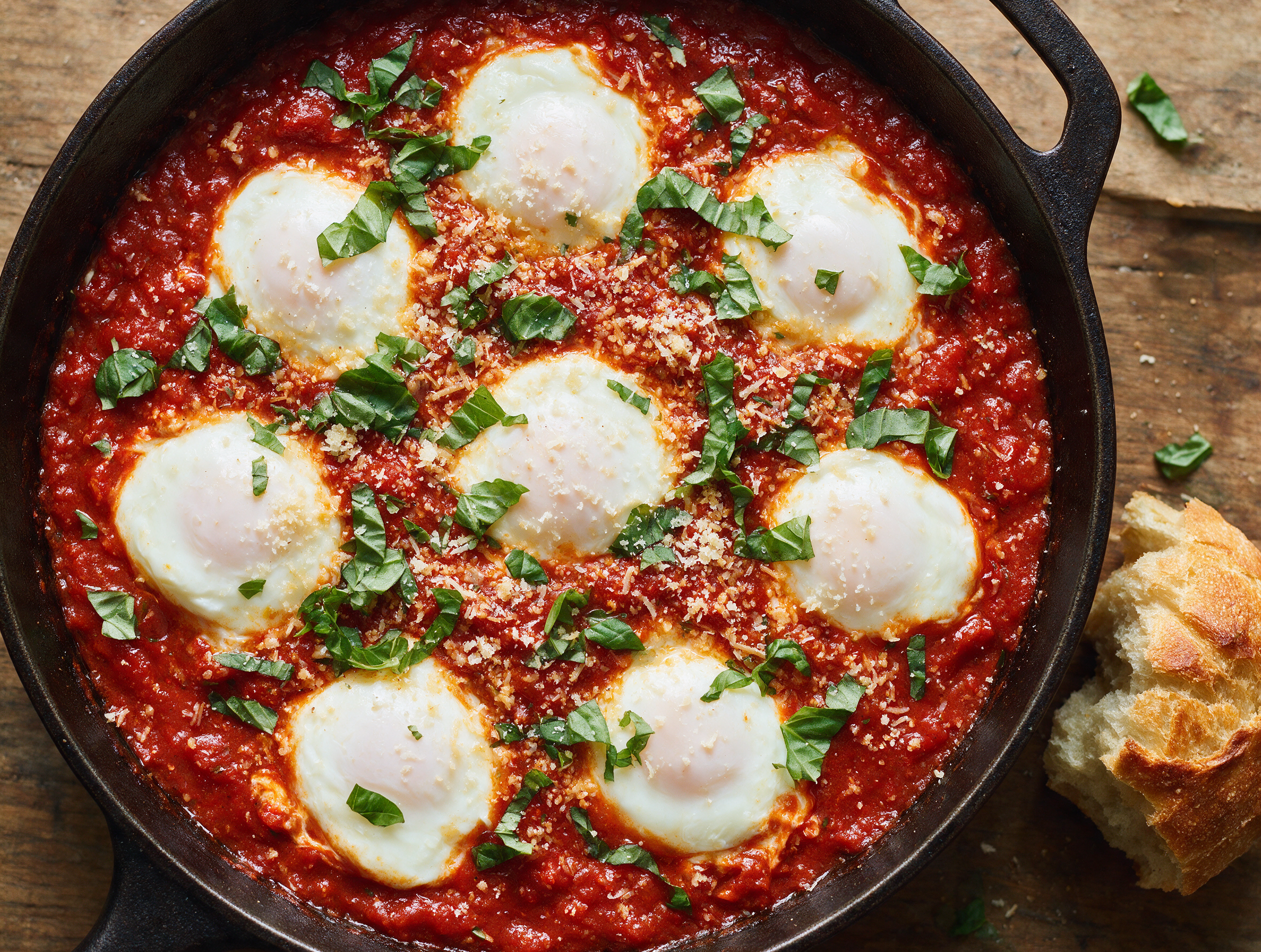
Uova in Purgatorio: Eggs Poached in Spicy Tomato Sauce
Ingredients
Method
- Heat the olive oil in a 30 cm / 12-inch skillet over medium heat. Add the sliced garlic and red pepper flakes, and cook for 1 to 2 minutes until the garlic turns fragrant but doesn't brown.
- Stir in the tomato paste and cook for 30 seconds until it darkens slightly and smells toasty.
- Add the crushed tomatoes with their juices, the salt, and a few grinds of black pepper. Bring to a low simmer and cook uncovered for 12 to 15 minutes, stirring occasionally, until the sauce thickens and coats the back of a spoon.
- Taste the sauce and adjust the salt or chile flakes.
- Use the back of a spoon to make 8 shallow wells in the sauce, spacing them evenly around the skillet. Crack an egg into each well.
- Cover the skillet and reduce the heat to low. Cook for 6 to 8 minutes, until the whites are fully set and opaque but the yolks still jiggle when you nudge the pan. Check at the 6-minute mark since eggs keep cooking under the lid.
- Remove the skillet from the heat. Scatter the torn basil and grated pecorino, if using, over the top.
- Serve straight from the skillet with crusty bread for scooping up the sauce and yolk.
Notes
- Crush canned tomatoes by hand for a chunkier, rustic sauce texture
- Cover the skillet while the eggs poach so whites set evenly on top
- Use pasteurized eggs if serving anyone pregnant, elderly, or immunocompromised
- Make the sauce up to 4 days ahead and poach eggs fresh each time

Tips for Success
- Crush canned tomatoes by hand for a chunkier sauce with more texture than pre-crushed varieties.
- Slice the garlic thin so it softens gently in the oil instead of scorching in the first minute.
- Space the eggs evenly around the skillet so each one gets its own pocket of sauce.
- Cover the pan while the eggs poach so the tops of the whites set without flipping.
- Check the eggs at 6 minutes for a runnier yolk, or let them go to 8 for a firmer set.
Variations
- Swap canned tomatoes for a jar of good passata for a smoother sauce that needs less simmering time.
- Stir torn stale bread or white beans into the sauce for a heartier one-pan meal.
- Finish with crumbled feta or a spoonful of nduja instead of pecorino for a different salty, spicy edge.
Storage and Reheating
The tomato sauce keeps 3 to 4 days in the fridge in a sealed container, without the eggs added. Reheat just the sauce in the skillet over medium heat until it bubbles again, then crack in fresh eggs and poach as directed.
Don’t cook the eggs ahead of time. Reheated poached eggs turn rubbery in the whites and chalky in the yolks, so poach them fresh each time you serve this dish.
Serving Suggestions
Crusty bread is essential here, use it to scoop up sauce and yolk before it’s gone. A toasted sourdough or a warm baguette both work.
For a full meal, add a simple green salad dressed with lemon and olive oil, or a side of roasted vegetables.
A glass of Chianti pairs well with the chile heat if you’re serving this for dinner, or sparkling water works for a lighter breakfast version.

FAQ
Why are my eggs in purgatorio runny with whites that won’t set?
Your heat is probably too low, or the pan isn’t covered. Covering the skillet traps steam so the tops of the whites set without flipping the eggs. Keep the heat at low, put the lid on, and check at 6 minutes, most stovetops need 6 to 8 minutes for whites to fully set while yolks stay soft.
Can I use fresh tomatoes instead of canned for uova in purgatorio?
Yes, use about 900 g ripe, peeled fresh tomatoes in place of the canned ones. Chop them and simmer 5 to 10 minutes longer than the canned version, since fresh tomatoes hold more water and need extra time to reduce to the same thick consistency.
Can I make the tomato sauce ahead for uova in purgatorio?
Yes, the tomato sauce keeps 3 to 4 days in the fridge in a sealed container. Reheat it in the skillet over medium heat until it bubbles, then crack in fresh eggs and poach as usual. Don’t cook the eggs ahead, reheated eggs turn rubbery and the yolks go chalky.
What goes well with uova in purgatorio besides bread?
Crusty bread is the classic pairing since you’ll want it for scooping up sauce and yolk, but a simple green salad with lemon and olive oil rounds out the meal. Roasted vegetables or white beans stirred into the sauce work well if you want something heartier.
Is uova in purgatorio safe to eat with a runny yolk?
It’s safe for most healthy adults when made with fresh, properly stored eggs cooked until the whites are fully set, which is how this recipe works. Pregnant women, young children, older adults, or anyone immunocompromised should use pasteurized eggs or cook the yolks until firm instead.
What’s the difference between uova in purgatorio and shakshuka?
Uova in purgatorio is the Italian version, built on a garlic and chile tomato sauce, while shakshuka is North African and Middle Eastern, usually spiced with cumin, paprika, and sometimes bell peppers. Both poach eggs directly in a simmering tomato sauce, but the spice profile and origin set them apart.