
Jump to Recipe
Ciambotta calabrese is a Calabrian summer vegetable stew built from eggplant, zucchini, peppers, potatoes, and tomatoes, simmered together in one pot until soft and thick. It started as a way to use up whatever was ripe and cheap that week, not a fixed recipe.
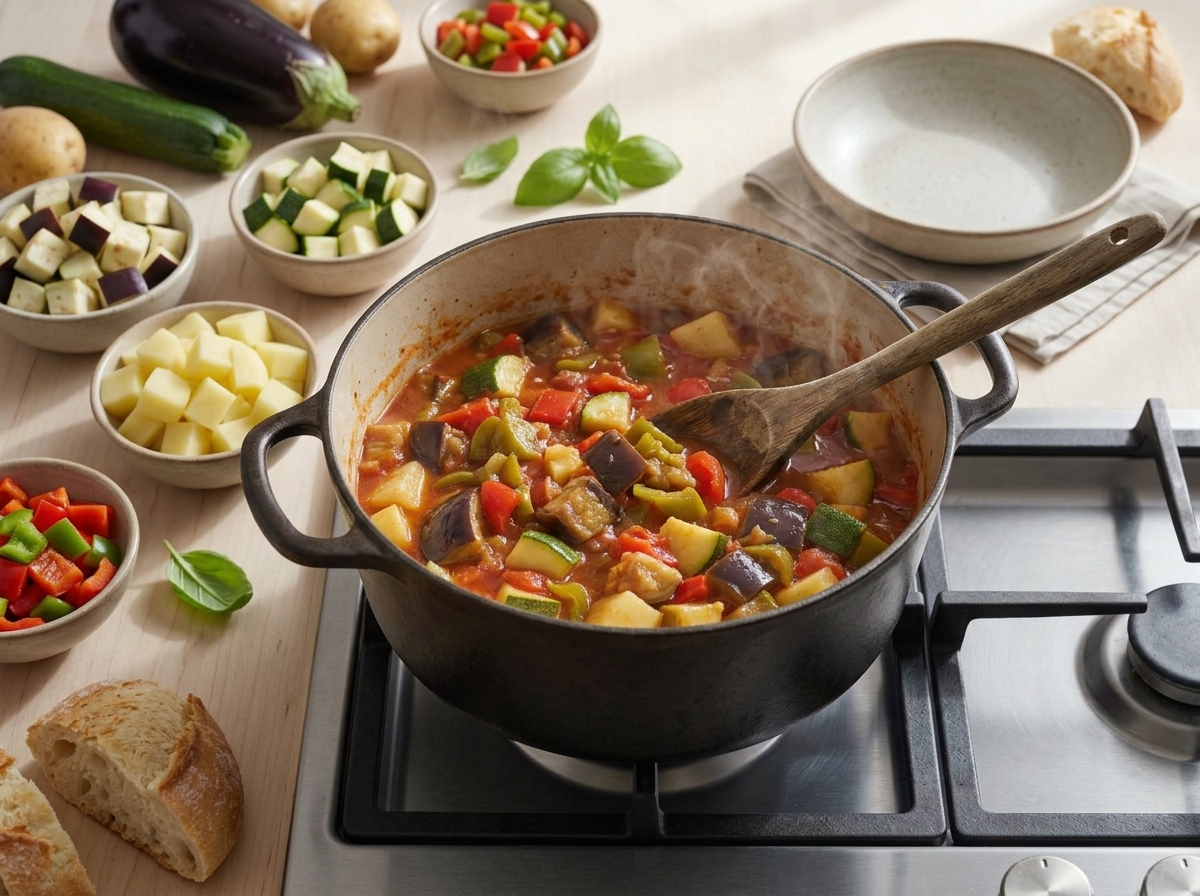
I make mine with a short soffritto of onion and garlic, then layer in the vegetables by how long they take to cook. Potatoes go in first, eggplant and zucchini last, so nothing turns to mush before the potatoes are done.
The one real trick: salt the eggplant and let it sit for 20 minutes before it hits the pot. Skip that step and the eggplant soaks up oil and turns bitter instead of soft.
Serve it warm with crusty bread, or let it sit overnight and eat it cold from the fridge the next day, when the flavors settle in.
Why You’ll Love This Recipe
- Uses up a full basket of summer vegetables at once
- One pot, no separate frying step required
- Tastes better the next day, good for meal prep
- Naturally vegan and gluten free without substitutions
Ingredient Notes
- eggplant: Salt and rest 20 minutes to draw out bitterness before cooking. Skip this and it soaks up oil instead of softening.
- zucchini: Use firm, small zucchini if you can find them. Large, seedy zucchini turn watery in the pot.
- bell peppers: Mix red and yellow for sweetness. Green peppers work too but taste sharper against the tomato.
- potatoes: Yukon gold holds its shape better than russet, which tends to break down into the broth.
- tomatoes: Ripe summer tomatoes or a 400 g can of whole peeled tomatoes both work fine here.
- olive oil: Use a fruity extra virgin oil since you taste it directly in the finished stew.
- basil: Add it off the heat at the very end so it stays fragrant instead of going dark and flat.
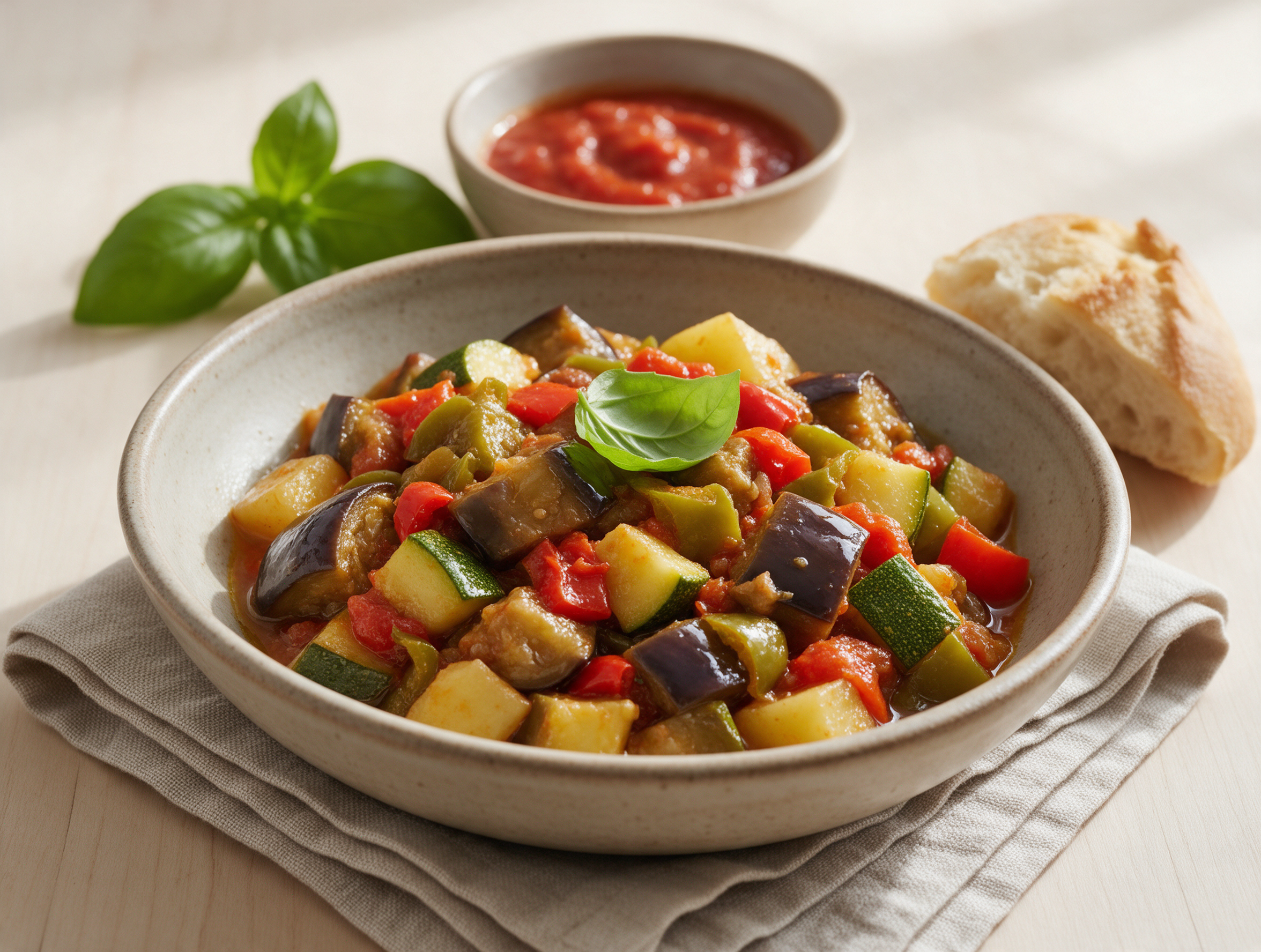
Simmered Ciambotta Calabrese Summer Vegetable Stew
Ingredients
Method
- Cut the eggplant into 2cm cubes, place in a colander set over a bowl, and toss with 1 tsp salt. Let drain 20 minutes, then pat dry with a clean towel.
- While the eggplant drains, cut the potatoes, zucchini, peppers, celery, onion, and tomatoes into similarly sized pieces so everything cooks evenly.
- Heat 3 tbsp of the olive oil in a 5-quart / 4.7L Dutch oven over medium heat. Add the onion and celery and cook 5 to 6 minutes, stirring, until soft and translucent.
- Add the garlic and cook for 1 minute until fragrant.
- Add the potatoes and cook for 5 minutes, stirring occasionally, until the edges start to soften.
- Add the drained eggplant, zucchini, bell peppers, and the remaining olive oil. Season with salt, black pepper, and red pepper flakes if using, and stir to coat.
- Add the tomatoes and the water or broth. Bring to a gentle simmer, cover, reduce the heat to low, and cook for 25 to 30 minutes, stirring every 10 minutes, until the potatoes are fork-tender and the vegetables have softened but still hold their shape.
- Uncover and simmer 5 to 8 minutes more if the stew looks thin, letting the liquid reduce until it coats the back of a spoon.
- Remove from the heat, stir in the torn basil, and taste for salt. Serve warm, or let cool and serve at room temperature.
Notes
- Salt eggplant 20 minutes before cooking, don't skip this step
- Cut vegetables to a matching 2cm size for even cooking
- Add basil off heat, not during the simmer
- Stew thickens more as it cools, account for that when serving
Tips for Success
- Salt the eggplant cubes and let them drain 20 minutes before cooking to stop them turning bitter and oily.
- Cut all vegetables to a similar 2cm size so everything finishes cooking at roughly the same time.
- Simmer uncovered for the last 5 to 8 minutes if the stew looks watery, letting it reduce to a thick, spoonable texture.
- Add basil off the heat at the very end so it stays fragrant instead of turning dark and flat.
- Taste and adjust salt after simmering, since the vegetables release their own liquid and can dilute the seasoning.
Variations
- Stir in a drained can of chickpeas during the last 10 minutes for a heartier, protein-added version of the stew.
- Swap the potatoes for cubed sweet potato for a sweeter, slightly caramelized version of ciambotta calabrese.
- Top each bowl with a poached egg for a Calabrian-style brunch spin on the vegetable stew.
Storage and Reheating
Ciambotta calabrese keeps for 4 to 5 days in an airtight container in the fridge, and the flavor actually improves after a day as the vegetables soften further and the tomato mingles with the oil.
Reheat gently in a saucepan over low heat for 5 to 7 minutes, stirring occasionally, adding a splash of water if it has thickened too much in the fridge. Microwave reheating works too, in 90-second bursts, stirred between each.
Freeze in a freezer-safe container for up to 2 months. Thaw overnight in the fridge before reheating on the stove, and expect the vegetables to soften a bit more than fresh, which is normal for a stew this soft-textured to begin with.
Serving Suggestions
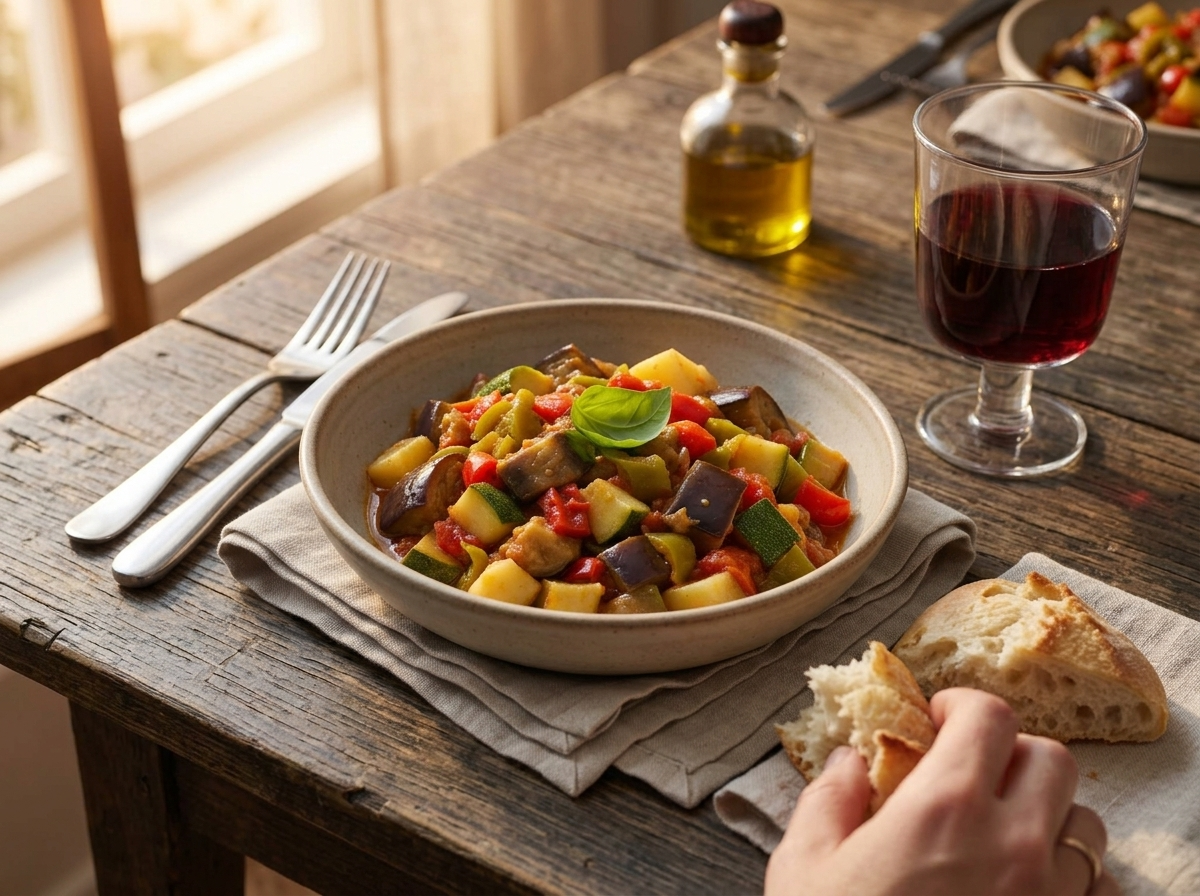
Ciambotta calabrese works as a stand-alone light main, spooned into a bowl with crusty bread on the side to soak up the juices.
As a side dish, it pairs well with grilled sausage, pan-seared chicken thighs, or a piece of simply cooked white fish.
Serve it warm the day it’s made or cold straight from the fridge the next day, both are traditional depending on the season and the cook.
FAQ
Why is my ciambotta calabrese watery instead of thick?
Your stew probably simmered covered for the full cook time without a chance to reduce. Uncover it for the last 5 to 8 minutes and let the liquid cook down until it coats the back of a spoon. Adding too much water at the start, more than the 120 ml called for, also thins it out.
Can I use canned tomatoes instead of fresh in ciambotta calabrese?
Yes, a 400g can of whole peeled tomatoes works well and is what many Calabrian cooks use outside of summer. Crush them by hand as you add them to the pot, and skip extra water if the can is very juicy, since ciambotta calabrese should stay thick, not soupy.
Can I freeze ciambotta calabrese?
Yes, it freezes well for up to 2 months in an airtight, freezer-safe container. Thaw it overnight in the fridge before reheating gently on the stove, and expect the vegetables to soften a bit more than when it was fresh, which is normal for a stew this soft-textured to begin with.
What goes well with ciambotta calabrese?
Crusty bread is the classic pairing, since you’ll want something to soak up the olive oil and juices left in the bowl. It also works alongside grilled sausage, pan-seared chicken thighs, or a piece of simply cooked white fish for a heartier meal.
Is ciambotta calabrese vegan and gluten free?
Yes, as written it’s fully vegan and gluten free, since it’s built from vegetables and olive oil with no dairy, meat, or flour involved. Just check that any broth you use for the 120 ml liquid is labeled gluten free if you’re cooking for someone with celiac disease.
What’s the difference between ciambotta calabrese and ratatouille?
The biggest difference is potatoes: ciambotta calabrese almost always includes them, giving the stew a starchier, thicker base than ratatouille. Ratatouille also tends to cook each vegetable separately before combining, while ciambotta simmers everything together in one pot from the start.