Jump to Recipe
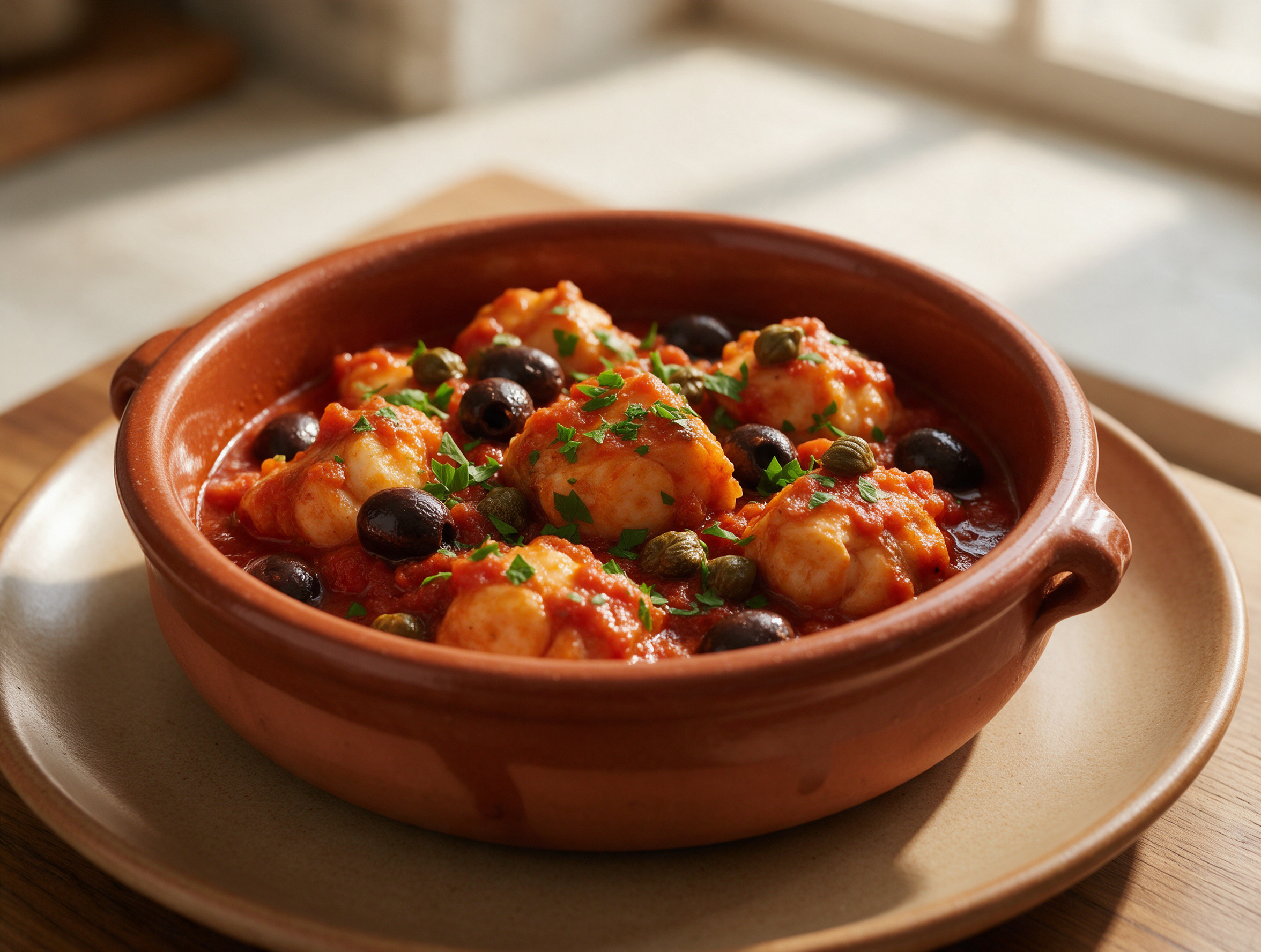
Coda di rospo in umido is monkfish tail braised in a quick tomato sauce with garlic, white wine, and black olives, in the same coastal tradition as braised baby octopus in tomato sauce found along Italy’s Adriatic and Tyrrhenian coasts. The fish holds its shape as it cooks, so the sauce stays clean-tasting instead of falling apart into flakes.
I use the tail portion because it’s the meatiest part of the fish and has almost no bones once the central cartilage is removed. A quick soffritto of onion and garlic goes in first, then wine to deglaze, then crushed tomatoes simmer down before the fish ever touches the pan.
The one thing that ruins this dish is overcooking the monkfish. It goes from silky to rubbery fast once it passes 145 F / 63 C, so pull it the moment the thickest piece turns opaque and flakes under light pressure.
Serve it with crusty bread to mop up the sauce, or spoon it over soft polenta.
Why You’ll Love This Recipe
- Monkfish stays firm and holds its shape in the tomato braise
- One pan, about 45 minutes from start to finish
- Capers and olives add brine without extra salt
- Sauce works spooned over polenta, bread, or plain
Ingredient Notes
- monkfish tail: Ask your fishmonger to remove the membrane and central bone. It saves time and the flesh cooks more evenly.
- dry white wine: A dry white like Vermentino or Pinot Grigio works well here. Swap in fish stock with a splash of lemon juice if you’re skipping alcohol.
- canned whole tomatoes: Crushed by hand, they give a chunkier sauce than passata. Either works, but hand-crushed keeps some texture.
- black olives: Taggiasche or Gaeta olives bring a mild brine. Kalamata is a fine substitute, though it’s sharper.
- capers: Rinse salt-packed capers well before adding, or use brined ones straight from the jar.
Coda di Rospo in Umido: Braised Monkfish Stew
Ingredients
Method
- Pat the monkfish chunks dry with paper towel and season lightly with salt. Set aside.
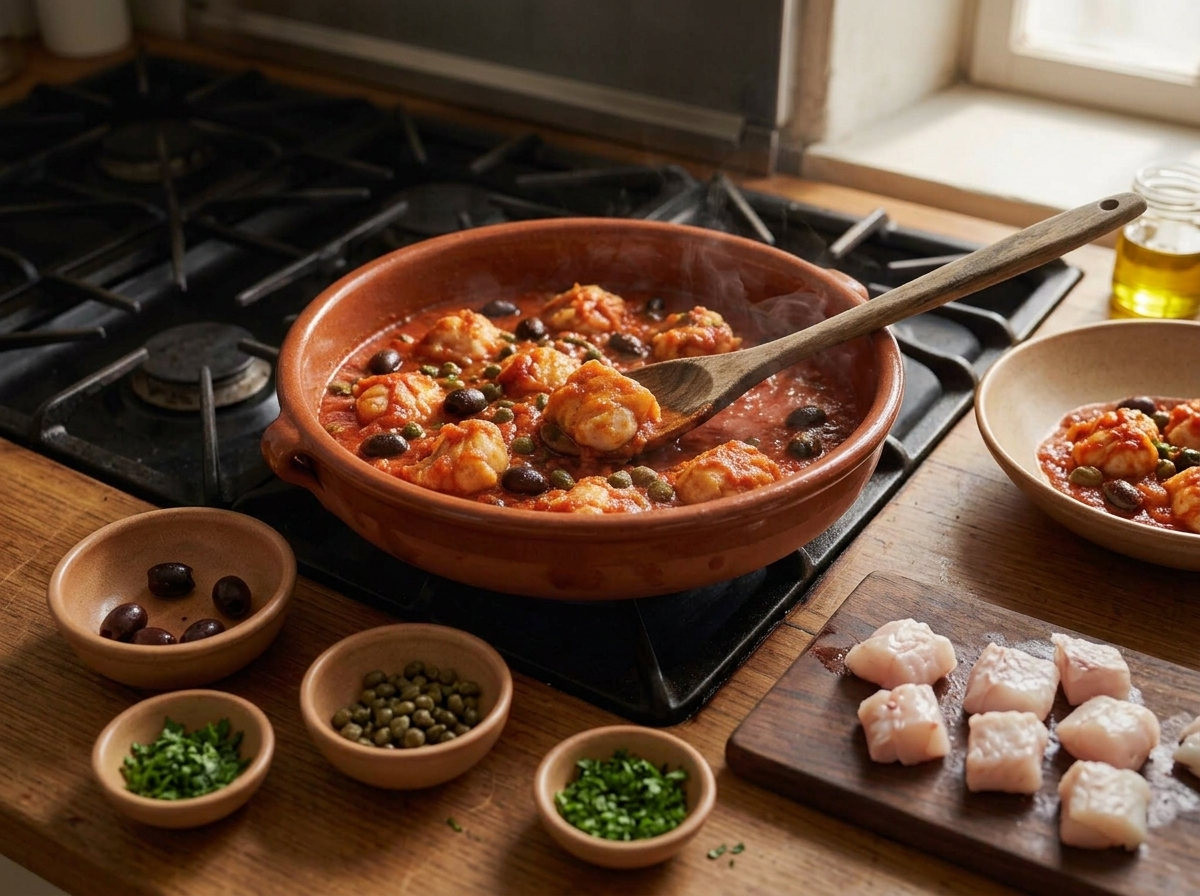
- Heat the olive oil in a 30 cm / 12-inch braising pan over medium heat. Add the onion and cook for 5 to 6 minutes until soft and translucent.
- Add the garlic and chili flakes, if using. Cook for 1 minute until fragrant, stirring so it doesn't catch.
- Pour in the wine and simmer for 2 minutes, scraping up any browned bits from the bottom of the pan.
- Add the crushed tomatoes, olives, and capers. Season with salt and pepper, then simmer uncovered for 12 minutes until the sauce thickens slightly and coats the back of a spoon.
- Nestle the monkfish chunks into the sauce in a single layer. Cover and cook for 8 to 10 minutes, turning the pieces once.
- Check doneness with an instant-read thermometer at the thickest chunk. It's ready at 145 F / 63 C, when the flesh is opaque and flakes under light pressure.
- Stir in the parsley and taste, adjusting salt if needed. Serve straight from the pan with crusty bread or polenta.
Notes
- Remove the membrane from monkfish tail or it toughens as it cooks.
- Don't skip the uncovered simmer before adding the fish.
- Pull the fish as soon as it's opaque; residual heat finishes it.
- Rinse olives if they're very salty from the brine.
Tips for Success
- Pat the monkfish dry before it goes in the pan so the sauce doesn’t turn watery.
- Simmer the tomato base uncovered for 12 minutes first so it thickens before the fish is added.
- Check doneness with an instant-read thermometer at the thickest chunk instead of guessing by eye.
- Rinse capers under cold water if they taste harsh or overly salty straight from the jar.
- Use a wide skillet rather than a deep pot so the fish sits in a single layer.
Variations
- Add a pinch of chili flakes and chopped fennel fronds for a spicier, more herbal sauce.
- Stir in 100 g cooked chickpeas in the last 5 minutes for a heartier, more filling stew.
- Swap monkfish for firm cod loin or halibut, cutting the fish simmer time to 5 to 6 minutes.
Storage and Reheating
Coda di rospo in umido keeps in the fridge for up to 2 days in an airtight container, stored in its sauce.
Reheat gently in a covered skillet over low heat for 4 to 5 minutes, stirring once, until warmed through. Avoid high heat or a long reheat, since monkfish turns rubbery fast if it’s pushed past 145 F / 63 C a second time.
Freezing isn’t a great fit here. The fish loses its firm texture once thawed, so I make the sauce ahead and add fresh monkfish only when I’m ready to eat.
Serving Suggestions
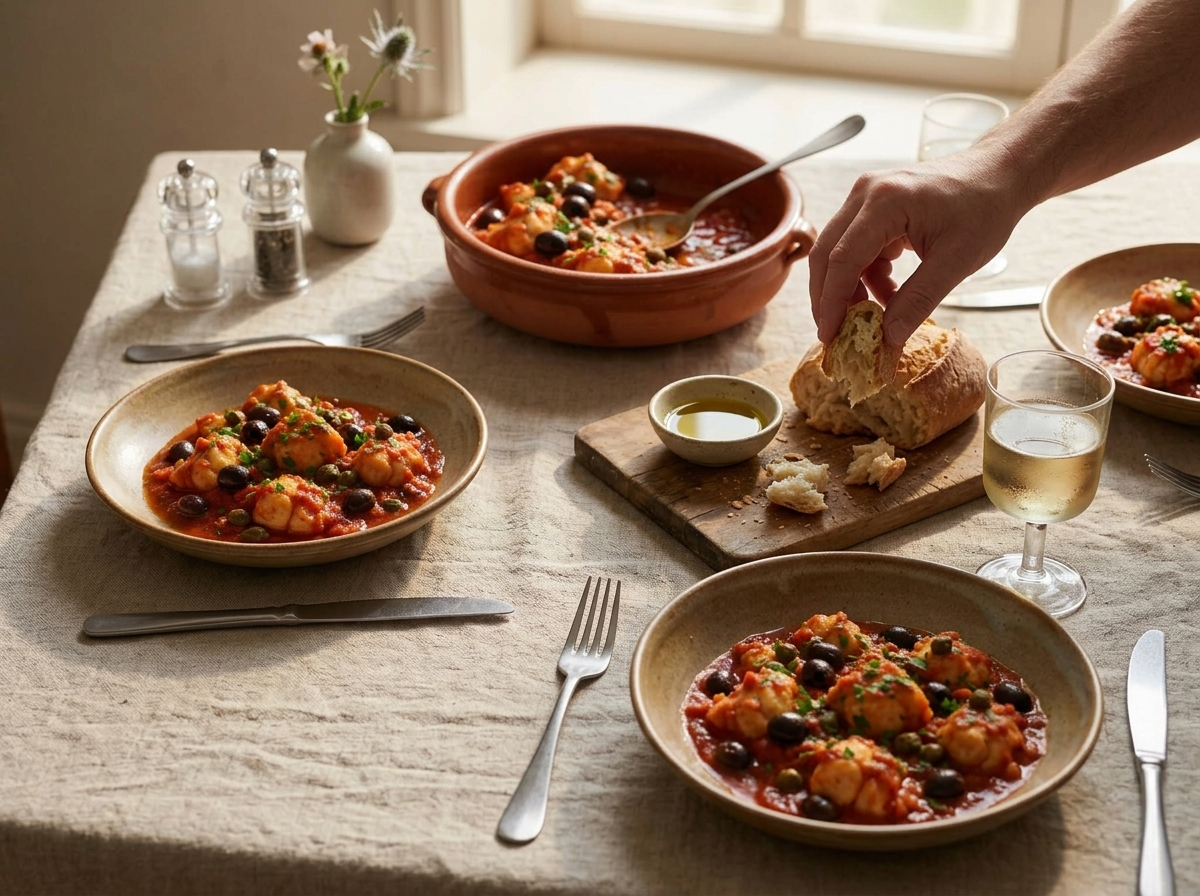
Coda di rospo in umido works well spooned over soft polenta, which soaks up the tomato sauce without competing with the fish.
Crusty bread is the simpler route, especially a warm ciabatta for mopping the pan clean. A green salad with a sharp vinaigrette on the side cuts through the richness of the olives and oil.
For wine, a chilled Vermentino or Verdicchio matches the acidity already in the sauce.
FAQ
Why is my coda di rospo in umido turning rubbery instead of tender?
It’s overcooked. Monkfish is lean and firm, but it turns tough fast once it passes 145 F / 63 C internal. Pull the chunks the moment the thickest piece is opaque and flakes under light pressure, then take the pan off heat right away.
Can I use cod instead of monkfish for this umido?
Yes, cod loin works, though it’s more delicate. Cut the fish simmer time to 5 to 6 minutes instead of 8 to 10, since cod flakes apart faster than the firmer monkfish tail.
Can I make coda di rospo in umido ahead of time?
The tomato base can be made a day ahead and reheated. Add the raw monkfish only when you’re ready to eat, since the fish itself doesn’t hold well pre-cooked and reheated without losing texture.
What goes well with coda di rospo in umido?
Soft polenta or crusty bread are the classic choices, both good at soaking up the tomato sauce. A green salad with a sharp vinaigrette and a glass of chilled Vermentino round out the meal.
Is coda di rospo in umido gluten-free?
Yes, as written it’s gluten-free, since the sauce uses just tomatoes, wine, olives, and capers. Just serve it with polenta or a gluten-free bread instead of regular crusty bread if that matters to you.
What does ‘in umido’ actually mean in this monkfish recipe?
It means braised or stewed in a wet sauce, usually tomato-based, over gentle heat, the same gentle technique used for white wine braised cauliflower. For coda di rospo in umido, that’s the garlic and tomato braise the monkfish finishes cooking in, rather than being pan-seared or fried on its own.