
Jump to Recipe
Sarde in saor is Venice’s classic sweet-sour sardine dish: fresh sardines fried until crisp, then layered with onions cooked down in vinegar and wine, plus raisins and pine nuts. Fishermen made it centuries ago to keep sardines edible on long trips, and the acid still does the same work today.
I fry the sardines in batches so the oil stays hot, then let the onions do their slow work in a separate pan. The vinegar smell is sharp going in, but a day in the fridge mellows it into something closer to a mild pickle.
This is a make-ahead dish by design. You want a full 24 hours in the fridge before you taste it, and it holds well for three days after that.
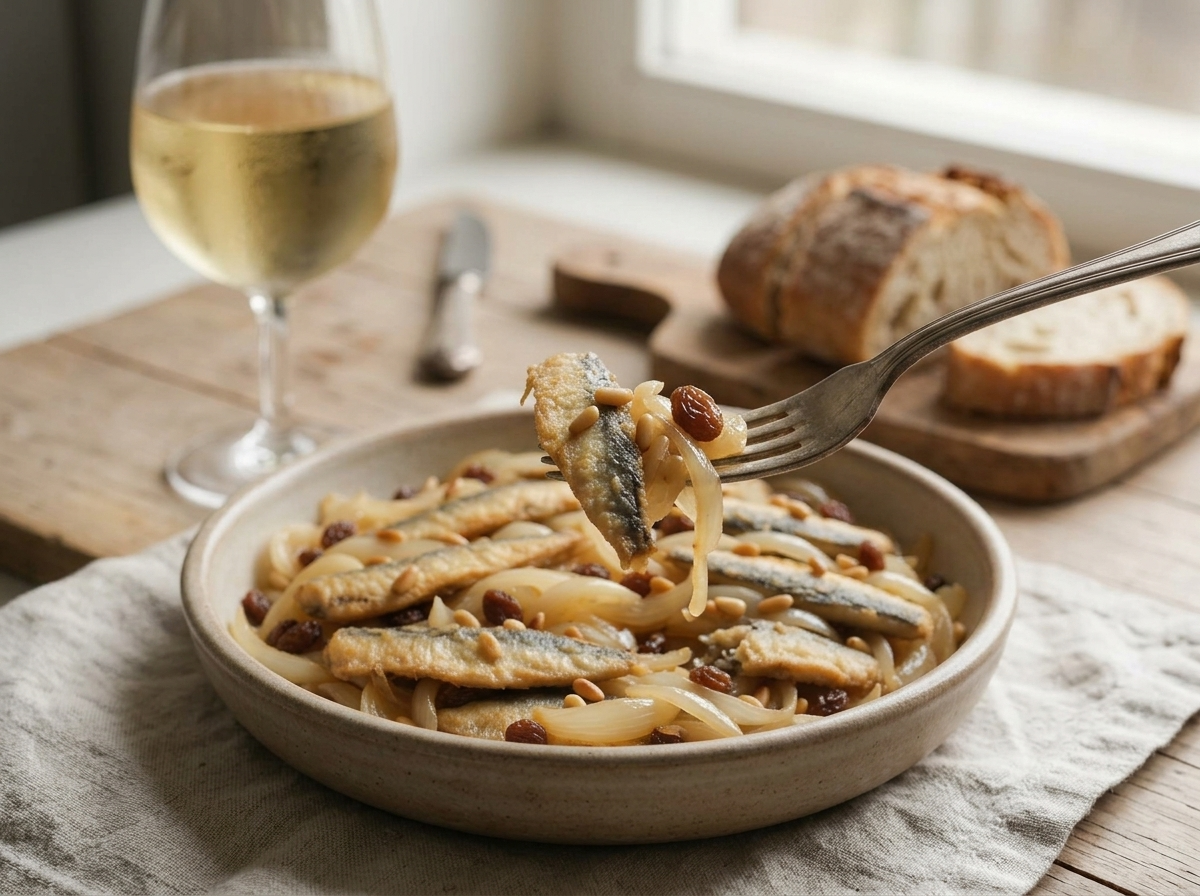
Serve it cold or at room temperature, straight from the dish, with crusty bread to mop up the onions.
Why You’ll Love This Recipe
- Tastes better the longer it sits in the fridge
- Uses simple pantry staples: onions, vinegar, raisins, pine nuts
- A true make-ahead antipasto for parties
- Sweet-sour flavor that keeps improving on day two
Ingredient Notes
- sardines: Ask for them cleaned and butterflied at the fish counter. Fresh anchovies or small mackerel fillets work too if sardines aren’t available.
- flour: A light dredge is all you need for a thin, crisp crust. Rice flour or cornstarch make this gluten free.
- onions: Sliced thin and cooked low so they turn silky, not browned. White onions work too, though yellow gives a rounder sweetness.
- white wine vinegar: This is the backbone of the saor. Apple cider vinegar is a fine substitute, a touch milder and slightly fruity.
- raisins: Golden raisins keep the color pale, dark raisins taste the same. Soaking softens them before they go into the layers.
- pine nuts: Toast them lightly in a dry pan first if you want more crunch. Slivered almonds are a reasonable, cheaper stand-in.
- sunflower oil: Neutral and heat-stable for frying. Light olive oil works too, though it adds its own flavor to the crust.
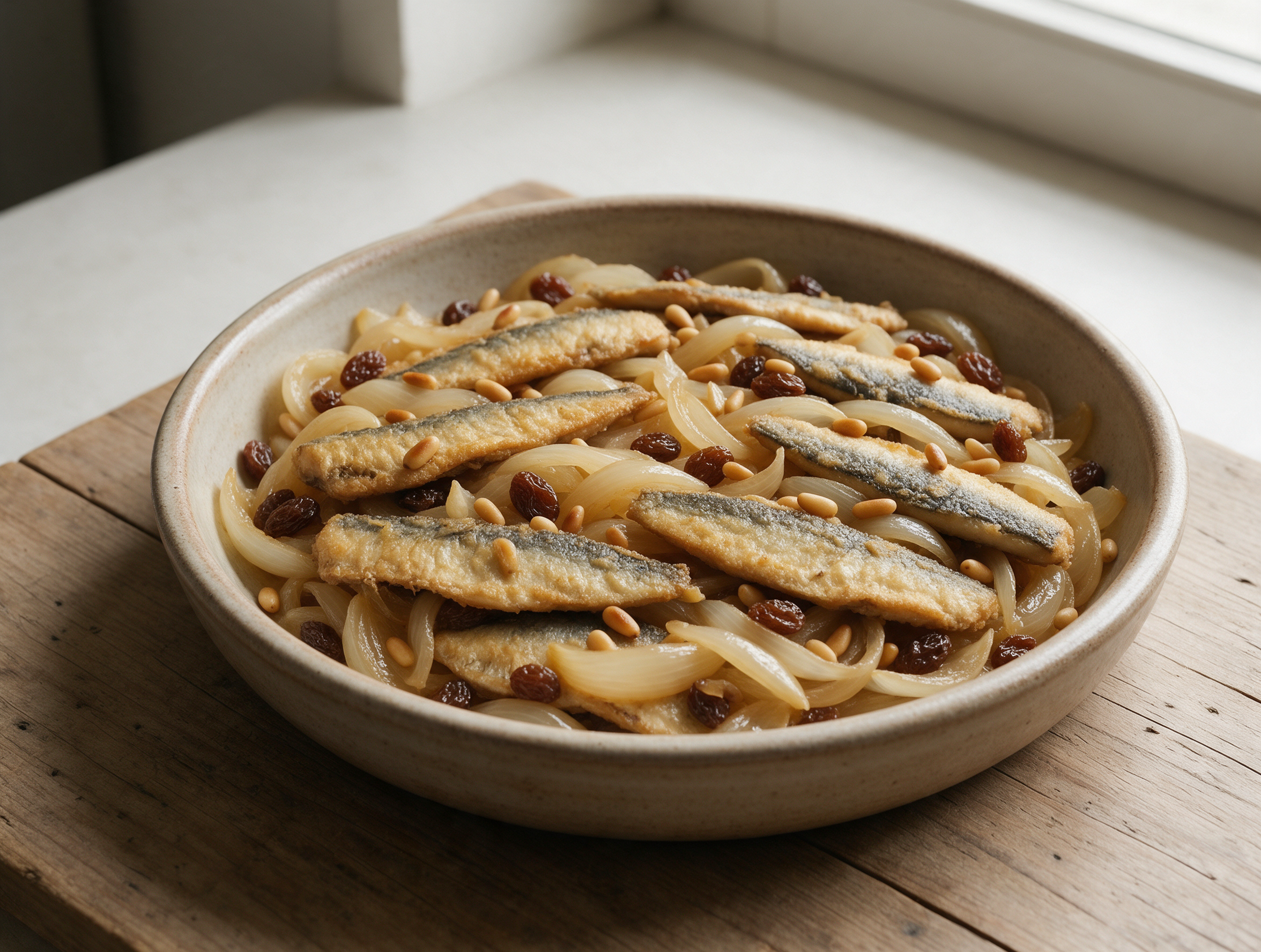
Sarde in Saor: Classic Venetian Sweet-Sour Sardines
Ingredients
Method
- Soak the raisins in the warm water for 10 minutes, then drain and set aside.
- Pat the sardines dry with paper towels and season both sides with salt and pepper.
- Spread the flour on a plate and dredge each sardine, shaking off the excess.
- Heat the sunflower oil in a 12-inch / 30 cm skillet to 175 C / 350 F. Fry the sardines in batches of 6 to 8 so the pan isn't crowded, 2 to 3 minutes per side, until golden and crisp.
- Lift the sardines onto a paper towel-lined tray and season with a pinch of salt while hot.
- Wipe out the pan or use a clean 10-inch / 26 cm skillet. Heat the olive oil over medium-low heat and add the onions with a pinch of salt.
- Cook the onions for 20 to 25 minutes, stirring occasionally, until soft and pale gold. Don't let them brown or catch on the bottom.
- Add the white wine vinegar, white wine, sugar, and bay leaves. Simmer for 5 minutes until the onions turn glossy and the sharp vinegar smell softens.
- Spoon a layer of the warm onions into the bottom of a 23 x 33 cm / 9 x 13 inch glass or ceramic dish. Add a layer of sardines, then scatter over some of the raisins and pine nuts.
- Repeat the layers until everything is used, finishing with a layer of onions on top.
- Cover and refrigerate for at least 24 hours, and up to 3 days, before serving. Bring to room temperature for 20 to 30 minutes before serving.
Notes
- Rest the dish at least 24 hours before serving, 48 hours is better.
- Don't crowd the frying pan, fry sardines in batches of 6 to 8.
- Keep the onions pale gold, not browned, for a clean-tasting saor.
- Serve cold or at room temperature, never reheated.
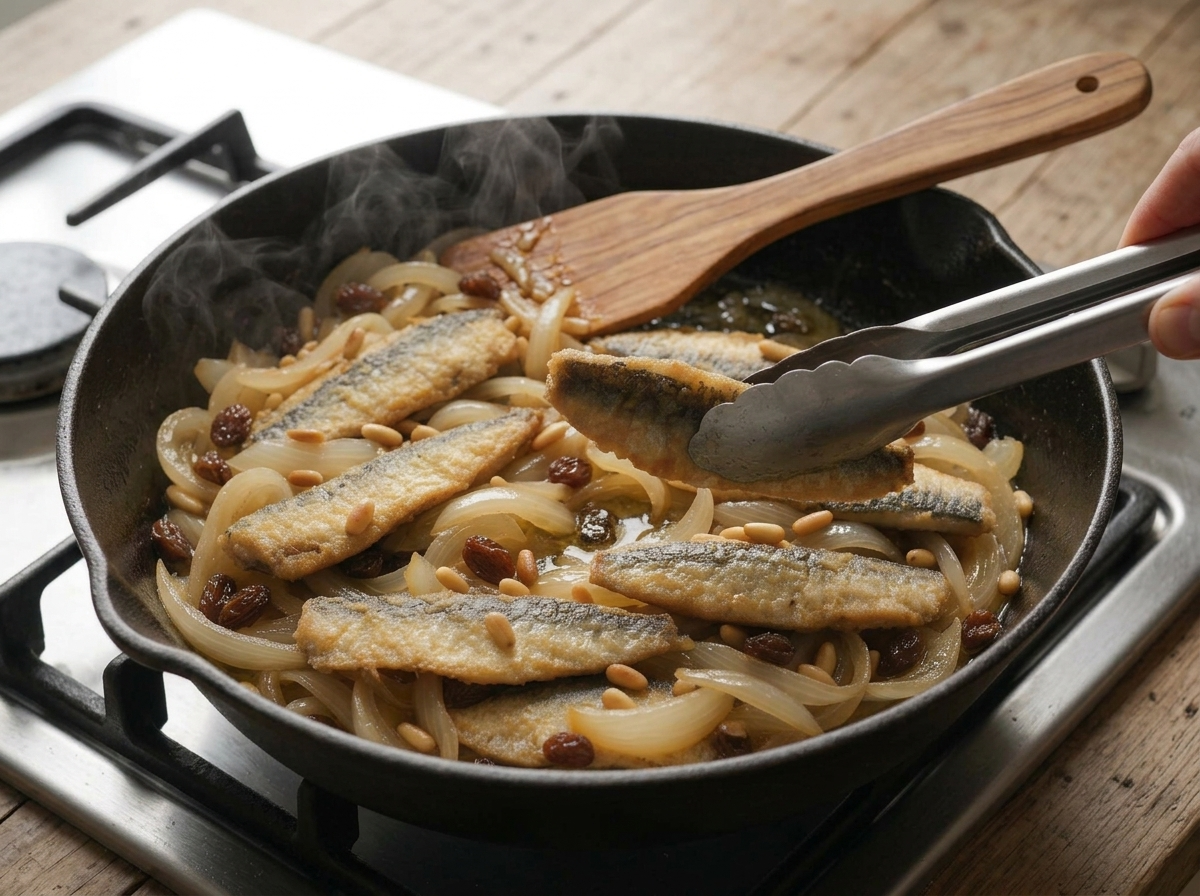
Tips for Success
- Fry the sardines in small batches of 6 to 8 so the oil temperature doesn’t drop and the crust stays crisp.
- Cook the onions low and slow for the full 20 to 25 minutes. Rushed onions turn sharp instead of sweet.
- Soak the raisins before layering so they plump instead of pulling moisture from the onions.
- Chill the dish for a full 24 hours minimum. The flavor at hour 2 and the flavor at hour 24 are two different dishes.
- Bring the dish to room temperature before serving. Cold from the fridge, the olive oil turns cloudy and dulls the flavor.
Variations
- Swap fresh sardines for fresh anchovies and reduce the frying time to 1 to 2 minutes per side since they’re smaller.
- Add a few strips of orange zest to the onions while they simmer for a citrus note common in some Venetian versions.
- Use rice flour instead of all-purpose for the dredge to make the dish gluten free without changing the crust texture.
Storage and Reheating
Sarde in saor is meant to be made ahead. Keep it covered in the fridge for 3 to 4 days, and it actually tastes better on day two than on day one.
This dish is served cold or at room temperature, never reheated. Heat would wilt the onions and flatten the vinegar bite that makes the dish work, so skip the stove or microwave altogether.
If you’re prepping for a party, make the full dish up to 3 days out and just pull it from the fridge 20 to 30 minutes before guests arrive.
Serving Suggestions
Sarde in saor is a classic Venetian cicchetti bar dish, served in small dishes alongside other antipasti and a glass of wine.
Pair it with grilled or toasted polenta, crusty bread to soak up the onions, or a simple radicchio salad to balance the sweetness.
A glass of dry white wine like Soave, or a classic Venetian spritz, cuts through the richness of the fried fish.
FAQ
Why is my sarde in saor too sour or vinegary?
Your onions probably didn’t simmer long enough with the vinegar, so the sharp raw edge never mellows. Cook them a full 5 minutes after adding the vinegar and wine, and add an extra pinch of sugar if needed. Resting the finished dish for 24 hours also softens the bite considerably.
Can I use apple cider vinegar instead of white wine vinegar for the saor?
Yes, apple cider vinegar works well and gives a slightly fruitier, milder result than white wine vinegar. Use the same amount, 150 ml, since the strength is similar. Rice vinegar is another option if you want an even softer, less sharp finish.
How long does sarde in saor keep in the fridge?
Sarde in saor keeps for 3 to 4 days in a covered container in the fridge, and it’s actually better on day two than fresh. The onions keep softening and the vinegar mellows the longer it sits. Bring it to room temperature for 20 to 30 minutes before you serve it.
What goes well with sarde in saor at an antipasto spread?
Crusty bread or grilled polenta work best, since they soak up the sweet-sour onions. A simple radicchio or green salad on the side balances the richness of the fried fish. A dry white wine like Soave or a classic Venetian spritz rounds out the plate.
Is sarde in saor gluten free?
Not as written, since the sardines are dredged in all-purpose flour before frying. Swap in rice flour or cornstarch for the dredge and the rest of the dish, onions, vinegar, raisins, and pine nuts, is naturally gluten free. Check your wine and vinegar labels too, most are gluten free by nature.
What’s the difference between sarde in saor and Spanish escabeche?
Both use an acid marinade to preserve fried fish, but sarde in saor is built on cooked-down onions, raisins, and pine nuts, giving it a sweet-sour profile. Escabeche usually leans on raw garlic, paprika, and a sharper vinegar bite without the sweetness. The Venetian version is milder and closer to a slow-cooked onion jam.