
Jump to Recipe
Triglie alla livornese is red mullet braised in a garlicky tomato sauce brightened with white wine and a touch of chili, a dish that comes straight from the port city of Livorno on the Tuscan coast. The fish gets a quick sear first, then finishes gently in the sauce so the flesh stays moist and the skin holds its shape.
This isn’t a long-simmer sauce. Twelve to fifteen minutes of reduction is enough to concentrate the tomatoes before the fish goes back in, and from there it’s eight to ten minutes of quiet braising.
I learned the hard way that adding fish to a thin, unreduced sauce turns the fillets mushy instead of firm. Reduce the sauce until it coats the back of a spoon first, then add the fish.
Livornese sauce shows up under braised swordfish in tomato sauce, baccala and even eggs in Tuscany, but red mullet is the classic pairing. The sweetness of the fish and the acidity of the tomato balance each other without needing much else.
Why You’ll Love This Recipe
- Ready start to finish in about 40 minutes
- One skillet handles both the sear and the braise
- Tomato sauce built from scratch, no premade stock or paste
- Classic Tuscan coastal recipe with straightforward technique
Ingredient Notes
- Red mullet: Ask your fishmonger to scale and gut them. Red snapper or porgy fillets work as a substitute if red mullet isn’t available.
- Canned whole peeled tomatoes: Crush them by hand for a chunkier sauce. Pre-crushed tomatoes from a can tend to be thinner and take longer to reduce.
- Dry white wine: Vermentino or a plain pinot grigio both work. Swap in fish stock with a squeeze of lemon if you’d rather skip the alcohol.
- Red chili flakes: Calabrian chili flakes give the best flavor here. Adjust the amount up or down depending on how much heat you want.
- All-purpose flour: Used only for dusting the fish before searing. Swap in rice flour or a gluten-free blend for a gluten-free version.
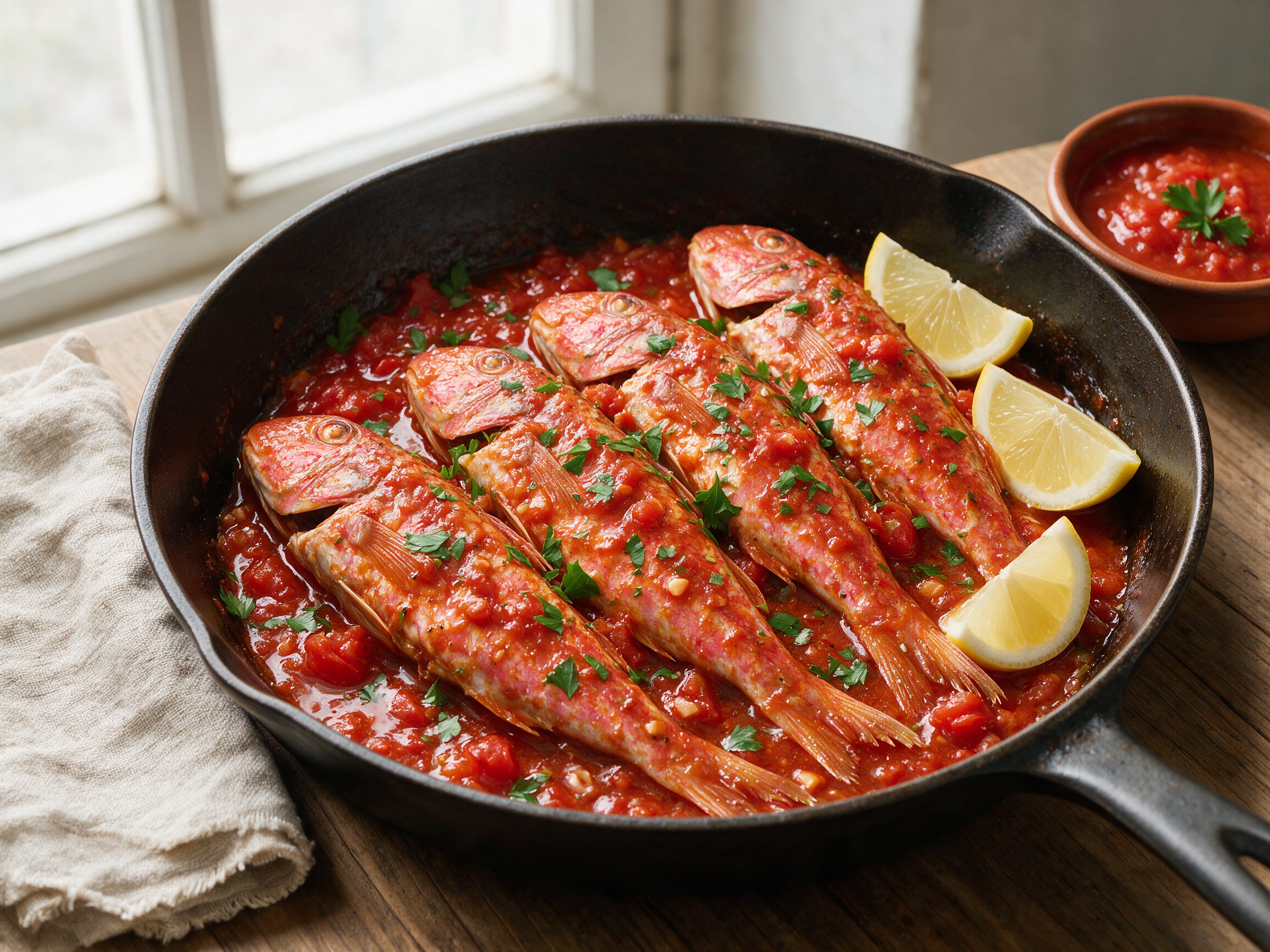
Braised Triglie alla Livornese in Tuscan Tomato Sauce
Ingredients
Method
- Pat the red mullet dry with paper towels and season inside and out with salt and pepper. Dust each fish lightly in flour, shaking off the excess.
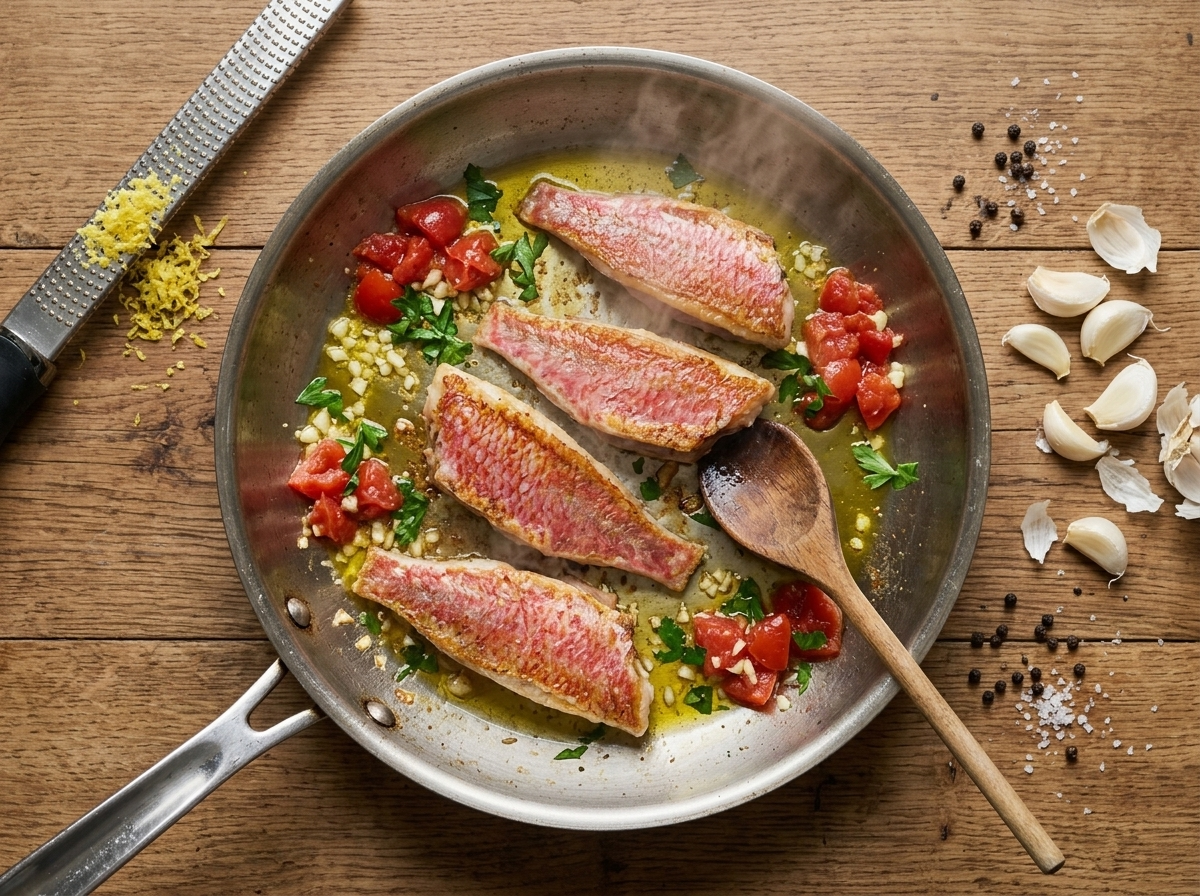
- Heat 2 tbsp olive oil in a 12-inch / 30 cm skillet over medium-high heat. Sear 2 fish at a time for 2 minutes per side until golden, then transfer to a plate. Repeat with remaining fish and 1 more tbsp oil.
- Lower the heat to medium and add the remaining 1 tbsp olive oil, garlic and chili flakes to the skillet. Cook for 1 minute until fragrant, don't let the garlic brown.
- Pour in the white wine, scraping up any browned bits, and simmer for 2 minutes until reduced by half.
- Add the crushed tomatoes and 1/2 tsp salt. Simmer uncovered for 12 to 15 minutes, stirring occasionally, until the sauce thickens and coats the back of a spoon.
- Return the seared fish to the skillet, spooning sauce over the top. Cover and simmer gently for 8 to 10 minutes, until the flesh flakes easily with a fork and reaches 145 F / 63 C at the thickest part.
- Sprinkle with half the parsley, taste the sauce and adjust salt. Plate the fish with sauce spooned over, finish with the remaining parsley and lemon wedges.
Notes
- Scale and gut fish before cooking, or ask the fishmonger to do it.
- Reduce sauce until spoon-coating thick before returning fish to the pan.
- Pull fish at 145 F / 63 C internal temperature.
- Crush canned tomatoes by hand for better texture.
- Sear fish in batches to keep the skillet hot.
Tips for Success
- Ask your fishmonger to scale and gut the red mullet, small bones near the belly are easy to miss otherwise.
- Reduce the tomato sauce until it coats the back of a spoon before adding the fish, or the fillets turn mushy in thin liquid.
- Sear the fish in two batches of two so the skillet stays hot and the fish browns instead of steaming.
- Check doneness at the thickest part of the fish with an instant-read thermometer, pull it at 145 F / 63 C.
- Use canned whole tomatoes and crush them by hand for a chunkier sauce, pre-crushed tomatoes turn watery fast.
Variations
- Swap red mullet for whole small red snapper or porgy, both hold up well to the quick braise in tomato sauce.
- Stir in a handful of pitted black olives and a spoonful of capers with the tomatoes for a puttanesca-leaning version.
- Use the same sauce over pan-seared swordfish steaks instead of whole fish, a common variation along the Tuscan coast.
Storage and Reheating
Triglie alla livornese keeps in the fridge for up to 2 days in an airtight container, though the fish is best the day it’s made since the flesh keeps firming up as it sits.
To reheat, warm the sauce and fish together in a covered 10-inch / 25 cm skillet over low heat for 4 to 5 minutes, spooning sauce over the fish rather than flipping it. A microwave works too, at 50% power in 30-second bursts, just until warmed through.
I don’t recommend freezing this one. The tomato sauce freezes fine on its own, but thawed red mullet turns watery and loses the texture that makes the dish worth making.
Serving Suggestions
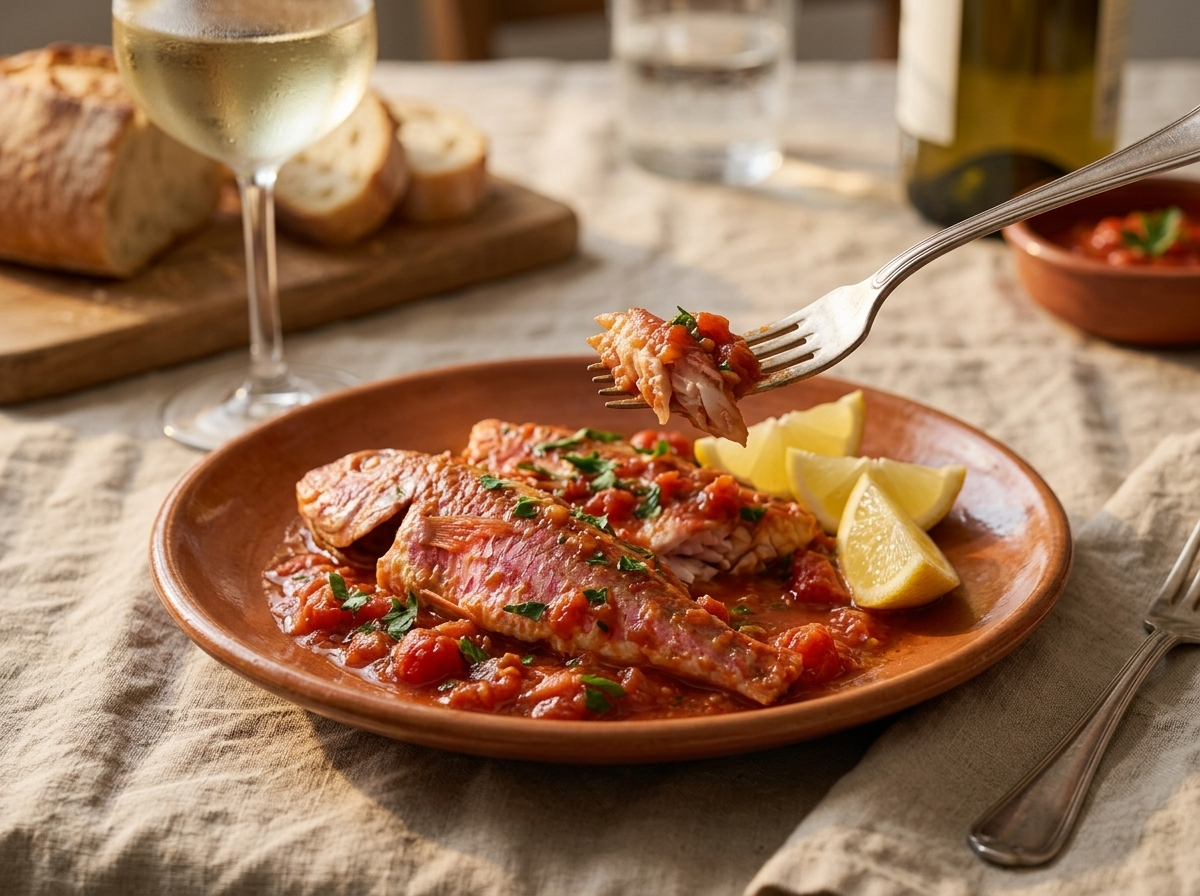
Triglie alla livornese wants something plain alongside to soak up the sauce, crusty Tuscan bread or a slice of grilled polenta both work well.
For a full Tuscan spread, start with a plate of bruschetta or crispy stuffed fried anchovies, then bring the fish to the table straight from the skillet.
A glass of dry Vermentino or Vernaccia di San Gimignano matches the acidity in the tomato sauce without fighting the fish.
FAQ
How do I know when the tomato sauce for triglie alla livornese is ready for the fish?
The sauce is ready when it coats the back of a spoon and no longer looks watery, usually after 12 to 15 minutes of simmering. If you add the fish too early, the thin liquid steams the fillets instead of braising them, and they turn mushy rather than firm.
Can I use red snapper instead of red mullet for triglie alla livornese?
Yes, red snapper or porgy fillets work well as a substitute for red mullet in this dish. Both hold their shape through a quick sear and braise, though whole small snapper may need an extra minute or two per side since the fillets run thicker than red mullet.
Can I make the tomato sauce for triglie alla livornese ahead of time?
Yes, the tomato sauce can be made up to 2 days ahead and stored in the fridge in an airtight container. Reheat it in the skillet until it simmers again, then sear the fish fresh and finish the braise, since red mullet loses its texture if cooked and reheated twice.
What goes well with triglie alla livornese besides crusty bread?
Grilled polenta, a lemony green salad, or plain boiled potatoes all work well alongside triglie alla livornese since they soak up the tomato sauce without competing with the fish. A glass of dry Vermentino or Vernaccia di San Gimignano matches the sauce’s acidity.
Is triglie alla livornese gluten free?
Not as written, since the fish gets a light dusting of all-purpose flour before searing. Swap in rice flour or a gluten-free flour blend in the same amount, and the rest of the recipe, garlic, tomatoes, wine and parsley, stays naturally gluten free.
What’s the difference between triglie alla livornese and puttanesca sauce?
Livornese sauce is simpler, built from garlic, tomato, white wine and chili with the fish simmered right in it. Puttanesca adds olives, capers and anchovies and is usually tossed with pasta rather than used as a braise for whole fish.