
Jump to Recipe
Canederli allo Speck are bread dumplings from South Tyrol, built from stale bread, milk, and eggs, studded with cured Alpine speck, then simmered in broth or salted water until they float.
The bread does the real work here. Day-old rolls or a rustic loaf soak up milk and egg without turning gluey, and that texture, not the speck, decides whether your dumplings hold together in the pot.
I learned this dish from a cousin who spends winters near Bolzano. Her one rule was patience: rest the mixture, keep the water at a gentle simmer, and test one dumpling before you commit the whole batch.
You’ll get about 12 to 14 dumplings from this amount, enough for four hearty dinner plates or six starter-sized bowls served in broth.
Why You’ll Love This Recipe
- Uses up stale bread instead of tossing it
- One bowl of dough, no special equipment needed
- Freezes well raw for a fast weeknight dinner later
- Works as a soup course or a plated main
Ingredient Notes
- stale bread: Use day-old crusty rolls or a rustic loaf cut into 1 cm cubes. Fresh bread turns gummy once it soaks up the milk.
- speck: Speck Alto Adige is smoked and cured, different from plain prosciutto. Pancetta or a smoky bacon works if you can’t find it.
- whole milk: Whole milk hydrates the bread fully. Skip skim milk, it won’t soften the crumb the same way.
- eggs: Eggs bind the dumplings together. Room temperature eggs mix in more evenly than cold ones straight from the fridge.
- flour: 00 flour or all-purpose both work. Add it a tablespoon at a time, since too much turns the dumplings dense.
- chives: Fresh chives add a mild onion note without overpowering the speck. Parsley works as a substitute.
- nutmeg: A small pinch rounds out the richness. It’s a small addition, but it’s traditional in South Tyrol cooking.
- Parmesan: Optional, but a light scatter over the finished dumplings adds a salty edge. Grana Padano works too.
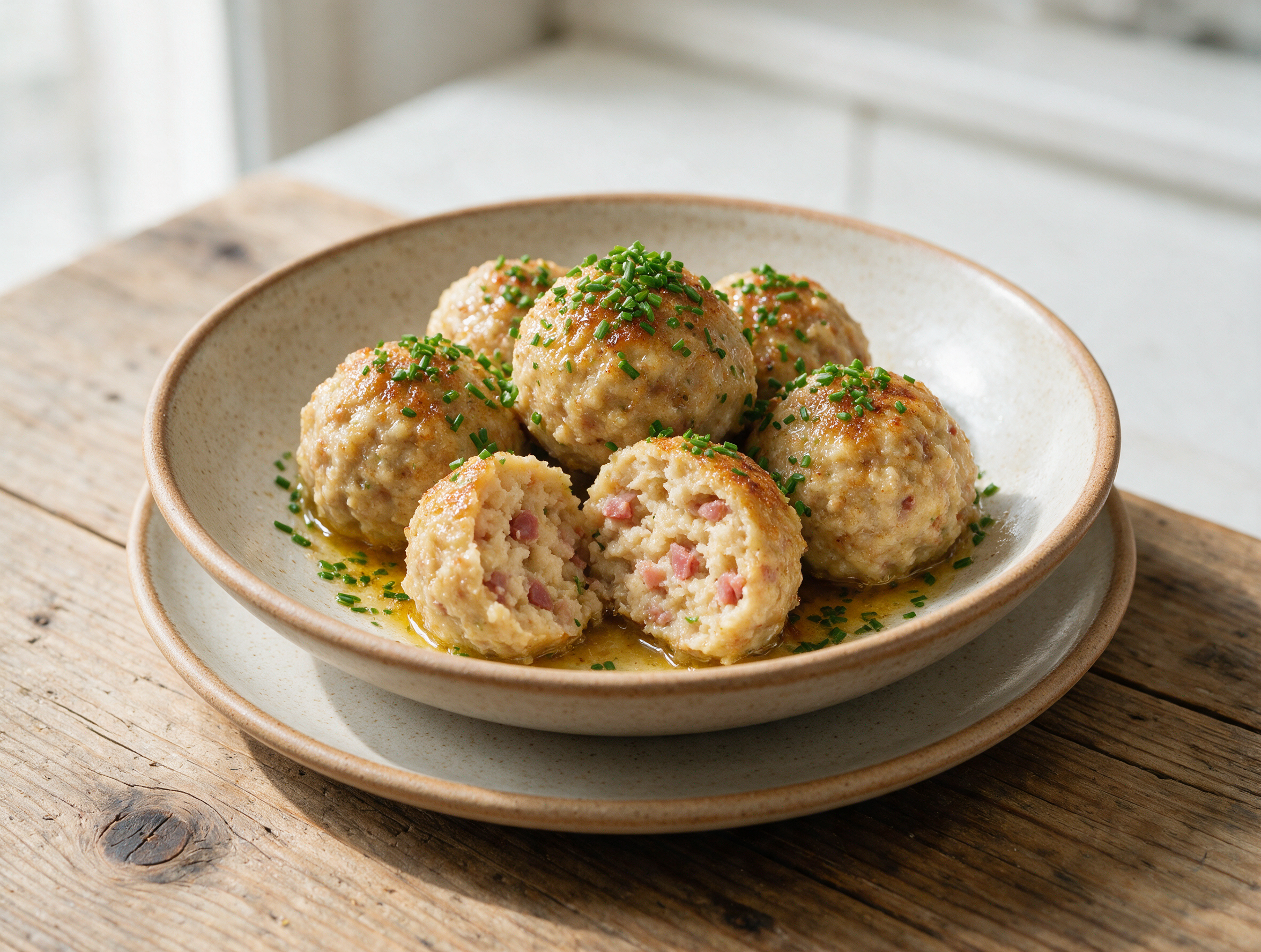
Canederli allo Speck: South Tyrol Bread Dumplings
Ingredients
Method
- Cut the bread into 1 cm cubes and place in a large mixing bowl. Warm the milk until just steaming, then pour it over the bread and let it soak for 10 minutes, stirring once.
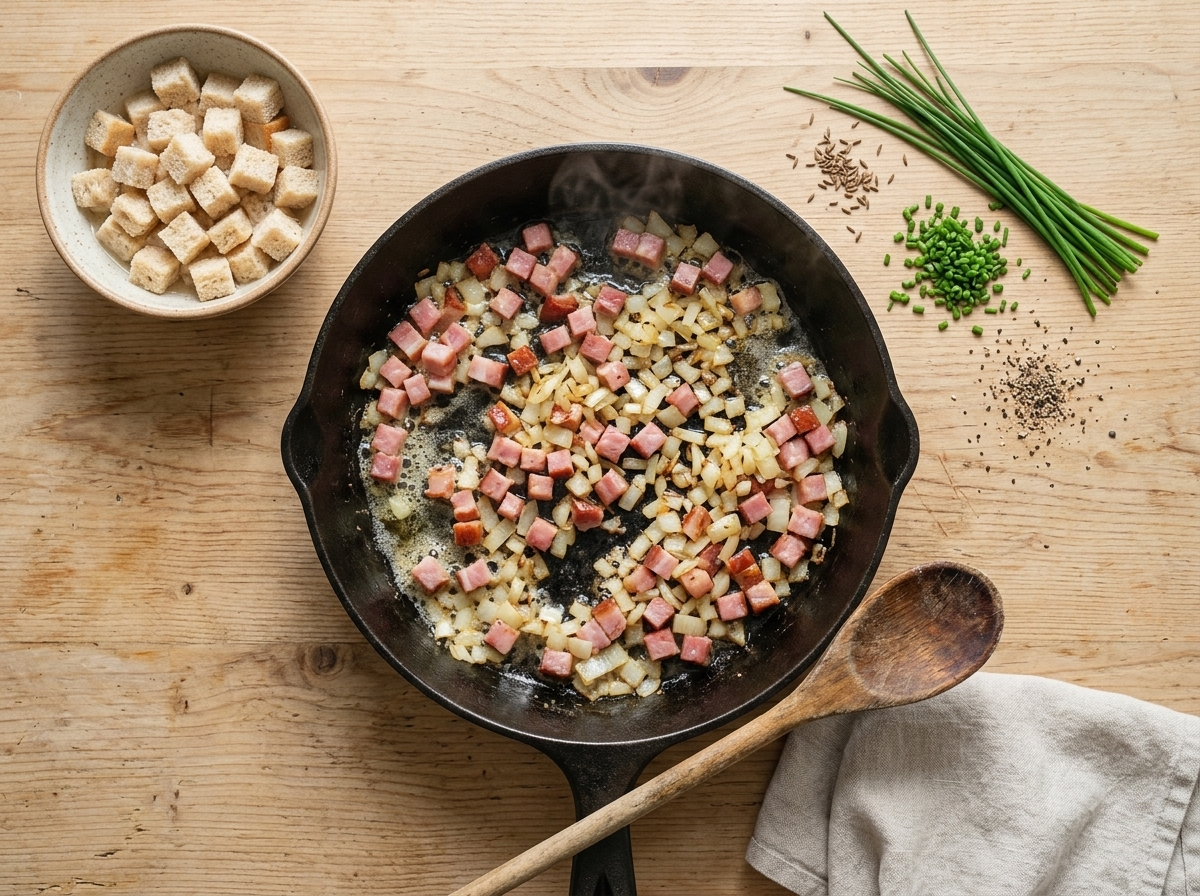
- Melt 20 g butter in a 24 cm / 9-inch skillet over medium heat. Add the onion and cook for 4 to 5 minutes until translucent.
- Add the diced speck to the skillet and cook for 2 to 3 minutes, just until the edges start to crisp. Remove from heat.
- Add the eggs, flour, chives, salt, pepper, and nutmeg to the soaked bread, along with the speck and onion mixture. Mix by hand until everything holds together in a sticky, cohesive mass.
- If the mixture feels loose or wet, add more flour a tablespoon at a time. If it feels dry and crumbly, add a splash more milk.
- Cover the bowl and rest the mixture in the fridge for 20 minutes. This lets the bread fully absorb the liquid, the biggest reason dumplings hold together or fall apart.
- Bring a 4-quart / 3.8 L pot of salted water or broth to a gentle simmer, around 90 C / 194 F, not a rolling boil.
- With wet hands, shape the mixture into balls about 6 cm / 2.5 inches across. You should get 12 to 14 dumplings.
- Drop one test dumpling into the simmering liquid and cook for 15 to 18 minutes. If it falls apart, mix 1 to 2 tablespoons more flour into the remaining batch before shaping the rest.
- Cook the remaining dumplings in two batches so they have room to float freely. Simmer 15 to 18 minutes per batch until they rise to the surface and hold together when cut in half.
- Lift the dumplings out with a slotted spoon and drain briefly.
- Melt the remaining 40 g butter in a 16 cm / 6-inch saucepan over medium heat until it turns golden and smells nutty, 2 to 3 minutes.
- Divide the canederli allo Speck among bowls, spoon the browned butter over top, and scatter with extra chives and grated Parmesan if using. Serve warm.
Notes
- Rest the dough at least 20 minutes, it firms up the crumb.
- Test-boil one dumpling before shaping the whole batch.
- Keep the liquid at a gentle simmer, never a rolling boil.
- Dumplings float when done, usually 15 to 18 minutes.
Tips for Success
- Rest the dumpling mixture in the fridge for 20 minutes so the bread absorbs the liquid fully before shaping.
- Keep the water at a gentle simmer, not a rolling boil, or the dumplings will break apart before they set.
- Test one dumpling first, and if it falls apart, mix 1 to 2 tablespoons more flour into the rest of the batch.
- Wet your hands before shaping the balls, since the mixture is sticky and dry hands will make it stick to your palms.
- Cook the dumplings in two batches in a 4-quart pot so they have room to float without crowding each other.
Variations
- Swap the speck for smoked pancetta or diced smoked sausage if speck isn’t sold near you.
- Serve canederli allo Speck in hot beef broth instead of browned butter for a classic soup-course version.
- Fold 50 g grated Fontina or Tirolean gray cheese into the mixture for extra richness in the center.
Storage and Reheating
Store cooked canederli allo Speck in an airtight container in the fridge for 3 to 4 days. Keep any leftover broth or browned butter separate so the dumplings don’t turn soggy.
Reheat gently in a pot of simmering broth for 3 to 4 minutes, or slice leftover dumplings in half and pan-fry in butter over medium heat for 2 to 3 minutes per side until golden.
To freeze, shape the raw dumplings and freeze them on a tray before transferring to a bag. Cook straight from frozen in simmering water or broth, adding 4 to 5 minutes to the cook time.
Serving Suggestions
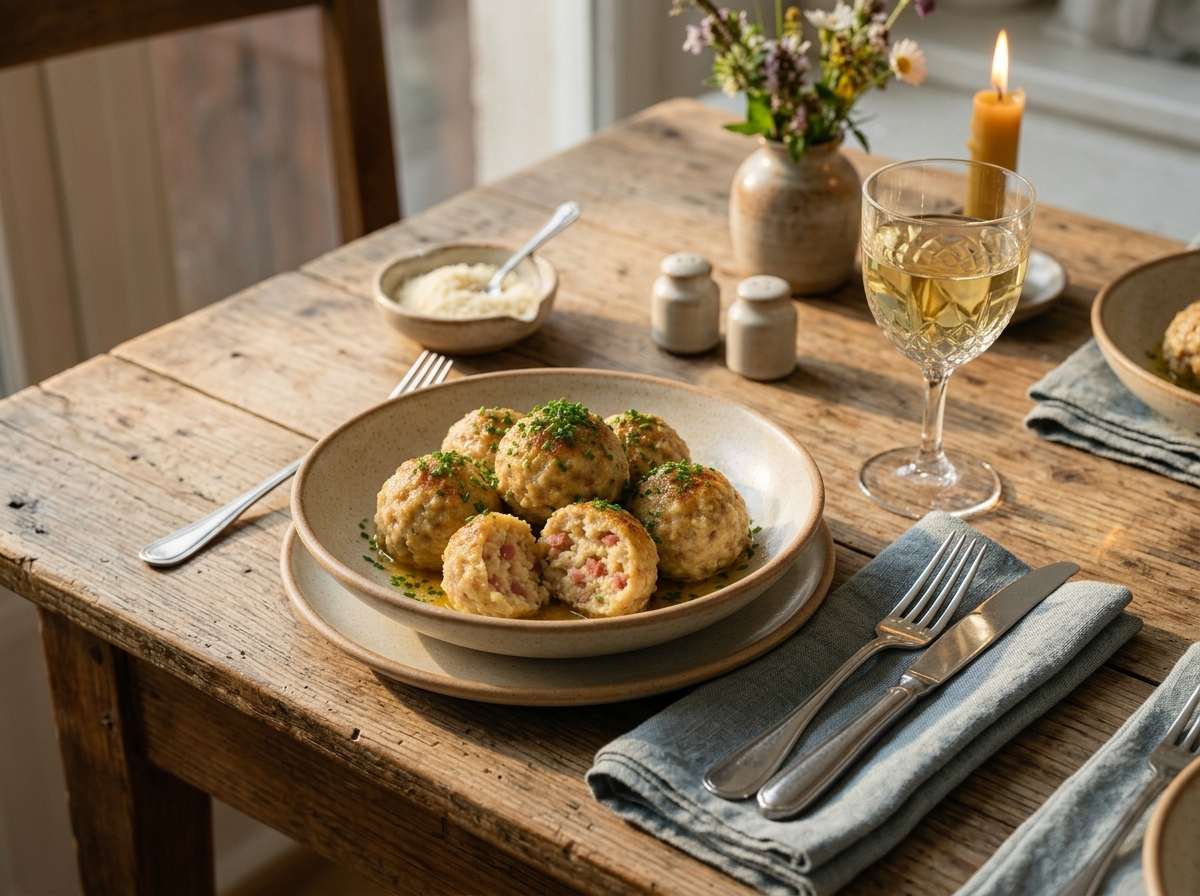
Canederli allo Speck work as a first course ladled into a shallow bowl of hot broth, or as a main dish with a side salad.
A simple green salad with a sharp vinaigrette cuts through the richness of the speck and browned butter. Sauerkraut or braised red cabbage is a classic Alpine pairing too.
Pour a glass of a crisp Sudtirol Pinot Bianco alongside. It matches the smoky speck without competing with it.
FAQ
Why do my canederli allo Speck fall apart in the pot?
This usually means the mixture didn’t rest long enough or the water is at a rolling boil instead of a gentle simmer. Let the dough sit in the fridge for 20 minutes so the bread fully absorbs the milk and egg, and add a tablespoon more flour if it still feels loose. Test one dumpling before cooking the whole batch.
Can I use pancetta instead of speck in canederli?
Yes, pancetta or a smoky bacon both work as a substitute for speck. You’ll lose some of the Alpine smokiness that speck brings, so add a small pinch of smoked paprika if you want that flavor back. Cook it the same way, rendering it with the onion before mixing into the bread.
Can I freeze canederli allo Speck before cooking them?
Yes, shape the raw dumplings and freeze them on a tray until firm, then transfer to a bag. Cook straight from frozen in gently simmering water or broth, adding about 4 to 5 minutes to the cook time. This is the better make-ahead route since cooked dumplings lose texture once frozen and thawed.
What goes with canederli allo Speck besides browned butter?
Hot beef broth is the classic pairing, turning the dish into a soup course instead of a plated main. Sauerkraut, braised red cabbage, or a sharp green salad also work well alongside. A crisp Alpine white wine rounds out the meal.
Are canederli allo Speck gluten-free?
No, the dumplings rely on wheat bread and flour for structure, so they aren’t gluten-free as written. You can try gluten-free bread and a gluten-free flour blend, but the texture turns denser and the dumplings hold together less reliably. Test one dumpling first if you go this route.
What’s the difference between canederli and Austrian Knodel?
Canederli and Knodel are nearly the same dumpling, the name just changes with the border. South Tyrol sits in Italy but was historically part of Austria, so the region uses canederli in Italian and Knodel in German for the same dumpling. The speck version is common to both traditions.