Jump to Recipe
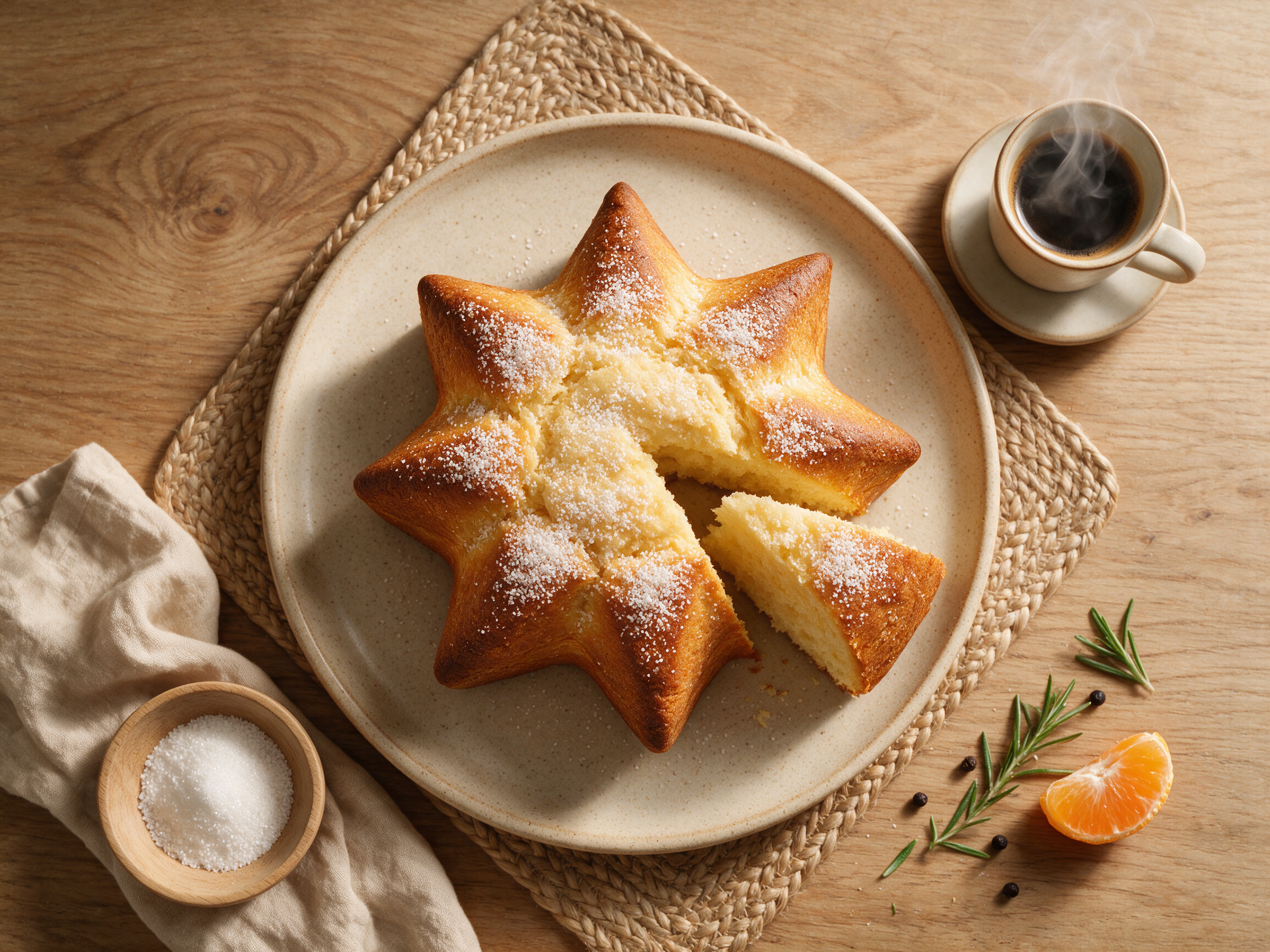
Pandoro is Verona’s answer to Christmas bread, a tall star-shaped loaf with a buttery, egg-rich crumb and no candied fruit in sight. This version skips the traditional 48-hour natural starter and uses instant yeast instead, so you get a full day of rising rather than two, without losing the soft, pull-apart texture.
The dough is heavy with butter and eggs, which means it needs patience more than skill. You build it in two stages: a quick starter to wake up the yeast, then a longer knead where you work in cubes of soft butter until the dough turns smooth and shiny.
Baking happens at 160C/320F for 35 to 40 minutes, until the loaf hits an internal temperature of 190F/88C and a skewer comes out clean of raw dough. Let it cool fully before dusting with vanilla sugar, or the sugar melts into the crust instead of sitting on top.
I bake this in an actual pandoro mold, the star-shaped aluminum tin sold in most Italian grocery stores around the holidays. If you don’t have one, a tall panettone paper mold works, though you lose the ridged star shape when you slice it.
Why You’ll Love This Recipe
- Skips the 48-hour starter without losing the soft crumb
- Bakes in one star-shaped mold, no loaf shaping needed
- Freezes well for make-ahead holiday baking
- No candied fruit, just butter, eggs, and vanilla
Ingredient Notes
- bread flour: Use a strong bread flour (11-12% protein) for structure. All-purpose works but the crumb comes out softer and less chewy.
- instant yeast: Instant yeast skips the proofing step active dry yeast needs. If using active dry, dissolve it in the warm milk with a pinch of sugar first and wait 10 minutes until foamy.
- whole eggs and egg yolks: The extra yolks add richness and color without extra water, which keeps the crumb tender instead of gummy.
- unsalted butter: Soften butter to room temperature, about 65F/18C, so it absorbs into the dough gradually instead of pooling.
- lemon zest: Zest just the yellow part. The white pith underneath turns bitter.
- vanilla bean paste: Vanilla extract works as a swap in the same amount.
- vanilla sugar: Make your own by burying a spent vanilla pod in a jar of granulated or powdered sugar for a week.
Homemade Pandoro: Soft Italian Christmas Star Bread
Ingredients
Method
- Warm the milk to about 105F/40C. Whisk in the instant yeast and 20 g sugar, then stir in the 100 g bread flour until you get a smooth, thick paste.
- Cover the bowl and let the starter rise at room temperature for 45 minutes, until bubbly and roughly doubled.
- In a stand mixer bowl, combine the risen starter with the remaining 400 g flour, 80 g sugar, whole eggs, egg yolks, salt, lemon zest, and vanilla bean paste. Knead with the dough hook on low-medium for 10 minutes until the dough comes together and pulls from the sides of the bowl, still tacky.
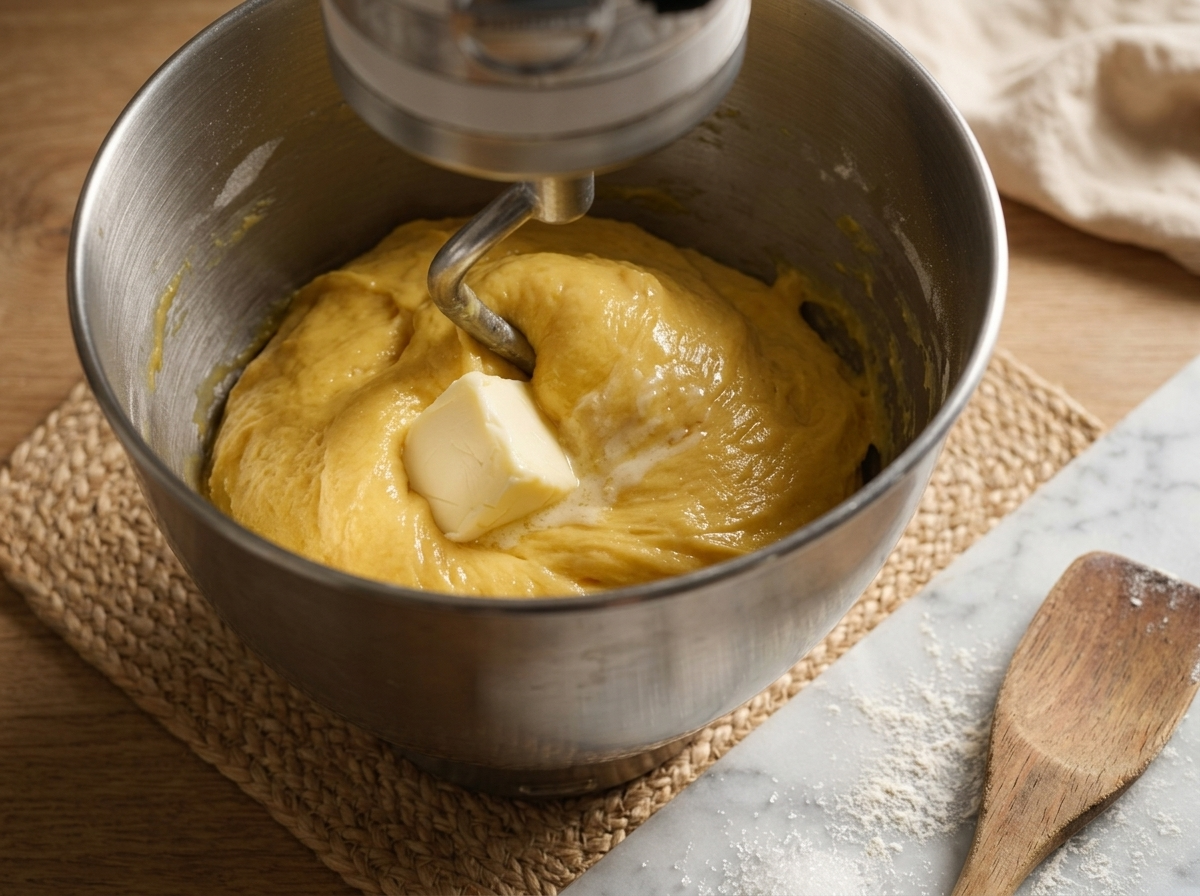
- With the mixer running, add the softened butter one cube at a time, waiting until each piece is fully absorbed before adding the next. Keep kneading for 8 to 10 minutes until the dough turns smooth, elastic, and shiny.
- Shape the dough into a tight ball and place it in a lightly buttered bowl. Cover and let it rise at room temperature, about 24C/75F, for 2 to 3 hours, until doubled.
- Butter the pandoro mold generously, working into every ridge. Punch down the dough, shape it into a tight ball again, and place it seam side down in the mold.
- Cover the mold loosely and let the dough rise for 1.5 to 2 hours, until it sits about 1 cm below the rim. Don't let it rise above the rim, the star ridges blur once it bakes.
- Heat the oven to 160C/320F. Bake the Pandoro for 35 to 40 minutes, tenting loosely with foil after 20 minutes if the top browns too fast, until the internal temperature reads 190F/88C and a skewer comes out clean.
- Cool the loaf in the mold on a wire rack for 10 minutes, then invert and unmold. Let it cool completely, at least 2 hours, before doing anything else.
- Once fully cool, dust generously with vanilla sugar through a fine-mesh sieve, turning the loaf slowly to coat every ridge. Slice into star-shaped wedges to serve.
Notes
- Room temp for rising should sit around 24C/75F, cooler kitchens need longer proof times.
- Windowpane test the dough before the first rise, it should stretch thin without tearing.
- Don't skip tenting with foil if the top browns before the center sets.
- Vanilla sugar clumps in humid kitchens, sift it right before dusting.
Tips for Success
- Soften the butter fully before kneading it in, cold cubes tear the gluten instead of blending smoothly.
- Add butter gradually, one cube at a time, so the dough absorbs each piece before the next goes in.
- Butter every ridge of the pandoro mold, missed spots make the loaf stick and tear on release.
- Stop the second rise about 1 cm below the mold’s rim, overfilling blurs the star ridges once it bakes.
- Cool the loaf completely before dusting with sugar, warm crust melts the sugar into a wet layer.
Variations
- Swap half the vanilla sugar for cocoa powder mixed with powdered sugar for a chocolate-dusted finish.
- Add 1 tbsp Marsala or dark rum to the dough for a boozier, more perfumed crumb.
- Bake in a tall panettone paper mold instead of a star tin if you don’t own one, the texture stays the same but the shape doesn’t.
Storage and Reheating
Pandoro keeps at room temperature for 3 to 4 days, wrapped tightly in plastic wrap or stored in an airtight container. Keep it away from direct sunlight or the butter in the crumb turns the crust greasy.
To freeze, wrap the whole loaf undusted tightly in plastic then foil and freeze up to 2 months. Thaw at room temperature for a few hours before dusting with fresh vanilla sugar.
To warm sliced pieces, toast lightly or warm in a 150C/300F oven for 4 to 5 minutes. This brings back the softness without drying out the crumb.
Serving Suggestions
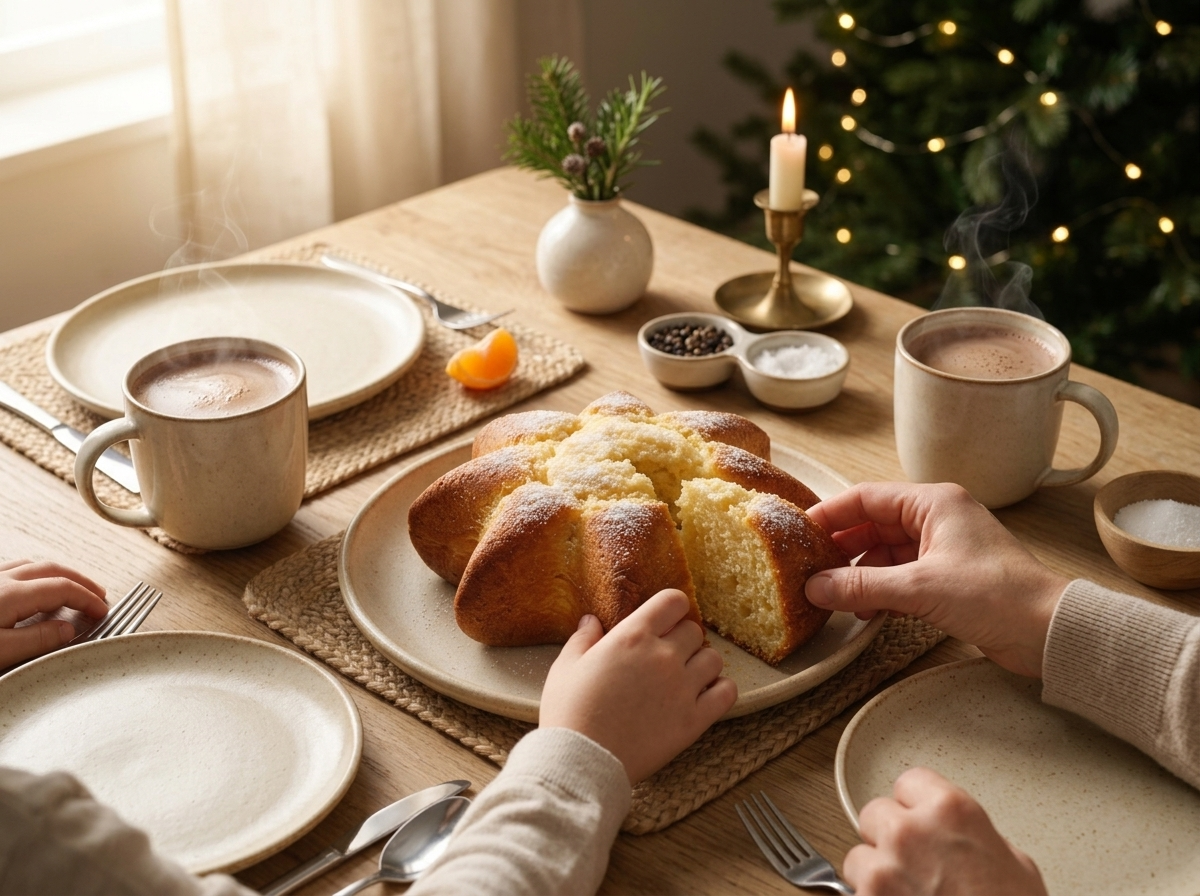
Pandoro is a Christmas morning bread in most Veronese homes, sliced into star-shaped wedges and served with coffee or hot chocolate. A dollop of mascarpone cream on the side turns a slice into a proper dessert.
For a dinner party, slice thin and layer with mascarpone and berries for a quick Zuccotto Fiorentino-style trifle dessert. A glass of sweet Moscato d’Asti works well alongside if you’re serving it after a holiday meal instead of at breakfast.
FAQ
Why did my Pandoro sink or deflate after baking?
Your Pandoro likely over-proofed past the rim of the mold before baking, or the oven door got opened too early during baking. Both let the delicate gluten structure collapse once it hits the oven. Stop the second rise about 1 cm below the rim and avoid opening the oven for the first 25 minutes.
Can I use active dry yeast instead of instant yeast in Pandoro?
Yes, active dry yeast works, but dissolve it in the warm milk with a pinch of sugar first and let it sit for 10 minutes until foamy before mixing into the starter. Use the same 7 g amount. Skipping this step can leave patches of dense, unrisen dough.
Can I freeze Pandoro before dusting it with sugar?
Yes, freeze the baked loaf undusted, wrapped tightly in plastic then foil, for up to 2 months. Thaw it at room temperature for a few hours, then dust with fresh vanilla sugar right before serving so it doesn’t clump or melt.
What do you eat with Pandoro besides vanilla sugar?
Mascarpone cream, hot chocolate, or a layer of berries all work well alongside Pandoro. In Verona, people often just tear off a slice with morning coffee since the bread carries enough sweetness on its own. Sweet Moscato d’Asti pairs well if you’re serving it after dinner.
Is Pandoro dairy-free or can I make a dairy-free version?
No, traditional Pandoro relies on butter and milk for its rich crumb, so it’s not dairy-free as written. Swapping in a plant-based butter and oat milk changes the texture, the crumb turns denser and less tender, but it will still rise and bake.
What’s the difference between Pandoro and Panettone?
Pandoro has a star-shaped crumb with no fruit or nuts, just an egg yolk-rich dough dusted in vanilla sugar. Panettone is dome-shaped and studded with candied citrus and raisins. Both come from northern Italy and use a slow-risen enriched dough like Bisciola Valtellinese fig and walnut bread, but they land in different flavor camps.