
Jump to Recipe
Fritole veneziane are Venetian carnival raisin fritters: small balls of yeasted batter with raisins and pine nuts, fried until deep gold and finished with sugar. This version makes about 24 fritole, fried at 170 C / 340 F after a 60-minute rise.
In Venice they fill pastry shop windows from late January until Martedì Grasso. The texture is the point. You get a thin crisp shell and a soft, almost custardy crumb, with raisins that taste faintly of grappa.
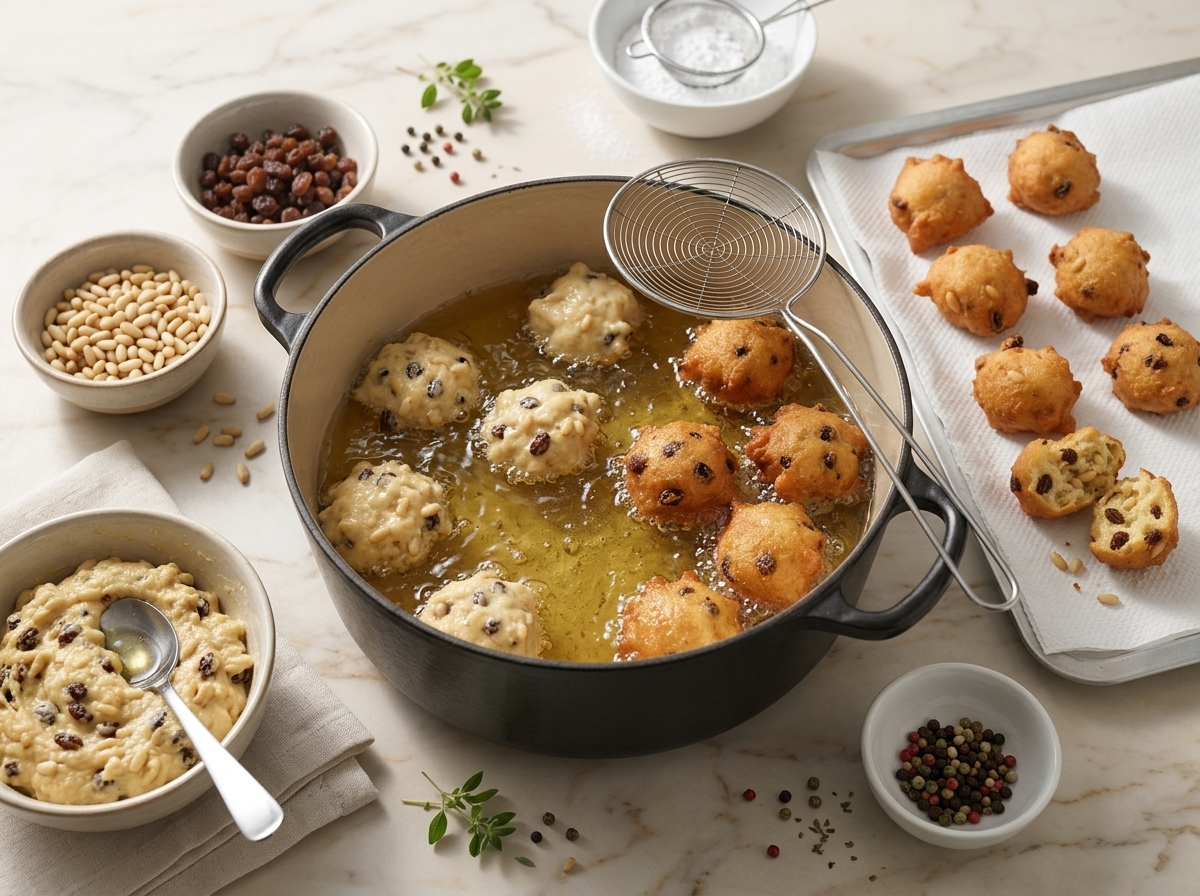
The batter is wet, closer to thick pancake mix than bread dough. You spoon it straight into the oil, so there’s no shaping and no rolling pin.
Plan on about 105 minutes start to finish, and most of that is the batter rising on its own.
Why You’ll Love This Recipe
- No shaping or rolling, you spoon the batter straight into oil
- Crisp shell with a soft, almost custardy crumb inside
- Most of the 105 minutes is a hands-off rise
- Pantry staples only, plus grappa or any spirit you have
Ingredient Notes
- raisins and grappa: Dark or golden raisins both work. Soaking them in grappa and warm water plumps them so they don’t pull moisture from the batter. Dry them well before folding in.
- pine nuts: Add them raw, since they toast in the hot oil. Chopped blanched almonds are a cheaper swap, though the flavor is less resinous.
- instant yeast: Instant yeast goes straight into the flour. If you only have active dry, use the same 7 g and dissolve it in the lukewarm milk for 5 minutes first.
- frying oil: Use sunflower or peanut oil for a clean taste and a high smoke point. Skip olive oil here, because its flavor competes with the citrus zest.
- lemon and orange zest: Zest the fruit before squeezing anything. The zest carries the bright, floral note that keeps the fritole from tasting only of sugar and fried dough.
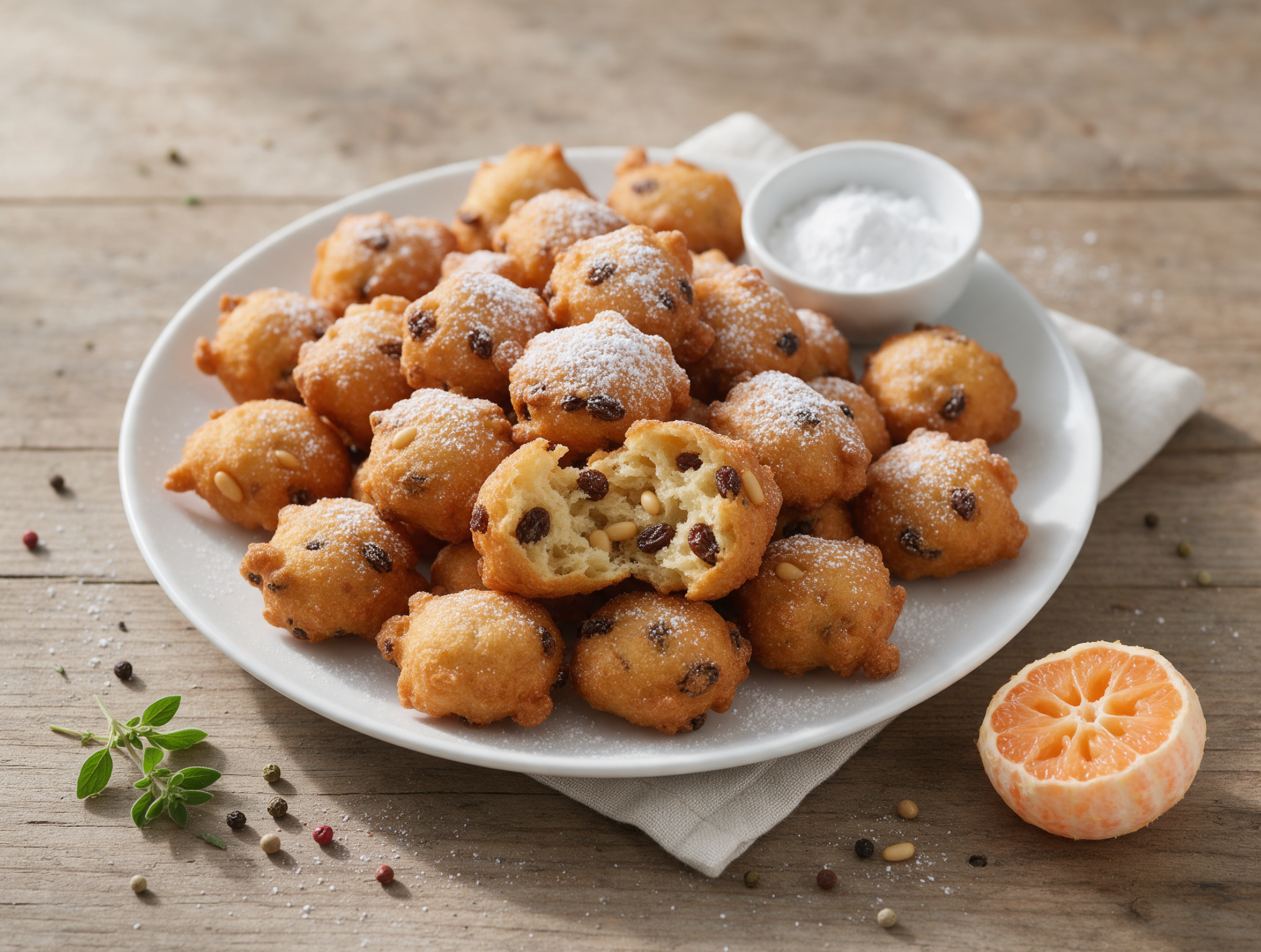
Fried Fritole Veneziane with Raisins and Pine Nuts
Ingredients
Method
- Put the raisins in a small bowl with the grappa and warm water. Let them soak for 15 minutes while you mix the batter, then drain and pat them very dry with a clean towel.
- In a 3 L / 3-quart mixing bowl, whisk the flour, sugar, yeast, salt, lemon zest, and orange zest. In a jug, whisk the lukewarm milk, eggs, and cooled melted butter, then pour into the dry mix. Stir with a wooden spoon until smooth and thick enough to fall from the spoon in a slow ribbon, then fold in the raisins and pine nuts.
- Cover the bowl with a damp towel and leave it at room temperature, about 22 to 24 C / 72 to 75 F, for 60 minutes. The batter is ready when it has doubled and the surface is covered in bubbles.
- Pour the oil into a 24 cm / 9.5-inch heavy-bottomed pot so it's about 3 cm deep, and heat it to 170 C / 340 F. Line a 33 x 46 cm / 13 x 18 inch sheet pan with paper towels. Watch the thermometer: above 180 C / 356 F the shells brown before the centers set and you end up with raw batter inside.
- Stir the batter once, gently, to keep the air in. Using two lightly oiled tablespoons, drop 6 heaping spoonfuls into the oil, leaving space between them. Fry for 3 to 4 minutes, turning once or twice, until they're deep golden on all sides and the centers are set and fluffy.
- Lift the fritole out with a slotted spoon and drain them on the paper towels for 2 minutes. Repeat with the remaining batter in 3 more batches of 6, letting the oil return to 170 C / 340 F between batches. Dust with powdered sugar through a sieve and serve within 30 minutes.
Notes
- Soak the raisins while you mix the batter, then drain and dry them.
- Keep the batter wet and spoonable, it should fall from the spoon in a slow ribbon.
- Check oil temperature between every batch, not just before the first.
- Fry one fritola first and tear it open to check the center.
Tips for Success
- Pat the soaked raisins completely dry before folding them in, since wet fruit makes the oil spatter and thins the batter.
- Clip a deep-fry thermometer to the pot and hold the oil at 170 C / 340 F, adjusting the burner between batches.
- Oil two tablespoons lightly so the sticky batter slides off in one clean drop instead of dragging a tail.
- Fry only 6 fritole at a time, because a crowded pot drops the oil temperature and leaves the shells pale and greasy.
- Serve within 30 minutes of frying and dust with sugar just before eating, since steam softens the shell as it cools.
Variations
- Swap half the raisins for finely diced candied orange peel to add a slightly bitter, perfumed edge to each bite.
- Fill cooled fritole with pastry cream or zabaglione using a piping bag and a small round tip, a style common in Venetian pastry shops.
- Use currants or chopped dried apricots in place of raisins, and soak them in warm orange juice if you want to skip the alcohol.
Storage and Reheating
Fritole veneziane are best eaten within 30 minutes of frying, while the shell is still crisp and the center is warm. Steam from the crumb softens the crust as they cool, and reheating doesn’t bring the crunch back, so I don’t reheat them.
Leftovers keep in an airtight container at room temperature for up to 2 days. They turn soft and cakey, which is pleasant with coffee, but they won’t be crisp. Freezing fried fritole isn’t worth it, since the shells turn leathery.
For a make-ahead route, refrigerate the mixed batter for 8 to 12 hours in a covered bowl large enough for it to double, in place of the 60-minute rise. Let it sit at room temperature for 30 minutes, then fry fresh.
Serving Suggestions
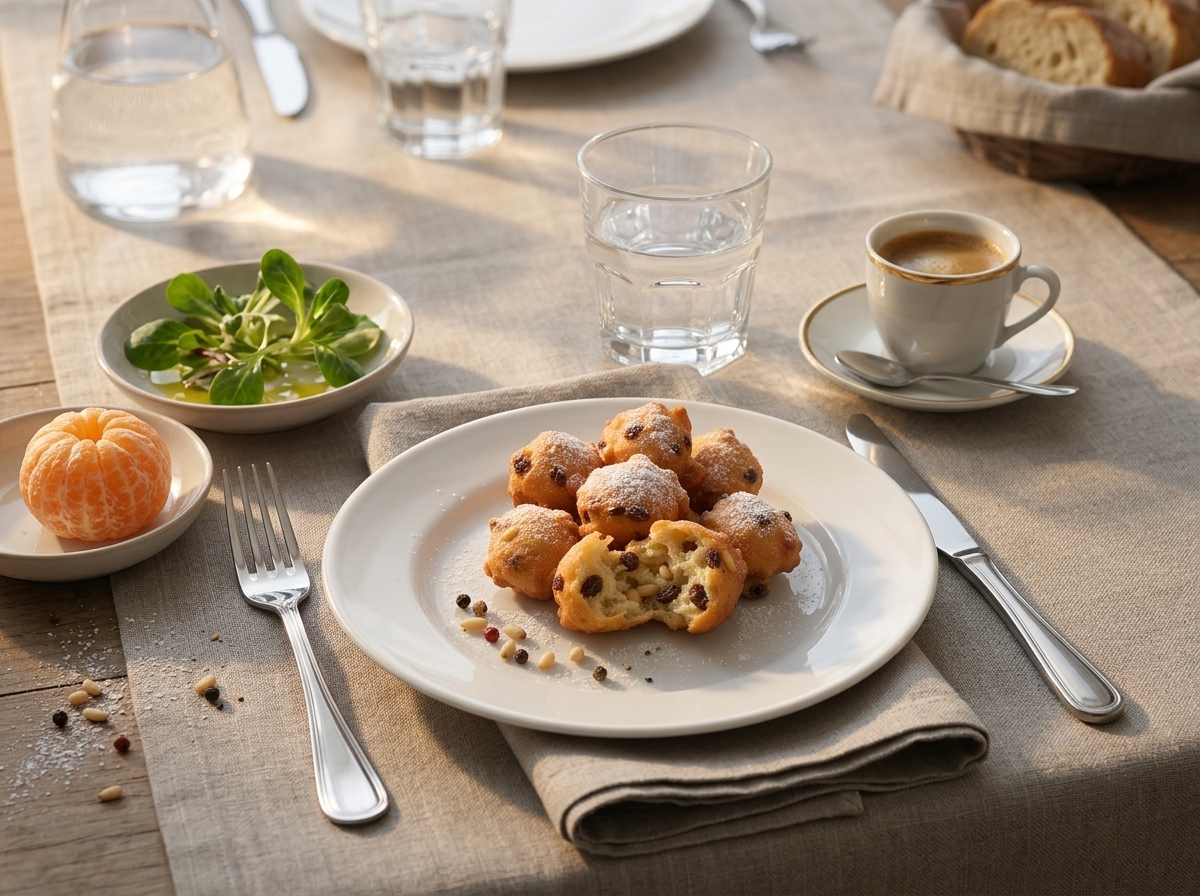
Serve fritole veneziane warm, piled on a platter and dusted with powdered sugar at the last minute. Count on 4 per person for dessert, or 5 to 6 as a snack with coffee.
An espresso or a small glass of Torcolato or Vin Santo suits the raisins and citrus. For a lighter table, pour chilled Prosecco, which cuts through the fried shell.
If you’re cooking for a crowd, fry in rounds and send each batch out as it’s ready instead of holding them. Four batches of 6 take about 20 minutes once the oil is hot.
FAQ
Why are my fritole veneziane raw in the middle?
Raw centers almost always mean the oil was too hot. Above 180 C / 356 F the shell browns in under 2 minutes while the middle is still wet batter. Hold the oil at 170 C / 340 F, fry 3 to 4 minutes, and tear the first fritola open to check before you fry the rest.
Can I use rum instead of grappa to soak the raisins?
Yes, dark rum, brandy, or Marsala all work in place of grappa, using the same 2 tbsp / 30 ml. For an alcohol-free batch, soak the raisins in warm orange juice instead. Grappa is drier and tastes cleaner, but the raisins absorb only a little, so the difference is mild.
Can I make the fritole batter the night before?
Yes. Cover the mixed batter and refrigerate it for 8 to 12 hours in place of the 60-minute rise, using a bowl large enough for it to double. Let it sit at room temperature for 30 minutes, then fry as written. The cold rise adds a slight yeasty tang.
What is the difference between fritole and frittelle?
Fritole is the Venetian word for frittelle, the Italian term for fritters. In Venice it means one specific recipe: a yeasted batter with raisins, pine nuts, and citrus zest, fried in spoonfuls. Elsewhere in Italy, frittelle can mean rice, apple, or ricotta versions, so the name alone doesn’t tell you the batter.
What goes well with fritole veneziane?
Espresso is the simplest match, and a small glass of Torcolato or Vin Santo suits the raisins and citrus zest. Chilled Prosecco also works, because the bubbles cut through the fried shell. Skip heavy cream sauces, since the fritole are already rich from the butter and pine nuts.
How do I make fritole veneziane dairy free?
Use unsweetened soy or oat milk, and replace the butter with 3 tbsp / 45 ml of sunflower oil. The crumb is slightly less rich but still tender. The batter still contains eggs and wheat flour, so the fritole are dairy free and vegetarian, not vegan.