
Jump to Recipe
Cupeta Valtellinese is a walnut brittle from the Valtellina valley in Lombardy, the same valley that bakes Bisciola Valtellinese, made by cooking sugar and honey to hard-crack stage before folding in toasted walnuts and pouring the mass onto a lemon-rubbed slab.
It’s a fair-day sweet, the kind sold from paper cones at village sagre in Sondrio province, where bakers also turn out Pane di Segale della Valtellina. No flour, no butter, no oven. Just sugar, honey, walnuts, and a candy thermometer if you want to skip the guesswork.
The technique is where cooks trip up. Pull the caramel off the heat too early and the brittle turns chewy instead of snapping clean. I check color and temperature together, since color alone can fool you on a cloudy day.
Once poured and scored, it hardens fast. Work the caramel while it’s still warm, because a cold slab will seize it before you get a clean spread.
Why You’ll Love This Recipe
- Only four ingredients, no oven required
- Snaps clean once fully cooled and hardened
- Keeps for weeks in an airtight tin
- Traditional Valtellina fair candy, made at home
Ingredient Notes
- walnuts: Use fresh, unrancid walnut halves and toast them first for deeper flavor and less moisture in the finished candy.
- granulated sugar: Plain white sugar caramelizes cleanly. Brown sugar scorches faster and changes the flavor.
- honey: Wildflower or chestnut honey gives the mild bitterness typical of the original. Acacia honey works if you want it milder.
- lemon: The zest goes into the caramel, and the cut halves rub the work surface so the hot sugar releases cleanly.
- salt: A small pinch balances the sweetness of the honey and sugar.
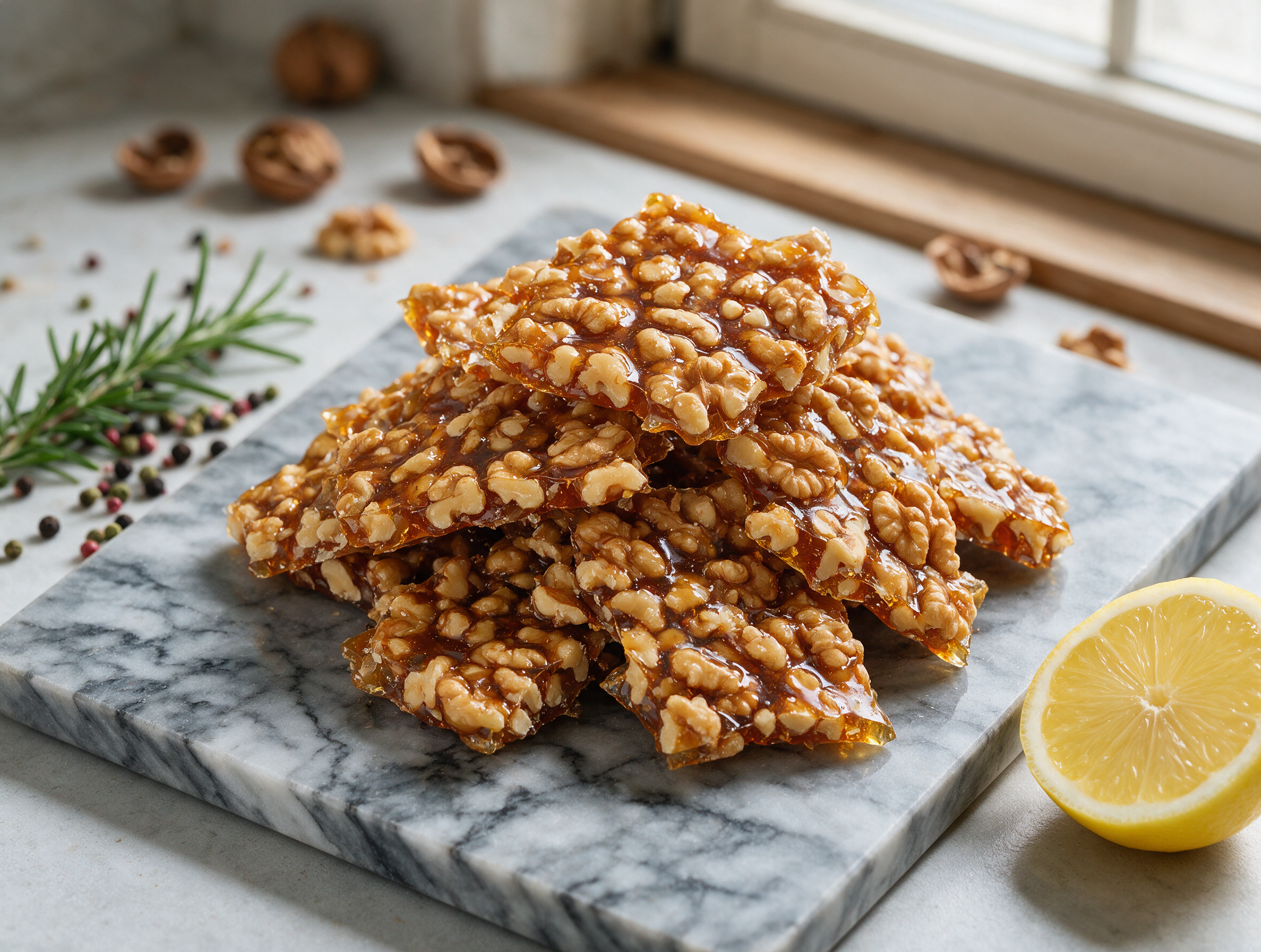
Cupeta Valtellinese: Crisp Walnut and Honey Brittle
Ingredients
Method
- Toast the walnuts in a dry 12-inch skillet over medium heat for 4 to 5 minutes, stirring, until fragrant and lightly browned. Let cool, then chop coarsely and set aside.
- Zest the lemon and set the zest aside. Halve the zested lemon and rub the cut side over a marble slab or a sheet pan lined with parchment paper, to keep the caramel from sticking.
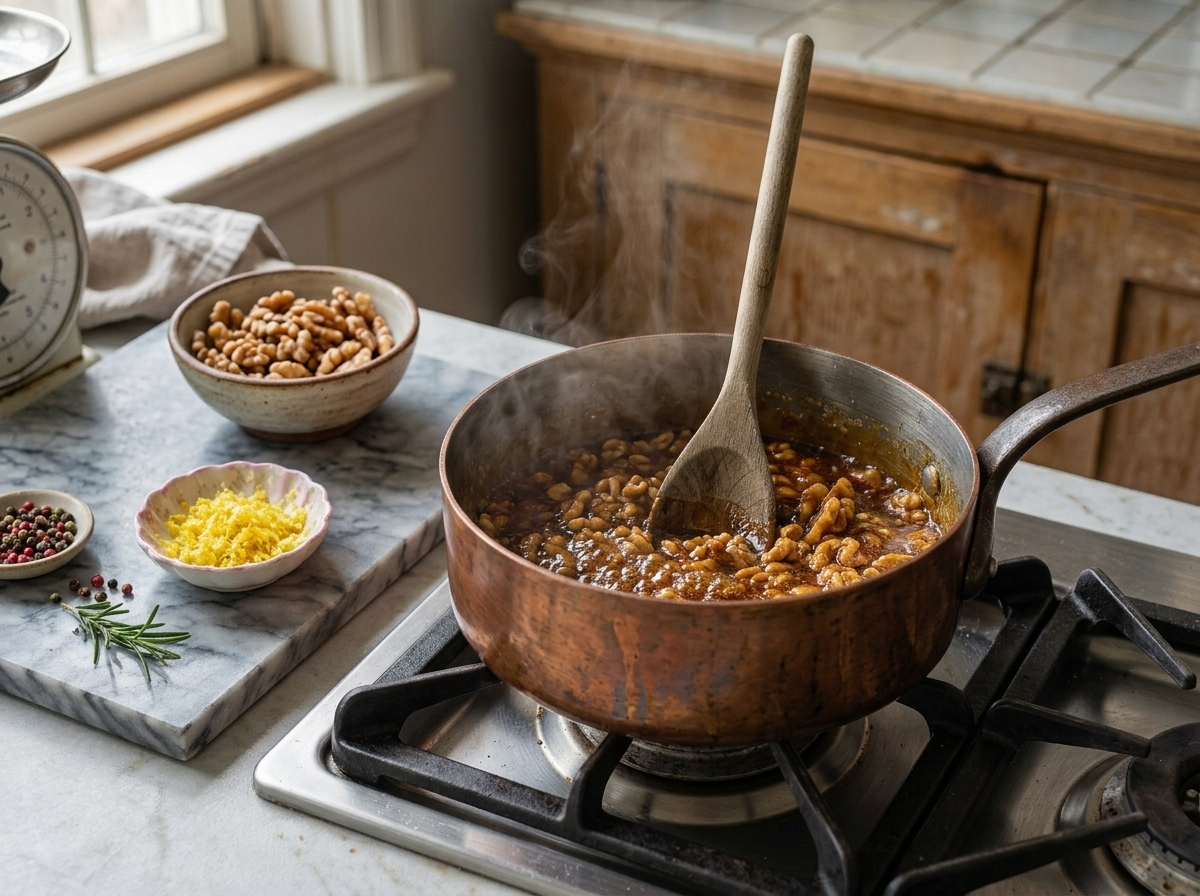
- Combine the sugar, honey, and water in a 3-quart / 2.8 L heavy-bottomed saucepan. Set over medium heat and stir gently until the sugar dissolves.
- Stop stirring once the sugar dissolves. Let the mixture bubble, swirling the pan occasionally, until it turns deep amber and reaches 150 C / 300 F on a candy thermometer, about 8 to 10 minutes.
- Remove the pan from the heat immediately. Stir in the toasted walnuts, lemon zest, and salt, working quickly so the caramel doesn't seize.
- Pour the hot mixture onto the prepared marble slab or sheet pan. Spread it to about 1 cm / 0.4 inch thickness with an oiled offset spatula.
- Let the brittle firm up for 3 to 4 minutes, until it's warm but no longer spreads. Score it into rough rectangles or diamonds with an oiled knife.
- Let cool fully at room temperature for 30 minutes, until hard throughout. Break along the scored lines into pieces.
- Store the pieces in an airtight tin at room temperature.
Notes
- Work with a candy thermometer if this is your first batch.
- Have parchment or a lemon-rubbed marble ready before the caramel starts.
- Chop walnuts by hand for uneven texture, a food processor makes them too fine.
- Score the brittle in one direction only for cleaner breaks later.
Tips for Success
- Toast the walnuts first in a dry skillet for 4 to 5 minutes so they stay crunchy inside the finished brittle.
- Use a candy thermometer and pull the caramel at 150 C / 300 F, hard-crack stage, for a clean snap.
- Rub the marble or wooden work surface with a cut lemon before pouring so the hot sugar doesn’t stick.
- Score the brittle into pieces while it’s still warm and pliable, about 3 to 4 minutes after pouring.
- Work fast once the walnuts go in, the mixture stiffens within a minute as it cools.
Variations
- Swap half the walnuts for toasted hazelnuts for a rounder, less bitter flavor closer to some Piedmont versions.
- Add a pinch of ground cinnamon or orange zest to the caramel for a warmer, spiced edge.
- Drizzle the cooled shards with melted dark chocolate for a modern twist on the rustic original.
Storage and Reheating
Cupeta Valtellinese keeps well because it’s basically cooked sugar. Store the pieces in an airtight tin or jar at room temperature, away from humidity, for 3 to 4 weeks.
Don’t refrigerate it. Cold, damp air makes sugar candy turn sticky and dull instead of staying crisp.
If pieces do soften after a few days in a humid kitchen, there’s no fixing them with heat. Make a fresh batch instead of trying to re-crisp softened brittle, since remelting changes the texture completely.
Serving Suggestions
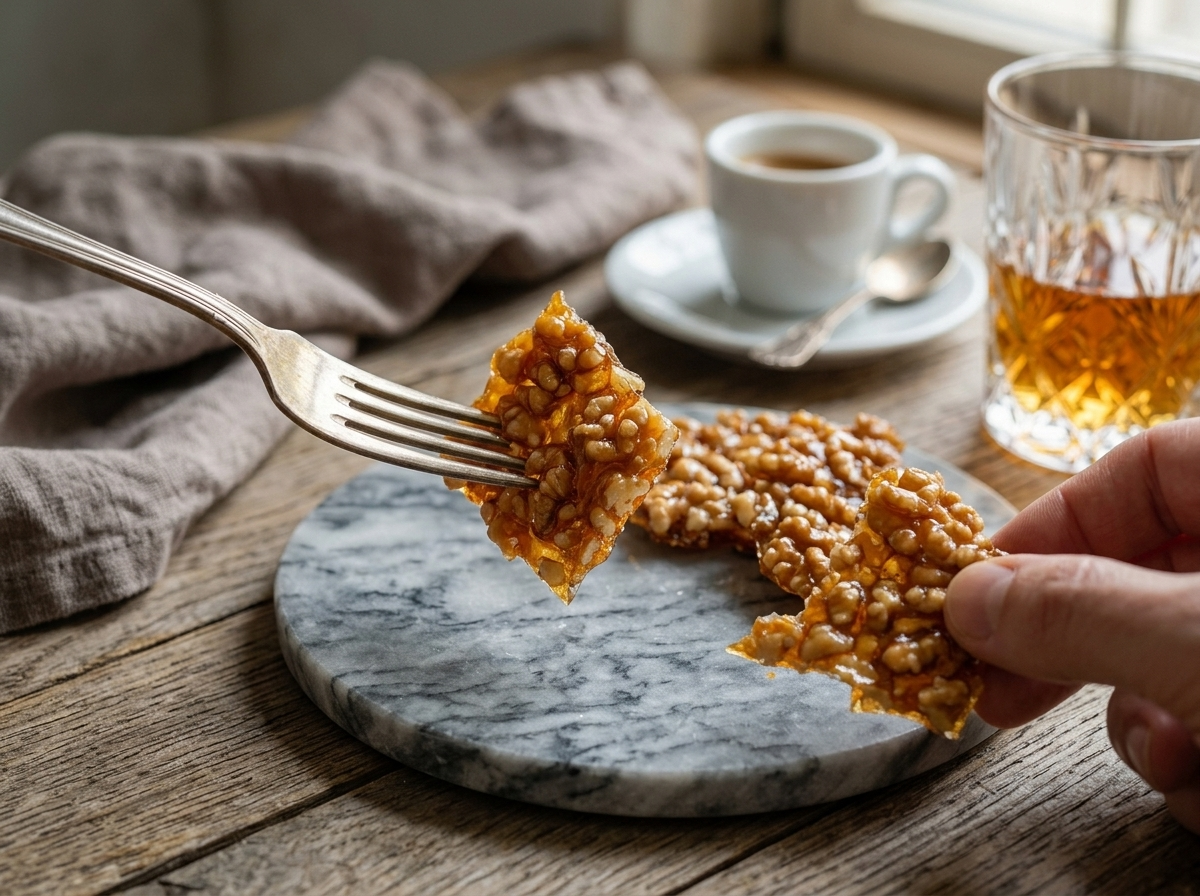
Cupeta Valtellinese is usually eaten out of hand, broken into shards and passed around after a meal or with coffee. It pairs well with a shaken Caffè Shakerato or a small glass of grappa, the way it’s served at valley festivals in Sondrio.
Crush leftover pieces and scatter them over vanilla gelato or a bowl of mascarpone cream for a quick dessert. Chopped fine, it works as a topping for panna cotta too.
Pack a few pieces in cellophane for a homemade gift, they hold their crunch for weeks and travel well without refrigeration.
FAQ
Why is my Cupeta Valtellinese chewy instead of crisp?
It usually means the caramel didn’t reach hard-crack stage. Pull it at 150 C / 300 F on a candy thermometer, when a drop in cold water snaps instead of bending. Under 145 C / 293 F, it stays soft and chewy once cooled.
Can I use hazelnuts instead of walnuts in Cupeta Valtellinese?
Yes, toasted hazelnuts work well and give a rounder, less bitter flavor than walnuts. Chop them the same way, coarse rather than fine, so the brittle keeps some texture. The cooking method and hard-crack temperature stay identical.
How long does Cupeta Valtellinese stay crisp once it’s made?
It stays crisp for 3 to 4 weeks stored in an airtight tin at room temperature. Keep it away from humidity, since damp air softens the sugar and dulls the snap. Don’t refrigerate it, cold moisture has the same effect.
What goes well with Cupeta Valtellinese besides coffee?
A small glass of grappa is the classic Valtellina pairing, cutting through the honey sweetness. Crushed pieces also work scattered over gelato or mascarpone cream. It’s simple enough that it doesn’t need much beyond something to drink alongside it.
Is Cupeta Valtellinese gluten free?
Yes, the traditional recipe uses only walnuts, sugar, honey, and lemon, none of which contain gluten. Check your honey brand if you’re strict about cross-contamination, since some are processed in shared facilities. Otherwise it’s naturally gluten free.
What’s the difference between Cupeta Valtellinese and torrone?
Cupeta is a single-cooked sugar and honey caramel with walnuts, closer to a brittle than a nougat, in the same lineage of simple Valtellina sweets as Biscottini di Prosto. Torrone whips egg whites into the hot syrup, which gives it a chewier, aerated texture. Cupeta is simpler to make and hardens into a glass-like snap instead.