
Jump to Recipe
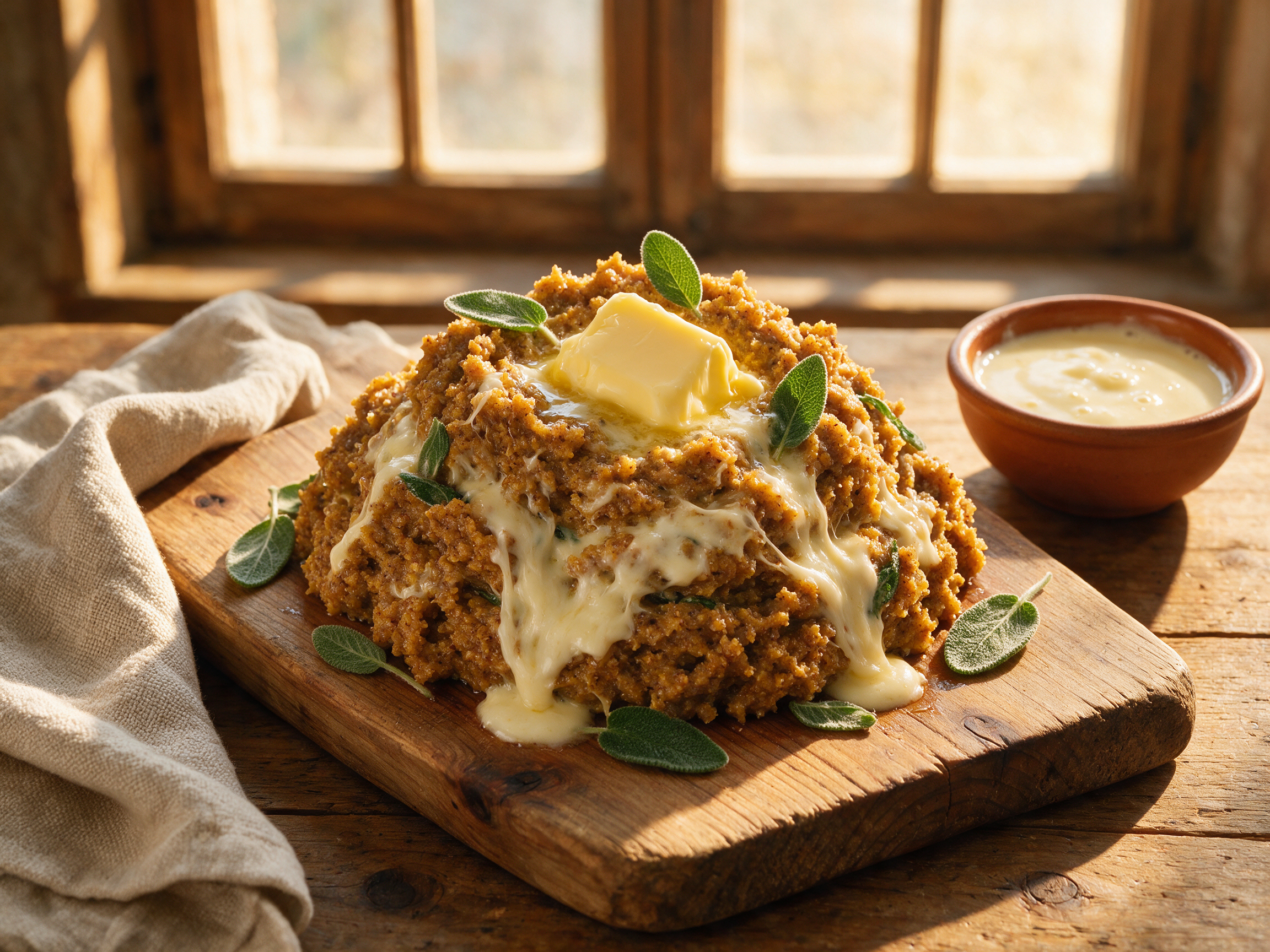
Polenta taragna valtellinese is a dense, nutty polenta from the Valtellina valley in Lombardy, made with buckwheat flour blended into cornmeal and finished with butter and melting Alpine cheese. The buckwheat gives it a darker color and a mineral, almost toasted flavor that plain yellow polenta doesn’t have.
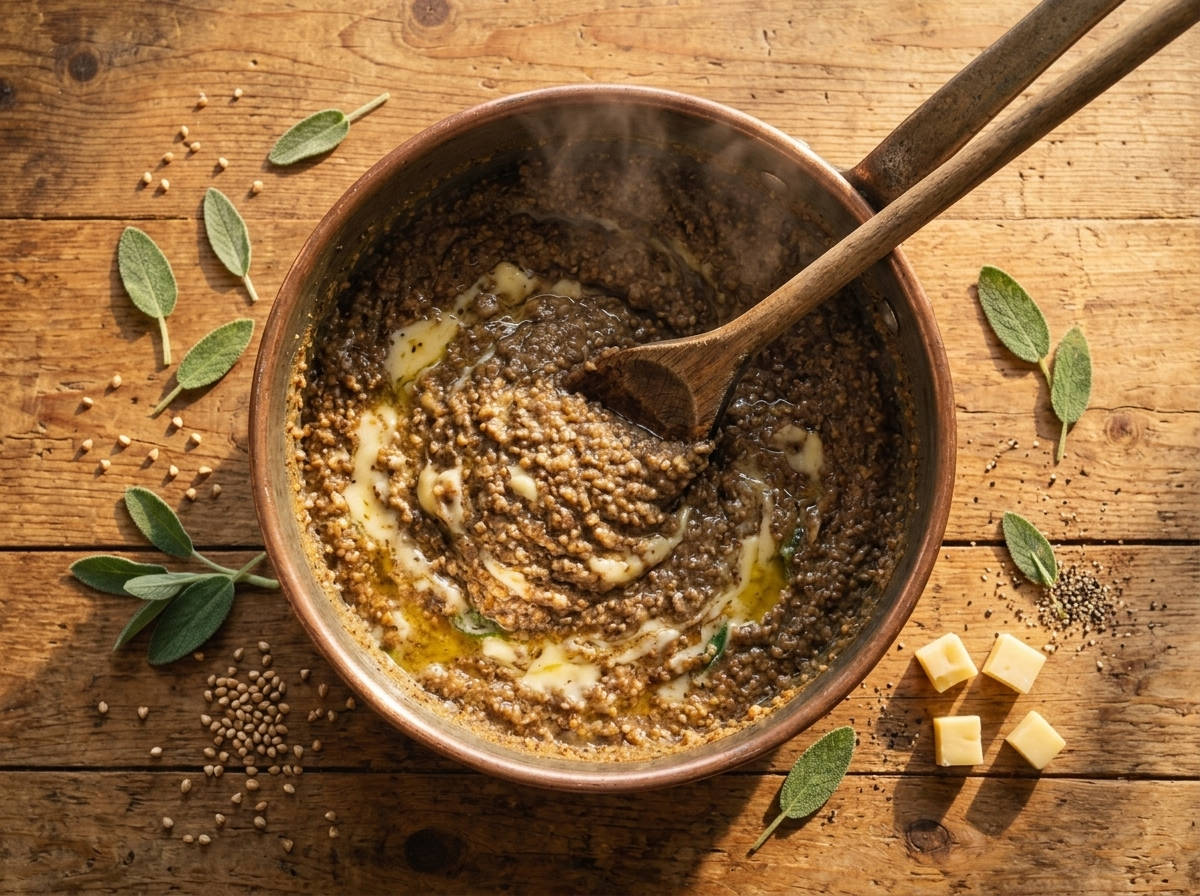
The name comes from the tarello, the wooden stick used to stir it in a copper pot for close to an hour. That long, slow stir is what breaks down the buckwheat and builds the thick, spoon-coating texture the dish is known for.
I’ve rushed this before by cranking the heat to save ten minutes. The flour scorched on the bottom and the whole pot tasted burnt. Low and slow, stirring often, is the only way this works.
Casera cheese is traditional, cubed and stirred in at the end so it melts into strands instead of disappearing. Fontina works if you can’t find it locally.
Why You’ll Love This Recipe
- Uses pantry staples plus one good melting cheese
- Feeds a crowd from one pot with no fuss
- Reheats well for a second meal the next day
- Naturally gluten free with a nutty, mountain flavor
Ingredient Notes
- buckwheat flour: Look for a fine grind labeled for polenta taragna. It gives the dish its dark color and toasted, mineral flavor.
- fine yellow cornmeal: Cut with the buckwheat for structure. A coarser cornmeal works but adds a few extra minutes of cooking time.
- Casera cheese: A young Valtellina cow’s milk cheese with good melt. Fontina or young Taleggio are the closest stand-ins.
- unsalted butter: Stirred in off the heat at the end. Salted butter works too, just cut back the added salt slightly.
Creamy Buckwheat Polenta Taragna, Valtellina Style
Ingredients
Method
- Bring the water and salt to a boil in a 28 cm / 11-inch heavy-bottomed pot.
- Combine the buckwheat flour and cornmeal in a bowl and whisk together so they're evenly mixed.
- Reduce the heat so the water is at a gentle simmer, around 90 C / 195 F. Add the flour mixture in a slow, steady stream, whisking constantly to stop lumps forming.
- Once the mixture starts to thicken, switch to a wooden spoon or tarello. Stir continuously, scraping the bottom and sides of the pot, for 45 to 50 minutes over low heat.
- The polenta is done when it pulls away cleanly from the sides of the pot and a spoon can stand upright in it without falling.
- Remove the pot from the heat. Add the cubed butter and cheese, stirring until fully melted and the polenta looks glossy with long cheese strands running through it.
- Pour the polenta onto a wooden board or large platter, spreading it into a mound about 3 cm / 1-inch thick.
- Let it rest for 5 minutes to firm up slightly, then slice or spoon into portions and serve warm.
Notes
- Stir constantly once the flour goes in, it scorches quickly if left unattended.
- Add cheese off the heat so it melts into strands instead of turning stringy and tough.
- Use a heavy-bottomed pot, thin pots hot-spot and burn the bottom layer.
- Let the poured polenta rest 5 minutes before slicing, it firms up as it cools.
Tips for Success
- Whisk the flours into the water in a slow stream to stop lumps from forming at the bottom of the pot.
- Stir constantly for the full 45 to 50 minutes, buckwheat scorches faster than plain cornmeal alone.
- Cube the cheese instead of grating it so it melts into long strands rather than vanishing into the mash.
- Use a wooden spoon or the traditional tarello, metal utensils drag hard against the thickening polenta.
- Pour the finished polenta onto a wooden board right away, it firms up fast once it stops moving.
Variations
- Swap Casera for Fontina Val d’Aosta or young Taleggio if Valtellina cheese isn’t available near you.
- Stir in sautéed wild mushrooms during the last 5 minutes for an earthier, forest-floor version.
- Finish with crumbled aged Bitto instead of Casera for a sharper, more pungent bite.
Storage and Reheating
Polenta taragna keeps in an airtight container in the fridge for 3-4 days. It firms up solid as it cools, which is normal.
To reheat, warm slices in a 26 cm / 10-inch skillet with a splash of milk or water and a small knob of butter over low heat, stirring until loosened and creamy again, about 5 minutes. You can also slice the cold polenta and pan-fry the pieces in butter until the outside crisps and the inside softens.
It freezes reasonably well for up to 2 months in a sealed container. Thaw overnight in the fridge before reheating in the skillet.
Serving Suggestions
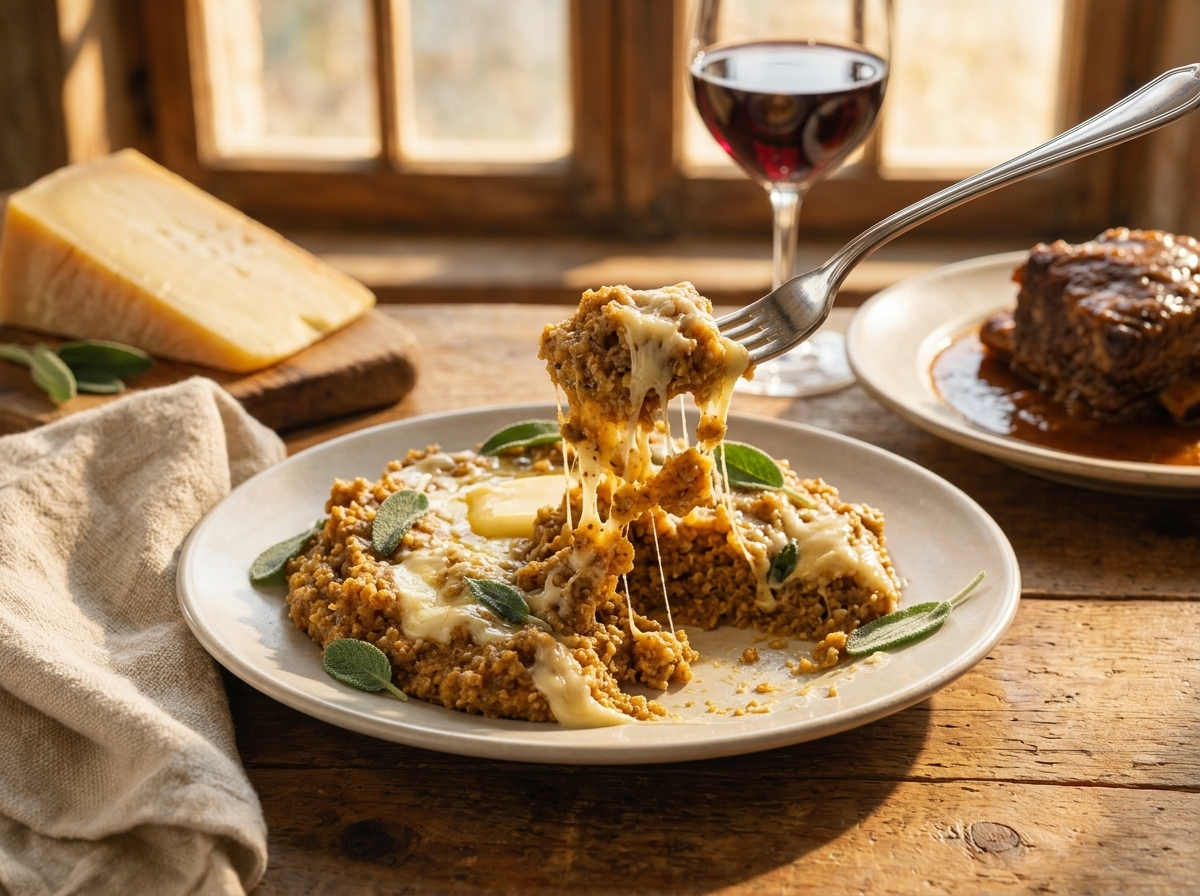
Polenta taragna is traditionally served alongside braised meats, like a beef stew or spezzatino, letting the sauce soak into the polenta. It also holds up well next to grilled sausage or a wedge of soft-cooked egg.
For a simpler plate, spoon it warm into shallow bowls and top with melted butter, a few sage leaves fried until crisp, and extra shaved cheese.
Leftover slices, pan-fried until the edges crisp, make a solid breakfast side with a fried egg on top.
FAQ
Why is my polenta taragna grainy instead of smooth?
Grainy polenta usually means the flour was added too fast or the heat was too high early on, so lumps set before they could dissolve. Whisk the buckwheat and cornmeal in slowly over a gentle simmer, and switch to a wooden spoon once it thickens. Straining lumpy flour through a sieve before adding it also helps.
Can I use Fontina instead of Casera cheese in polenta taragna?
Yes, Fontina Val d’Aosta is the most common substitute and melts just as well into long strands. Young Taleggio also works if you want something softer and slightly tangier. Avoid pre-shredded cheese, it doesn’t melt as smoothly as cubed fresh cheese stirred in by hand.
Can I make polenta taragna ahead and reheat it the next day?
Yes, it reheats well in a skillet with a splash of milk or water and a knob of butter over low heat until loosened again. Cooled polenta also slices and pan-fries nicely for a crisp-edged second-day version. Keep it in the fridge for 3-4 days in an airtight container.
What goes well with polenta taragna besides sausage?
Braised beef or a slow-cooked spezzatino is the classic pairing, since the sauce soaks into the dense polenta. Wild mushrooms sautéed in butter, or a fried egg on top for breakfast, both work too. Keep sides simple since the polenta itself is rich.
Is polenta taragna gluten free?
Yes, both buckwheat flour and cornmeal are naturally gluten free, so a traditional polenta taragna made this way is safe for a gluten-free diet. Just check that your buckwheat flour is labeled gluten free, since some mills process it alongside wheat and cross-contamination can happen.
What’s the difference between polenta taragna and regular yellow polenta?
Polenta taragna blends buckwheat flour into the cornmeal, giving it a darker color, nuttier flavor, and denser bite than plain yellow polenta. It’s also finished with butter and cubed mountain cheese stirred in at the end, which regular polenta usually skips or adds in smaller amounts.