Jump to Recipe
Alpine family-style pork and cabbage is a slow braise of pork shoulder, savoy cabbage, and potatoes simmered with speck, caraway, and juniper until the meat pulls apart with a fork. It comes from the cooking of the mountain valleys where Italy meets Austria and Switzerland, places where cabbage, pork, and root vegetables carried a household through winter.
I make this in one dutch oven, browning the pork first so the fond builds flavor before anything else goes in. The cabbage breaks down slowly and picks up the meat’s fat and the wine’s acidity, so by the end it tastes closer to a vegetable braised in gravy than a side dish.
This isn’t a fast dinner. Give it a full afternoon and the payoff is a pot that feeds six people with very little hands-on work after the browning stage.
Speck is the traditional Alpine cured pork, but thick-cut bacon works fine if that’s what’s in your fridge.
Why You’ll Love This Recipe
- One pot handles browning, braising, and serving
- Feeds six people from a single dutch oven
- Speck and juniper give it real Alpine flavor
- Leftovers taste even better the next day
Ingredient Notes
- Pork shoulder: Bone-in or boneless both work, but boneless cuts into cleaner chunks. Pork butt is the same cut under a different name.
- Speck: This is the Alpine cured, smoked pork traditionally used in this braise. Thick-cut bacon or pancetta are fine substitutes if speck isn’t sold near you.
- Savoy cabbage: Its crinkled leaves hold up to a long braise better than smooth green cabbage. Red cabbage works too but shifts the color and adds a slightly sweeter edge.
- Juniper berries: Crush them with the flat of a knife before adding so they actually release flavor into the braise, not just sit whole in the broth.
- Caraway seeds: These bring a warm, slightly anise-like note common in Alpine and German-adjacent cooking. Fennel seeds can stand in if you’re out.
- Dry white wine: Use something plain and dry, not sweet. A splash of dry vermouth works if you don’t want to open a bottle.
- Chicken or pork stock: Homemade or good-quality store-bought both work. Keep it low-sodium since speck and stock both add salt.
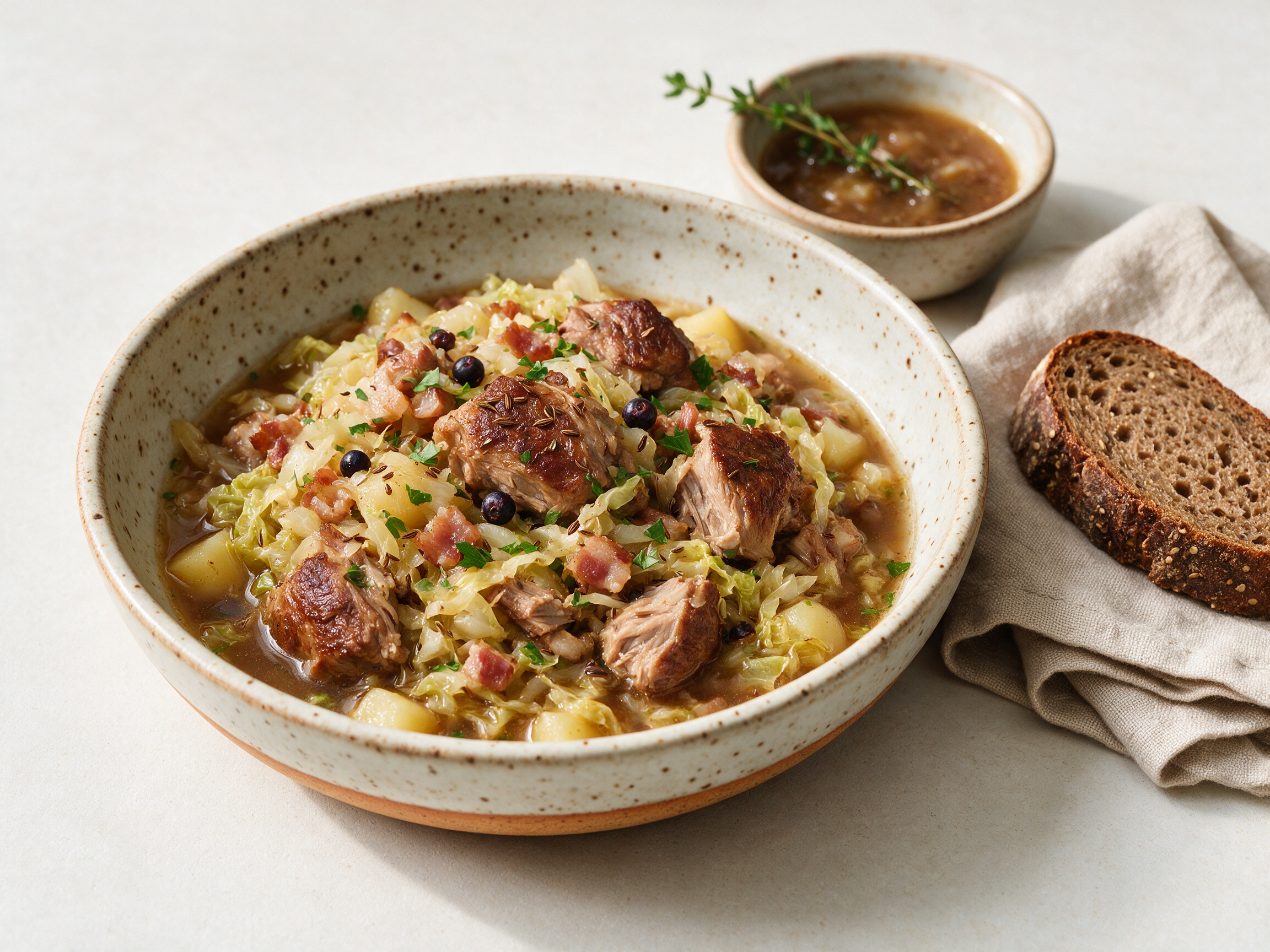
Braised Alpine Pork and Cabbage with Potatoes
Ingredients
Method
- Season the pork shoulder chunks generously with salt and pepper. Heat the olive oil in a 5.5-quart / 5 L dutch oven (28 cm / 11-inch) over medium-high heat.
- Brown the pork in two batches, about 3 to 4 minutes per side, until deep golden on all sides. Don't crowd the pot, or the pork will steam instead of browning. Transfer to a plate.
- Add the diced speck to the same pot and cook 4 to 5 minutes, stirring, until the fat renders and the edges crisp.
- Add the onion and garlic, cook 4 to 5 minutes until soft and translucent. Stir in the caraway seeds, crushed juniper berries, and bay leaves, and cook 30 seconds until fragrant.
- Pour in the white wine, scraping up any browned bits from the bottom of the pot. Simmer 2 minutes to cook off the sharp alcohol smell.
- Heat the oven to 160 C / 325 F. Return the pork and its juices to the pot, add the stock, and bring to a gentle simmer on the stovetop.
- Cover and transfer the pot to the oven. Braise for 45 minutes.
- Remove the pot, stir in the potatoes, cover, and return to the oven for 20 minutes.
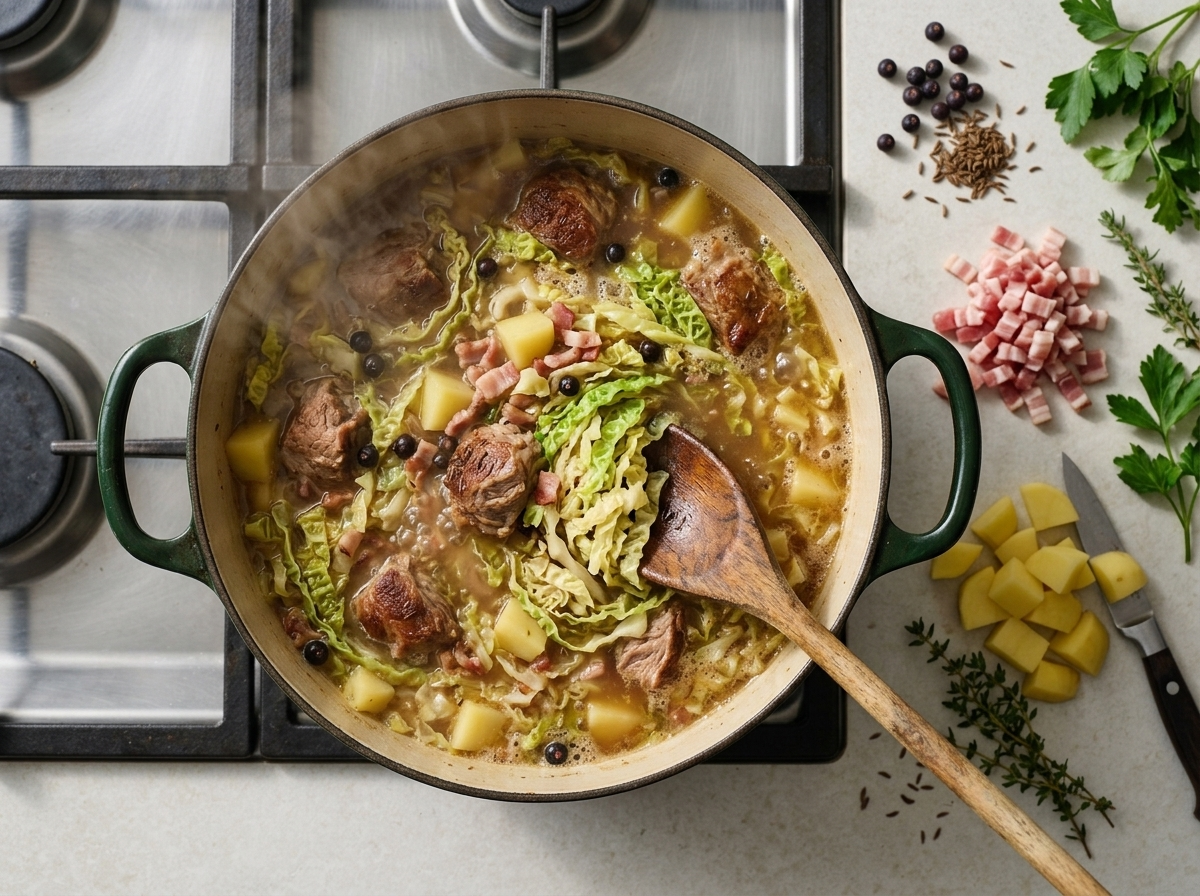
- Add the cabbage, pushing it down into the liquid so it's mostly submerged. Cover and braise 25 to 30 minutes more, until the pork is fork-tender and shreds easily, reaching an internal temperature of about 90 C / 195 F, and the cabbage is soft.
- Uncover for the last 10 minutes if the broth looks thin, to let it reduce slightly.
- Stir in the butter off the heat, discard the bay leaves, and taste for salt and pepper.
- Ladle into bowls, scatter with parsley, and serve.
Notes
- Browning pork in batches prevents steaming and builds a better fond.
- Crush juniper berries so their oil actually flavors the braise.
- Rest the pot 5 minutes off heat before ladling to let fat settle.
- Discard bay leaves before serving, they turn brittle and bitter.
Tips for Success
- Brown the pork in two batches so each piece gets real contact with the pot, not steam from crowding.
- Crush juniper berries with the flat of a knife before adding, or they pass through the braise untouched.
- Cut potatoes about 3 cm so they hold their shape through the long simmer instead of turning mushy.
- Simmer low and slow rather than boil hard, or the pork will seize up and turn tough before it softens again.
- Taste the broth before adding salt, since speck and stock both bring their own sodium.
Variations
- Swap pork shoulder for bone-in pork ribs and add 15 minutes of simmer time before the potatoes go in.
- Use red cabbage instead of savoy for a deeper color and a slightly sweeter, more mineral finish.
- Stir in a spoonful of grainy mustard at the end for an Alpine-meets-French edge to the broth.
Storage and Reheating
Alpine pork and cabbage keeps 3-4 days in the fridge in an airtight container. The flavor actually improves overnight as the cabbage keeps absorbing the broth.
Reheat gently in a 3-quart / 2.8 L saucepan over medium-low heat for 8-10 minutes, adding a splash of stock or water if it looks dry. A microwave works too, covered, in 2-minute bursts, stirring between.
Freeze cooled portions for up to 3 months. The potatoes soften further after freezing, so cut them slightly larger next time if you plan to freeze.
Serving Suggestions
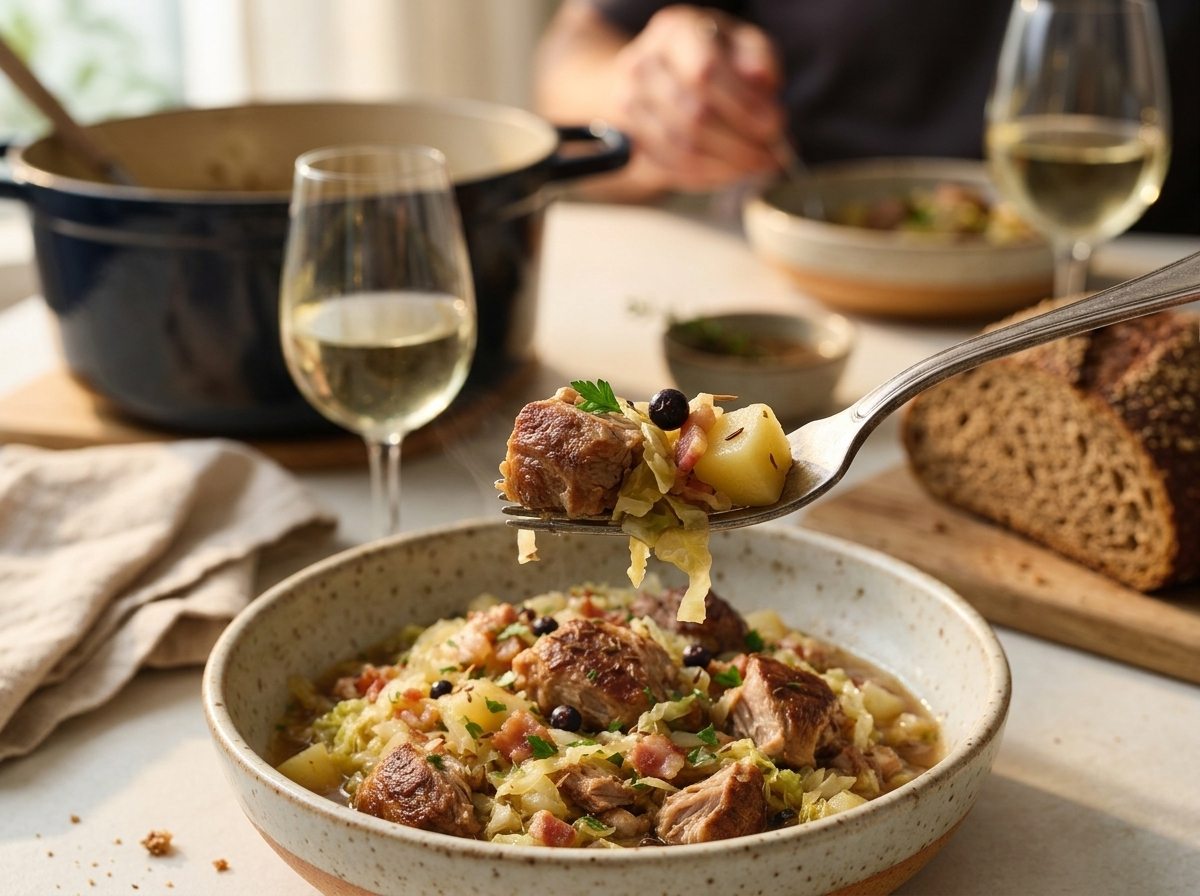
Alpine pork and cabbage stands on its own in a bowl, ladled with plenty of broth. A slice of dense rye or dark bread on the side is the classic move, good for mopping up the pot.
For a lighter plate, serve it over a small mound of egg noodles or spatzle instead of extra bread. A crisp apple or fennel salad on the side cuts through the richness.
Pour a dry Alpine white like a Kerner or Muller-Thurgau if you’re drinking wine with dinner, or a simple pilsner if beer’s more your speed.
FAQ
Why is my Alpine pork and cabbage watery instead of thick?
Your braise is probably watery because the lid stayed on too long. Uncover the pot for the last 10 to 15 minutes of cooking so the liquid reduces and coats the cabbage instead of pooling underneath it. A simmer that’s too gentle for too short a time can also leave excess liquid.
Can I use pork belly instead of pork shoulder for this braise?
Yes, pork belly works, though it’s fattier and needs less added oil for browning. Trim some of the fat cap first, then follow the same braising time. Expect a richer, softer texture than pork shoulder gives.
Can I make Alpine pork and cabbage a day ahead?
Yes, and it’s better a day ahead. Cool it completely, refrigerate in an airtight container for up to 3-4 days, and reheat gently on the stove with a splash of stock before serving. The cabbage keeps absorbing flavor overnight.
What goes with Alpine pork and cabbage besides bread?
Dark rye bread is traditional, but egg noodles, spatzle, or boiled potatoes on the side all work if you want something to soak up the broth. A crisp apple or fennel salad balances the richness, and a dry Alpine white wine or pilsner rounds out the meal.
Is Alpine pork and cabbage gluten-free?
Yes, as written it’s gluten-free since the pork, cabbage, potatoes, and stock contain no wheat. Double-check your stock and speck labels, since some cured meats and packaged broths add gluten-based fillers. Serve it with rice or a gluten-free bread if you want something on the side.
What’s the difference between this dish and German-style pork and sauerkraut?
The main difference is the cabbage. This Alpine version uses fresh savoy cabbage braised until soft, while German pork and sauerkraut relies on cabbage already fermented and sour. Alpine style also leans on juniper and speck rather than caraway alone, giving it a milder, more savory profile.