
Jump to Recipe
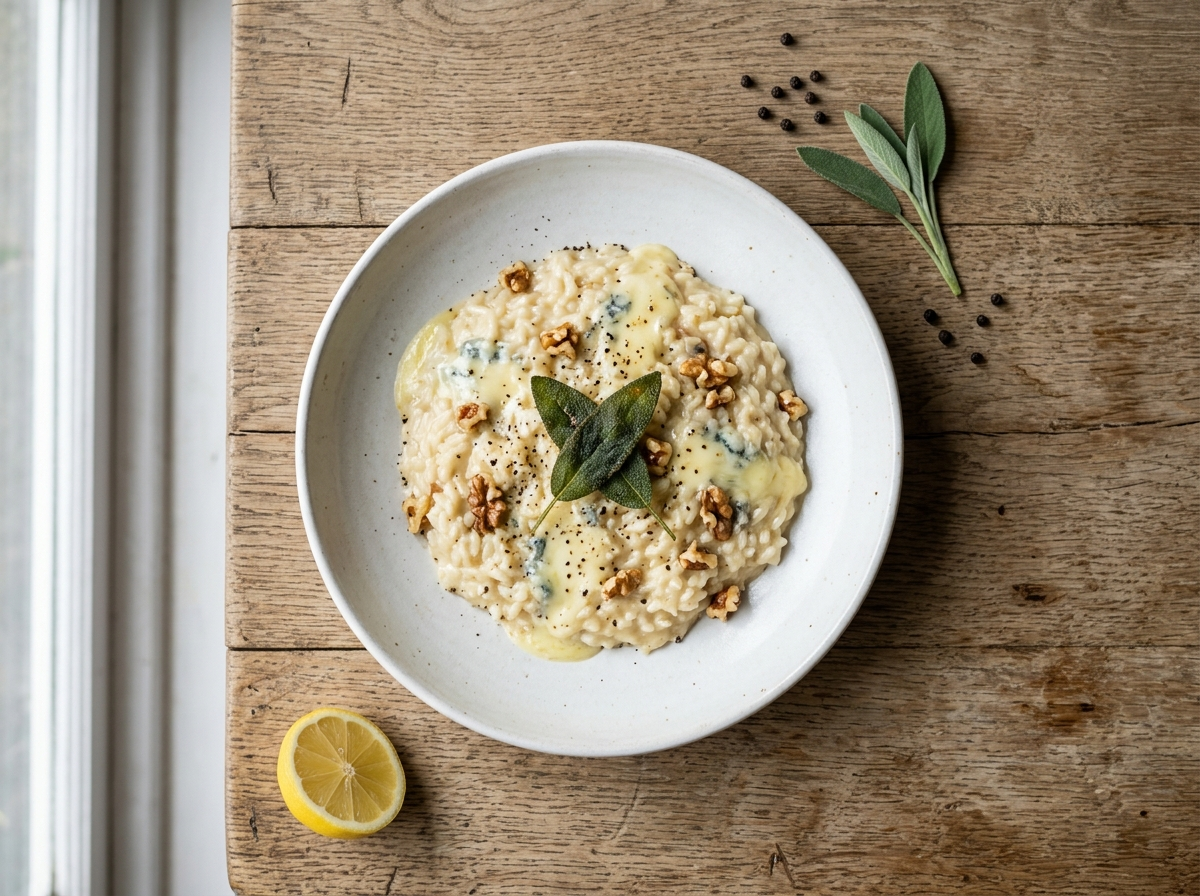
Risotto al gorgonzola is a Northern Italian rice dish in the same family as asparagus risotto, where arborio or carnaroli rice cooks slowly in stock until creamy, then gets finished with melted gorgonzola off the heat so the cheese stays silky instead of stringy.
The technique matters more than the ingredient list. A slow ladle-by-ladle simmer builds the starch that makes the risotto creamy on its own, before any cheese goes in.
I use gorgonzola dolce here because it melts smoothly and tastes milder than the piccante version. If your gorgonzola is salty, hold off on extra seasoning until the very end.
One thing that trips people up: adding the cheese while the pan is still over direct heat. Do that and the fat separates, and the risotto turns oily instead of glossy. Pull the pan off the burner first, then stir the gorgonzola in.
Why You’ll Love This Recipe
- Ready in about 40 minutes with pantry staples plus one cheese
- Mantecatura finish keeps the sauce glossy, never oily or split
- Toasted walnuts and fried sage add crunch against the soft rice
- Naturally gluten free without any recipe adjustments needed
Ingredient Notes
- Arborio rice: High-starch short grain that releases starch slowly for a creamy result. Carnaroli works too and holds a firmer bite.
- Gorgonzola dolce: Young, mild, and melts smoothly. Taleggio is a good milder substitute if you want less tang.
- Shallot: Milder and sweeter than onion for the soffritto. Half a small yellow onion works if that’s what you have.
- Dry white wine: Adds acidity that cuts the richness of the cheese. Skip it and use extra stock plus a squeeze of lemon if you’d rather avoid alcohol.
- Parmesan: Adds salt and umami alongside the gorgonzola. Grana Padano is a fine budget swap.
- Walnuts: Toasted for crunch and a slight bitterness that balances the rich cheese. Pecans or hazelnuts work as well.
- Stock: Vegetable or chicken both work here. Keep it at a bare simmer so it doesn’t cool the rice down when ladled in.
Creamy Gorgonzola Risotto with Toasted Walnuts
Ingredients
Method
- Warm the stock in a small saucepan and keep it at a bare simmer, about 85 C / 185 F, over low heat.
- Cube the gorgonzola and set it out at room temperature so it melts evenly later.
- Heat olive oil and half the butter in a wide saucepan over medium heat. Add the shallot and cook 3 to 4 minutes until translucent.
- Add the rice and stir for 2 minutes until the edges turn translucent and the grains are coated in fat.
- Pour in the wine and stir until it's fully absorbed, about 1 to 2 minutes.
- Add the hot stock one ladle at a time, stirring frequently and waiting until each ladle is absorbed before adding the next. This takes 17 to 18 minutes total, until the rice is creamy on the outside with a slight bite at the center.
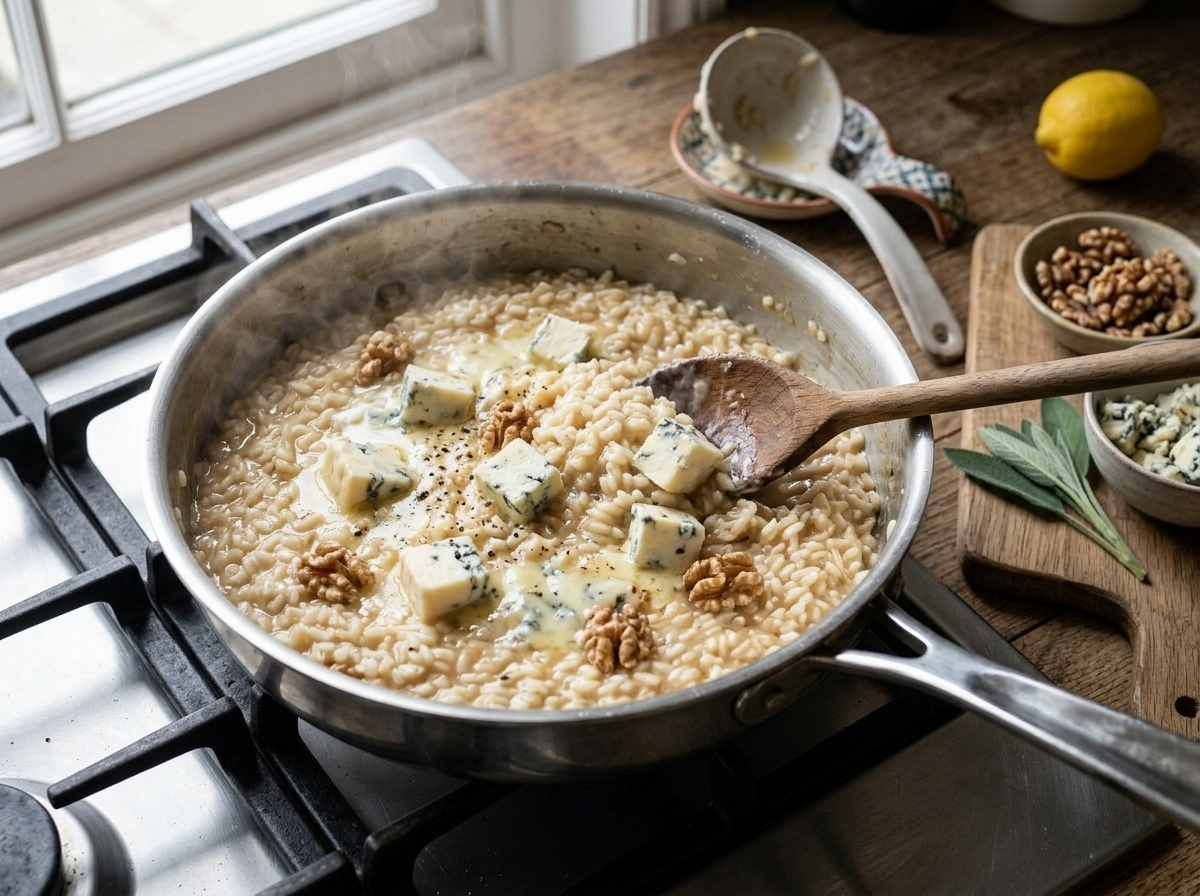
- Remove the pan from the heat. Stir in the remaining butter, parmesan, and gorgonzola until fully melted and glossy.
- Cover and rest for 1 to 2 minutes, then adjust salt and pepper to taste.
- If using sage, fry the leaves in a small pat of butter for 1 minute until crisp.
- Plate the risotto and top with toasted walnuts, fried sage, and a crack of black pepper.
Notes
- Keep stock simmering separately so each ladle doesn't cool the pan down.
- Add gorgonzola off heat only, or the sauce will split and turn oily.
- Rice should hold a slight bite at the center, about 17 to 18 minutes of stock addition.
- Rest covered for 1 to 2 minutes before plating so it settles without stiffening.
Tips for Success
- Toast the rice in butter for a full 2 minutes before adding wine so each grain builds a starchy coat.
- Keep the stock at a bare simmer in a separate pot so ladling it in doesn’t drop the pan’s temperature.
- Stir often during the first 10 minutes, then more frequently near the end to release maximum starch.
- Pull the pan off the heat before stirring in gorgonzola, or the fat will split and turn oily.
- Taste before adding salt since gorgonzola and parmesan both carry plenty already.
Variations
- Swap half the gorgonzola for mascarpone for a milder, less tangy finish that still stays creamy.
- Stir in blanched radicchio or wilted spinach for color and a bitter counterpoint to the cheese.
- Use pecans or hazelnuts instead of walnuts, and finish with a drizzle of aged balsamic instead of fried sage.
Storage and Reheating
Risotto al gorgonzola is best eaten right after the mantecatura, while the rice is still loose and glossy. Leftovers firm up fast once the starch cools, but that’s normal for risotto.
Store cooled risotto in an airtight container in the fridge for up to 3 days. Freezing isn’t ideal here since gorgonzola’s texture turns grainy after thawing.
Reheat gently in a saucepan over low heat with a splash of stock or water, stirring until it loosens back to a creamy consistency, about 4 to 5 minutes. A microwave works in a pinch, covered, in 30-second bursts, stirred between each.
Serving Suggestions
Risotto al gorgonzola works as a stand-alone primo, so keep the rest of the meal light. A simple radicchio salad with a sharp vinaigrette cuts through the richness.
For a heartier dinner, serve it alongside a small portion of grilled steak or the slow-braised veal shanks from ossobuco alla Milanese. The mild char plays well against the tangy cheese.
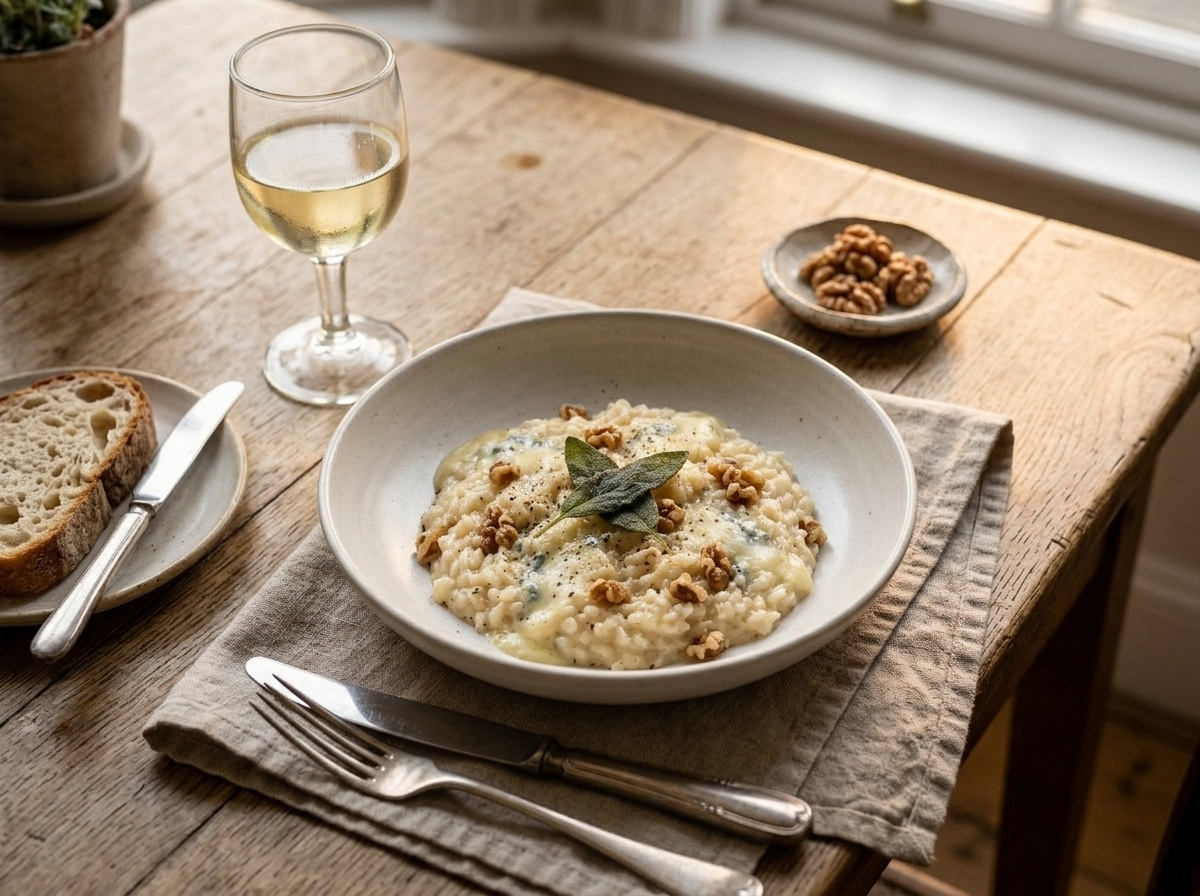
Pour a crisp white with good acidity, like a Soave or Pinot Grigio, to balance the fat from the butter and gorgonzola.
FAQ
Why is my risotto al gorgonzola grainy instead of creamy?
Grainy risotto usually means the gorgonzola melted over direct heat instead of off it. Pull the pan off the burner before stirring in the cheese, then add it gradually so it emulsifies into the starchy rice liquid. Overcooked rice that’s absorbed too much stock too fast can also make the texture feel broken rather than glossy.
Can I use taleggio instead of gorgonzola in this risotto?
Yes, taleggio works well since it melts smoothly and carries a milder tang than gorgonzola. Use the same 150 g amount, cubed, and stir it in off heat the same way. The risotto will taste less sharp but keep the same creamy texture.
Can I make risotto al gorgonzola ahead of time and reheat it?
You can, though risotto tastes best cooked close to serving since the starch firms up as it cools. Undercook the rice by 2 to 3 minutes, spread it on a tray to cool fast, then finish it with hot stock and gorgonzola right before serving. A full reheat from a fridge portion also works if you add extra stock to loosen it.
What wine pairs well with gorgonzola risotto?
A dry white with good acidity, like Soave, Pinot Grigio, or a light Sauvignon Blanc, cuts through the richness of the melted cheese and butter. If you prefer red, a young Barbera does the same job with its bright acidity. Skip heavy oaked whites, which tend to flatten the dish.
Is risotto al gorgonzola gluten free?
Yes, arborio rice, gorgonzola, and stock are naturally gluten free as long as your stock doesn’t contain hidden gluten additives. Check the label if you’re using a store-bought stock cube or carton. The wine and butter in this recipe are gluten free by nature too.
What’s the difference between gorgonzola dolce and gorgonzola piccante for this risotto?
Gorgonzola dolce is younger and milder, melting into a smooth, creamy sauce, which is what this recipe calls for. Gorgonzola piccante is aged longer, firmer, and sharper, and using the same amount can make the risotto taste bitter. If you want a stronger blue-cheese punch, use half piccante and half dolce.