
Jump to Recipe
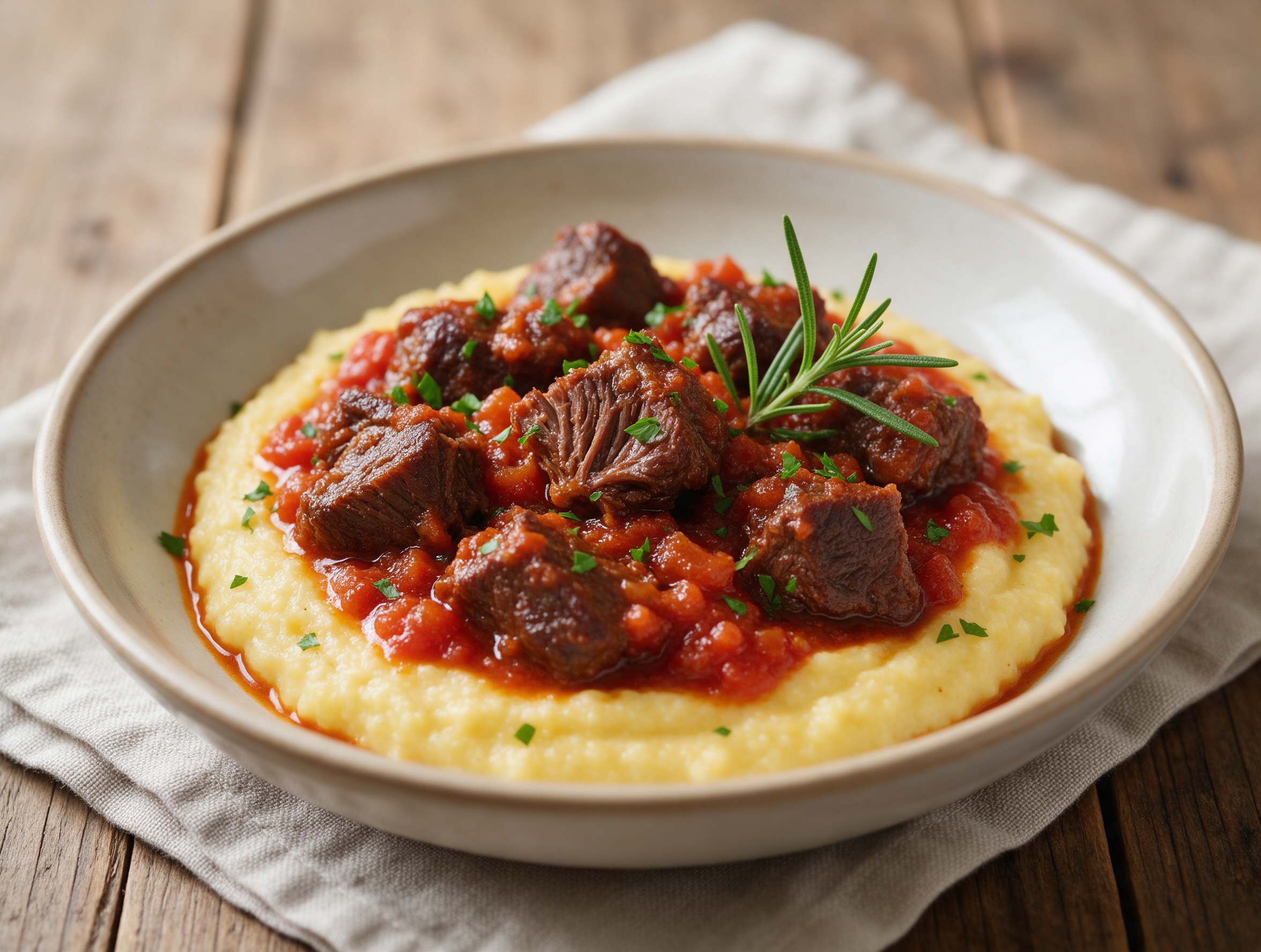
Cinghiale in umido is a Tuscan-style braise of wild boar, cooked slowly in red wine and tomato until the meat yields to a fork. This version uses boneless shoulder, a 2-hour wine marinade, and 2 hours in a 150 C / 300 F oven.
Boar shoulder is lean and full of connective tissue, so time does the work. At 90 minutes the cubes look done but still spring back and chew dry. Wait for the full 2 hours, when the collagen melts and the sauce turns glossy.
You don’t need flour or cream here. A finely diced soffritto and a long braise thicken the sauce on their own.
Plan on 20 minutes of prep, a 2-hour marinade, and about 2.5 hours of cooking. It tastes better on day two and freezes well, so it earns its weekend slot.
Why You’ll Love This Recipe
- One pot and under an hour of hands-on work
- Sauce thickens from soffritto alone, with no flour or cream
- Tastes better on day two and freezes for 3 months
- Red wine and juniper temper the gamey edge without hiding it
Ingredient Notes
- wild boar shoulder: Boneless shoulder has enough fat and collagen to stay moist over a long braise. Wild boar can carry Trichinella, a parasite killed by thorough cooking, so buy from a licensed supplier, keep it at or below 40 F / 4 C, and cook it to at least 160 F / 71 C. A 2-hour braise passes that mark long before the meat turns tender.
- dry red wine: Use a Chianti or Montepulciano you’d drink, with firm tannins and no oak-heavy sweetness. The wine is both the marinade and the main braising liquid, so a thin or sweet bottle shows up in the sauce.
- juniper berries: Crush them lightly so they release their resinous aroma. Discard them before the braise, since biting into one tastes harsh. If you can’t find them, add one extra rosemary sprig and a strip of lemon peel.
- canned whole peeled tomatoes: Crush them by hand for a rustic texture. San Marzano style tomatoes give a clean, less acidic sauce, but any good canned whole tomato works.
Cinghiale in Umido: Braised Wild Boar with Red Wine
Ingredients
Method
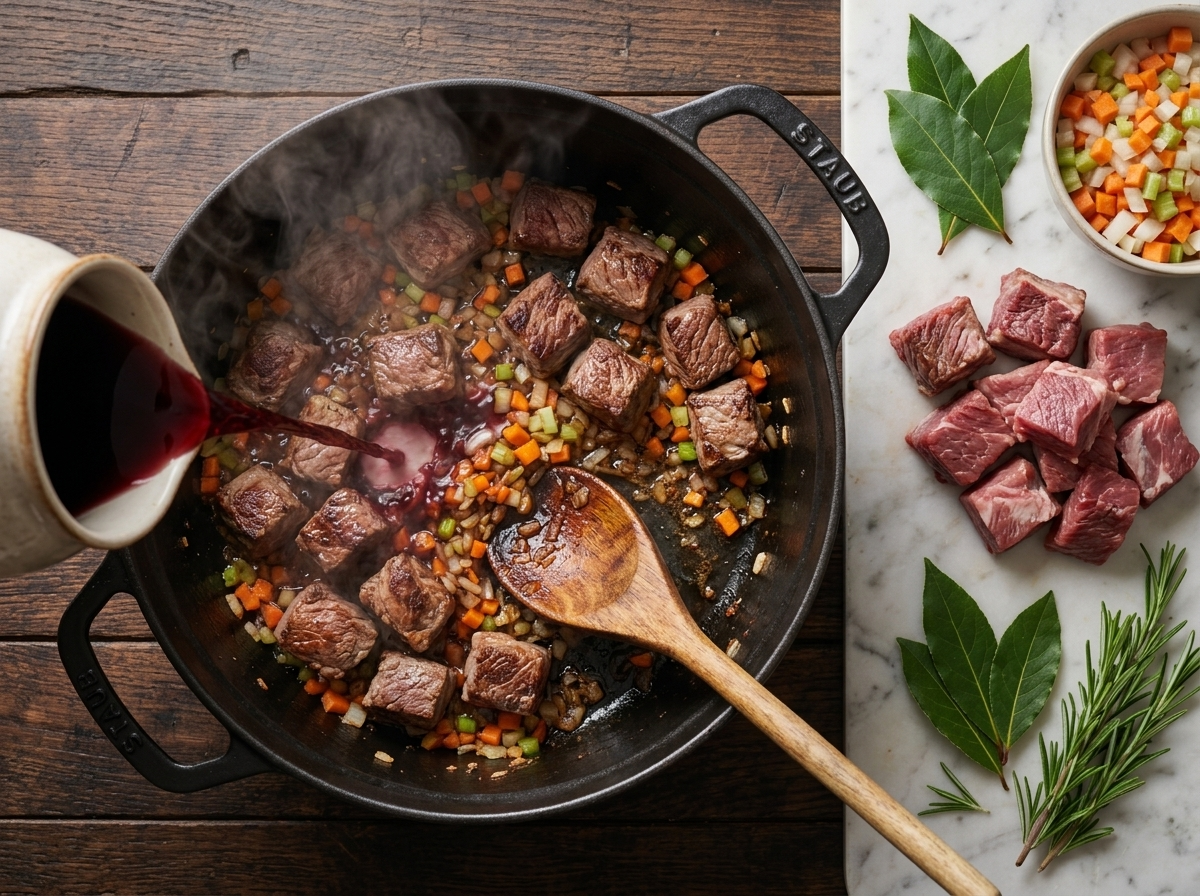
- Combine the boar cubes, red wine, juniper berries, bay leaves, and rosemary in a 3-quart / 2.8 L non-reactive bowl. Cover and refrigerate for 2 hours, stirring once halfway through.
- Set a sieve over a bowl and drain the boar, keeping the wine, bay leaves, and rosemary and discarding the juniper berries. Spread the cubes on paper towels and pat them completely dry, then season with 1 tsp of the salt and the black pepper.
- Set a rack in the lower third of the oven and heat it to 150 C / 300 F. Heat 1 tbsp of the oil in a 28 cm / 11-inch Dutch oven over medium-high heat until it shimmers. Brown half the boar for 5 to 6 minutes, turning, until deep brown on most sides, then move it to a plate. Add 1 more tbsp oil and brown the second batch the same way.
- Lower the heat to medium and add the remaining 2 tbsp oil, the onion, carrot, celery, and the remaining 1/2 tsp salt. Cook for 8 minutes, scraping up the browned bits, until the vegetables are soft and pale gold. Stir in the garlic and tomato paste and cook for 2 minutes until the paste darkens to brick red.
- Pour in the reserved wine, then add the bay leaves and rosemary. Simmer for about 6 minutes until the wine smells mellow and has reduced by about one third.
- Stir in the crushed tomatoes, hot water, and the browned boar with any juices from the plate. Bring to a gentle simmer, cover, and transfer to the oven. Braise for 105 minutes, stirring once at the 1-hour mark.
- Remove the lid and braise for 15 minutes more, until the sauce coats the back of a spoon and a cube shreds under a fork with no spring. Fish out the bay leaves and rosemary stems, stir in the parsley, and taste for salt.
Notes
- Buy boar from a licensed butcher or game supplier and keep it at or below 40 F / 4 C.
- Marinate in the refrigerator, never on the counter, and discard the juniper berries before braising.
- The meat passes 160 F / 71 C early, but fork-tender at 2 hours is the real finish line.
- Make the stew a day ahead for a deeper, rounder sauce.
Tips for Success
- Pat the marinated cubes completely dry with paper towels, because surface moisture makes the meat steam and turn grey instead of browning.
- Brown the boar in two batches in the Dutch oven, since crowded cubes release liquid and never form the dark crust that flavors the sauce.
- Dice the carrot, celery, and onion to about 5 mm so the soffritto melts into the sauce and thickens it without flour.
- Peek at the 1-hour mark and look for a few lazy bubbles at the pot’s edge, not a rolling boil that tightens the meat.
- Test one cube with a fork at the 2-hour mark and look for meat that shreds with no spring, since older animals may need 15 more minutes.
Variations
- Add 30 g dried porcini soaked in hot water, and swap 120 ml of the hot water for the strained soaking liquid for a deeper, earthier sauce.
- Make a Maremma-style version by stirring in 100 g pitted black olives during the final 15 minutes of uncovered cooking.
- Shred the finished meat, return it to the sauce, and toss with 400 g cooked pappardelle for a pasta course.
Storage and Reheating
Cinghiale in umido keeps in an airtight container in the fridge for 4 days. Make sure the cubes sit under the sauce, which keeps them moist. The flavor deepens overnight, so day two is often better than day one.
To reheat, put the stew in a pot over low heat with 2 to 3 tablespoons of water. Cover and warm for 12 to 15 minutes, stirring now and then, until it’s steaming hot throughout. A microwave works at 70% power in 2-minute bursts, stirring between each.
Freezing works well for this dish. Cool it fully, then freeze in airtight containers for up to 3 months with enough sauce to cover the meat. Thaw overnight in the fridge before reheating.
Serving Suggestions
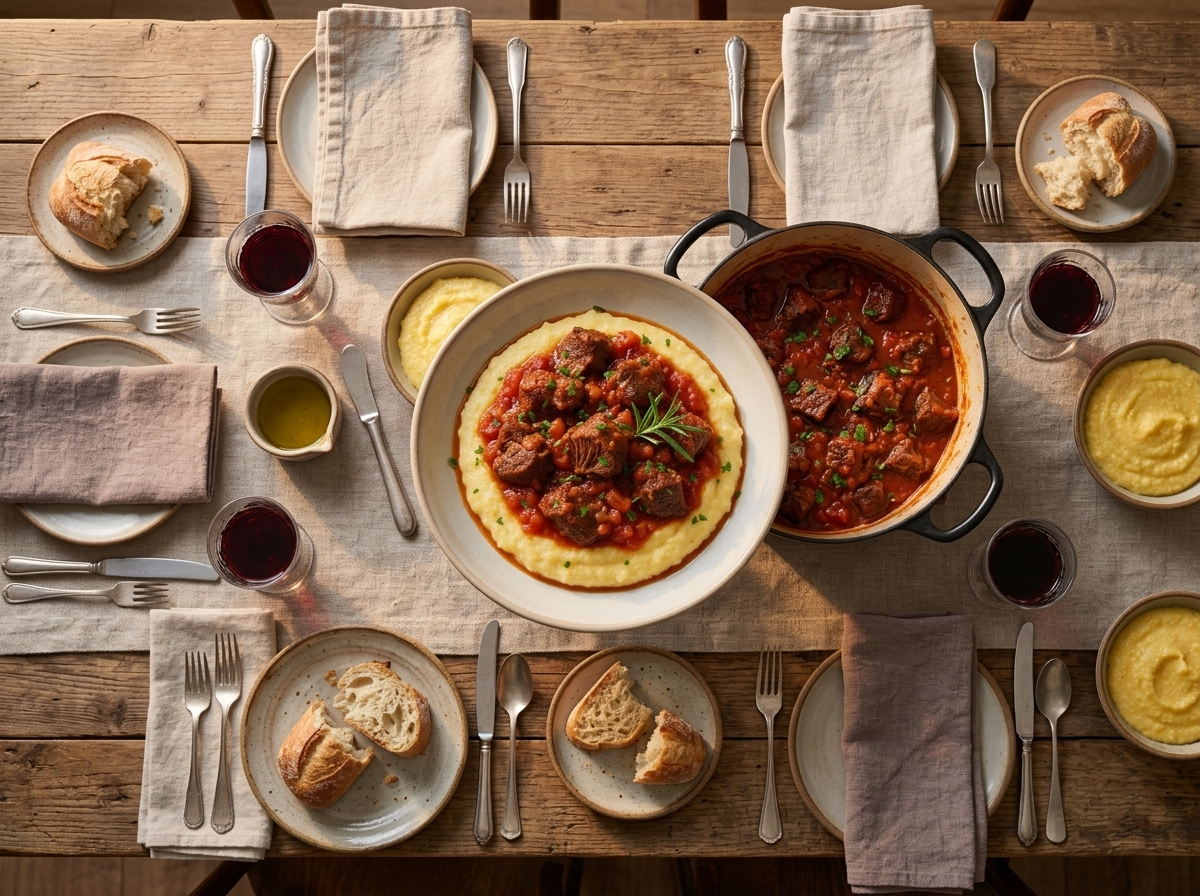
Serve cinghiale in umido over soft polenta, which catches the sauce the way Tuscan and northern Italian kitchens have always done. Spoon about 1 heaping cup / 270 g into each shallow bowl and finish with the chopped parsley.
For a primo, shred the meat with two forks and toss it with pappardelle, the way a slow-braised Tuscan hare ragu does. Sauteed cavolo nero or bitter greens with garlic add a clean, slightly bitter contrast to the rich sauce.
Pour a Chianti Classico or Morellino di Scansano alongside, and keep crusty bread on the table for the last of the sauce.
FAQ
Why is my cinghiale in umido still tough and chewy?
Wild boar turns tough when the braise runs too hot or finishes too early. A bare simmer in a 150 C / 300 F oven lets the collagen melt, while hard boiling tightens the fibers. At 90 minutes the cubes still spring back, so wait for the 2-hour mark and test one with a fork.
Can I use pork shoulder instead of wild boar for cinghiale in umido?
Yes, pork shoulder is the closest swap. Cut it into the same 4 cm cubes and skip the marinade, since farmed pork has no gamey edge. Add the wine straight to the pot after the soffritto and start testing the meat at 90 minutes, because pork softens a little sooner.
Can you freeze braised wild boar, and how long does it keep?
Yes. Cool the stew completely, then freeze it in airtight containers for up to 3 months, with enough sauce to cover the cubes. Thaw overnight in the fridge and reheat gently with a splash of water. In the fridge instead, it keeps 4 days.
What goes well with cinghiale in umido, polenta or pasta?
Soft polenta is the classic partner because it soaks up the sauce. Pappardelle works as a primo if you shred the meat and toss it through the pasta. Sauteed cavolo nero adds a bitter contrast, and a Chianti Classico or Morellino di Scansano suits the wine-based sauce.
Is cinghiale in umido gluten free, and can I make it without wine?
Yes, it’s gluten free as written, because the sauce thickens from soffritto and not flour. To make it without wine, use 400 ml low-sodium gluten-free beef stock plus 1 tbsp red wine vinegar, skip the marinade, and skip the wine reduction. The sauce will taste milder and less sharp.
Is wild boar safe to eat, and what temperature should it reach?
Wild boar is safe when it’s cooked through. It can carry Trichinella, so buy from a licensed supplier, keep it at or below 40 F / 4 C, and cook to at least 160 F / 71 C. A 2-hour braise passes that mark long before the meat is tender.