
Jump to Recipe
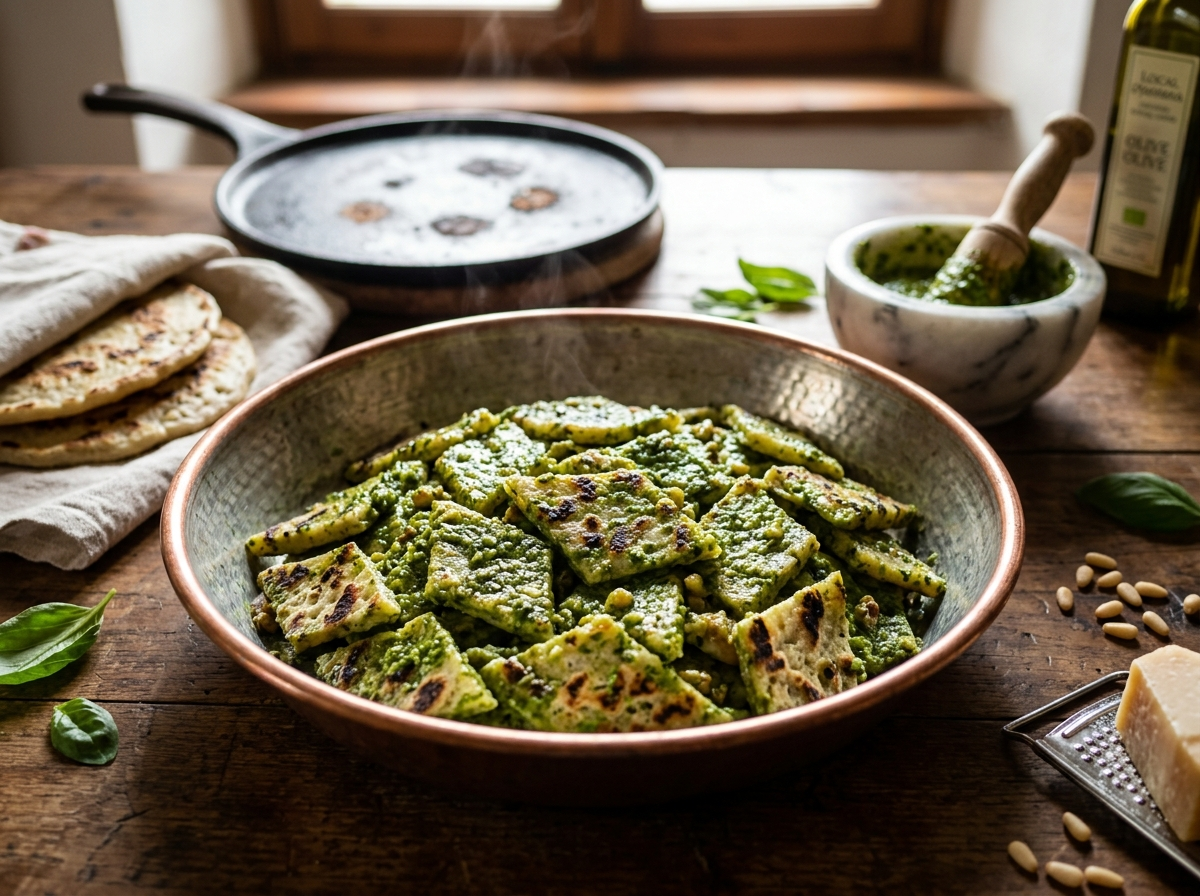
Testaroli al pesto is one of Italy’s oldest pasta shapes, older than dried spaghetti by most accounts. It starts as a thin batter cooked on a hot griddle like a savory pancake, then cut into diamonds and given the briefest dunk in boiling water before it meets pesto.
The dish comes from Lunigiana, the hilly strip where Tuscany, Liguria, and Emilia-Romagna meet. Farmers made testaroli with flour and water long before tomatoes or eggs showed up in Italian kitchens, cooking the batter on a cast-iron testo set over the fire, the same style of pan used for Ligurian panigacci flatbreads.
I use a nonstick crepe pan at home since most of us don’t own a pair of iron testi. The batter needs 30 minutes to rest so the flour hydrates fully, which keeps the cooked sheets from turning gummy.
One thing that trips people up: testaroli is already cooked once it comes off the griddle. Dropping it into boiling water for more than 2 minutes turns it soft and pasty instead of chewy, so watch the clock, not just the pot.
Why You’ll Love This Recipe
- Uses pantry staples: flour, water, salt, and pesto
- Ready in about 85 minutes, mostly hands-off resting
- Chewy texture unlike any dried or fresh pasta
- One of Italy’s oldest documented pasta shapes
Ingredient Notes
- 00 flour: All-purpose flour works fine as a substitute; the batter just needs to whisk into a smooth, pourable consistency.
- Pine nuts: Toast them lightly for more depth, or swap in walnuts if pine nuts are pricey where you shop.
- Pecorino Romano: Adds a sharper, saltier edge than parmesan alone; use all parmesan if you prefer a milder pesto.
- Fresh basil: Use young, bright green leaves. Older or bruised leaves turn the pesto dull and slightly bitter.
- Olive oil: Use a decent extra virgin oil for the pesto since it’s uncooked and its flavor comes through directly.
Griddle-Cooked Testaroli al Pesto, Lunigiana Style
Ingredients
Method
- Whisk flour and salt in a large bowl, then gradually whisk in water until the batter is smooth and thin, like heavy cream.
- Cover the bowl and let the batter rest at room temperature for 30 minutes so the flour hydrates fully.
- Heat a 10-inch nonstick or cast-iron crepe pan over medium heat and brush lightly with olive oil.
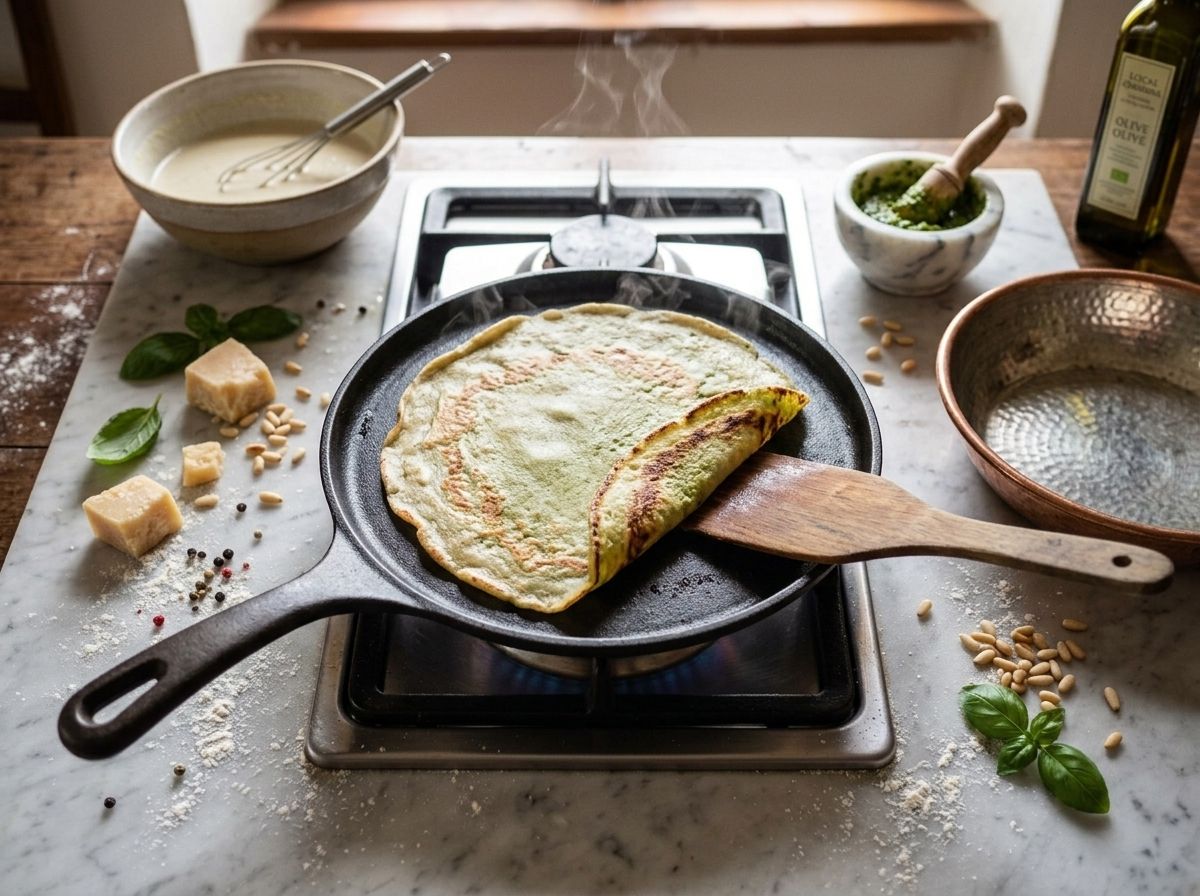
- Ladle in about 120 ml of batter, tilt the pan to spread it thin, cover, and cook for 3 to 4 minutes until the top looks dry and set.
- Flip carefully and cook uncovered for 1 to 2 minutes until both sides have light brown spots. Repeat with the remaining batter, stacking cooked sheets on a rack to cool completely, about 5 to 6 sheets total.
- Pulse basil, garlic, and pine nuts in a food processor until coarsely chopped.
- Add parmesan and pecorino, pulse again, then drizzle in olive oil while pulsing until the pesto is thick but pourable. Season with salt.
- Cut the cooled testaroli sheets into rough 2-inch diamonds or squares.
- Bring a large pot of water to a boil and salt it generously, then drop in the testaroli pieces.
- Cook for 60 to 90 seconds, just until the pieces float and turn slightly translucent at the edges, then scoop out with a slotted spoon, reserving 1/2 cup of the poaching water.
- Toss the warm testaroli with pesto in a large bowl, adding a splash of reserved water to loosen the sauce. Serve right away with extra parmesan.
Notes
- Rest the batter a full 30 minutes; skipping this makes sheets gummy in the center.
- Cool sheets completely on a rack before cutting into diamonds.
- Poach in small batches so the water stays at a rolling boil.
- Reserve pasta water before draining; it loosens thick pesto without diluting flavor.
- Use a well-seasoned or nonstick pan so sheets release cleanly without tearing.
Tips for Success
- Whisk the batter until no lumps remain, then rest it a full 30 minutes for even hydration.
- Cook each sheet over medium heat, not high, so the inside sets before the outside browns too fast.
- Cool the testaroli sheets completely before cutting or they’ll tear instead of slicing clean.
- Poach the pieces only until they float, about 60 to 90 seconds, then pull them immediately.
- Save a small cup of the poaching water to loosen the pesto before tossing everything together.
Variations
- Swap half the wheat flour for chestnut flour for a nuttier, more rustic version closer to the old farmhouse style.
- Toss the poached testaroli with browned butter and sage instead of pesto for a fall variation.
- Add a spoonful of soft ricotta on top of the pesto for a creamier, richer finish.
Storage and Reheating
Keep uncut testaroli sheets stacked between parchment in the fridge for up to 2 days before poaching. Make the pesto separately and store it in a jar with a thin film of olive oil on top, sealed, for up to 4 days.
Once tossed with pesto, testaroli is best eaten within the hour since the sheets soften as they sit. If you have leftovers, refrigerate in an airtight container for up to 1 day.
To reheat, warm gently in a skillet over low heat with a splash of water or olive oil for 2 to 3 minutes. Avoid the microwave, which turns the texture rubbery.
Serving Suggestions
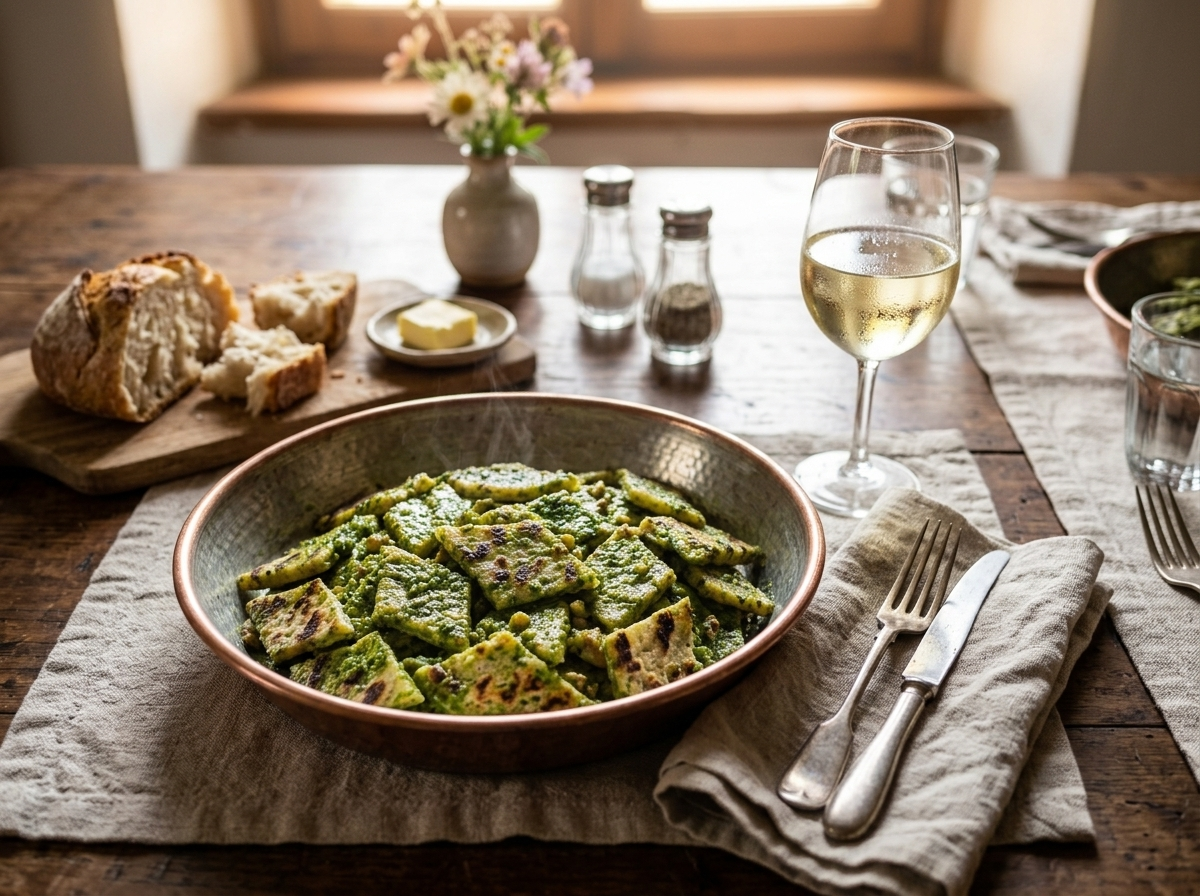
Serve testaroli al pesto right out of the bowl with extra grated parmesan and a crack of black pepper. A drizzle of raw olive oil at the table wakes up the pesto if it’s sat for a few minutes.
A glass of chilled Vermentino or another dry white from Liguria matches the herbal pesto without competing with it. For a full meal, add a simple green salad with lemon and a plate of cured meats on the side.
Leftover pesto also works well spread on grilled bread as a starter before the testaroli comes out.
FAQ
Why did my testaroli turn mushy instead of chewy?
Mushy testaroli almost always means it sat in boiling water too long. The sheets are already cooked on the griddle, so they only need 60 to 90 seconds in the water to warm through and turn slightly translucent at the edges. Pull them the moment they float, not a minute later.
Can I use chestnut flour instead of wheat flour for testaroli?
Yes, chestnut flour is actually closer to how testaroli was made in older Lunigiana kitchens. Replace up to half the wheat flour with chestnut flour for a nuttier, slightly sweeter batter. Using all chestnut flour makes the sheets fragile, so keep some wheat flour for structure.
Can I make the testaroli sheets ahead and store them before poaching?
Yes, cooked testaroli sheets keep well in the fridge for up to 2 days, stacked with parchment between them so they don’t stick. Let them come to room temperature before cutting into diamonds. Poach and dress with pesto only right before serving.
What wine goes well with testaroli al pesto?
A dry, crisp white like Vermentino or a light Ligurian white pairs well since it cuts through the olive oil in the pesto. A young Chianti also works if you prefer red. Avoid heavy, oaky whites that fight with the basil and garlic.
Is testaroli al pesto vegetarian or can it be made vegan?
Testaroli al pesto is vegetarian as written, since the pesto contains parmesan and pecorino. To make it vegan, swap the cheese for a spoonful of nutritional yeast and check that your pine nuts and olive oil are the only other fats. The batter itself is already egg-free and dairy-free.
What’s the difference between testaroli and regular pasta or crepes?
Testaroli sits between a crepe and pasta: it’s cooked once on a griddle like a pancake, then cut and briefly poached like pasta before serving, similar in spirit to hand-stamped corzetti al sugo di funghi. Regular pasta is boiled raw from dough, while crepes are eaten straight off the pan. Testaroli needs both steps to reach its chewy, dense texture.