
Jump to Recipe
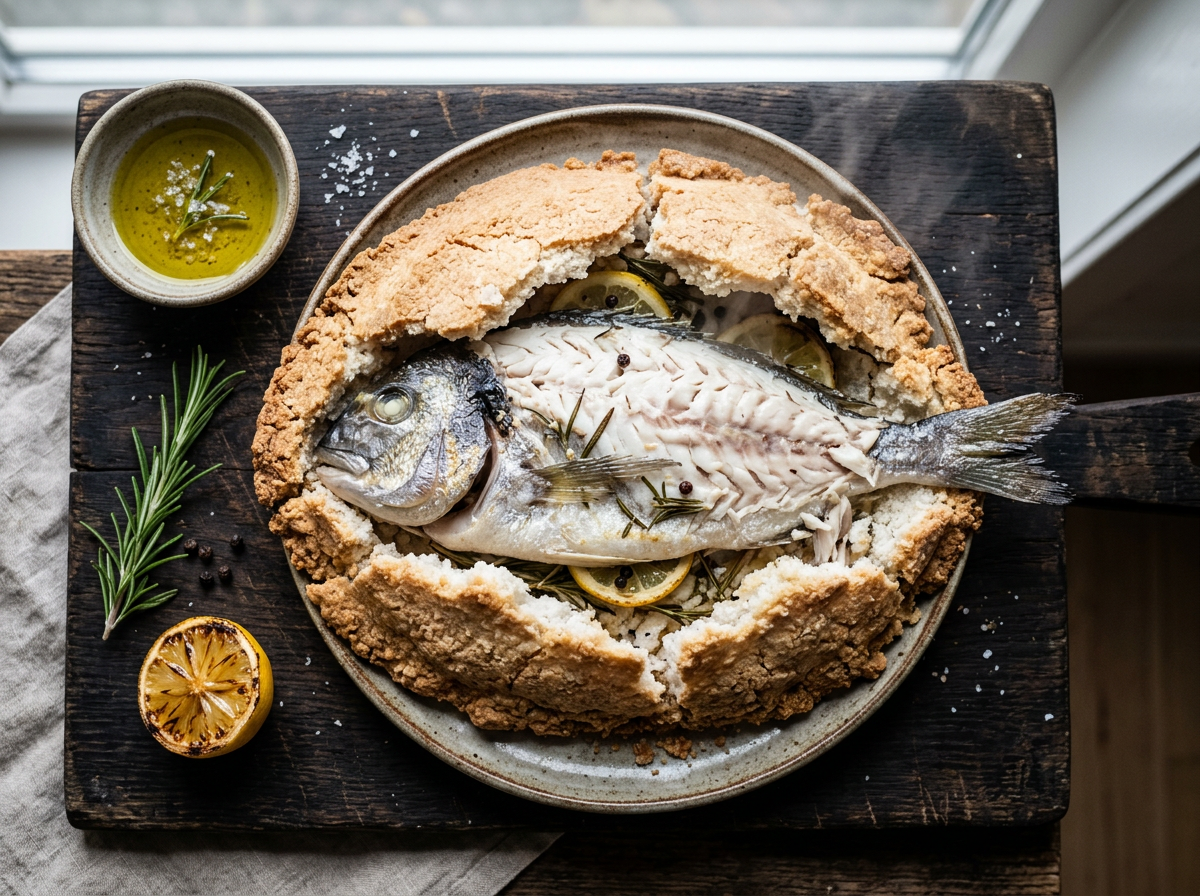
Orata al sale is whole gilthead sea bream packed in wet coarse salt and baked until the crust hardens into a shell you crack open at the table. The salt never touches the flesh directly, the skin acts as a barrier, so the fish comes out clean-tasting and moist rather than salty.
This is a technique more than a recipe. Once you understand that the crust needs enough moisture to set hard, you can apply it to branzino, snapper, or any firm whole fish of similar size.
The one place this goes wrong is dry salt. If you skip the egg white and water and just pile on dry coarse salt, it stays loose and crumbles the second you tap it, so the fish steams unevenly and the crust won’t lift off in one piece.
I serve it straight from the tray, crack the crust at the table, and let the smell of lemon and rosemary hit everyone before I even plate it.
Why You’ll Love This Recipe
- No oil or butter needed, the crust does all the work
- Dramatic table presentation when you crack the shell open
- Naturally gluten free with almost no added fat
- Works with any similar-size whole white fish you find fresh
Ingredient Notes
- Whole gilthead sea bream: Buy it already scaled and gutted if you can. Branzino or snapper of the same size work as a substitute.
- Coarse sea salt: Use coarse or kosher salt, not fine table salt. Fine salt packs too dense and can over-season through the skin.
- Egg whites: These bind the salt into a paste that hardens as it bakes. Skip them and use a bit more water if you want to keep it egg free.
- Lemon and rosemary: Stuffed inside the cavity, they perfume the flesh from the inside without adding any salt or oil.
Orata al Sale: Whole Sea Bream in a Salt Crust
Ingredients
Method
- Heat the oven to 220 C / 425 F. Line a large rimmed baking sheet with parchment paper.
- Rinse the bream inside and out, then pat completely dry with paper towels, including the cavity.
- Stuff each cavity with lemon slices, a rosemary sprig, a bay leaf, and a pinch of cracked pepper.
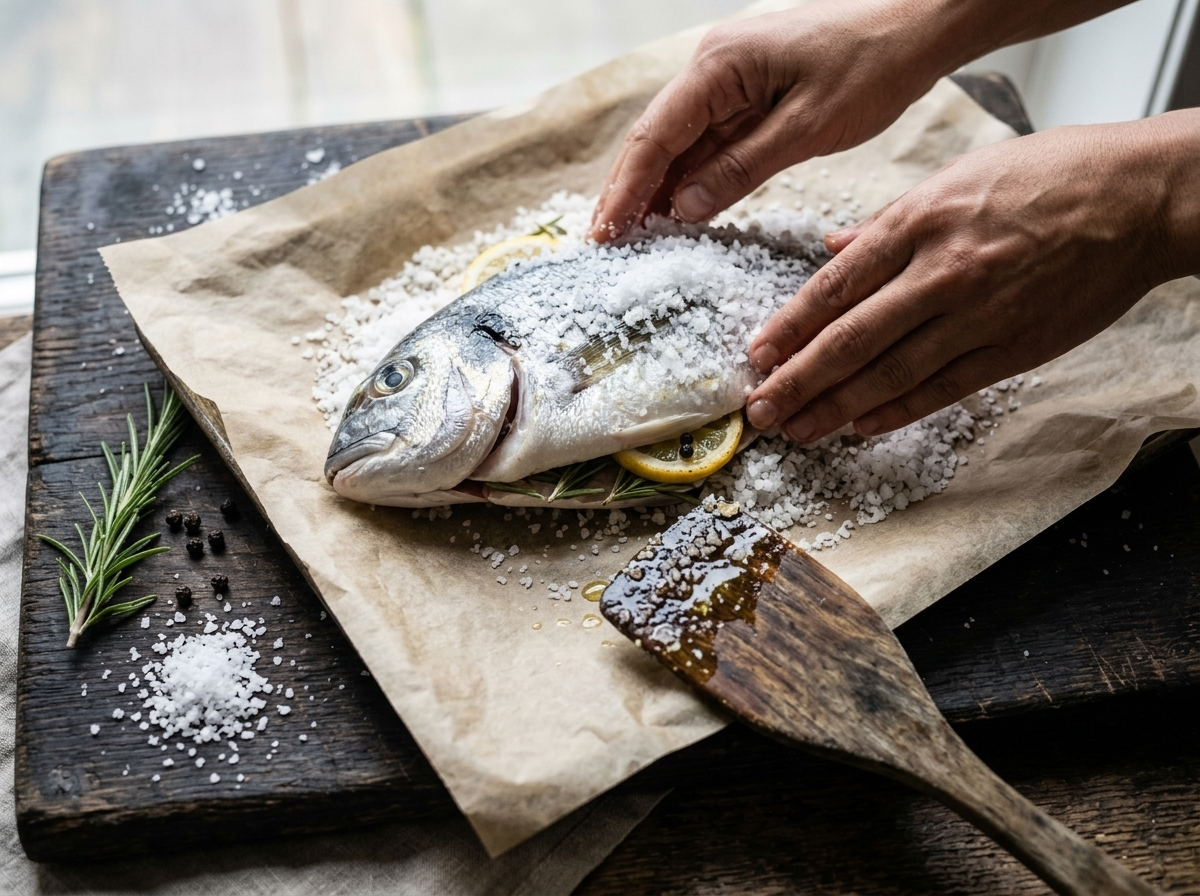
- In a large bowl, mix the coarse salt with the egg whites and water until it looks like wet sand and clumps when pressed.
- Spread a 1 cm bed of the salt mixture on the tray, place the fish on top, then pack the rest of the salt over and around each fish to fully encase it, pressing firmly to seal any gaps.
- Bake for 25 to 28 minutes, until the crust is golden and firm, and an instant-read thermometer inserted through the crust near the spine reads 135 F / 57 C.
- Remove from the oven and let rest 8 to 10 minutes, this lets the crust firm up before cracking.
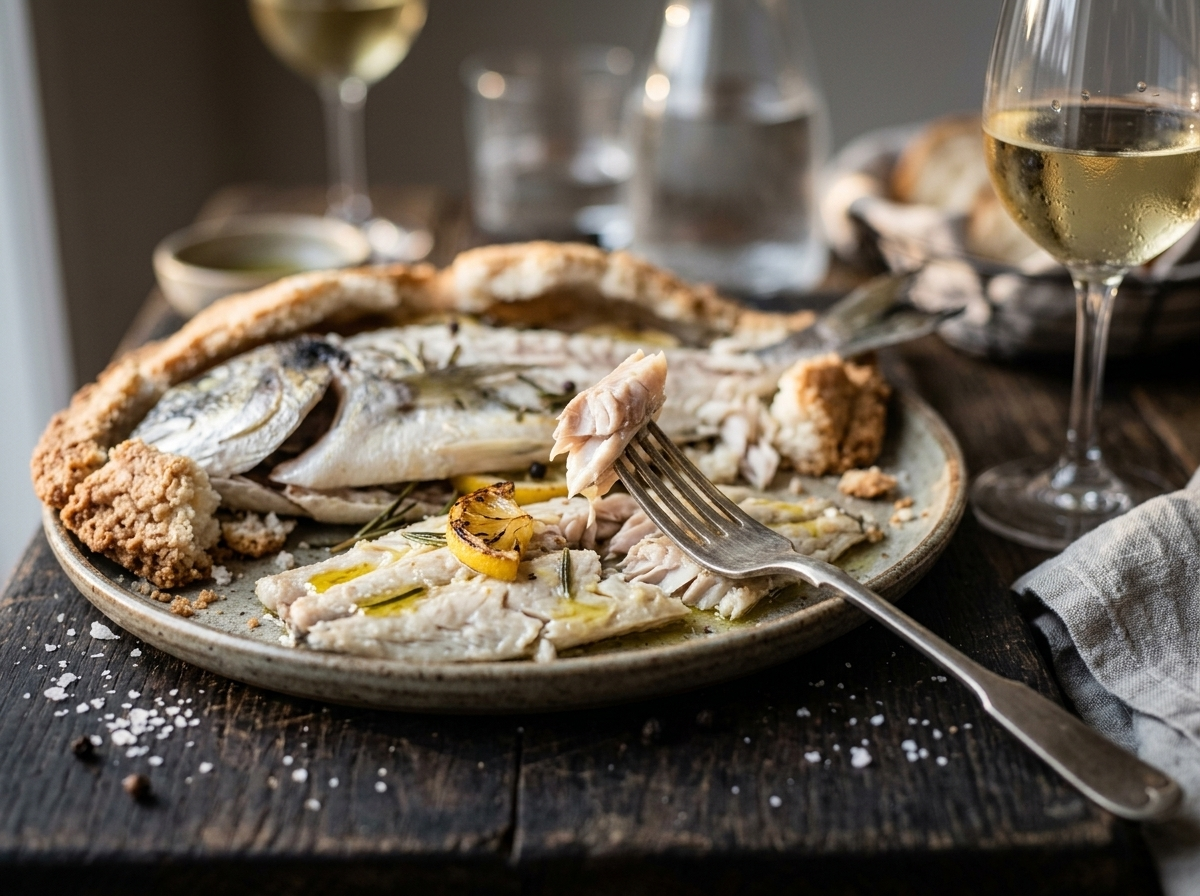
- Crack the crust with the back of a spoon, brush off the loose salt, peel back the skin, and lift the fillets away from the bone.
- Serve warm, drizzled with olive oil and lemon wedges on the side.
Notes
- Use coarse salt, not fine, or the crust won't set into a hard shell.
- Dry the fish skin completely before packing salt around it.
- Check temp near the spine, that's the last part to cook through.
- Rest the baked fish 8 to 10 minutes before cracking the crust open.
Tips for Success
- Pat the fish completely dry before packing salt, wet skin makes the crust slide off during baking.
- Press the salt firmly around the whole fish, gaps let steam escape and dry out the flesh near the tail.
- Check internal temp through the thickest point near the spine, not near the head or tail.
- Let the fish rest 8 to 10 minutes before cracking, the crust needs that time to firm up fully.
- Crack the crust away from the table if you want a clean fillet, or crack it in front of guests for the show.
Variations
- Swap rosemary for fennel fronds and a splash of Pernod inside the cavity for an anise note.
- Use two smaller 400g branzino instead of one large bream, reduce bake time by about 5 minutes.
- Add crushed juniper berries and orange slices to the cavity for a winter version with more bitterness.
Storage and Reheating
Orata al sale is best eaten right after cracking the crust, since the salt shell is meant to be a one-time cooking vessel. Once cracked, remaining fish keeps in an airtight container in the fridge for up to 2 days.
Reheat leftover fillets gently in a 150C/300F oven for 8 to 10 minutes, covered loosely with foil, just until warmed through. Avoid the microwave, it dries out the delicate flesh fast.
Don’t try to save or reuse the salt crust itself, it has absorbed moisture and fish juices and won’t harden properly a second time.
Serving Suggestions
Orata al sale needs very little on the plate since the fish carries its own flavor. A simple green salad with lemon vinaigrette or steamed potatoes tossed in olive oil rounds it out without competing.
I usually put out a small dish of good olive oil and extra lemon wedges so everyone can season their own portion after the crust comes off. A chilled Vermentino or another crisp Italian white works well alongside.
For a fuller meal, start with a light vegetable soup or bruschetta, then let the bream be the only main course. It’s rich enough on its own once you add the oil.
FAQ
How do I know when orata al sale is done baking?
The crust turns golden and sounds hollow when tapped, and the internal temperature at the thickest part near the spine reads 135 F / 57 C. Insert an instant-read thermometer straight through the crust to check without breaking it open early. If it’s still translucent near the bone, give it another 3 to 4 minutes.
Can I use branzino instead of orata for this salt crust technique?
Yes, branzino works well as a substitute since it’s a similar size and has firm flesh under a protective skin. Snapper is another good option. Just match the weight to the bake time, roughly 25 to 28 minutes per 600g fish at 220 C / 425 F.
Can I mix the salt crust for orata al sale ahead of time?
You can mix the salt, egg white, and water a few hours ahead and store it covered at room temperature. Don’t pack it onto the fish until right before baking, sitting on raw fish too long can make the crust soggy and slow to harden in the oven.
What goes well with orata al sale at the table?
A crisp green salad with lemon vinaigrette, roasted or steamed potatoes, and a chilled Vermentino or Vermentino-style white all pair well. Keep sides simple since the fish itself carries the meal once you crack the crust and drizzle it with olive oil.
Is orata al sale gluten free?
Yes, orata al sale is naturally gluten free since it’s just whole fish, coarse salt, egg white, water, lemon, and herbs. There’s no flour or breading involved at any stage, so it works for gluten-free guests without any substitutions needed.
Why does the skin stay on when baking orata al sale?
The skin acts as a barrier that keeps the salt from touching the flesh directly, which is why the fish doesn’t taste over-salted. You peel off and discard the skin along with the crust once it’s cracked open, then lift the clean fillets out from underneath.