
Jump to Recipe
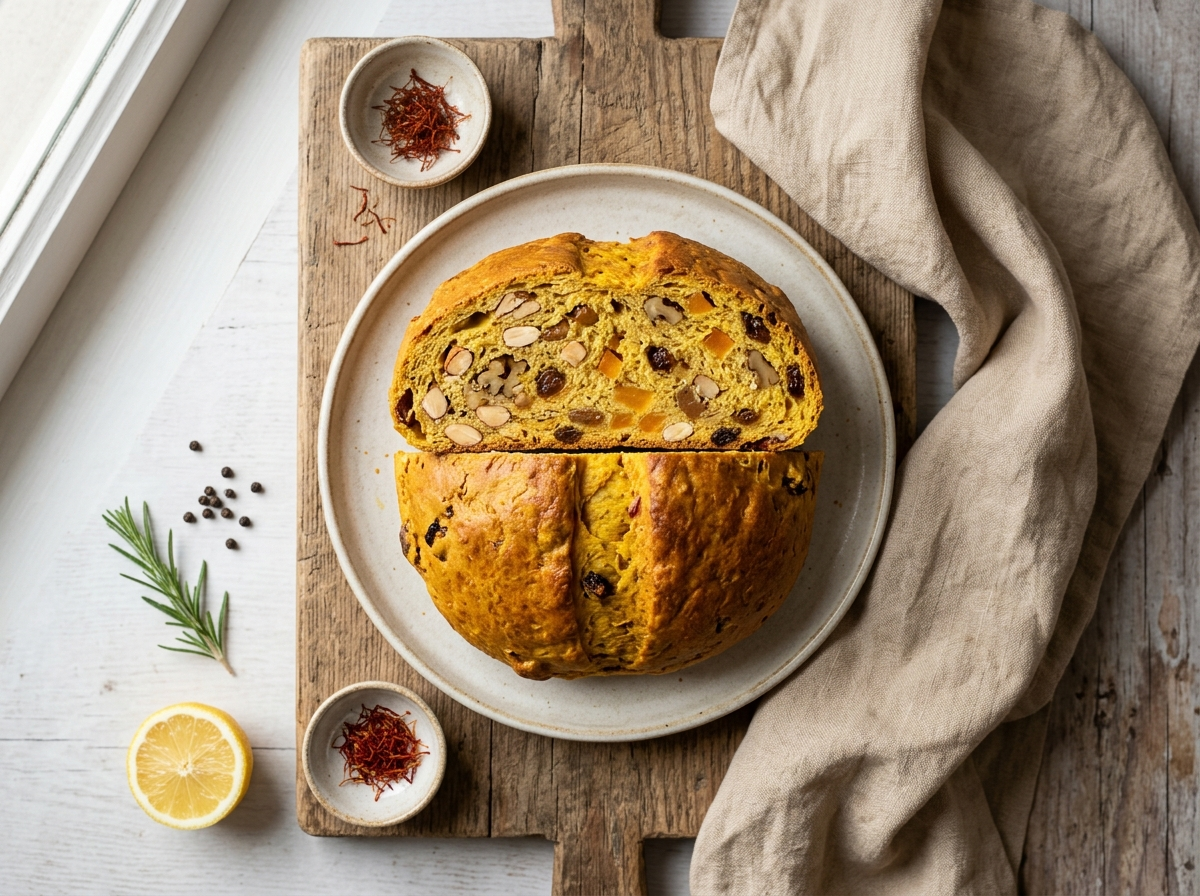
Pangiallo romano is a dense Roman Christmas bread built from toasted nuts, dried fruit and candied peel, bound with honey and coated in a thin saffron-tinted crust that bakes to a deep gold. That golden shell is where the name comes from – giallo means yellow in Italian, and the color used to signal a rich household at holiday time.
The texture sits somewhere between a fruit cake and a dense energy bar. There’s no leavening beyond a small amount of flour holding everything together, so a slice is chewy and heavy, not fluffy.
Most Roman families make it a day or two before Christmas and let it sit wrapped at room temperature. The wait matters. Slice it too soon and the honey hasn’t had time to soften the dried fruit, so the cut edges crumble instead of holding together.
I use a mix of almonds and walnuts because that’s what shows up in most Roman versions, but the ratio is forgiving. What isn’t forgiving is the glaze – too thin and it slides off, too thick and it cracks in the oven.
Why You’ll Love This Recipe
- Keeps well for weeks, so you can bake it days ahead of Christmas
- Uses pantry staples: nuts, honey, dried fruit, one egg-free dough
- Naturally dense and rich, so a thin slice goes a long way
- The saffron crust gives it a distinct look no other Christmas cake has
Ingredient Notes
- Almonds and walnuts: Toast them first so they stay crunchy inside the dense dough. Hazelnuts or pistachios work if that’s what you have.
- Raisins: Soak them in warm water or a splash of rum for 15 minutes so they don’t pull moisture from the honey later.
- Dried figs: Chop them small, they’re sticky and hard to cut once baked into the loaf. Dates are a fine substitute.
- Candied citron and orange peel: This is the traditional flavor base. If you don’t like candied peel, swap half of it for extra dried apricots.
- Honey: Use a darker honey like chestnut for a more bitter, complex flavor. Wildflower honey works but tastes milder.
- Saffron: A pinch dissolved in warm water gives the crust its color and a faint floral note. Turmeric is a cheap, flavorless substitute for color only.
- Black pepper: This is traditional, not a mistake. It adds a warm, faint heat that balances the sweetness of the honey and fruit.
Pangiallo Romano: Rome’s Golden Christmas Fruit Bread
Ingredients
Method
- Heat the oven to 160 C / 320 F. Spread almonds and walnuts on a sheet pan and toast for 8 minutes, until fragrant.
- In a large bowl, combine the toasted nuts, pine nuts, drained raisins, chopped figs, candied citron and candied orange peel.
- Add the orange zest, black pepper, cinnamon, cloves, nutmeg and salt. Toss to coat everything evenly.
- Warm the honey in a small saucepan over low heat until loose and pourable, about 2 minutes. Pour over the fruit and nut mixture.
- Add the flour and mix with a wooden spoon or your hands until you get a dense, sticky dough that holds together when pressed.
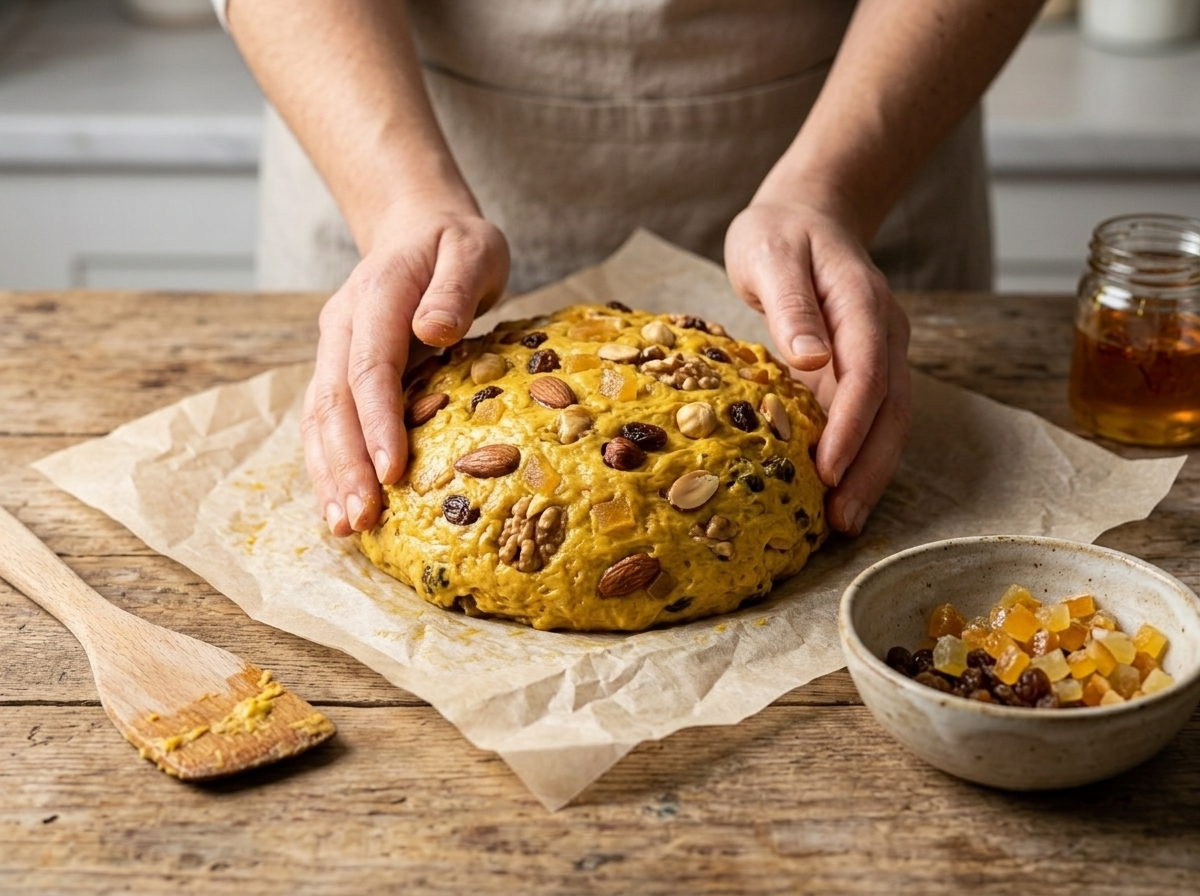
- Line a baking sheet with parchment or wafer paper. With wet hands, shape the dough into a flattened dome about 18 cm wide and 5 cm tall.
- Whisk the glaze flour, warm water and saffron into a thin, smooth paste.
- Brush a thin coat of glaze over the top and sides of the loaf. Let it set for 2 minutes, then brush a second thin coat.
- Bake at 160 C / 320 F for 35 to 40 minutes, until the crust is deep golden and firm to the touch.
- Cool the loaf completely on the pan, at least 1 hour, before moving it.
- Wrap tightly and let it rest at room temperature for 24 hours before slicing thin to serve.
Notes
- Toast nuts before mixing, raw nuts turn chewy and dull inside the dense dough.
- Rest the baked loaf a full 24 hours before slicing for a cleaner cut.
- Apply the saffron glaze in two thin coats to avoid cracking in the oven.
- Wet hands when shaping, the honey dough is sticky and won't shape dry.
- Store wrapped at room temperature, not in the fridge, to keep the crumb from drying out.
Tips for Success
- Toast the nuts at 160 C / 320 F for 8 minutes before chopping, this keeps them from going soggy in the honey dough.
- Warm the honey gently before mixing so it coats the nuts and fruit evenly instead of clumping in one spot.
- Wet your hands slightly when shaping the loaf, the dough is sticky and hard to handle dry.
- Brush the saffron glaze in two thin coats rather than one thick one, so it doesn’t crack while baking.
- Let the loaf cool completely, then wrap it and rest it for 24 hours before slicing for a cleaner cut.
Variations
- Add 50 g grated dark chocolate to the dough for a modern version that’s slightly bitter and less sweet overall.
- Swap the candied citron for dried apricots and cranberries if you find traditional candied peel too intense.
- Line the base with edible wafer paper (ostia) instead of parchment for the classic bakery finish.
Storage and Reheating
Pangiallo romano keeps at room temperature for up to 3 weeks when wrapped tightly in parchment and foil or stored in an airtight tin. The flavor actually improves after 2 to 3 days as the honey softens the dried fruit and pulls the slice together.
Don’t refrigerate it, the cold dries it out faster than the counter does. If it starts to feel hard on the outside after a few weeks, a thin slice still works fine with coffee, it just won’t be as soft.
To freeze, wrap the whole loaf or individual slices in plastic and foil and freeze for up to 2 months. Thaw at room temperature for a few hours before serving, no reheating needed since it’s served cool.
Serving Suggestions
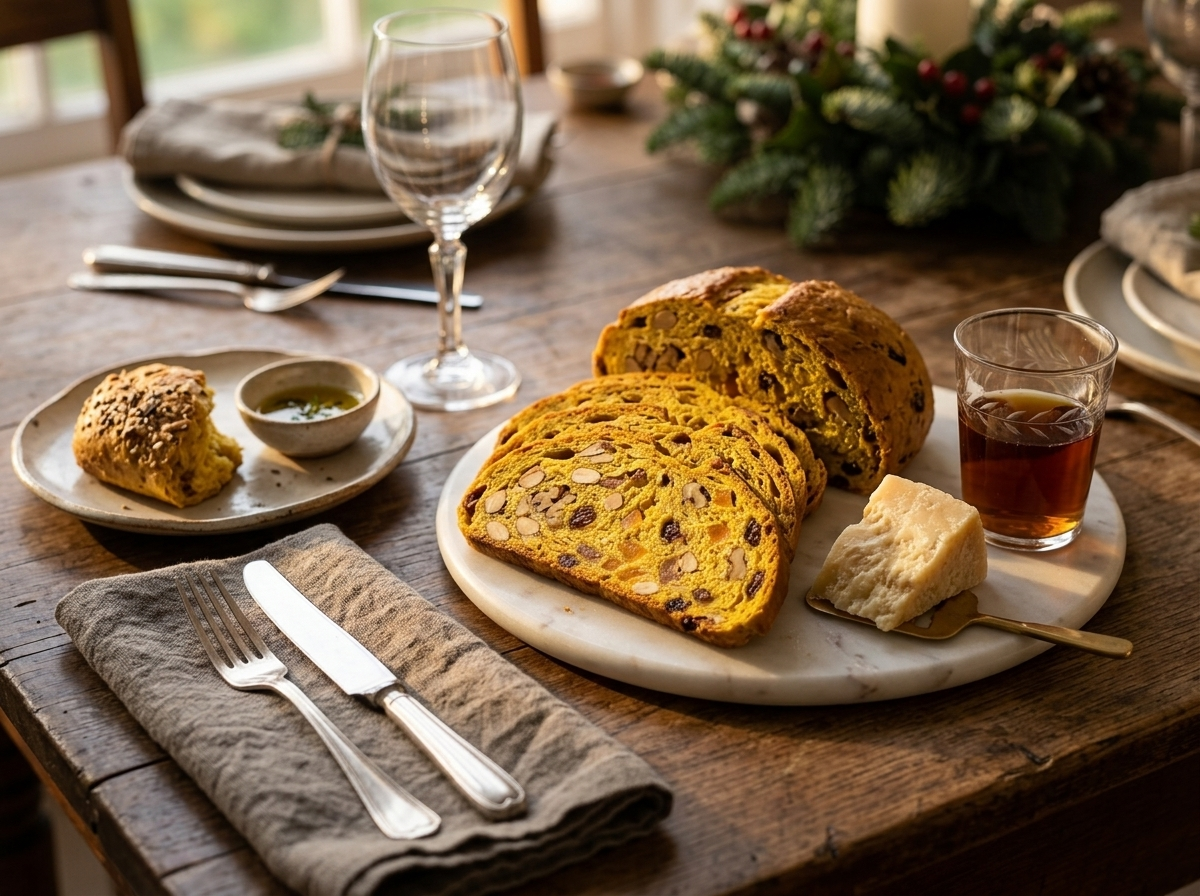
Serve pangiallo romano in thin slices, about 1 cm thick, since it’s dense and rich. It pairs well with a small glass of vin santo or a strong espresso after a holiday meal.
I like it alongside a cheese board too, especially with aged pecorino, the salt cuts through the sweetness of the honey and dried fruit.
For a simple gift, wrap a whole small loaf in parchment and twine. It travels well and doesn’t need refrigeration, which makes it an easy thing to bring to a Christmas gathering.
FAQ
Why is my pangiallo romano falling apart when I slice it?
It’s usually cut too soon. Pangiallo romano needs to cool fully and rest at least 24 hours wrapped so the honey has time to soften the dried fruit and bind the crumb. If you slice it warm or the same day it’s baked, the pieces will crumble instead of holding together.
Can I use turmeric instead of saffron for the glaze?
Yes, turmeric works fine for color but it won’t give the same faint floral flavor saffron adds. Mix a small pinch with warm water into a thin paste and brush it on the same way. Use less than you think, turmeric stains more aggressively than saffron does.
How far ahead can I make pangiallo romano for Christmas?
You can bake it up to 3 weeks ahead and store it wrapped at room temperature. The flavor gets better over the first few days as the fruit softens, so baking it 3 to 5 days before serving is actually ideal, not a compromise.
What goes well with pangiallo romano at the end of a meal?
A small glass of vin santo or a strong espresso works well since both cut through the honey and dried fruit sweetness. Aged pecorino on the side is also common in Rome, the salt balances the richness of the nuts and candied peel.
Is pangiallo romano gluten free?
Not as written, since it uses a small amount of wheat flour to bind the nuts and fruit. You can swap in a 1:1 gluten-free flour blend for both the dough and the glaze paste with good results, the flour is a minor structural ingredient here, not the main bulk.
What’s the difference between pangiallo romano and panforte?
Pangiallo romano is a Roman specialty with a distinct saffron-glazed yellow crust and a coarser, chunkier texture from whole nuts and chopped dried fruit. Panforte, from Siena, is flatter, denser and usually coated in powdered sugar instead of a saffron glaze, with a more uniform, sliceable crumb.