
Jump to Recipe
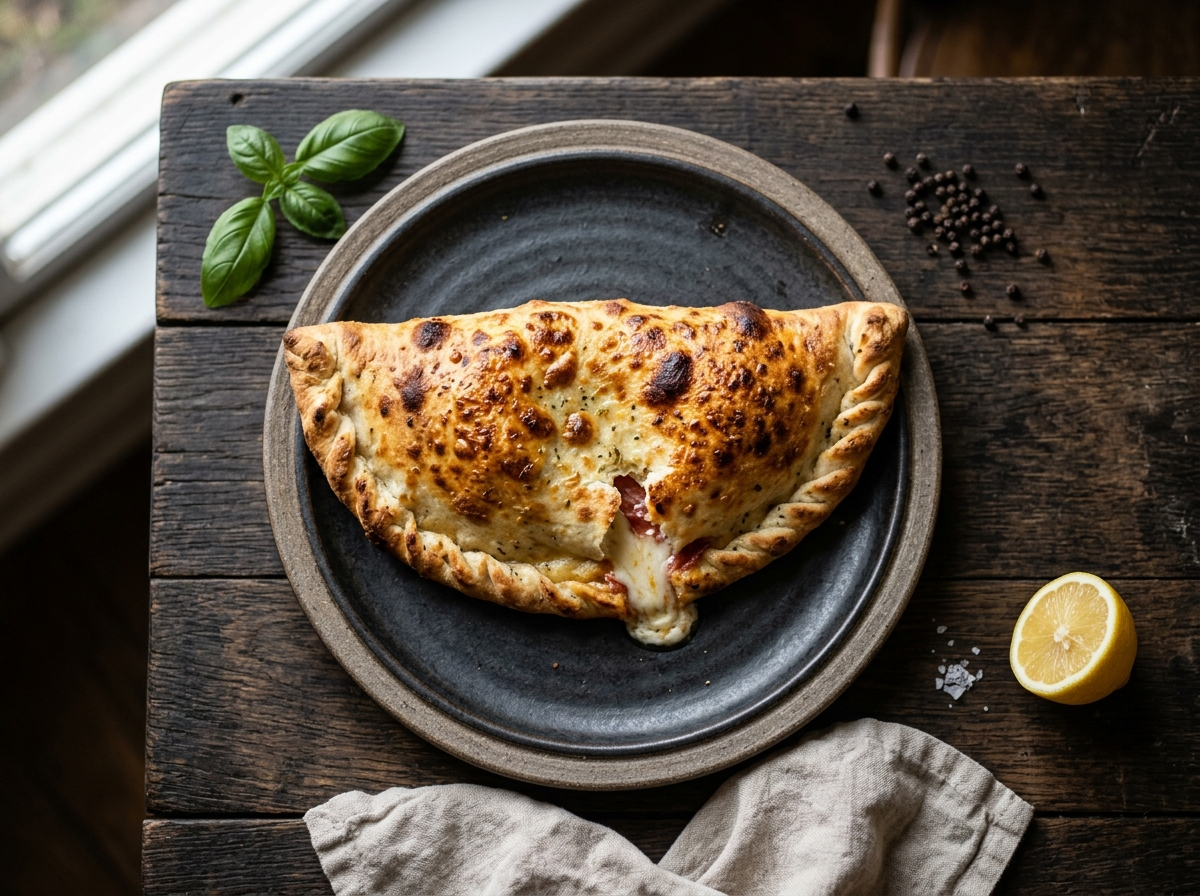
Calzone napoletano al forno is not a Neapolitan pizza folded in half as an afterthought. It’s a distinct Neapolitan street food with its own logic: a slightly thicker, more enriched dough that holds a dense filling of ricotta, salami, and fresh mozzarella without leaking.
The filling is the key structural decision. Ricotta needs to be drained overnight or it releases too much water and the bottom stays raw. Salami goes in sliced thin, not cubed.
This baked version cooks at high heat, around 220 C, so the outside blisters and crisps while the inside stays molten. A wood-fired oven gives you char; a domestic oven on its top setting gives you a good approximation.
I’ve tested this with both ’00’ flour and standard bread flour. The ’00’ gives a softer, more tender crumb. Bread flour gives slightly more chew. Both work.
Why You’ll Love This Recipe
- Crisp, blistered crust that holds its shape when cut
- Ricotta and salami filling stays molten, not watery
- Dough can be made a day ahead for better flavor
- Scales easily from two to eight servings
Ingredient Notes
- Tipo ’00’ flour: Low-protein ’00’ flour gives the softest crumb and the most supple dough. Standard strong bread flour (12-13% protein) works as a substitute and gives a slightly chewier result.
- Fresh yeast: I use 3 g fresh yeast for a slow room-temperature rise. If using instant dry yeast, use 1 g (about 1/4 tsp) and follow the same timing.
- Ricotta: Drain whole-milk ricotta in a fine-mesh sieve for at least 2 hours, ideally overnight. Wet ricotta is the single most common reason for a soggy calzone base.
- Fior di latte mozzarella: Use fior di latte (cow’s milk) rather than buffalo mozzarella here. Buffalo mozzarella releases far more water during baking and can make the filling soupy.
- Neapolitan salami (salame napoletano): Salame napoletano is lightly spiced and fatty, which balances the mild ricotta. Substitute with Milano salami or ciccioli if unavailable. Avoid highly smoked varieties.
- Olive oil: A tablespoon of extra-virgin olive oil goes into the dough and another is brushed on top before baking. This is standard in the Neapolitan version and adds color to the crust.
Calzone Napoletano al Forno (Baked Neapolitan Calzone)
Ingredients
Method
- Dissolve the yeast in the lukewarm water and let it sit for 5 minutes until slightly foamy.
- Add the flour to a large bowl. Pour in the yeast water gradually, mixing with your hand or a dough hook until a shaggy dough forms.
- Add the salt and olive oil, then knead for 8-10 minutes by hand on a lightly floured surface, or 6 minutes on medium speed in a stand mixer, until the dough is smooth and slightly tacky.
- Divide the dough into 4 equal balls (each about 210 g). Place on a lightly floured tray, cover with a damp cloth, and let rise at room temperature for 2 hours until noticeably puffy and soft.
- Combine drained ricotta, Parmigiano, black pepper, and a pinch of salt in a bowl. Mix until smooth.
- Pat the mozzarella pieces dry with paper towels to remove surface moisture. Set aside separately.
- Lay the salami slices out on a board. You'll layer them on top of the ricotta mixture when assembling.
- Heat the oven to 220 C / 430 F with a baking stone or heavy sheet pan on the middle rack for at least 30 minutes.
- On a lightly floured surface, stretch one dough ball by hand into a rough circle about 25 cm / 10 inches in diameter, keeping the edges slightly thicker than the center.
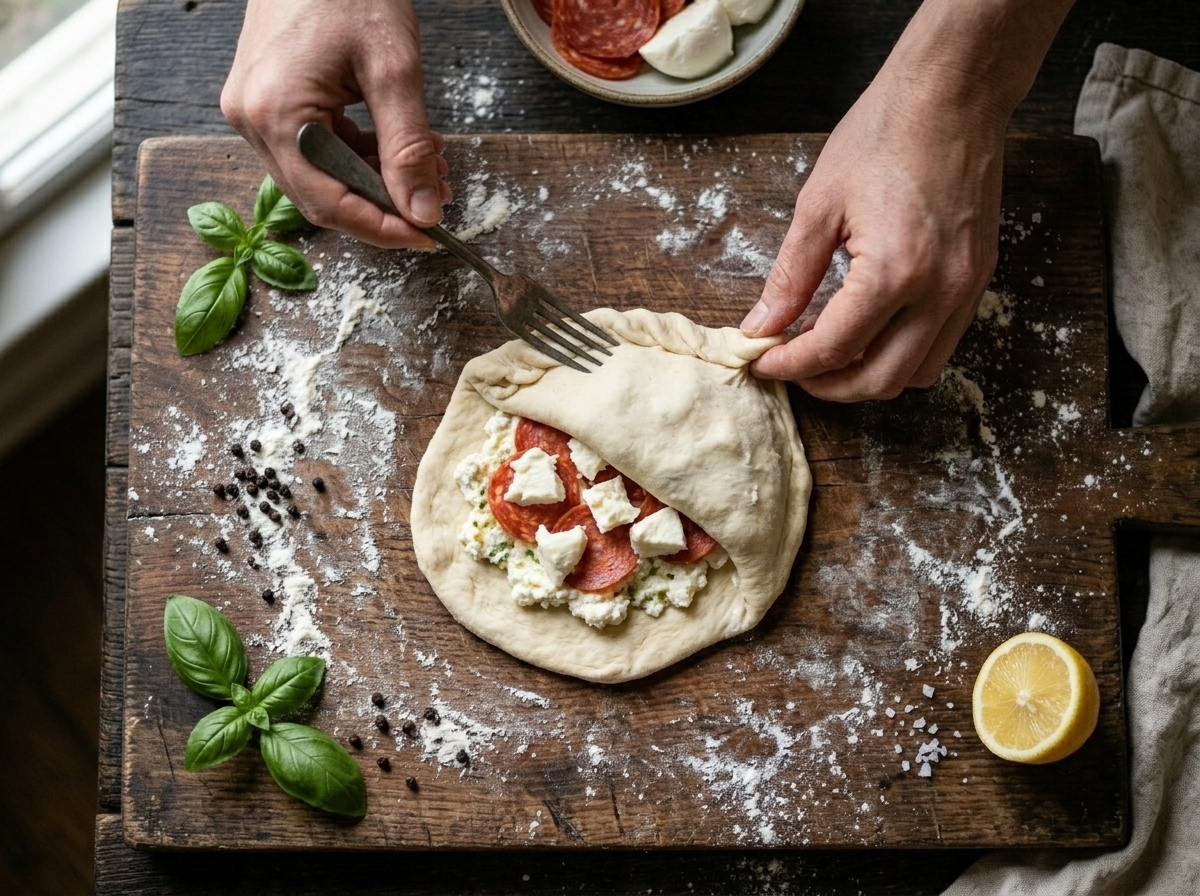
- Spread one quarter of the ricotta mixture over one half of the circle, leaving a 2 cm border clear around the edge.
- Scatter one quarter of the mozzarella pieces and 30 g of salami over the ricotta.
- Fold the empty half of the dough over the filling to form a half-moon. Press the edges firmly with your fingertips, then crimp with a fork to seal completely.
- Transfer to a piece of parchment dusted with semolina. Let the shaped calzone rest for 15 minutes.
- Brush the top of each calzone generously with olive oil. Score one small vent, about 1 cm, in the center of the top with a sharp knife.
- Slide the calzone on its parchment onto the preheated baking stone or pan. Bake at 220 C / 430 F for 22-25 minutes until the top is golden and shows small brown blisters.
- Remove from the oven and let rest for 5 minutes before cutting. The filling continues to set as it cools slightly and will stay inside cleanly when sliced.
Notes
Tips for Success
- Drain ricotta overnight in the fridge over a fine-mesh sieve to prevent a wet, undercooked base.
- Stretch the dough by hand rather than rolling it to keep the internal air structure intact.
- Seal the edges by folding and pressing firmly with your fingertips, then crimp with a fork to prevent filling from leaking.
- Preheat your baking stone or heavy sheet pan for at least 30 minutes at 220 C for a crisp bottom crust.
- Brush the top with olive oil and score one small vent in the center so steam escapes without tearing the dough.
Variations
- Vegetarian version: swap salami for sauteed spinach, black olives, and capers drained well.
- Spicy filling: add thinly sliced Calabrian soppressata and a pinch of dried chili flakes to the ricotta.
- Fritta-style baked hybrid: brush the finished calzone generously with olive oil and broil for 2 minutes for a darker, cratered crust.
Storage and Reheating
Store baked calzone wrapped in foil in the fridge for up to 2 days. The dough softens overnight but the flavor deepens.
To reheat, place directly on a preheated oven rack at 190 C / 375 F for 8-10 minutes. This restores crust crispness better than a microwave, which makes the dough rubbery.
Unbaked, shaped calzone freezes well. Freeze on a parchment-lined tray until solid, then wrap tightly. Bake from frozen at 210 C / 410 F for 28-32 minutes. Do not thaw first.
Serving Suggestions
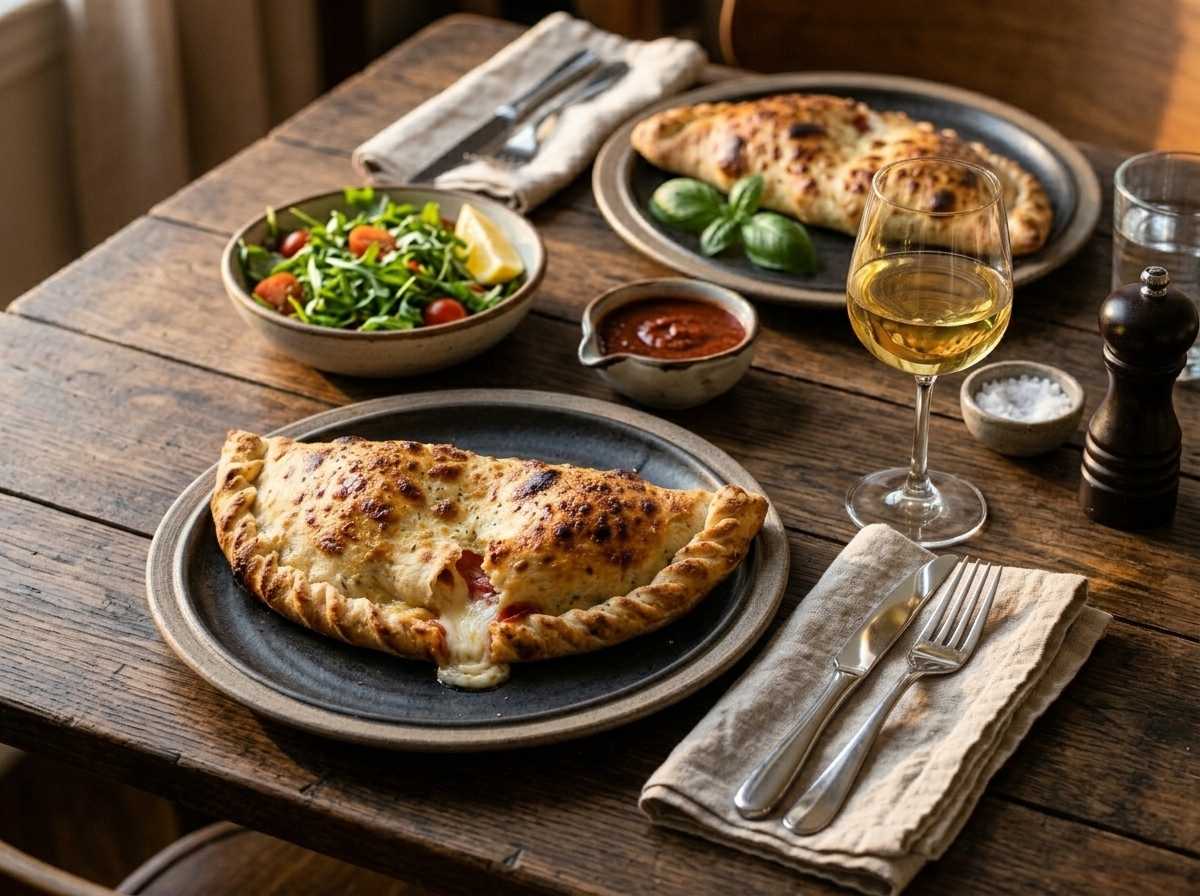
Calzone napoletano is traditionally eaten on its own, cut in half at the table so the filling stays inside while it’s hot. A light green salad dressed with lemon and olive oil is the standard accompaniment, nothing heavy.
In Naples, it’s common to serve it with a small dish of passata or a lightly seasoned tomato sauce on the side for dipping, much like the bold tomato base used in Campanian tomato-based dishes, though the calzone itself contains no tomato internally.
A cold Peroni or a glass of Campanian Falanghina cuts through the richness of the ricotta and salami cleanly, and if you want a proper aperitivo first, a classic Negroni fits the bill. For a non-alcoholic option, sparkling water with a slice of lemon works just as well.
FAQ
Why is the bottom of my calzone napoletano still doughy after baking?
The most likely cause is wet ricotta. Drain it overnight and make sure your baking surface (stone or heavy pan) is fully preheated before the calzone goes in. Baking at 220 C on a cold tray almost always produces an undercooked base.
Can I use buffalo mozzarella instead of fior di latte in the filling?
You can, but it’s not recommended. Buffalo mozzarella releases significantly more water during baking and will make the filling loose and the dough soggy. Fior di latte stays firmer and holds its shape.
Can I freeze the calzone dough before shaping and filling it?
Yes, freeze the dough balls after the first rise. Wrap each one tightly in plastic, freeze for up to 1 month, and thaw overnight in the fridge. Bring to room temperature for 1 hour before shaping.
What’s the difference between calzone napoletano and a regular calzone?
The Neapolitan version uses ricotta as the primary filling base, combined with salami and fior di latte — the same fresh cheese central to classic Neapolitan baked dishes — and contains no tomato sauce inside. Many generic calzone recipes add tomato inside, which is not traditional for this specific style.
Is calzone napoletano al forno suitable for a vegetarian diet?
The traditional recipe contains salami so it’s not vegetarian. You can make a vegetarian version by replacing the salami with drained sauteed spinach, or black olives and roasted peppers, while keeping the ricotta and mozzarella filling.
How do I know when the calzone is fully cooked inside?
The outside should be golden with a few small brown blisters, and it should feel firm when you press the top lightly. If you insert an instant-read thermometer through the vent, the internal temperature should read at least 75 C / 167 F.