Jump to Recipe
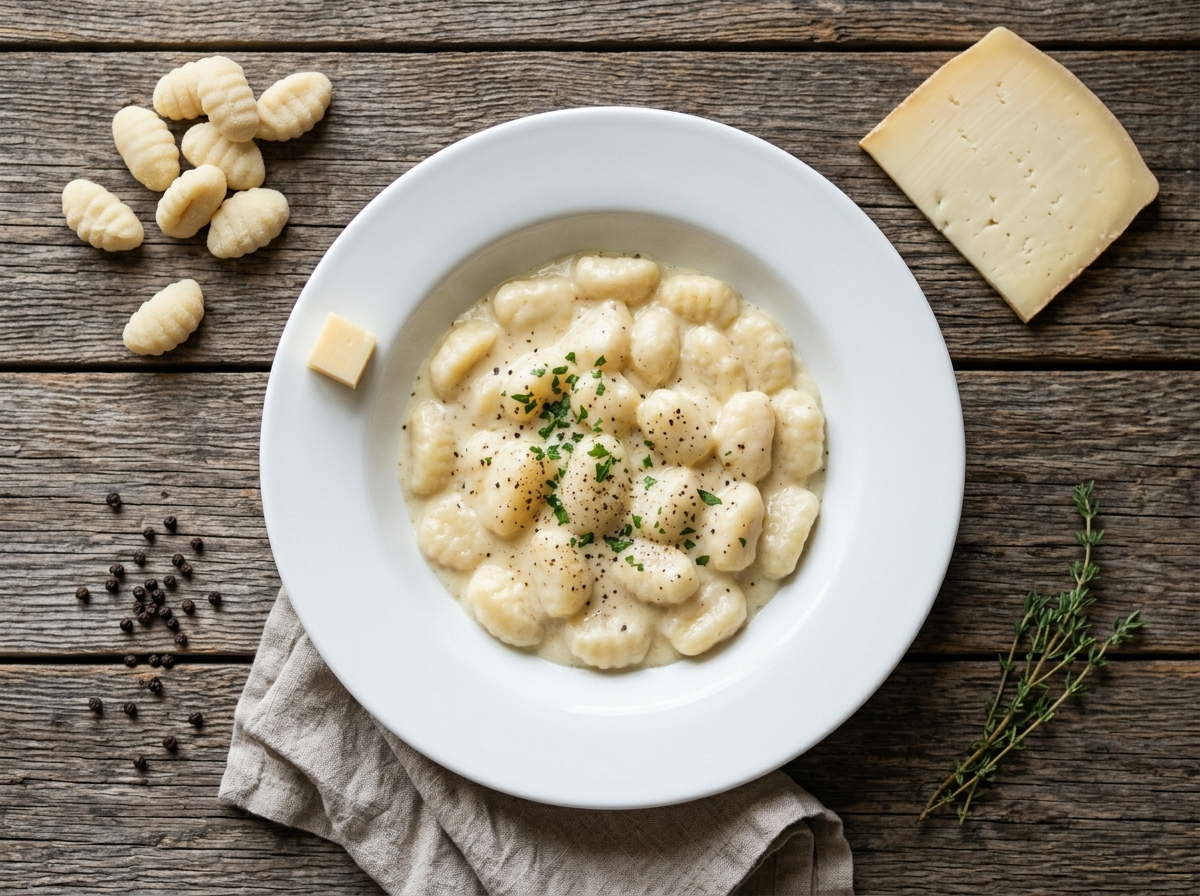
Gnocchi alla bava comes from the Aosta Valley and Piedmont, where Fontina cheese has been produced for centuries. ‘Bava’ means drool in Italian dialect, a reference to the long, stringy pull of melted Fontina as you lift your fork. It’s an apt name.
The sauce has three components: butter, cream, and Fontina. That simplicity is intentional. There’s nowhere to hide a bad cheese or overcooked gnocchi, so the technique matters.
I use store-bought gnocchi on weeknights without apology, though homemade potato gnocchi are worth the effort on weekends, since the sauce is the real subject here. Either way, the gnocchi should go straight from boiling water into the warm sauce, not onto a cold plate.
This is winter food from the Italian Alps. It’s rich, it’s short on complexity, and it works.
Why You’ll Love This Recipe
- Four ingredients make a restaurant-quality cheese sauce
- Ready in under 30 minutes including boiling the gnocchi
- Fontina melts without breaking or going grainy
- Pairs with a glass of Barbera d’Asti for a complete meal
Ingredient Notes
- Fontina Val d’Aosta: Use genuine DOP Fontina from the Aosta Valley – it melts silky and has a mild, milky depth that Danish or Swedish Fontina lacks. If you can’t find it, Gruyere is the closest substitute: same melt, slightly nuttier.
- Heavy cream: Full-fat heavy cream (35% fat) keeps the sauce stable. Lower-fat creams can split when the cheese goes in. Avoid UHT if you can.
- Potato gnocchi: Store-bought gnocchi work well here. If making from scratch, use floury potatoes like Russets and keep the dough dry so the gnocchi hold their shape in the sauce.
- Unsalted butter: Butter starts the sauce and adds body. Unsalted gives you control over the final salt level since Fontina varies in saltiness by producer.
- Black pepper: Freshly cracked pepper is the only seasoning beyond salt in this dish. Grind it coarse so it stays present against the rich sauce.
Gnocchi alla Bava (Piedmontese Gnocchi with Fontina and Cream)
Ingredients
Method
- Bring a large pot of water to a rolling boil. Add 1 tbsp salt.
- Add the gnocchi and cook until they float to the surface, about 2 to 3 minutes. Do not drain yet.
- Use a ladle to scoop out about 60 ml of the starchy cooking water and set aside. Then remove the gnocchi with a slotted spoon.
- While the water heats, place the cream and butter in a wide saute pan over medium-low heat. Warm until the butter melts and the cream begins to steam, about 3 to 4 minutes. Do not let it boil.
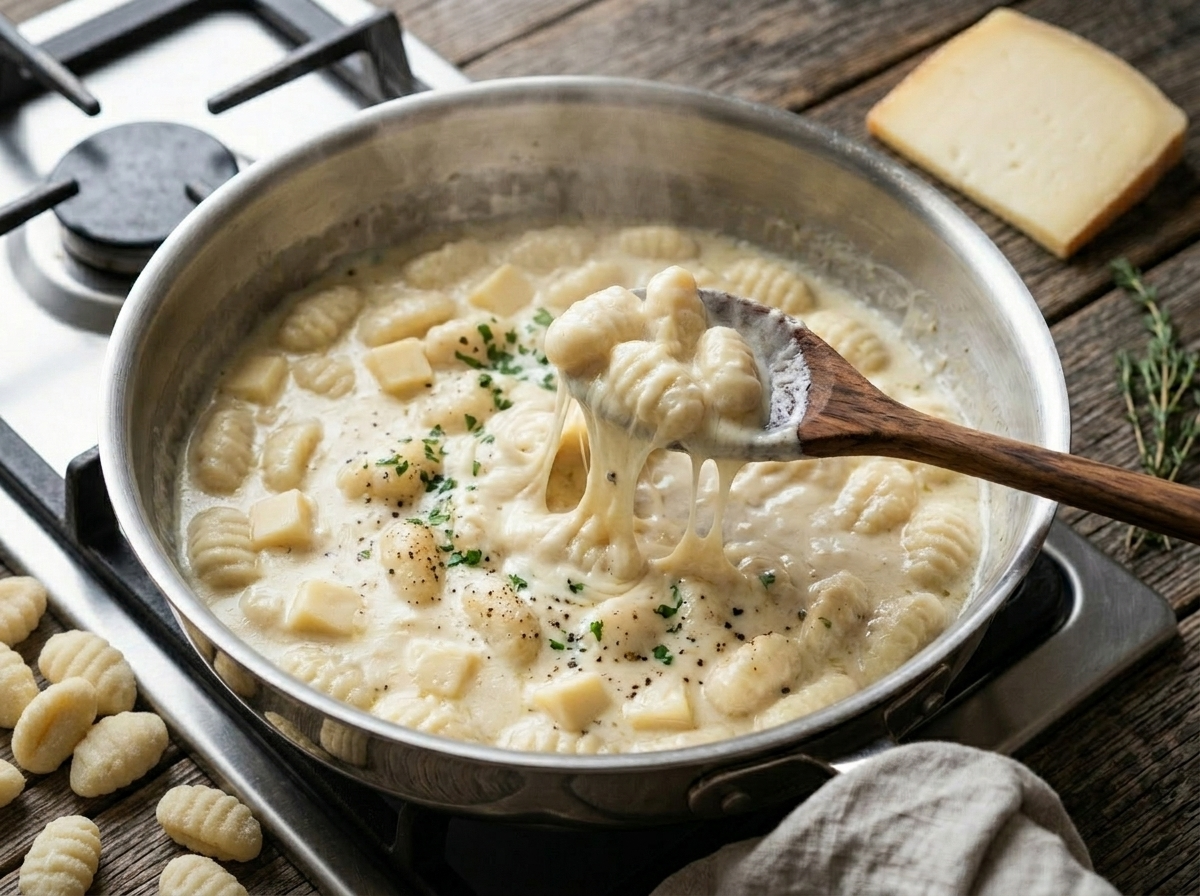
- Add the diced Fontina in two batches, stirring constantly with a wooden spoon after each addition until the cheese melts fully into the cream and the sauce looks pale and uniform, about 4 to 5 minutes total.
- Reduce heat to low. The sauce should coat the back of a spoon. Taste and season with salt only at this point, since Fontina varies in saltiness.
- Add the gnocchi to the pan with the sauce. Toss gently to coat, adding a splash of reserved cooking water if the sauce is too thick to move freely around the gnocchi.
- Remove the pan from heat. Add freshly cracked black pepper and toss once more.
- Divide into warm bowls immediately. Serve with extra black pepper at the table if you like.
Notes
Tips for Success
- Remove the Fontina rind and grate or dice the cheese finely so it melts evenly without clumping.
- Keep the cream at a gentle simmer – never a rolling boil – when adding cheese or the sauce will split.
- Reserve at least 60 ml of gnocchi cooking water before draining to loosen the sauce if it tightens.
- Transfer gnocchi straight from the pot to the sauce pan using a slotted spoon, not a colander – a little cooking water clings on and helps emulsify.
- Finish the pan off heat once the gnocchi are coated so the sauce stays glossy, not grainy.
Variations
- Add a grating of fresh truffle or truffle paste over the plated gnocchi for a Piedmontese special-occasion version.
- Stir in a handful of cooked speck or pancetta with the butter for a smokier, heartier mountain variation.
- Replace half the Fontina with Taleggio for a stronger, more pungent sauce that still melts cleanly.
Storage and Reheating
Store leftover gnocchi alla bava in an airtight container in the fridge for up to 2 days. The sauce thickens considerably as it cools and the gnocchi absorb it.
To reheat, place in a small saucepan over low heat with a splash of cream or water, stirring gently until the sauce loosens and the gnocchi warm through. Microwaving works in a pinch at 60% power for 90 seconds, stirring halfway.
Freezing is not recommended. The cream sauce breaks on thawing and the gnocchi texture suffers. Cook only what you plan to eat.
Serving Suggestions
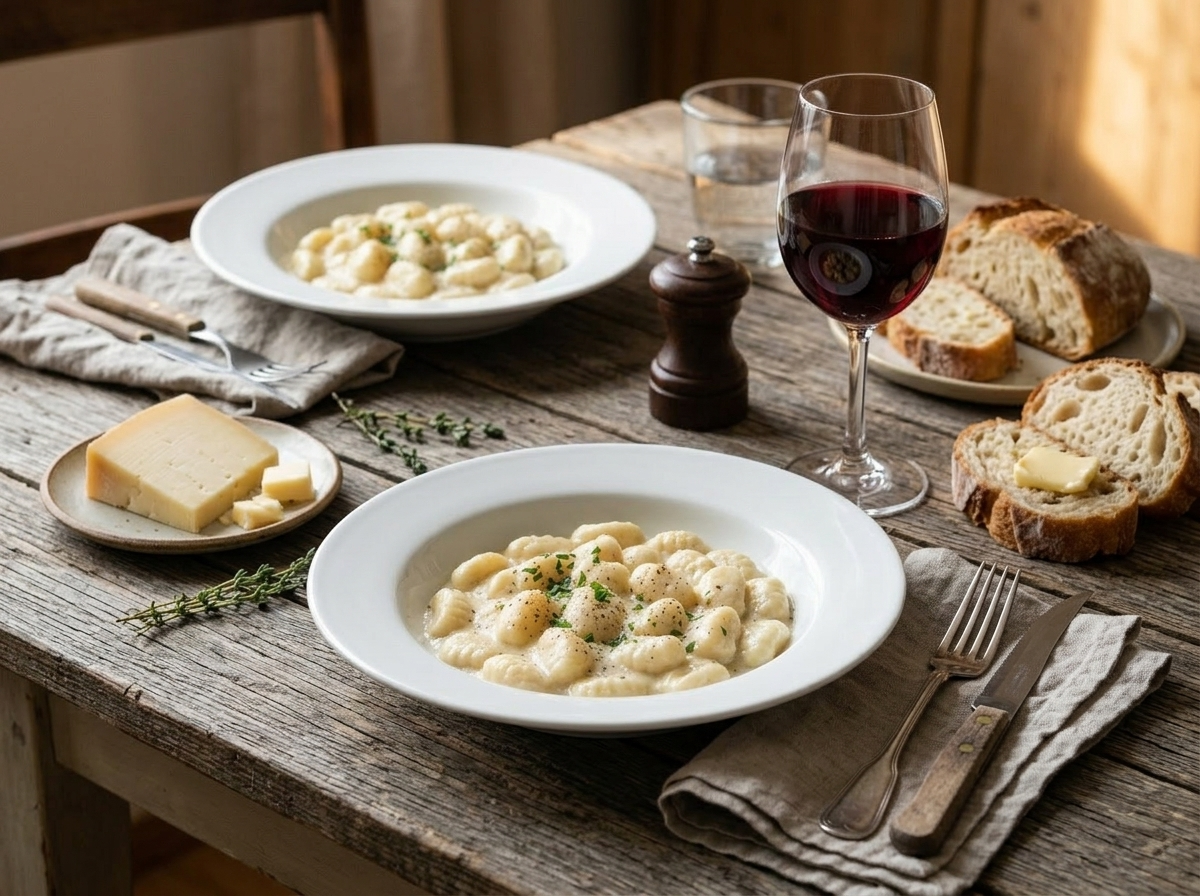
Gnocchi alla bava is rich, so serve it as a primo in smaller portions followed by a simple roast or a bitter green salad dressed with lemon. In the Alps it often shows up as a standalone lunch with nothing else alongside.
A glass of Barbera d’Asti or Dolcetto d’Alba cuts through the fat cleanly — for a deeper look at how acidity and tannin work against rich sauces, Italian wine pairing for pasta covers the logic well. If you want something white, a Piedmontese Arneis works. Avoid oaky wines that compete with the cheese.
For bread, a plain sourdough or Piedmontese grissini on the side handles any sauce left in the bowl without overpowering the dish.
FAQ
Why is my gnocchi alla bava sauce grainy instead of silky?
Graininess usually means the cream got too hot before the cheese went in. Keep the heat at medium-low and add the Fontina gradually off or near the lowest flame. Genuine Fontina Val d’Aosta is also less prone to breaking than cheaper substitutes.
Can I use Gruyere instead of Fontina for gnocchi alla bava?
Yes, Gruyere is the best substitute – it has a similar melt and creamy texture, though the flavor is nuttier and slightly less mild. Avoid pre-shredded bags of any cheese, as the anti-caking coating prevents clean melting.
Can I make the Fontina cream sauce ahead and reheat it before adding the gnocchi?
You can make the sauce up to a day ahead and store it covered in the fridge. Reheat it very gently with a splash of cream over low heat, stirring constantly, before dropping in freshly cooked gnocchi. Don’t boil it.
What is the difference between gnocchi alla bava and gnocchi al Gorgonzola?
Both are northern Italian cheese-sauced gnocchi, but bava is specifically made with Fontina and cream from the Aosta Valley and has a mild, stringy pull. Gnocchi al Gorgonzola uses blue-veined cheese, which gives a sharper, saltier, and more assertive sauce.
Is gnocchi alla bava gluten-free?
Traditional potato gnocchi contain wheat flour, so standard gnocchi alla bava is not gluten-free. You can buy or make gnocchi using rice flour or a certified GF potato gnocchi – the Fontina sauce itself contains no gluten.
How do I know when the Fontina has melted enough into the cream?
The sauce is ready when it coats the back of a spoon and you no longer see any solid cheese pieces – it should look pale and uniform, not lumpy or oily. Give it a stir and lift the spoon: it should fall in a slow, thick ribbon.