Jump to Recipe
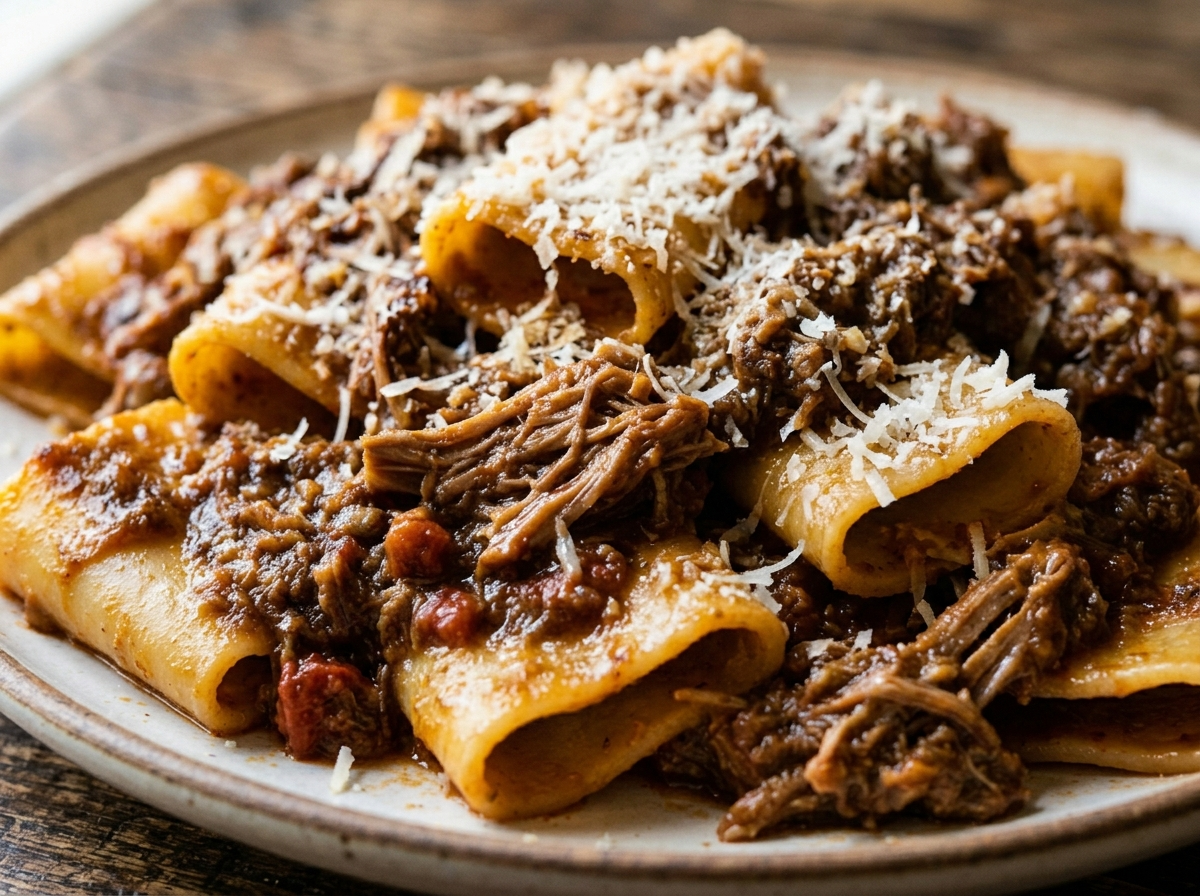
Ragù napoletano is not a weeknight bolognese. It’s a Sunday sauce from Campania that simmers for at least three hours, built around whole cuts of meat rather than ground beef. The result is a sauce that tastes more like braised meat than tomato, which is exactly the point.
Packheri are the right pasta for this job. The large, ridged tubes trap chunks of sauce inside and hold their shape through a long toss in the pan. Rigatoni is a common substitute, but the wider bore of paccheri makes a real difference.
I use pork ribs and beef braciole together here, which is the Neapolitan standard. Once the meat is cooked, you pull it out, dress the pasta, and serve the meat separately as a second course. That two-course structure is part of the tradition.
The active work is about 20 minutes. Everything else is patience.
Why You’ll Love This Recipe
- Sauce doubles as a braised meat second course
- Paccheri tubes hold the chunky ragù inside each bite
- Freezes well, so one cook feeds you twice
- Deep tomato and pork flavor built from simple pantry ingredients
Ingredient Notes
- Paccheri: Use dry paccheri rigati (ridged) for better sauce adhesion. If you can’t find them, rigatoni works as a close substitute, though the bite will be smaller.
- San Marzano tomatoes: Whole canned San Marzano DOP tomatoes are worth finding here. Crush them by hand before adding. Good-quality Italian plum tomatoes from any brand work if San Marzano aren’t available.
- Pork ribs (spare ribs): Bone-in spare ribs add gelatin and depth as they braise. You can swap in pork shoulder cut into large chunks if ribs are hard to source.
- Beef for braciole: Use thin slices of beef top round or flank steak, rolled around a filling of pine nuts, raisins, and pecorino. If you skip the braciole, add 300 g of beef chuck in one large piece instead.
- Soffritto base (onion, celery, carrot): The classic Neapolitan ragù uses mostly onion and very little carrot or celery, keeping the sauce clean-tasting. I use a small amount of each for balance.
- Strutto or lard (optional): Traditional recipes start with lard or strutto for a richer base. Olive oil is a straightforward substitute if you prefer.
Paccheri al Ragù Napoletano
Ingredients
Method
- Lay the beef slices flat on a board. Mix together the pecorino, pine nuts, raisins, garlic, and parsley in a small bowl.
- Spread a thin layer of filling over each beef slice, leaving a 1 cm border. Roll tightly and secure each roll with kitchen twine or a toothpick at each end.
- Heat the olive oil in a 6-quart Dutch oven over medium-high heat. Season the pork ribs and braciole with salt and pepper.
- Add the pork ribs and sear for 3 to 4 minutes per side until deeply browned. Remove and set aside. Sear the braciole rolls for 2 minutes per side until browned all over. Remove and set aside.
- Reduce heat to medium-low. Add the sliced onion, celery, and carrot to the same pot with the remaining fat. Cook for 8 to 10 minutes, stirring often, until the onion is pale and soft but not colored.
- Add the tomato paste and stir it into the soffritto for 2 minutes until it darkens slightly.
- Pour in the red wine and scrape up any browned bits from the pot base. Let it bubble for 2 minutes until the wine smell softens.
- Add the crushed San Marzano tomatoes and stir to combine. Nestle the pork ribs and braciole back into the pot. Tuck in the basil leaves.
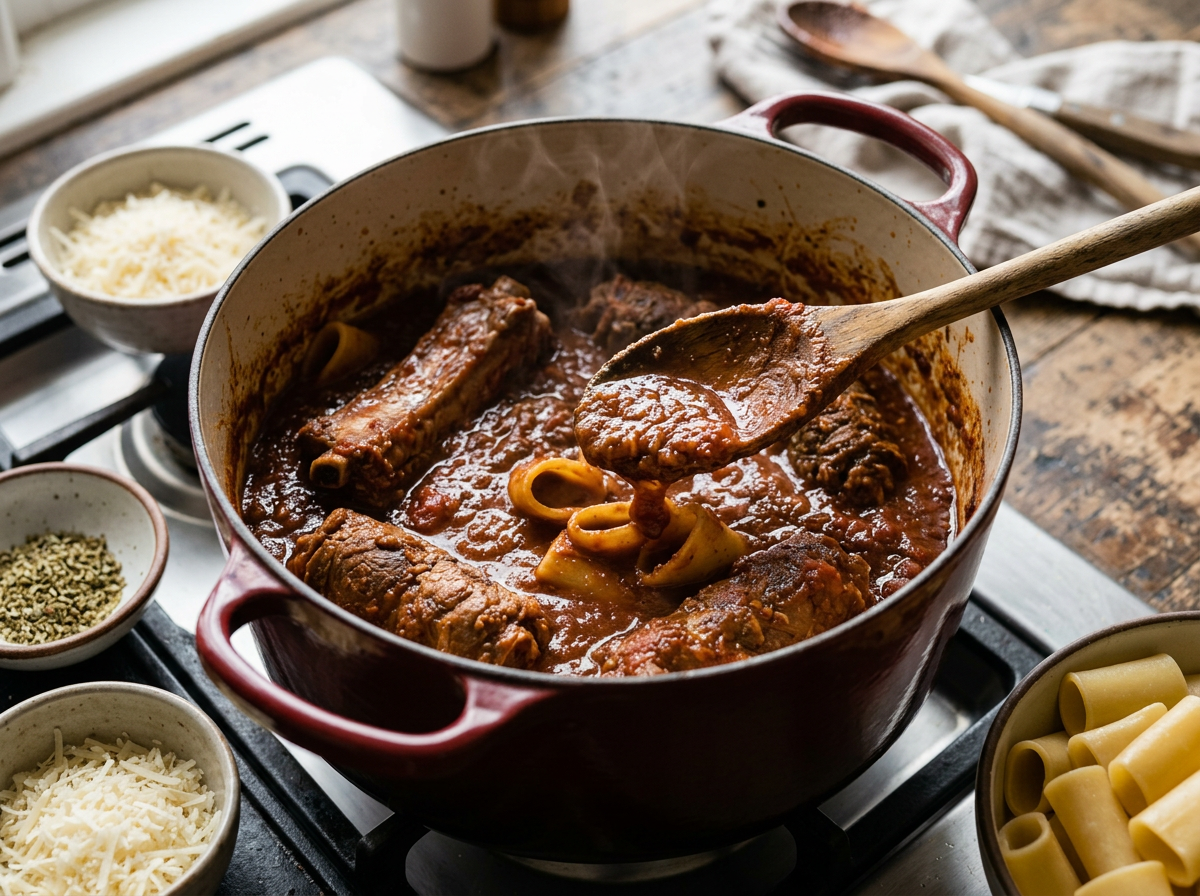
- Bring to a gentle boil, then reduce heat to the lowest possible setting. Place the lid slightly ajar. Simmer for 3 hours, stirring every 20 to 30 minutes, until the sauce is deep rust-red and the ribs fall from the bone.
- After 3 hours, taste and adjust salt. Carefully remove the pork ribs and braciole with tongs and set aside covered with foil. Remove and discard the wilted basil. The sauce should be thick but pourable.
- Bring a large pot of water to a rolling boil. Add the coarse salt and cook the paccheri for 2 minutes less than the package instruction states.
- Reserve 200 ml of pasta cooking water before draining. Drain the paccheri through a colander.
- Transfer the drained paccheri to the pot with the ragù over medium heat. Add a ladleful of pasta water and toss well for 2 minutes until each tube is coated and the sauce clings.
- Plate immediately with grated Parmigiano-Reggiano or pecorino and a few torn basil leaves. Serve the reserved pork ribs and braciole as a second course alongside sautéed greens or roasted potatoes.
Notes
Tips for Success
- Brown the meat in batches over high heat so it sears rather than steams, building a dark fond on the pan base.
- Deglaze with wine and scrape the fond before adding tomatoes, pulling all those caramelized bits into the sauce.
- Keep the heat at the lowest possible simmer after the first boil, with just an occasional bubble breaking the surface.
- Reserve 200 ml of pasta cooking water before draining, then add it a splash at a time when tossing the pasta to loosen the sauce.
- Taste the ragù for salt only in the last 30 minutes, as the long reduction concentrates the flavors significantly.
Variations
- Neapolitan vegetarian version: replace meat with fried eggplant chunks and smoked scamorza stirred into the tomato base.
- Add whole hard-boiled eggs to the ragù in the final hour, a classic Neapolitan Easter Sunday tradition.
- Use the same ragù sauce base with rigatoni and top with fresh ricotta instead of pecorino for a lighter finish.
Storage and Reheating
Leftover ragù keeps in an airtight container in the fridge for up to 4 days. Store it separately from the cooked pasta so the paccheri don’t absorb all the liquid overnight.
To reheat, warm the ragù in a wide pan over low heat, adding a splash of water if it has thickened. Cook the pasta fresh if possible, or reheat cooked pasta in the sauce with a little water for 2 to 3 minutes.
The ragù freezes well for up to 3 months. Freeze it in portions without the pasta. Thaw overnight in the fridge and reheat gently on the stovetop.
Serving Suggestions
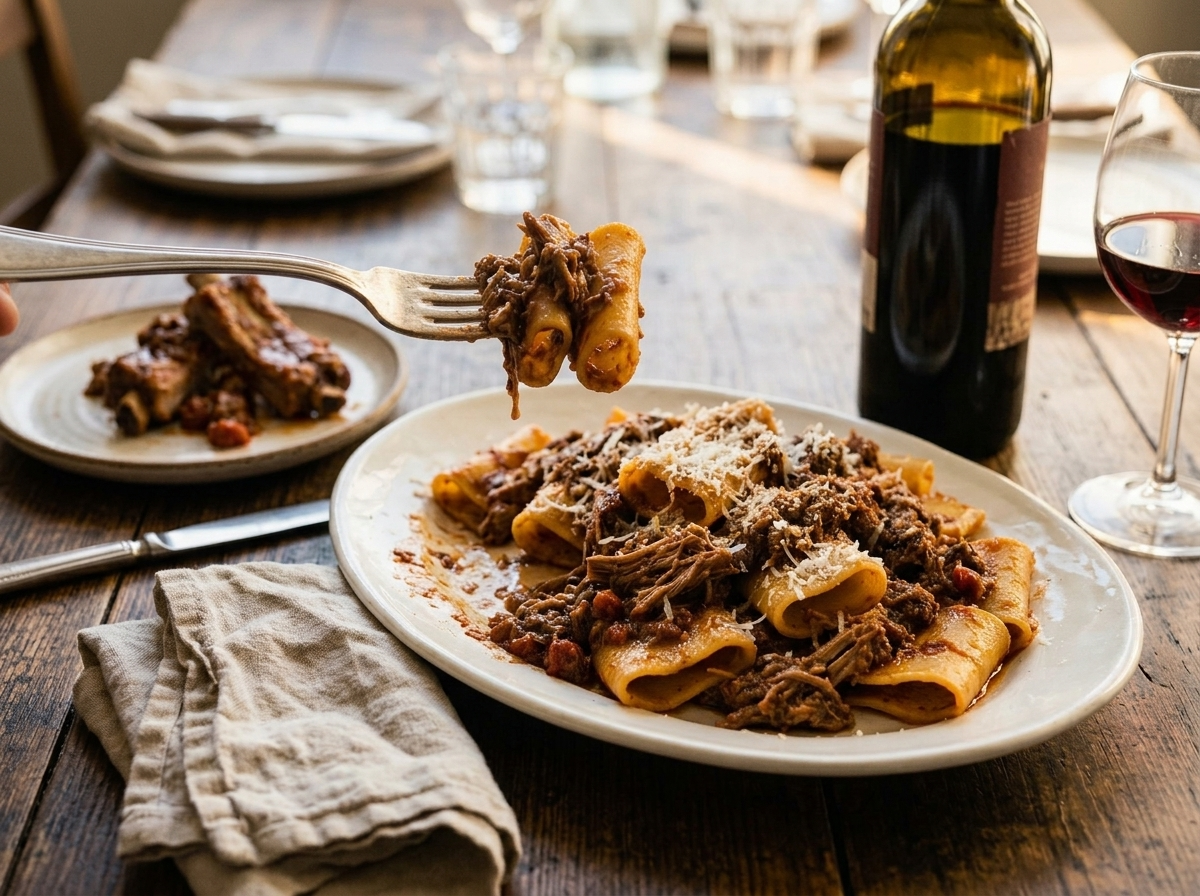
In the Neapolitan tradition, the paccheri dressed with ragù comes first as the primo. The braised pork ribs and beef braciole you cooked in the sauce are served separately as the secondo, usually with sautéed greens or crispy roasted potatoes alongside.
For the pasta course, finish each bowl with a generous grating of aged Parmigiano-Reggiano or pecorino romano and a drizzle of raw olive oil. A rough torn basil leaf on top adds a clean, green note against the deep red sauce.
Serve with a southern Italian red wine — a Taurasi or Aglianico del Vulture holds up well to the weight of the pork fat and long-cooked tomatoes, as covered in this guide to red wine pairing for Italian comfort foods.
FAQ
Why does my ragù napoletano taste acidic even after hours of simmering?
Acidity usually means the sauce didn’t get enough time or the heat was too high and the tomatoes didn’t fully break down. Add a very small pinch of baking soda (not more than 1/4 tsp) and stir it in, or simmer uncovered for another 30 minutes. Avoid adding sugar, which masks the problem rather than fixing it.
Can I use ground beef instead of whole cuts in ragù napoletano?
Technically yes, but it won’t be ragù napoletano, it will be closer to a bolognese-style sauce. The whole cuts of meat are what give the Neapolitan ragù its braised, gelatinous texture. If you’re short on time, use pork shoulder cut into large chunks as a compromise.
Can I make ragù napoletano in a slow cooker and freeze it?
Yes. Brown the meat and soffritto on the stovetop first, then transfer everything to a slow cooker on low for 7 to 8 hours. The ragù freezes well for up to 3 months in sealed containers without the pasta.
What’s the difference between ragù napoletano and bolognese?
Ragù napoletano uses whole cuts of pork and beef slow-braised in tomato, while bolognese uses finely minced meat cooked with milk or cream and very little tomato. The Neapolitan version is tomato-forward and produces a much looser, more liquid sauce.
Is paccheri al ragù napoletano gluten-free?
Not with standard dry paccheri, which is made from durum wheat semolina. You can use certified gluten-free large pasta tubes made from rice or corn flour as a substitute, though the texture will be softer. The ragù itself contains no gluten.
How do I know when the ragù napoletano is ready?
The sauce should be a deep rust-red, not bright tomato orange, and a wooden spoon dragged across the surface should leave a clear trail for a moment before it closes. The pork ribs should fall away from the bone with no resistance when pressed.