Jump to Recipe
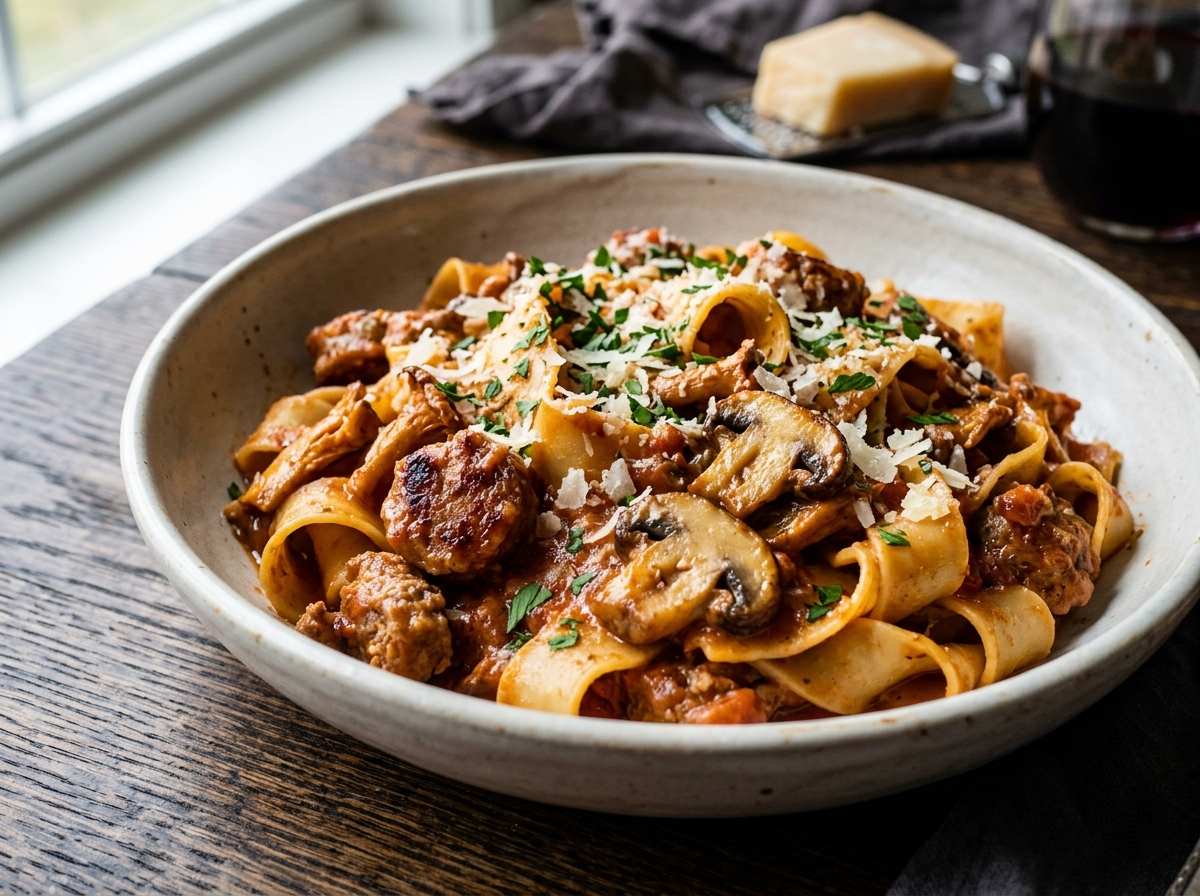
Pasta alla boscaiola means woodsman’s pasta, and the name tells you what to expect: earthy mushrooms, coarse Italian sausage, and a sauce that leans rustic rather than refined.
The classic version uses a tomato base loosened with a splash of cream at the end. Some cooks skip the cream entirely and go pure tomato. Others go white, no tomato at all. I use both, because the tomato gives structure and the cream rounds the edges.
The mushrooms matter more than the pasta shape here. A mix of cremini and dried porcini gives you bulk plus concentrated forest flavor. The porcini soaking water goes into the sauce, so nothing is wasted.
This is a weeknight dish that tastes like it took longer than it did.
Why You’ll Love This Recipe
- One skillet sauce, minimal cleanup after dinner
- Dried porcini add deep forest flavor for almost no cost
- Ready in 40 minutes start to finish
- Sauce holds well, even better reheated the next day
Ingredient Notes
- Italian pork sausage: Use a coarse-ground, fennel-seasoned variety for the most authentic flavor. Mild or hot both work. In a pinch, plain ground pork with a pinch of fennel seed and chili flake is a solid substitute.
- Cremini mushrooms: Cremini (baby bella) hold their texture well during browning. White button mushrooms work but release more water. Portobello sliced thin is also good if that’s what you have.
- Dried porcini mushrooms: Even a small amount, around 15 g, punches well above its weight. Soak in hot water for 15 minutes, then use both the mushrooms and the strained soaking liquid in the sauce.
- Crushed tomatoes: A 400 g tin of good-quality crushed or whole peeled tomatoes (crushed by hand) is ideal. San Marzano style tomatoes give a cleaner, less acidic base.
- Heavy cream: Add only at the end, off direct heat, so it doesn’t break. You can substitute creme fraiche for a slightly tangier result, or omit it entirely for a fully tomato-based boscaiola.
- Pasta shape: Pappardelle or rigatoni are classic choices because the sauce clings to wide ribbons or catches inside tubes. Tagliatelle and penne work equally well.
Pasta alla Boscaiola (Woodsman’s Pasta with Mushrooms and Sausage)
Ingredients
Method
- Place dried porcini in a small bowl and pour 180 ml of hot (not boiling) water over them. Let soak for 15 minutes until soft, then lift them out, squeeze gently, and chop roughly. Pour the soaking liquid through a fine-mesh sieve or coffee filter to catch any grit. Set liquid aside.
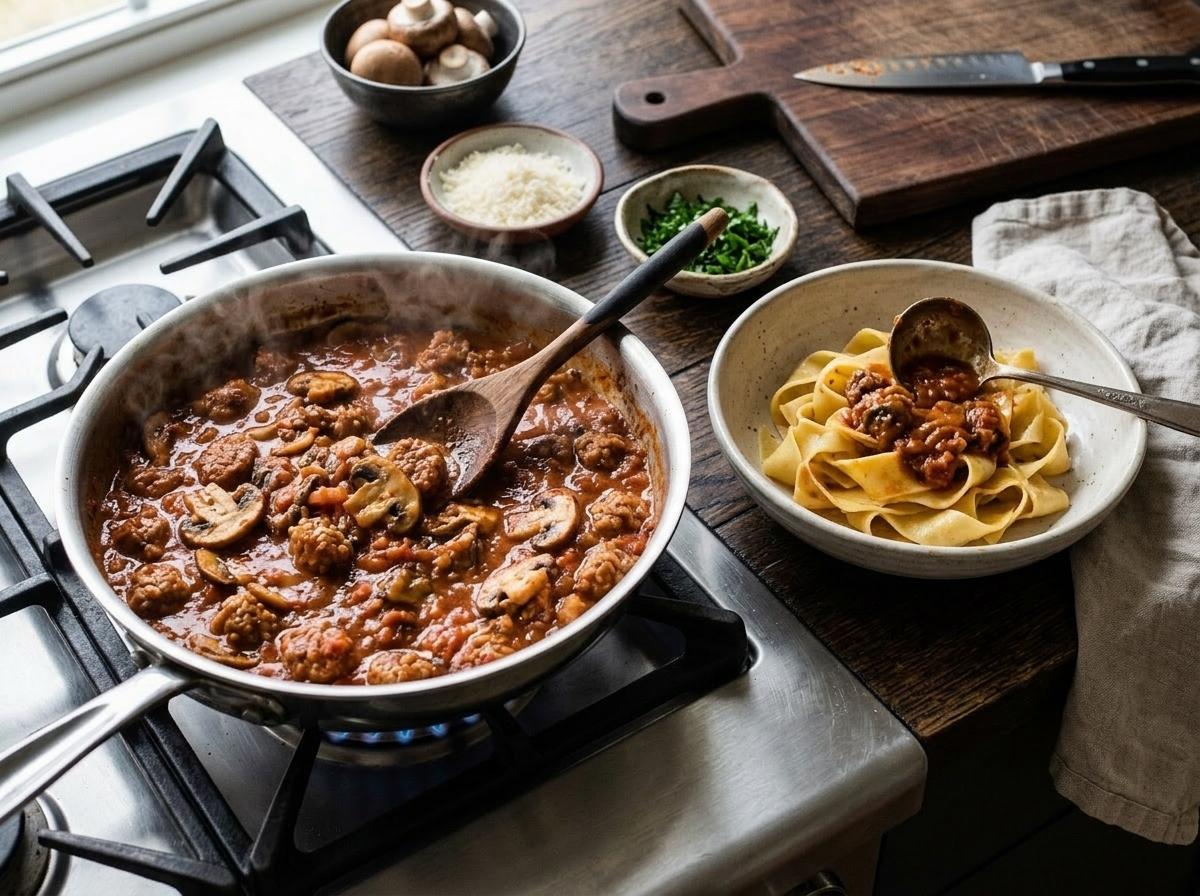
- Heat a 12-inch skillet over high heat until it just begins to smoke. Add the cremini mushrooms in a single layer with no oil. Leave undisturbed for 2 minutes until the undersides are deep golden, then stir and cook another 2 minutes until most moisture has evaporated. Season with a pinch of salt, transfer to a plate, and set aside.
- Return the skillet to medium-high heat and add 1 tbsp olive oil. Add the sausage in rough, irregular chunks squeezed from the casing. Cook without moving for 2 minutes, then break up with a wooden spoon and cook another 3 minutes until browned all over. Transfer to the same plate as the mushrooms.
- Reduce heat to medium. Add the remaining 1 tbsp olive oil and the diced onion to the skillet. Cook, stirring occasionally, for 5 minutes until pale and soft. Add the sliced garlic and fresh thyme leaves and cook 1 minute more until fragrant.
- Pour in the white wine and scrape up any browned bits from the base of the pan. Let it reduce for 1 minute until almost dry.
- Add the crushed tomatoes, strained porcini liquid, and a pinch of salt. Stir well and bring to a gentle simmer. Return the browned sausage, cremini mushrooms, and chopped rehydrated porcini to the pan. Simmer uncovered for 10 minutes until the sauce thickens slightly and the flavors come together.
- While the sauce simmers, bring a large pot of heavily salted water to a boil. Cook the pasta 1 minute less than the package directs for al dente. Before draining, scoop out about 240 ml of pasta cooking water and set aside. Drain the pasta.
- Remove the skillet from the heat. Stir in the heavy cream and black pepper. Add the drained pasta to the sauce along with 60-80 ml of the reserved pasta water. Return to medium heat and toss for 1 minute until the pasta is fully coated and the sauce clings to each piece, adding more pasta water if needed to loosen.
- Divide among four warm bowls. Top with grated Parmigiano-Reggiano, a grind of black pepper, and a scatter of chopped parsley. Serve immediately.
Notes
Tips for Success
- Brown mushrooms in a dry, hot skillet in a single layer before adding any fat or sausage.
- Squeeze sausage out of its casing in rough chunks for irregular, well-browned edges.
- Strain porcini soaking water through a fine-mesh sieve or coffee filter to remove grit before adding to the sauce.
- Reserve at least 120 ml of pasta cooking water and add it gradually if the sauce tightens before serving.
- Stir in the cream off the heat and toss immediately with the drained pasta so the sauce emulsifies rather than splits.
Variations
- White boscaiola: skip the tomatoes, use a full splash of white wine and extra cream instead.
- Vegetarian boscaiola: replace sausage with an extra 200 g of mixed wild mushrooms and a pinch of smoked paprika.
- Truffle boscaiola: finish with a few drops of white truffle oil and shaved Parmigiano instead of Pecorino.
Storage and Reheating
Store leftover pasta alla boscaiola in an airtight container in the fridge for up to 3 days. The sauce actually tightens overnight, so add a splash of water or stock when reheating.
Reheat in a wide skillet over medium-low heat, stirring gently and adding liquid as needed. Microwave works if you cover the bowl and stop to stir halfway through.
The sauce alone freezes well for up to 2 months. Cook fresh pasta when you pull it from the freezer rather than freezing already-sauced pasta, which turns starchy and soft on thawing.
Serving Suggestions
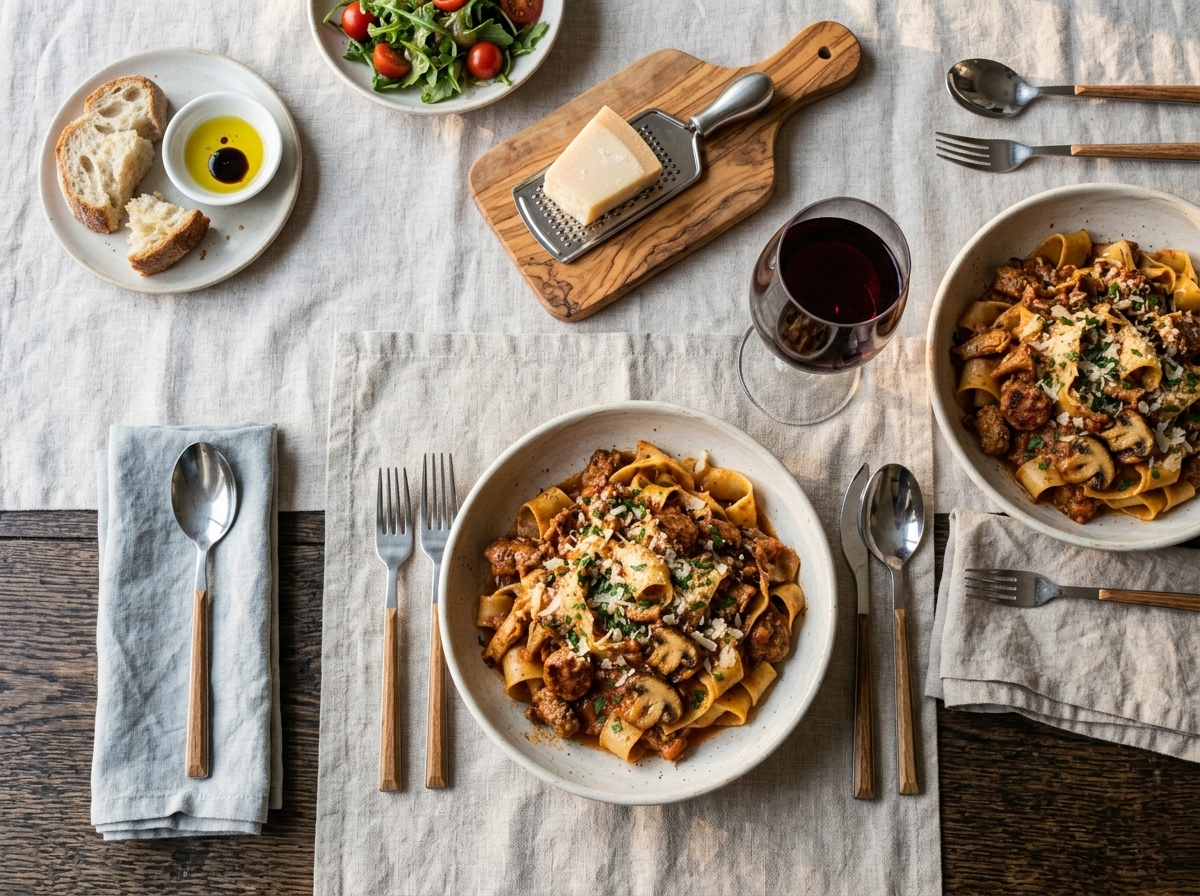
Pasta alla boscaiola is filling enough to serve on its own with good bread to mop the plate. A simple green salad dressed with lemon and olive oil is all the side dish you need.
For a more structured meal, open with a light antipasto of cured meats or marinated olives. Follow with the pasta, then finish with fruit or a small wedge of aged cheese.
A medium-bodied red wine sits well alongside the earthy mushroom-sausage combination, and a practical guide to Italian wine pairing can help you choose between Barbera d’Asti, Chianti Classico, or a Rosso di Montalcino without competing with the sauce.
FAQ
Why are my mushrooms in pasta alla boscaiola watery and pale instead of golden?
Mushrooms release water when the pan is too cool or too crowded. Cook them in a single layer over high heat without stirring for the first 2 minutes so they brown rather than steam. Work in two batches if your skillet is smaller than 12 inches.
Can I use fresh porcini instead of dried porcini in boscaiola?
Yes, and fresh porcini are excellent when in season. Use about 100 g fresh porcini in place of 15 g dried, and skip the soaking step. You’ll miss the concentrated soaking liquid, so add an extra splash of dry white wine to the sauce instead.
Can I freeze pasta alla boscaiola sauce and cook the pasta fresh later?
The boscaiola sauce freezes well in sealed containers for up to 2 months. Thaw overnight in the fridge, reheat gently in a skillet, and stir in a small knob of butter or a spoonful of cream before tossing with freshly cooked pasta.
What pasta shape works best with a boscaiola sauce?
Wide, flat shapes like pappardelle and tagliatelle catch the chunky sausage and mushroom pieces beautifully. Rigatoni or penne are the best choice if you prefer short pasta, since the sauce gets into the ridges and tubes.
Is pasta alla boscaiola gluten-free?
Not in its standard form, since it uses regular wheat pasta. You can make it gluten-free by swapping in your preferred certified gluten-free pasta shape. Check your sausage label too, as some brands use breadcrumb fillers that contain gluten.
What is the difference between pasta alla boscaiola and pasta ai funghi?
Pasta ai funghi is a simpler, often cream-only mushroom sauce without meat, while boscaiola always includes a cured or fresh pork element, usually sausage or pancetta, which gives the sauce a richer, meatier base — closer in spirit to hearty Italian comfort food dishes than a light pasta al funghi.