
Jump to Recipe
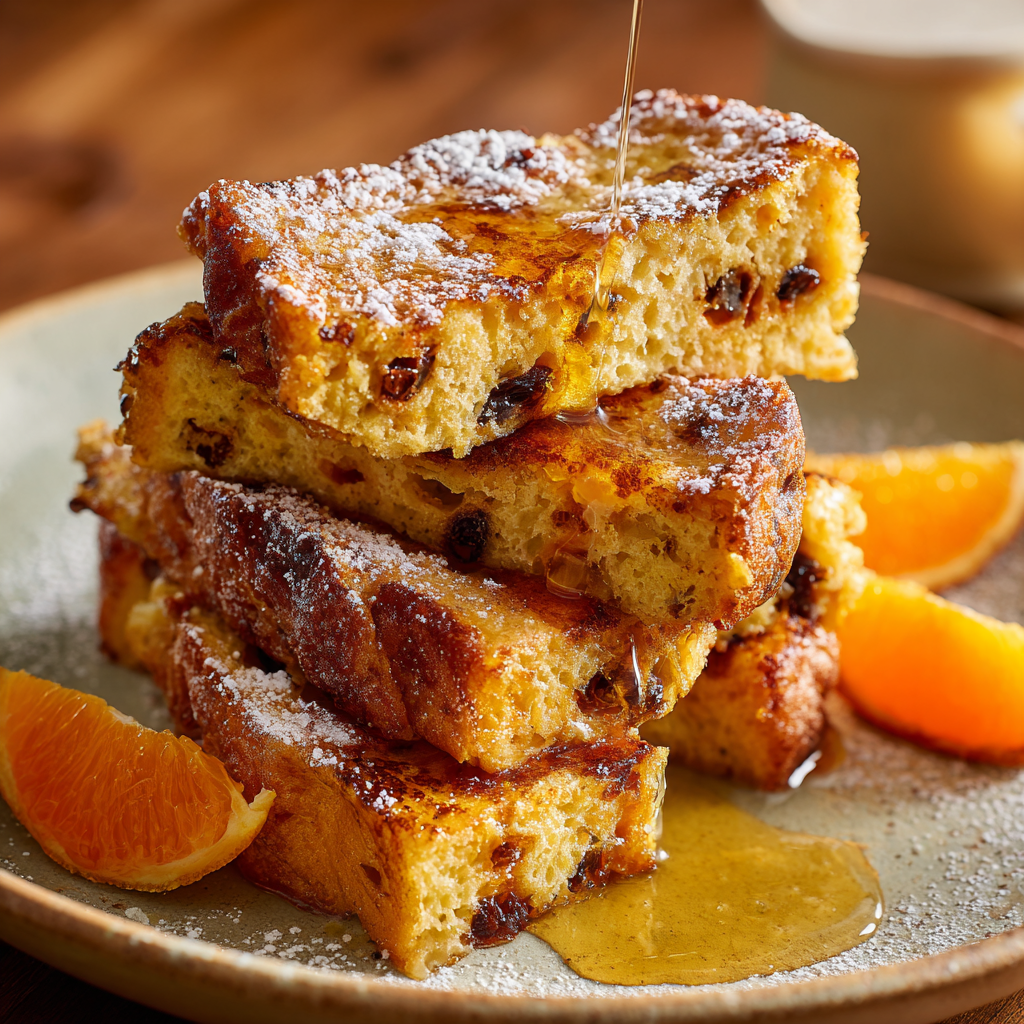
Panettone french toast recipe opens a door to mornings that smell of citrus, vanilla, and warm butter, and I love how one loaf can feel like celebration. I reach for this airy Italian bread when I want a breakfast that tastes festive without extra fuss.
.
Thick slices soak up a simple egg-and-dairy custard and cook in foaming butter until edges turn gently crisp. I’ll guide you through a quick skillet method and an easy overnight bake, with clear cues for slice thickness, soak time, and oven finish so every bite stays custardy inside.
Expect topping ideas from warm maple to an orange-spiced syrup that plays up the loaf’s candied peel. I also cover smart storage, reheating tips, and small fixes from my test kitchen to prevent soggy slices and keep flavors bright on holiday mornings.
Key Takeaways
- Use ¾–1″ slices of panettone for best soak and texture.
- Quick skillet: dip briefly, cook ~2 minutes per side over medium heat.
- Overnight bake: refrigerate 2+ hours, bake 350°F for 30–35 minutes.
- Top simply with maple and powdered sugar or an orange-spiced syrup.
- Store cooked toast 3–4 days in the fridge; freeze on a sheet pan first.
Why panettone makes the best French toast for the holidays and beyond
There’s something about a citrus-studded loaf that lifts simple eggs and milk into a special breakfast. I use a tall, domed loaf when I want a dish that smells of orange peel and butter from the first warm bite.
Light, aromatic structure
The loaf is leavened slowly, which creates a delicate, open crumb. It’s enriched with butter and eggs and studded with candied peel and raisins. That airy interior soaks custard without collapsing, much like a great bread pudding.
How it compares to brioche and sandwich bread
Compared with brioche, this loaf feels lighter and more aromatic. Compared with sandwich bread, it is richer and holds up when cut into thick slices (¾–1 inch). The built-in citrus and fruit mean less added sweetness in the custard. In short, it gives you flavor and structure up front, so you spend less time fixing textures and more time enjoying mornings.
| Loaf | Texture | Best slice | Sweetness impact |
|---|---|---|---|
| Italian holiday loaf | Feathery, open crumb | ¾–1 inch | Natural citrus reduces added sugar |
| Brioche | Dense, buttery | ½–¾ inch | Rich, needs less topping |
| Sandwich bread | Fine, tight crumb | Thin slices | Neutral; may need more sugar |
Panettone French toast recipe
I’ll keep this quick and useful so you can set up and start cooking without fuss. What it makes: tender, custardy slices with crisp edges. Total time is short and the payoff is a festive breakfast for family or guests.
Yield, timing, and the quick overview
Yield: A 1-pound loaf serves about 4–6. Cut 5–6 thick slices and halve if you prefer easier dipping.
Timing: Plan about 5 minutes to prep and 10–15 minutes to cook in batches. Each skillet batch takes roughly 2 minutes per side, so keep a light hold in a 200°F oven between rounds.
Overview: Whisk together eggs and dairy in a shallow bowl, dip briefly, then cook until the outside is set and golden.
Equipment checklist
- Large nonstick skillet or griddle (preheat while you mix custard)
- Shallow dish or bowl wide enough to lay a slice flat
- Whisk to blend eggs and milk until smooth
- Spatula and a baking sheet to hold warm in a 200°F oven
- Small pieces of butter set nearby for even browning
| Item | Quantity | Approx. time |
|---|---|---|
| Loaf yield | 1 lb — 5–6 slices | Serves 4–6 |
| Prep | Whisk custard in a bowl | About 5 minutes |
| Cook | Skillet batches, 2 minutes/side | 10–15 minutes total |
Ingredients and smart swaps that keep the custard rich, not cloying
A few smart ingredient choices will keep the custard rich without making the dish too sweet. Start by matching the loaf’s built-in sweetness to a restrained custard. That way the final plate stays balanced and bright.
Loaf choices and flavor notes
Classic panettone with candied orange and raisins brings balanced sweetness and aromatic lift. Chocolate, pistachio, or almond versions work too—just pick toppings that complement the loaf.
Custard essentials and their roles
Eggs supply structure; a pinch of salt and vanilla round flavors. Orange zest echoes the loaf’s citrus and brightens the mixture.
- Milk yields a lighter custard; use for a less rich finish.
- Half-and-half adds body without overpowering citrus notes.
- A splash of cream makes the custard indulgent but use sparingly to avoid masking fruit flavors.
- Keep added sugar minimal—the bread is sweet; warm maple and powdered sugar can sweeten the plate instead of the custard.
Finish: butter and syrups
Cook in butter for even browning and a delicate crust. Serve with warmed maple syrup and a light dusting of powdered sugar so the syrup hugs each slice.
| Dairy | Texture | Taste impact | Best use |
|---|---|---|---|
| Milk (1 cup) | Light, fluid | Maintains citrus and fruit notes | Casual family breakfast |
| Half-and-half (1 cup) | Velvety, fuller set | Adds body without masking flavors | Weekend brunch |
| Cream (splash) | Luxurious, rich | Deepens mouthfeel; use little | Special occasion or dessert-style plates |
How to slice, soak, and fry for golden brown edges and a custardy center
For a reliably golden exterior and a custardy center, the cut and cook technique matters most. I start by stabilizing the loaf on a board and cutting thick slices about ¾–1 inch wide. Then I halve those slabs so they’re easy to dip and flip without tearing.
Next, whisk eggs, milk, a touch of vanilla, and orange zest until the custard is smooth and streak-free. Dip each panettone slice just a few seconds per side, then let the excess drip back into the bowl—this keeps the center from turning soggy.
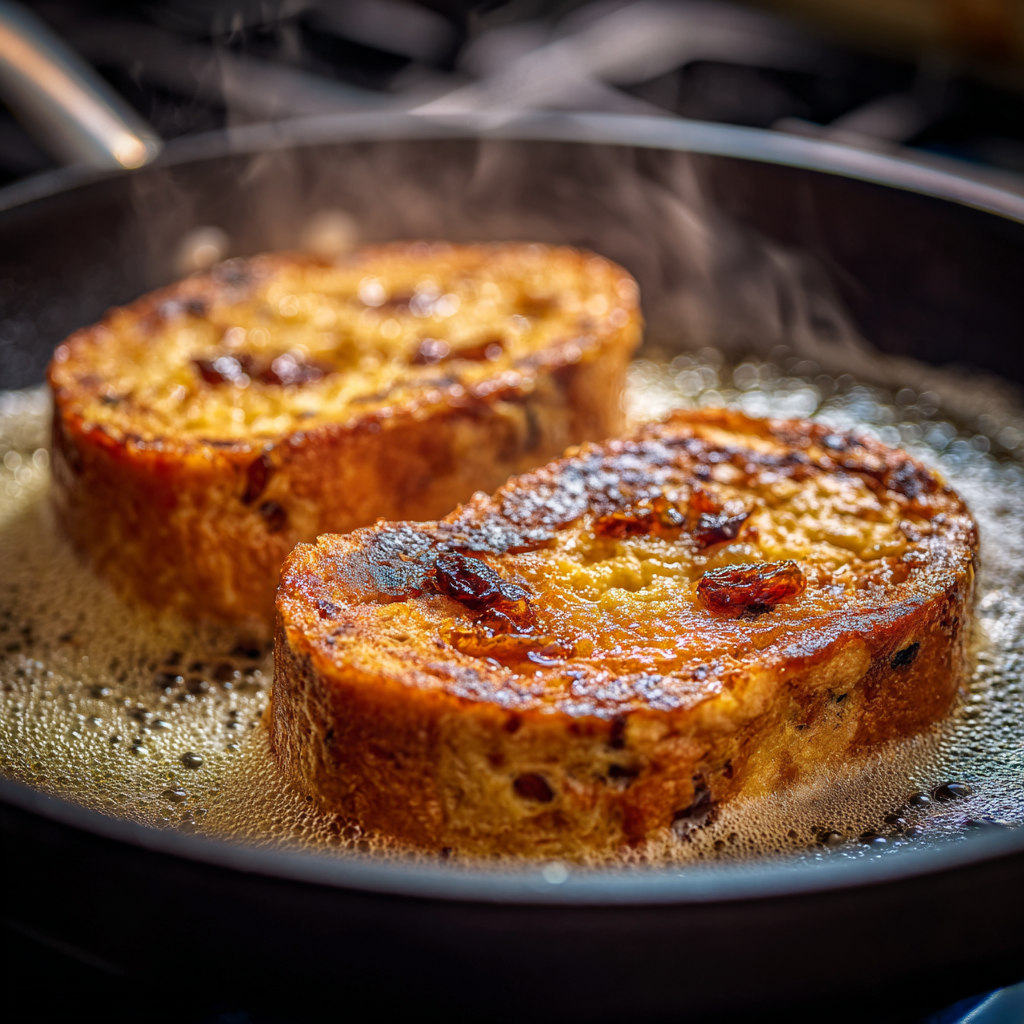
Add a small knob of butter to a nonstick skillet and warm over medium heat. Watch for the butter to foam, not burn; that foam is your cue the pan is ready. Lay pieces into the pan with space between them so the pan makes full contact and color develops evenly.
Cook about 2 minutes per side until a deep golden brown forms, resisting the urge to move them early. Flip gently with a wide spatula and give the second side another minute or two, checking for hot spots and rotating if needed.
- Stabilize then cut thick slices so the inside stays custardy while the exterior crisps.
- Dip briefly and let the mixture drip to avoid saturation.
- Use foaming butter and medium heat; sear undisturbed for the best color.
- Hold finished toast on a baking sheet in a 200°F oven so everything serves hot together.
Pro tips from the test kitchen to prevent soggy toast
In the test kitchen I learned small timing habits make the biggest difference between a crisp breakfast and a soggy mess. These are practical fixes I reach for when a batch needs saving.
Control soak time and slice thickness
Start with ¾–1 inch slices. Thin cuts soak too fast and collapse. Dip each piece only a few seconds per side and let excess custard drip back into the bowl.
Watch heat cues: foaming butter and even browning
Heat the pan until butter foams gently — that foam tells you the surface is ready. Cook over medium heat so the center sets while the crust reaches a golden brown without burning.
Common mistakes and quick fixes
- If a slice feels heavy, rest it on a rack 30 seconds before frying.
- Too-dark edges? Reduce heat and rotate the pan to avoid hot spots.
- Too-soft batches can be saved: re-crisp on a wire rack at 400°F for a few minutes.
- Keep added sugar low in the custard; excess sugar chars before the center sets.
- For baked versions, bring the dish to room temperature for 30 minutes so the custard puffs and sets evenly.
| Cause | Quick fix | Best practice |
|---|---|---|
| Thin slices soak | Use ¾–1″ slices | Cut even slabs |
| Cool pan | Warm until butter foams | Preheat to medium heat |
| Overly sweet custard | Reduce sugar | Finish sweetness at the plate |
Overnight and baked options for effortless mornings
An overnight bake turns busy mornings into something that feels gently celebratory with almost no fuss.
Layered pan method
Butter a 13×9 dish and arrange thick panettone slices, slightly overlapping so the custard reaches every edge.
In a bowl whisk together eggs, 1 cup milk, a splash of vanilla, and a pinch of salt. A touch of cinnamon is optional.
Pour the mixture slowly over the loaf, letting the liquid soak exposed edges to avoid dry pockets. Cover and chill at least 2 hours, preferably overnight.
Bring to room temp for best rise
Remove the dish 30 minutes before baking. This short rest promotes an even, airy rise and helps the center set without overbrowning the exterior.
Cube or slice — which to choose?
Cube the bread for a pudding-like texture that soaks thoroughly. Keep thick sliced layers for a classic look that slices neatly at the table.
- Bake at 350°F for 30–35 minutes until set and puffed.
- Sprinkle raw sugar before baking for a crunchy top, if you like.
- Serve right from the baking dish to keep things warm and convivial during holiday mornings.
Toppings that elevate: from classic maple to citrus-spice syrup
Bright syrups and a few fresh toppings take humble slices straight to something festive. I like to keep the custard restrained and finish sweetness at the plate so each bite feels balanced.
Orange-spiced maple syrup
For a quick infused syrup, add a 4-inch strip of orange rind, two whole cloves, one cinnamon stick, and three allspice berries to 1 cup of maple syrup. Gently simmer 3–5 minutes, then strain.
Use it warm for a light perfume, or steep overnight in the fridge for deeper spice, then rewarm before serving. This syrup pairs especially well with citrus-studded loaves.
Fresh fruit, whipped cream, nuts, and chocolate
Bright fruit—orange segments, berries, or grapes—adds color and lift. Barely sweetened whipped cream softens edges without overpowering the plate.
Toasted nuts add crunch; a thin chocolate drizzle or a sprinkle of cacao nibs echoes any chocolate in the loaf. A light veil of powdered sugar finishes plates with a gentle shine.
Balancing sweetness
Keep the custard low in sugar so guests can top to taste. Warm toppings slightly so they flow over warm slices instead of cooling them.
For a gathering, set a small topping bar with warmed maple syrup, the orange-spiced syrup, fruit, nuts, and a jar of jam. Let people choose how to top each plate for the most joyful flavor.
For a complementary dessert idea, try pairing with a hazelnut chocolate tart from my test kitchen: hazelnut chocolate tart.
Flavor variations using chocolate, almond, and seasonal twists
Small flavor twists transform familiar slices into brunch stars without changing the method you already trust. I like to nudge the custard and toppings so each loaf’s personality leads the plate.
Chocolate chip, Nutella swirl, or pumpkin custard vibes
For chocolate-studded loaves, tuck mini chips between slices before dipping. Finish with a whisper of cinnamon and a warm drizzle of syrup.
Swirl a spoonful of Nutella into the custard mixture for a hazelnut ribbon that melts into the crumb as it cooks. For autumn, add a dollop of pumpkin puree and pumpkin spice to the mixture for cozy, spiced notes.
Almond extract, pistachio crunch, and limoncello-inspired notes
Almond versions love a few drops of almond extract and a shower of toasted slivered almonds at the end. Pistachio panettone benefits from chopped nuts and a bright lemon zest finish. For limoncello-inspired plates, add zest and a light lemon syrup after cooking for a fresh lift.
- Keep sweetness in check: flavored loaves are rich, so balance with fresh fruit or lightly sweet cream.
- Prefer a softer set? Use the baked, bread pudding approach to showcase mix-ins evenly.
- Match toppings: chocolate with orange-spiced syrup; almond with macerated berries.
| Variation | Key add-in | Best finish |
|---|---|---|
| Chocolate | Mini chips, cinnamon | Orange-spiced syrup |
| Almond | Almond extract, slivered almonds | Macerated berries |
| Pistachio / Limoncello | Pistachio crunch, lemon zest | Light lemon syrup |
Make-ahead, storage, reheating, and freezing without losing texture
I like to do most of the work ahead so brunch feels relaxed. Cool cooked slices on a rack so steam doesn’t soften the crust. This step keeps edges crisp when you chill or freeze.
Refrigerate cooked slices for 3–4 days. Reheat on a rack over a baking pan at 400°F for about 8–10 minutes. The oven revives the crust while the center stays tender.
To freeze, chill pieces until cool, arrange in a single layer on a sheet pan, and freeze until firm. Transfer to a labeled freezer bag.
- Reheat frozen slices straight from the freezer at 400°F on a rack until hot and crisp.
- Hold finished batches warm at 200°F while you finish new pans so every plate lands hot together.
- Plan simple sides—fresh fruit or savory eggs—while the oven works; one cup of warmed orange juice plus a splash of maple makes a quick syrup.
- Avoid the microwave; it softens the crust and ruins contrast between crisp edge and soft center.
| Method | Storage time | Reheat temp/time | Best practice |
|---|---|---|---|
| Refrigerate | 3–4 days | 400°F — 8–10 minutes | Cool on a rack first |
| Freeze (single layer) | Up to 3 months | 400°F, from frozen — 12–15 minutes | Freeze on sheet, then bag |
| Hold between batches | Short term | 200°F — hold warm | Use a rack over a pan to keep crisp |
| Quick syrup | Use immediately | Warm 1 cup orange juice + maple | Rewarm gently before serving |
Bring it to the table: serving ideas, pairings, and your next sweet brunch
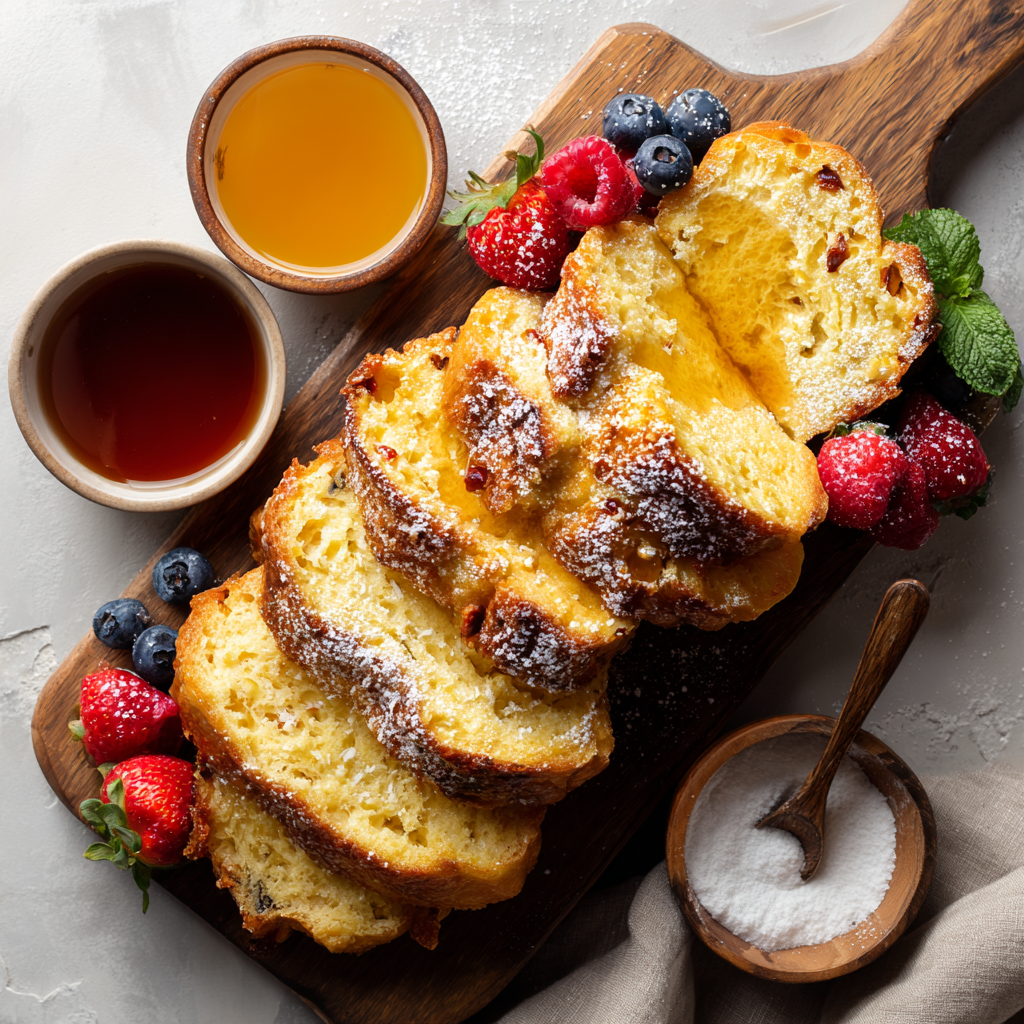
Host with ease: arrange thick slices on a warmed board and offer a small trio of toppings so guests can finish each bite their way. Spoon warmed maple syrup and orange-spiced syrup over a few pieces so they glisten.
Keep a dish of powdered sugar, softened butter, and lightly sweetened whipped cream scented with vanilla. Add fresh fruit—orange segments or grapes—to echo the loaf’s candied peel. For balance, serve scrambled eggs or a crisp fennel-and-orange salad and a side of bacon or sausage.
Slice the panettone into thick slices or triangles for a pretty platter. Reheat leftovers in a warm oven for one to two minutes to restore crispness. Use half a loaf when cooking for two and save the rest for another morning; this recipe stretches into two lovely meals.
Pour coffee, cappuccino, or tea; keep a small cup of orange-spiced syrup for refills. Small touches—maple on the table, butter nearby, and prewarmed plates—make a simple holiday breakfast feel special.
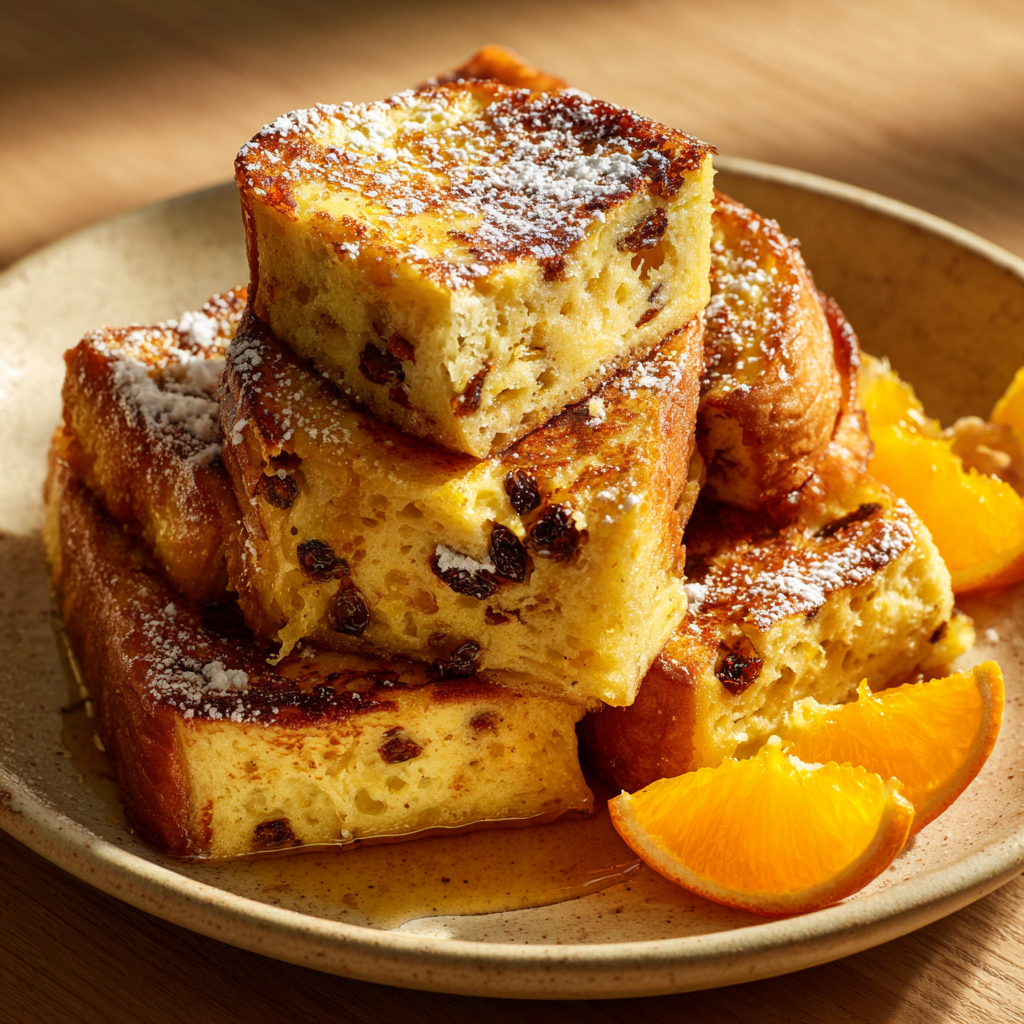
Panettone French Toast
Ingredients
Method
- Cut into ¾–1 inch slices. Halve each slice for easier dipping and flipping.
- In a shallow bowl, whisk eggs, milk (or half-and-half), vanilla, salt, and orange zest until smooth.
- Heat a nonstick skillet over medium heat. Add a small knob of butter. When it foams, the pan is ready.
- Dip each slice briefly—just a few seconds on each side. Let extra custard drip off so the slices don’t get soggy.
- Lay slices in the pan with space between them. Cook about 2 minutes per side until golden brown and crisp on the edges.
- Transfer finished pieces to a baking sheet and keep in a 200°F oven while you cook the rest.
- Add warm maple syrup, powdered sugar, or orange-spiced syrup. Fresh fruit or whipped cream also work well.
Notes
- Thick slices matter. Thin pieces soak too fast and fall apart.
- Let the butter foam—not burn. That’s when you’ll get even browning.
- Don’t overload the custard with sugar. The bread already has plenty of sweetness from fruit and citrus.
- If a slice feels too wet, rest it on a rack for 30 seconds before cooking.
- Leftovers freeze beautifully. Reheat at 400°F to bring back the crisp edges.