
Jump to Recipe
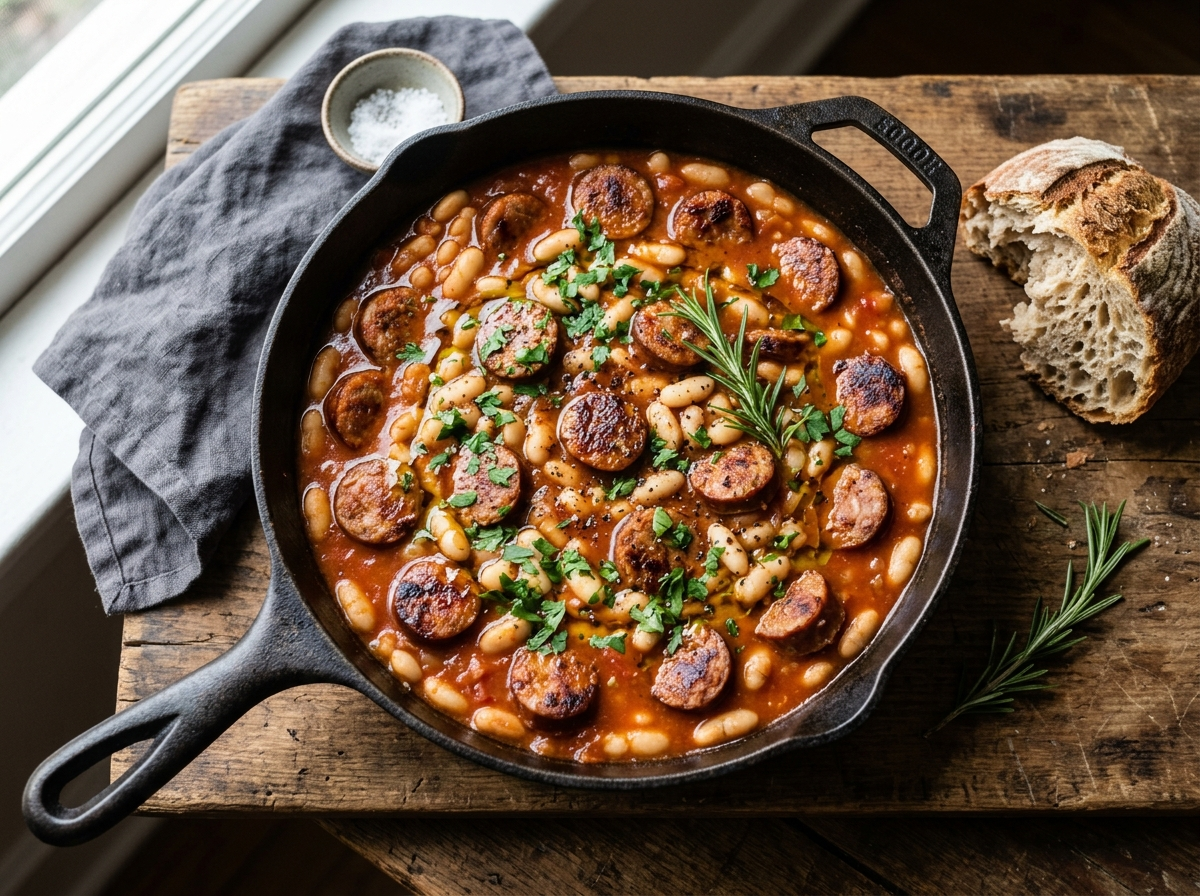
Salsiccia e fagioli is a Tuscan trattoria dish of pork sausage braised with cannellini beans in a light tomato broth. It comes together in one pan in under an hour, which makes it an easy weeknight dinner that still tastes like it simmered all afternoon.
The flavor comes from browning the sausage first, then using that rendered fat to soften onion, garlic and rosemary. The beans go into the same pan and pick up everything left behind.
I use canned cannellini beans because they hold their shape and cut the cooking time down. Dried beans work too if you soak them the night before and simmer them separately until tender.
One thing that trips people up: don’t rush the sausage browning. If the pan isn’t hot enough, the sausage steams instead of searing, and you lose the browned bits that flavor the whole broth.
Why You’ll Love This Recipe
- One pan, about 45 minutes start to finish
- Browned sausage fat flavors the whole broth
- Canned beans mean no overnight soaking
- Tastes even better as next-day leftovers
Ingredient Notes
- Italian sausage: Use fresh pork sausage, mild or spicy, not cured salami. Turkey sausage works if you want a lighter version, though the broth will taste less rich.
- Cannellini beans: Canned beans, drained and rinsed, hold their shape and save time. Borlotti beans are a good swap if you want a nuttier, earthier flavor.
- San Marzano tomatoes: Whole canned tomatoes crushed by hand give a cleaner, less watery sauce than pre-crushed cans. Any good canned plum tomato works in a pinch.
- Rosemary: Fresh rosemary gives a sharper, more resinous flavor. Use half the amount if you’re using dried.
- Chicken stock: Use low-sodium stock so you can control the final seasoning. Water plus a pinch of extra salt works if you don’t have stock on hand.
Salsiccia e Fagioli: Rustic Tuscan Sausage and Beans
Ingredients
Method
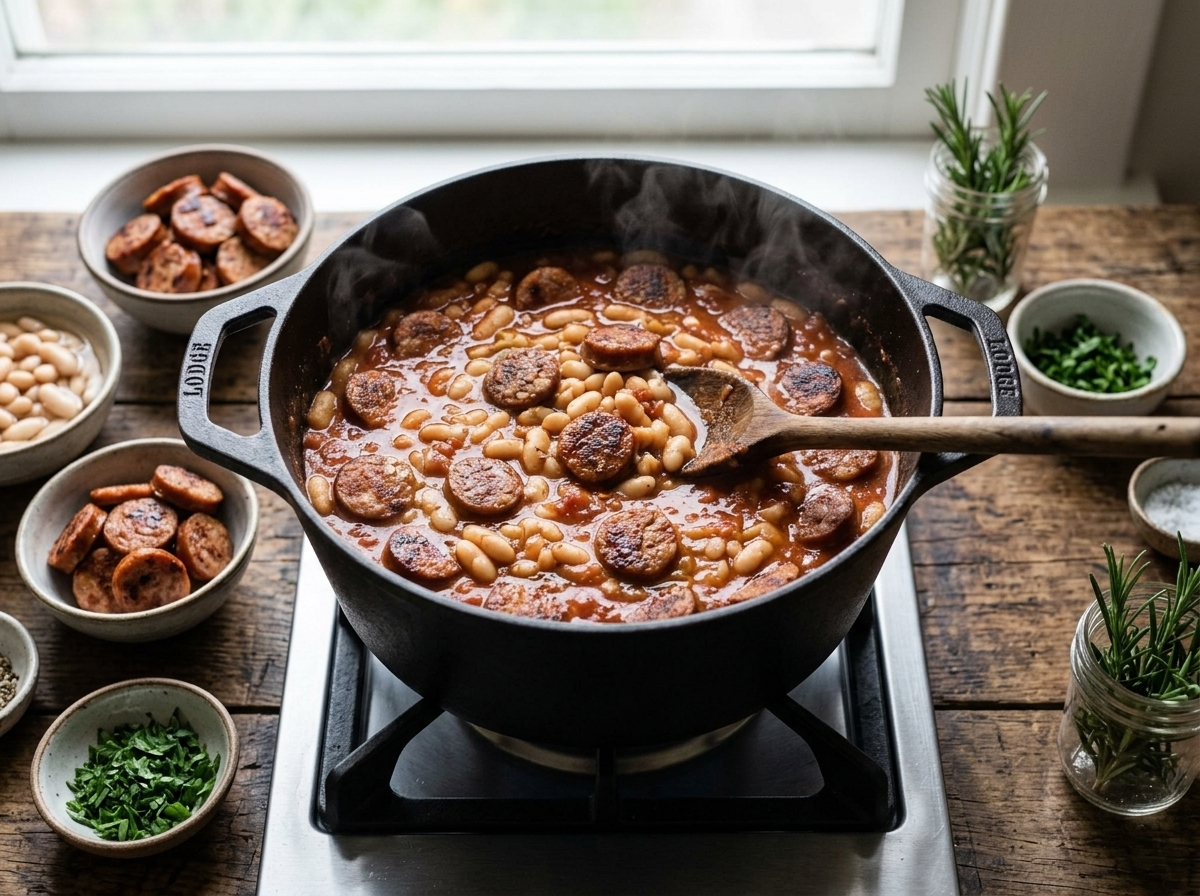
- Heat olive oil in a large skillet or Dutch oven over medium-high heat. Add sausage links or pieces and cook for 5 to 6 minutes, turning occasionally, until browned on most sides. Remove to a plate.
- Lower heat to medium. Add onion to the same pan and cook for 4 to 5 minutes until soft and starting to turn golden, scraping up the browned bits from the bottom.
- Add garlic, red pepper flakes and rosemary. Cook for 30 seconds until fragrant.
- Pour in crushed tomatoes and chicken stock. Stir well and bring to a simmer.
- Slice sausage into rounds if using whole links, then return to the pan along with any juices. Add cannellini beans.
- Reduce heat to low, cover partially, and simmer for 18 to 20 minutes, until sausage reaches 160 F / 71 C internally and the sauce has thickened slightly with beans creamy at the edges.
- Season with salt and pepper to taste. Remove from heat and rest for 5 minutes before serving with parsley and grated Parmesan.
Notes
- Don't skip browning the sausage, it builds the base flavor for the whole dish.
- Use a heavy pan so the onion cooks evenly without scorching.
- Check sausage for doneness at 160 F / 71 C if pieces are thick.
- Let the dish rest 5 minutes off heat before serving so the sauce settles.
Tips for Success
- Brown the sausage in batches if your pan is small, so it sears instead of steaming.
- Scrape up the browned bits after cooking the onion, since that’s where most of the flavor sits.
- Simmer uncovered for the last 5 minutes if the sauce looks thin, to let it reduce.
- Slice whole sausage links into rounds before returning them to the pan for even seasoning.
- Check the sausage with an instant-read thermometer if the pieces are thick, aiming for 160 F / 71 C.
Variations
- Add a handful of chopped kale or escarole in the last 5 minutes for a heartier, greens-forward version.
- Swap half the cannellini beans for borlotti beans for a two-bean version with more color and texture.
- Stir in a splash of dry white wine after browning the sausage for a sharper, brighter background flavor.
Storage and Reheating
Salsiccia e fagioli keeps well in an airtight container in the fridge for up to 4 days. The flavor actually improves overnight as the beans soak up more of the broth.
Reheat gently on the stovetop over medium-low heat, adding a splash of stock or water if the sauce has thickened too much. A few minutes is usually enough to bring it back to a simmer.
To freeze, cool completely and store in a freezer-safe container for up to 3 months. Thaw overnight in the fridge before reheating on the stove, since beans can turn grainy if microwaved straight from frozen.
Serving Suggestions
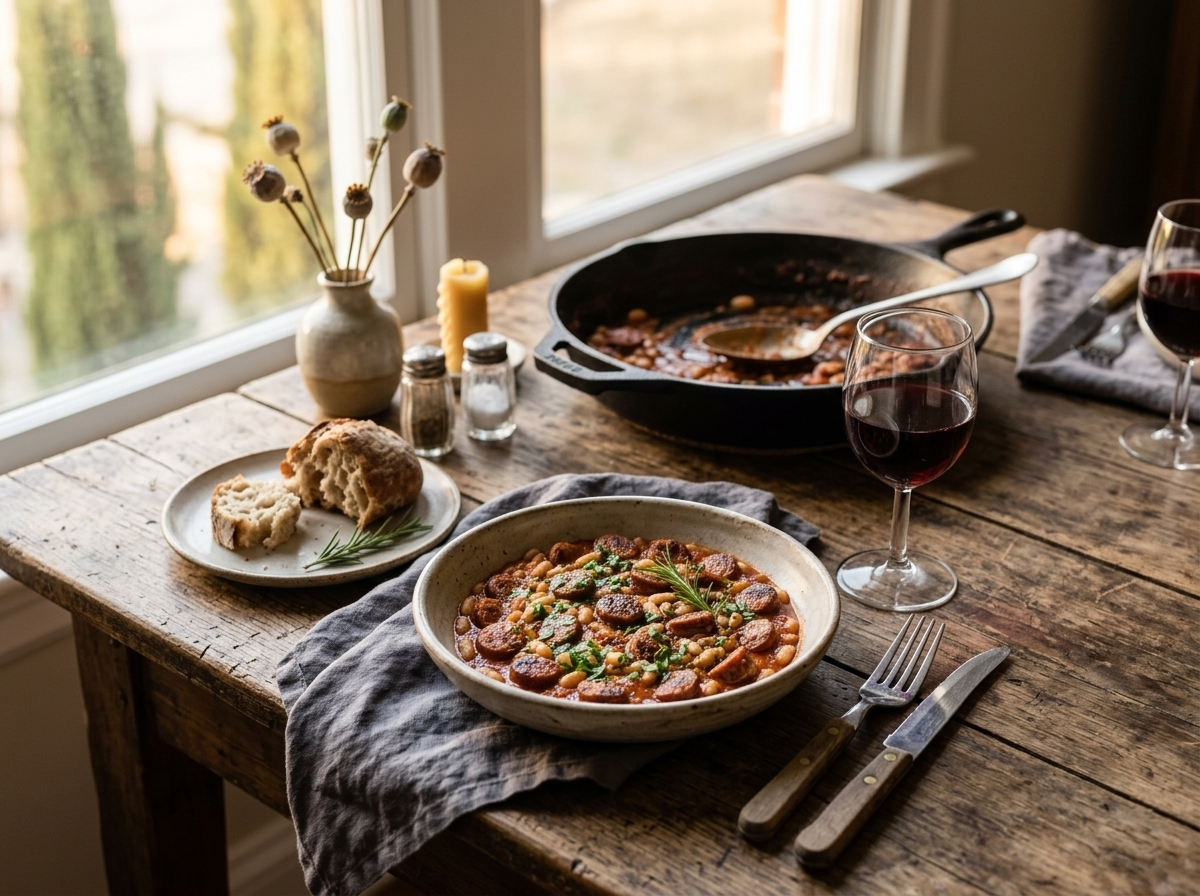
Salsiccia e fagioli is filling enough on its own with a piece of crusty bread to soak up the broth. A drizzle of good olive oil over the top right before serving adds a fresh, peppery note.
For a heartier meal, spoon it over soft polenta or a slice of grilled bread rubbed with garlic. A simple side salad with a sharp vinaigrette cuts through the richness of the sausage.
A glass of Chianti or another medium-bodied Italian red pairs well with the tomato and rosemary here.
FAQ
Why is my salsiccia e fagioli sauce too thin?
It’s usually from too much added liquid or not simmering long enough. Simmer uncovered for the last 5 to 10 minutes so the tomato and stock reduce and coat the beans. Mashing a few beans against the side of the pan also helps thicken the broth naturally.
Can I use dried cannellini beans instead of canned for salsiccia e fagioli?
Yes, but soak them overnight and cook them separately until tender before adding to the pan. Canned beans are already soft and only need to warm through in the sauce, while dried beans need 60 to 90 minutes of simmering on their own first.
Can I freeze salsiccia e fagioli?
Yes, it freezes well for up to 3 months in an airtight container. Cool it fully before freezing, then thaw overnight in the fridge and reheat gently on the stovetop, since beans can turn mealy if reheated straight from frozen in the microwave.
What goes well with salsiccia e fagioli besides bread?
Soft polenta or garlic-rubbed grilled bread both work well for soaking up the broth. A simple green salad with a sharp vinaigrette balances the richness of the sausage, and a glass of Chianti rounds out the meal.
Is salsiccia e fagioli gluten free?
It usually is, since sausage, beans and tomatoes are naturally gluten free, but always check the sausage label for fillers or binders. Some commercial sausages use breadcrumbs, so choose a brand labeled gluten free if that’s a concern.
What’s the difference between salsiccia e fagioli and pasta e fagioli?
Salsiccia e fagioli is built around browned sausage and beans in a thick tomato broth, served as a main dish. Pasta e fagioli adds small pasta and more liquid, making it closer to a soup than a braise.