
Jump to Recipe
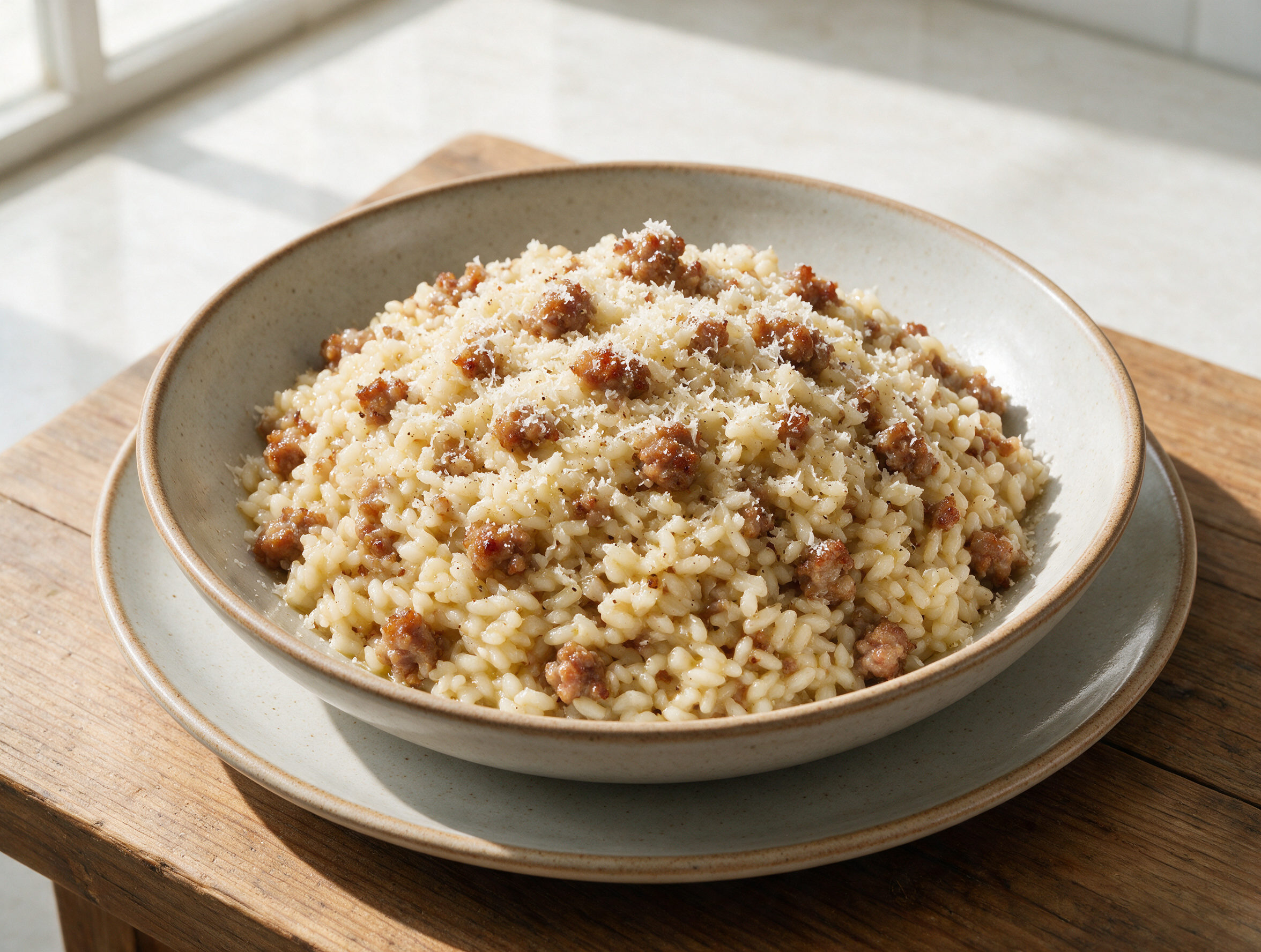
Risotto alla pilota is a rice dish from Mantua where the rice cooks by absorption instead of the usual ladle-and-stir method, then gets tossed with crumbled fresh pork sausage and butter until the grains sit dense and separate rather than creamy.
The name comes from the pilota, the rice mill workers of the Mantua countryside who husked and polished the local rice. This was their everyday meal, built around Vialone Nano rice and whatever sausage was on hand, cooked fast with no fuss.
What sets it apart from a Milanese-style risotto is the cottura. You boil the rice for two minutes, cover the pot, pull it off the heat, wrap it in a towel, and let residual steam finish the job. No standing at the stove with a ladle.
Get the water ratio wrong and the whole dish falls apart. Too much water and you get a gluey mess instead of the dry, grainy texture that makes risotto alla pilota what it is.
Why You’ll Love This Recipe
- No standing over the stove ladling broth for 20 minutes straight
- Just five main ingredients, mostly pantry and butcher-counter basics
- Dense, dry texture is a real change from typical creamy risotto
- Sausage and rice cook almost at the same time, ready in 40 minutes
Ingredient Notes
- Vialone Nano rice: The traditional choice for this dish because its starch holds a firmer, drier bite. Carnaroli works as a substitute but leans creamier.
- Fresh pork sausage: Use plain Italian sausage or salamella mantovana with casings removed. Check the label if you need it gluten-free, since some fillers add breadcrumb.
- Grana Padano: Parmigiano Reggiano works as a straight swap if that’s what you’ve got in the fridge.
- Butter: Don’t skip the second addition at the end, that’s what carries the cheese into every grain without turning creamy.
- Nutmeg: Just a pinch, freshly grated if you have it. It’s a small traditional touch that rounds out the sausage.
Risotto alla Pilota: Mantua’s Dense Sausage Risotto
Ingredients
Method
- In a 4-quart / 3.8L saucepan, bring the water and salt to a rolling boil.
- Stir in the rice, return to a boil, and cook uncovered for 2 minutes.
- Cover tightly and remove from the heat. Wrap the pot in a thick kitchen towel to hold in the heat, and let it stand undisturbed for 12 to 15 minutes, until all the water is absorbed and the rice is tender with a slight bite.
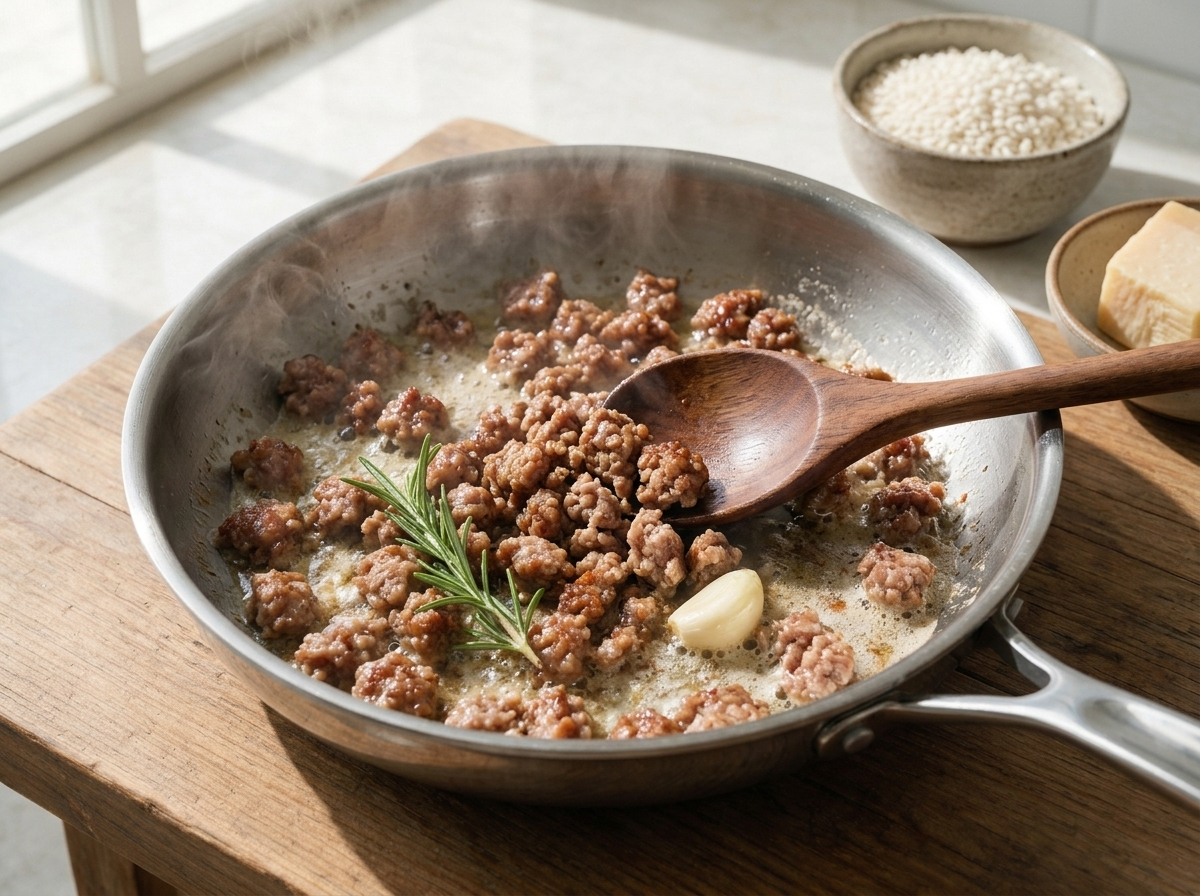
- While the rice rests, melt 40 g of the butter in a 10-inch / 26cm skillet over medium heat. Add the garlic and rosemary and cook 1 minute until fragrant.
- Crumble the sausage meat into the skillet in small, uneven pieces. Cook for 8 to 10 minutes, stirring and breaking it up further, until browned and cooked through to 71 C / 160 F with no pink remaining.
- Discard the garlic clove and rosemary sprig.
- Uncover the rice and fluff with a fork. It should look dry with grains separate and no standing water. If it's still wet, set the pot over low heat uncovered for a minute or two to dry it out.
- Add the remaining 40 g butter, the cooked sausage with its fat, the Grana Padano, nutmeg, and a generous grind of black pepper.
- Stir vigorously for 1 to 2 minutes off the heat until the cheese melts and coats every grain and the rice holds together loosely without turning creamy. This is mantecatura a secco, the dry-style finish.
- Taste and adjust salt and pepper. Serve immediately in warm shallow bowls with extra Grana Padano on top.
Notes
- Wrap the pot tightly, a loose towel lets heat escape and the rice won't finish cooking evenly.
- Crumble the sausage small, big chunks won't distribute through the rice properly.
- Don't skip the second butter addition, it carries the cheese into the grains.
- Serve the moment it's mantecato, the texture changes fast as it cools.
Tips for Success
- Use exactly double the water to rice by volume, this ratio is what makes the absorption method work without guessing.
- Wrap the covered pot in a towel while it rests, trapped heat finishes cooking the rice without scorching the bottom.
- Break the sausage into small, uneven crumbles by hand instead of a spoon for better texture in the finished dish.
- Check the rice at the 12-minute mark and taste one grain, it should have a slight bite left, not be fully soft.
- Stir the final mantecatura off the heat only, direct heat makes the cheese seize instead of melting smoothly into the rice.
Variations
- Swap the pork sausage for Italian fennel sausage for a slightly sweeter, aniseed note through the whole dish.
- Stir a spoon of tomato paste in with the sausage for a rosier color and a touch of acidity.
- Use half pork sausage and half finely chopped pancetta for a smokier, saltier version of the classic.
Storage and Reheating
Risotto alla pilota is best eaten right after the mantecatura, while the rice is still warm and the butter hasn’t set back up. Once it cools, the dense grains firm up and lose the loose, separate texture that defines the dish.
If you want to prep ahead, cook the sausage mixture up to 2 days in advance and keep it covered in the fridge. Cook the rice fresh just before serving, since the absorption method only takes about 15 minutes start to finish.
Leftovers keep in an airtight container in the fridge for 2 days, but the texture won’t bounce back the same way. I’d rather make a smaller fresh batch than reheat this one, since the dry, separate grains are the whole point.
Serving Suggestions
Risotto alla pilota is filling enough to serve as a standalone primo, the traditional Mantuan way, with nothing more than a green salad alongside.
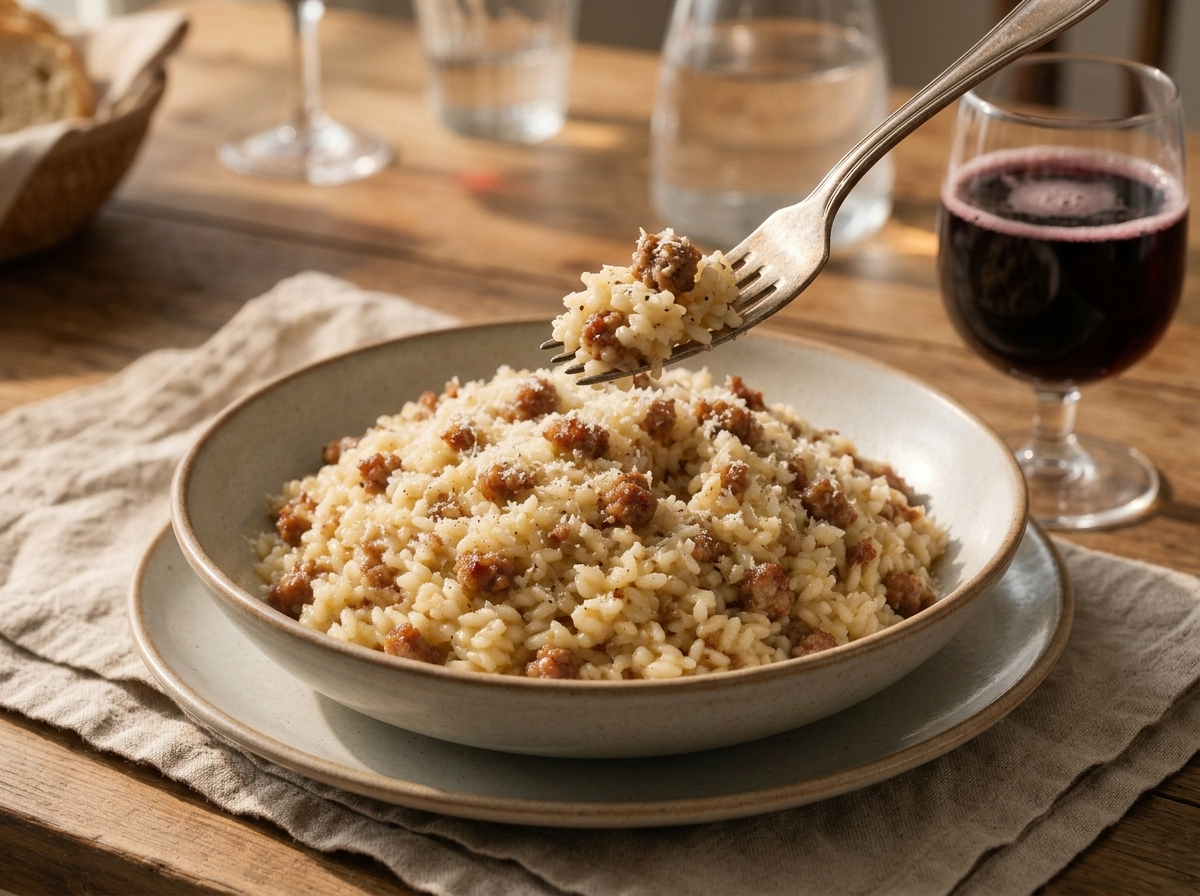
Braised radicchio or a simple dish of sauteed chicory cuts through the butter and sausage nicely if you want a vegetable side. A glass of Lambrusco or a light Bardolino pairs well with the richness.
For a bigger table, follow it with a plate of sliced salame and pickled vegetables before the risotto, in the style of a full Mantuan Sunday lunch.
FAQ
What’s the difference between risotto alla pilota and a regular creamy risotto?
Regular risotto is stirred and ladled with broth over 18 to 20 minutes for a creamy, mantecato finish. Risotto alla pilota cooks by absorption in one go, boiled 2 minutes then rested off heat covered, so the rice stays dense and dry with distinct grains. The sausage and butter get folded in at the end instead of built into the broth.
Can I use Carnaroli rice instead of Vialone Nano for risotto alla pilota?
Yes, Carnaroli rice works, though Vialone Nano is the traditional Mantuan choice for this dish. Vialone Nano’s shorter grain and higher surface starch soak up water fast and hold a firmer, drier bite, which suits the absorption method better than Carnaroli’s naturally creamier tendency.
Why is my risotto alla pilota mushy instead of dry and grainy?
Mushy rice usually means too much water or too long a rest under the towel. Stick to exactly double the water to rice by volume and check at the 12-minute mark. If water pools at the bottom when you fluff it, the ratio was off, and if grains have burst open, it rested too long.
Can I make risotto alla pilota ahead of time?
It’s best fresh, since the grains lose their dry, separate texture once refrigerated and reheated. Cook the sausage a day or two ahead and keep it in the fridge, then cook the rice fresh and toss everything together right before serving, which takes under 20 minutes total.
What goes with risotto alla pilota besides the sausage already in it?
A simple green salad or braised radicchio works well since the dish itself is rich with butter and sausage. Mantuans often serve it as a standalone primo with just a glass of Lambrusco, no side dishes needed at all.
Is risotto alla pilota gluten-free?
Yes, rice, sausage, butter and Grana Padano are naturally gluten-free, but check your sausage’s ingredient label. Some fresh sausages use breadcrumb fillers or seasoning blends that include gluten, so pick a butcher-made or pure meat sausage to be safe.