
Jump to Recipe
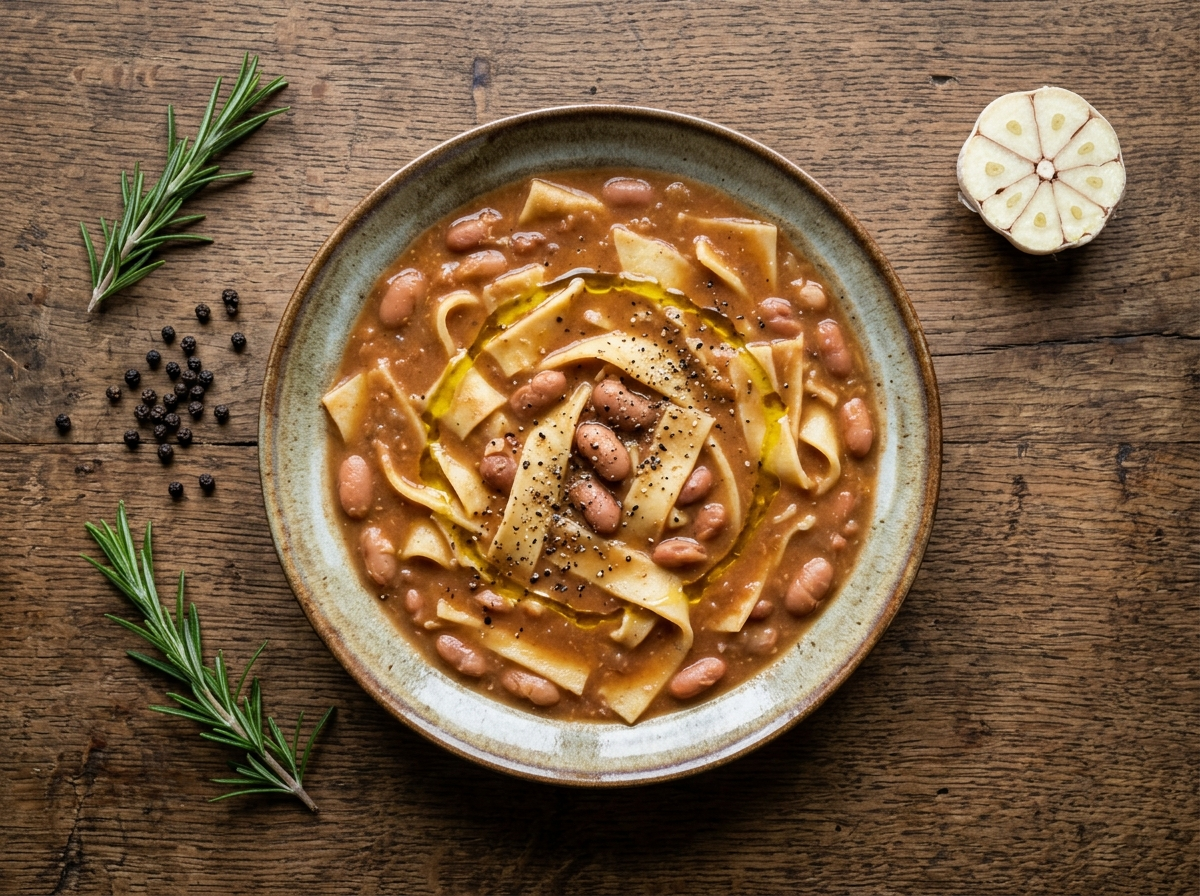
Sagne e fagioli comes from the inland hill towns of Abruzzo, where winter cooking means stretching dried legumes with hand-cut pasta into something filling enough to carry you through a cold afternoon. The name is simple: sagne are the rough, wide pasta strips, and fagioli are the beans.
This is not a refined dish. The pasta breaks and swells into the broth. Some beans get mashed against the side of the pot to thicken the base. The result sits somewhere between a thick soup and a loose stew, not unlike the hearty texture of Trieste’s smoky bean soup.
Borlotti beans are traditional, but cranberry beans or even canned cannellini work fine on a weeknight, much the same way Abruzzo’s egg pasta dishes tolerate practical weeknight adjustments. The real flavor comes from a slow soffritto of onion, garlic, and celery, a spoonful of tomato paste, and a sprig of rosemary added near the end.
I make this on a Sunday and eat it for three days. It thickens overnight and tastes better the next morning reheated with a splash of water and a thread of olive oil.
Why You’ll Love This Recipe
- One pot, minimal cleanup, deeply satisfying result
- Dried or canned beans both work without sacrificing flavor
- Thickens overnight and tastes better reheated next day
- Budget-friendly, plant-based, and naturally dairy-free
Ingredient Notes
- Sagne pasta: These are rough, flat pasta strips about 2-3 cm wide. If you can’t find sagne, use maltagliati, broken lasagna sheets, or pappardelle snapped into short pieces. Fresh pasta will cook faster than dried.
- Borlotti beans: Dried borlotti beans give the creamiest result after soaking overnight. Canned borlotti or cannellini beans are a practical swap – drain and rinse, then add them 20 minutes into cooking instead of the start.
- Tomato paste: A single tablespoon deepens the broth without making it taste like tomato soup. In summer, one ripe peeled tomato chopped fine works in its place.
- Rosemary: One fresh sprig added in the last 15 minutes is enough. Dried rosemary can be used but use half the quantity, and add it with the soffritto so it has time to soften.
- Guanciale or pancetta (optional): Traditionally this soup is meatless, but a small amount of diced guanciale or smoked pancetta rendered at the start of the soffritto adds a savory, smoky depth. Omit entirely to keep it vegan.
- Extra virgin olive oil: Use a good-quality Abruzzese or central Italian olive oil if you have it. The finishing drizzle at serving is not optional – it ties the whole bowl together.
Sagne e Fagioli (Abruzzo Pasta and Bean Soup)
Ingredients
Method
- Heat 3 tbsp olive oil in a large heavy pot over medium heat. If using guanciale or pancetta, add it now and cook for 3-4 minutes, stirring, until the fat has rendered and the edges are lightly golden.
- Add the diced onion and celery. Cook over medium-low heat for 8-10 minutes, stirring occasionally, until soft and pale gold but not browned.
- Add the sliced garlic and chili flakes (if using). Cook for 1-2 minutes until fragrant.
- Stir in the tomato paste and cook for 2 minutes, pressing it around the pot until it darkens slightly and smells sweet.
- Add the drained soaked beans (or canned beans), warm broth, 400 ml water, the rosemary sprig, and the bay leaf. Stir to combine.
- Bring to a gentle boil, then reduce heat to a steady simmer. Cook uncovered for 40-50 minutes for soaked dried beans (or 20 minutes for canned), until the beans are completely tender and the broth has thickened slightly. Add extra water if the level drops too low.
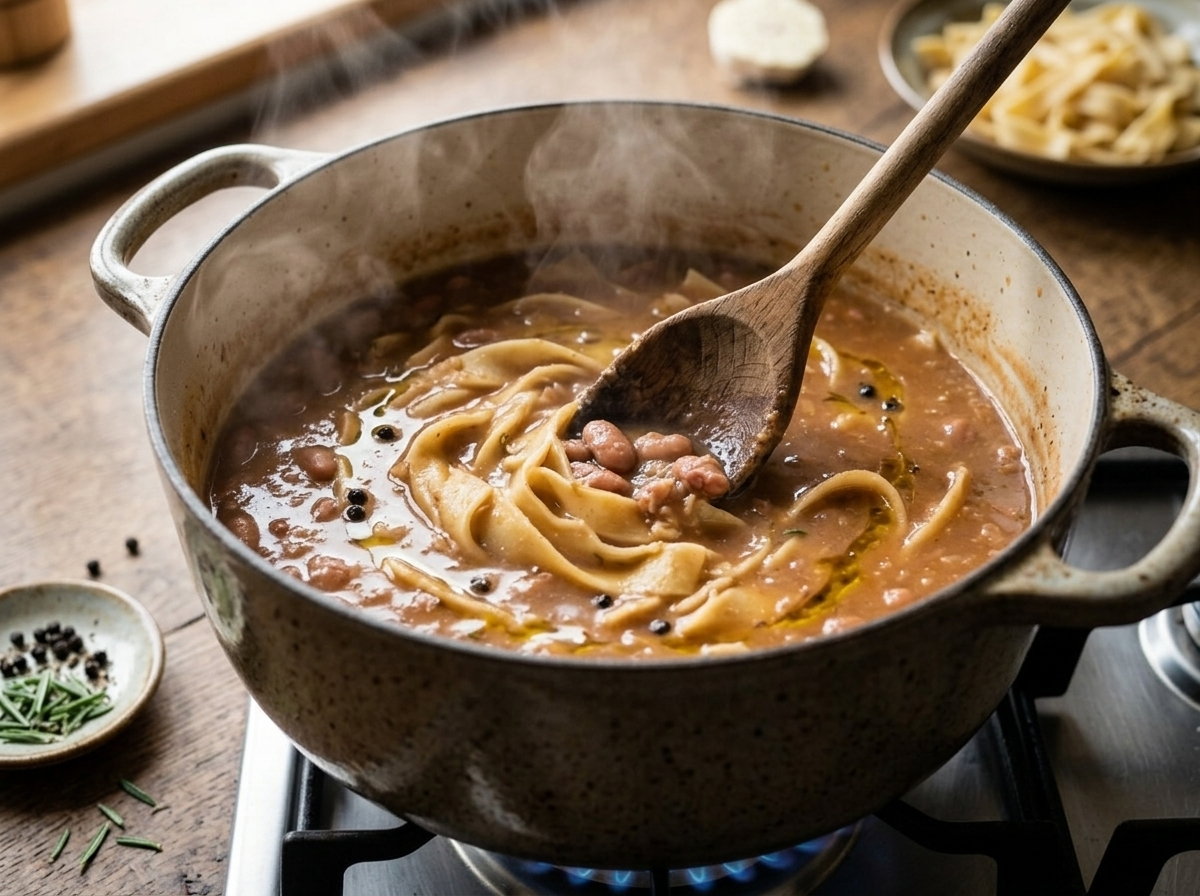
- Remove the rosemary sprig and bay leaf. Using a wooden spoon or a fork, roughly mash about one quarter of the beans against the side of the pot to create a naturally thick, creamy base. Season with 1 tsp salt and taste - adjust as needed.
- Bring the broth to a gentle simmer (not a rolling boil). Add the sagne pasta and stir immediately to prevent sticking.
- Cook for the time indicated on the pasta package minus 1 minute, stirring every couple of minutes. The pasta should be just tender but still hold its shape - it will continue cooking as the soup rests.
- Check consistency: the soup should be thick enough to coat a spoon. Add hot water in small amounts if it has thickened too much before the pasta is done.
- Remove the pot from the heat. Add a generous grind of black pepper and stir once.
- Let the soup rest off the heat for 5 minutes so the pasta absorbs the last of the broth and the flavors settle.
- Ladle into deep bowls and finish each portion with a drizzle of raw extra virgin olive oil. Serve with toasted bread if you like.
Notes
Tips for Success
- Mash roughly one quarter of the beans against the pot wall before adding pasta to naturally thicken the broth.
- Add the pasta to simmering, not boiling, broth so the strips cook slowly and absorb flavor rather than turning gummy.
- Season the broth in stages – once after the soffritto and again just before serving, when the salt level is easier to judge.
- Keep a cup of hot water nearby and add it in small amounts if the soup thickens too fast before the pasta is cooked through.
- Rest the finished soup off the heat for 5 minutes before serving so the pasta finishes absorbing broth and the flavors settle.
Variations
- Add a Parmesan rind to the simmering broth for extra savory depth, remove before serving.
- Stir in a teaspoon of Calabrian chili paste with the soffritto for a spicier southern-Italian version.
- Use chickpeas instead of borlotti beans and add a pinch of smoked paprika for a different but equally satisfying result.
Storage and Reheating
Store cooled sagne e fagioli in an airtight container in the fridge for up to 3 days. The pasta will absorb most of the broth as it sits, which is normal.
To reheat, add 4-6 tablespoons of water per portion, stir well, and warm over medium-low heat until it reaches a loose, spoonable consistency again. Do not boil hard or the pasta will break down completely.
This soup freezes reasonably well for up to 2 months, but freeze it before adding the pasta if possible. Reheat the bean base from frozen, bring to a simmer, then cook fresh pasta directly in the reheated broth.
Serving Suggestions
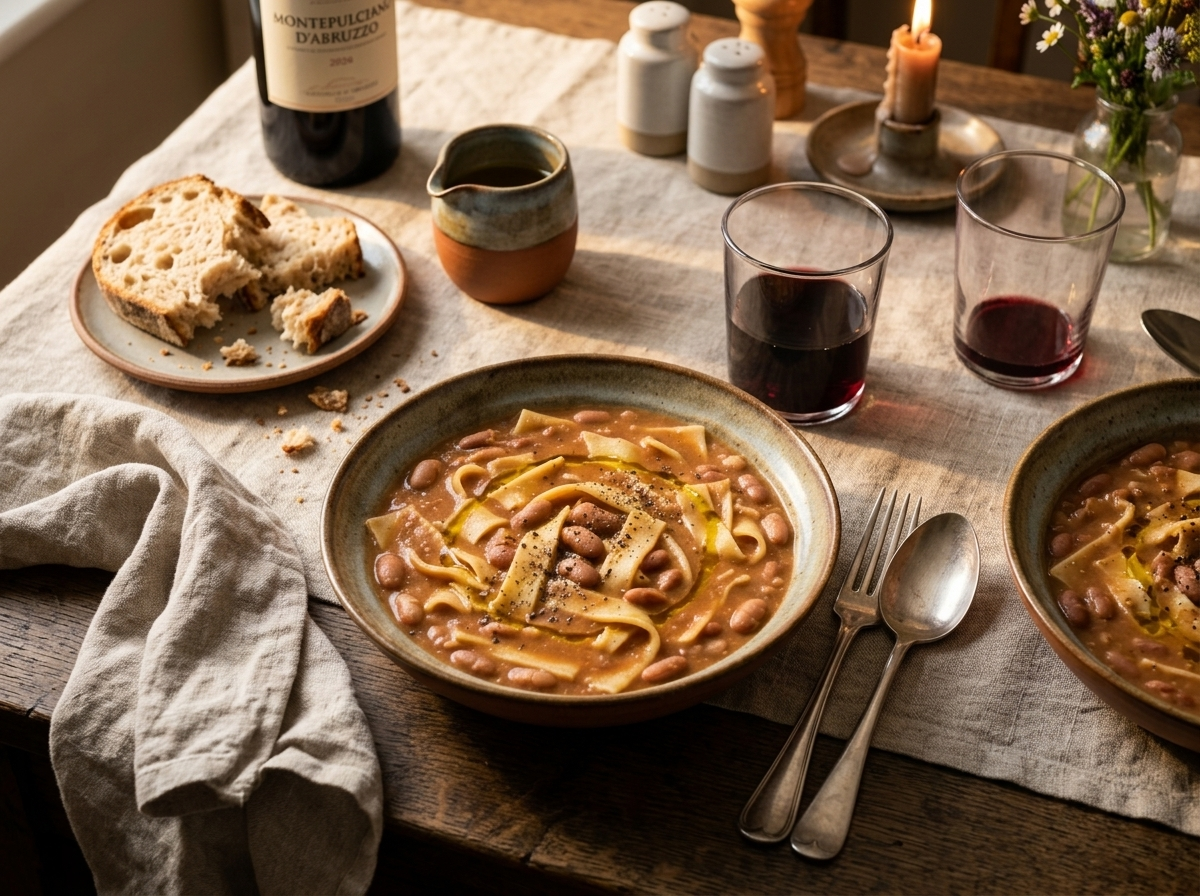
Serve sagne e fagioli in deep bowls with a generous drizzle of raw extra virgin olive oil and a crack of black pepper. A slice of grilled bread rubbed with garlic alongside is the standard Abruzzese approach.
In Abruzzo this dish is a primo, meaning it comes before a simple meat or vegetable second course. As a standalone weeknight meal, a sharp green salad dressed with lemon and oil is enough to round it out.
A glass of Montepulciano d’Abruzzo works well here – the wine’s earthy tannins sit comfortably against the creamy beans and the olive oil finish.
FAQ
Why is my sagne e fagioli too thick and almost paste-like?
The pasta has absorbed too much liquid during cooking or resting. Stir in hot water, a few tablespoons at a time, over low heat until you reach a loose, spoonable consistency. This is normal behavior for this type of soup – it thickens significantly as it sits.
Can I use canned borlotti beans instead of dried ones in sagne e fagioli?
Yes, two 400 g cans of drained borlotti beans work well. Add them after the soffritto is done rather than at the start, and reduce the simmering time to about 20 minutes before adding the pasta.
Can I make sagne e fagioli the day before and reheat it for guests?
It’s actually better the next day once the flavors have had time to develop. Reheat it gently with a splash of water and finish with fresh olive oil just before serving so it doesn’t taste flat.
What type of pasta is best if I can’t find sagne?
Broken lasagna sheets are the closest substitute in terms of width and texture. Maltagliati or thick pappardelle cut into short pieces also work well and hold up to the dense broth without going mushy.
Is sagne e fagioli gluten-free?
The traditional recipe is not, since sagne pasta is made from wheat flour. To make it gluten-free, use a corn-and-rice pasta in a similar wide, flat shape, and check that your tomato paste and broth contain no added wheat.
What is the difference between sagne e fagioli and pasta e fagioli?
Italian pasta and bean soups like pasta e fagioli are a broader category found across Italy, often made with small tubular pasta like ditalini. Sagne e fagioli is specific to Abruzzo and uses wide, hand-cut or broken pasta strips called sagne, giving the dish a chunkier, more rustic texture.