
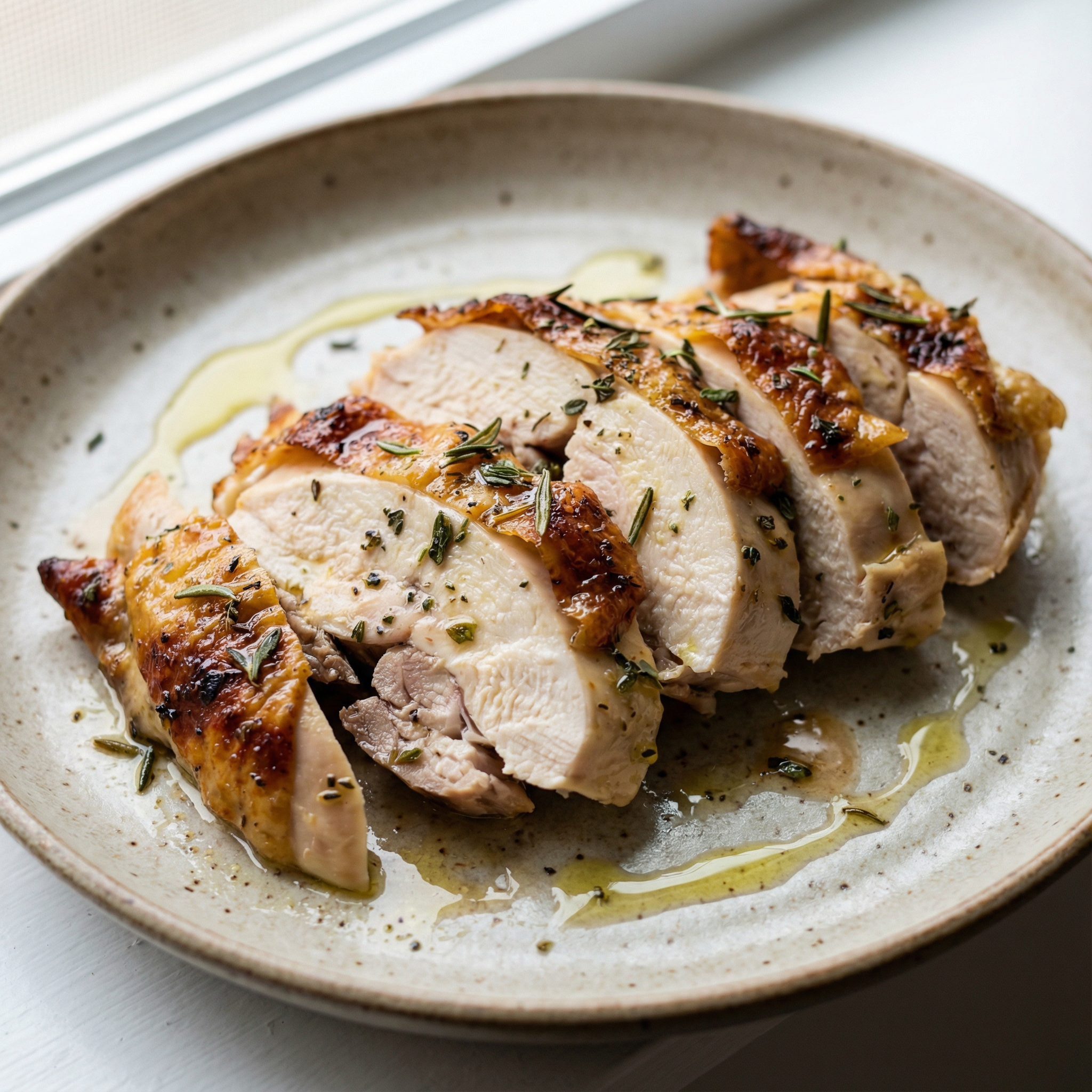
Jump to Recipe
I remember the first time the whole house smelled like Sunday: warm citrus, toasted skin, and a quick pop of garlic in olive oil. I like to bring that calm to any weeknight, using simple salt and fresh herbs to coax deep, honest flavor from one pan and a modest oven time.
I keep technique plain and steady—pat dry, bring to room temperature, roast hot for about 70–90 minutes and rest 15—so the meat stays juicy and the skin breaks to crunchy shards. No fuss, just the kind of cooking that makes the kitchen feel like home and the table feel ready for company.
Key Takeaways
- This recipe balances easy technique and big, rustic flavor.
- Dry the skin and use a roomy pan for crisp results and less oven smoke.
- Roast at 425°F for 70–90 minutes; check 165°F in the thigh and rest 15 minutes.
- Season simply with olive oil, salt, and herbs so the meat stays succulent.
- Store leftovers refrigerated 4–5 days or freeze carved pieces up to 3 months.
The Italian-style roast chicken you’ll actually make on a weeknight
I want you to walk in, pop the bird in the oven, and relax while dinner happens. I remove guesswork by giving clear cues for time, temperature, and simple steps you can trust after a long day.
For a 4–5 lb bird roast at 425°F for 70–90 minutes; check at 70 minutes since ovens vary. If the skin browns too fast, tent with foil for the last 10 minutes. Rest the meat 15 minutes before carving so juices stay put.
This method favors crisp skin and reliable internal doneness without extra fat or fuss. Use a roomy pan and the middle rack so heat circulates evenly. If you need a faster weeknight dish, swap a whole bird for thighs or drumsticks and cut the minutes down.
- Rack: center. Temperature: 425°F. Check at 70 minutes.
- Tent if dark, rest 15 minutes, carve and serve.
- Small tweaks—dry skin, roomy pan—make a big flavor difference.
| Portion | Oven Temp | Approx Minutes |
|---|---|---|
| Whole 3–4 lb | 425°F | 60–75 minutes |
| Whole 4–5 lb | 425°F | 70–90 minutes |
| Thighs / Drumsticks | 425°F | 35–45 minutes |
Ingredients that deliver big flavor with minimal effort
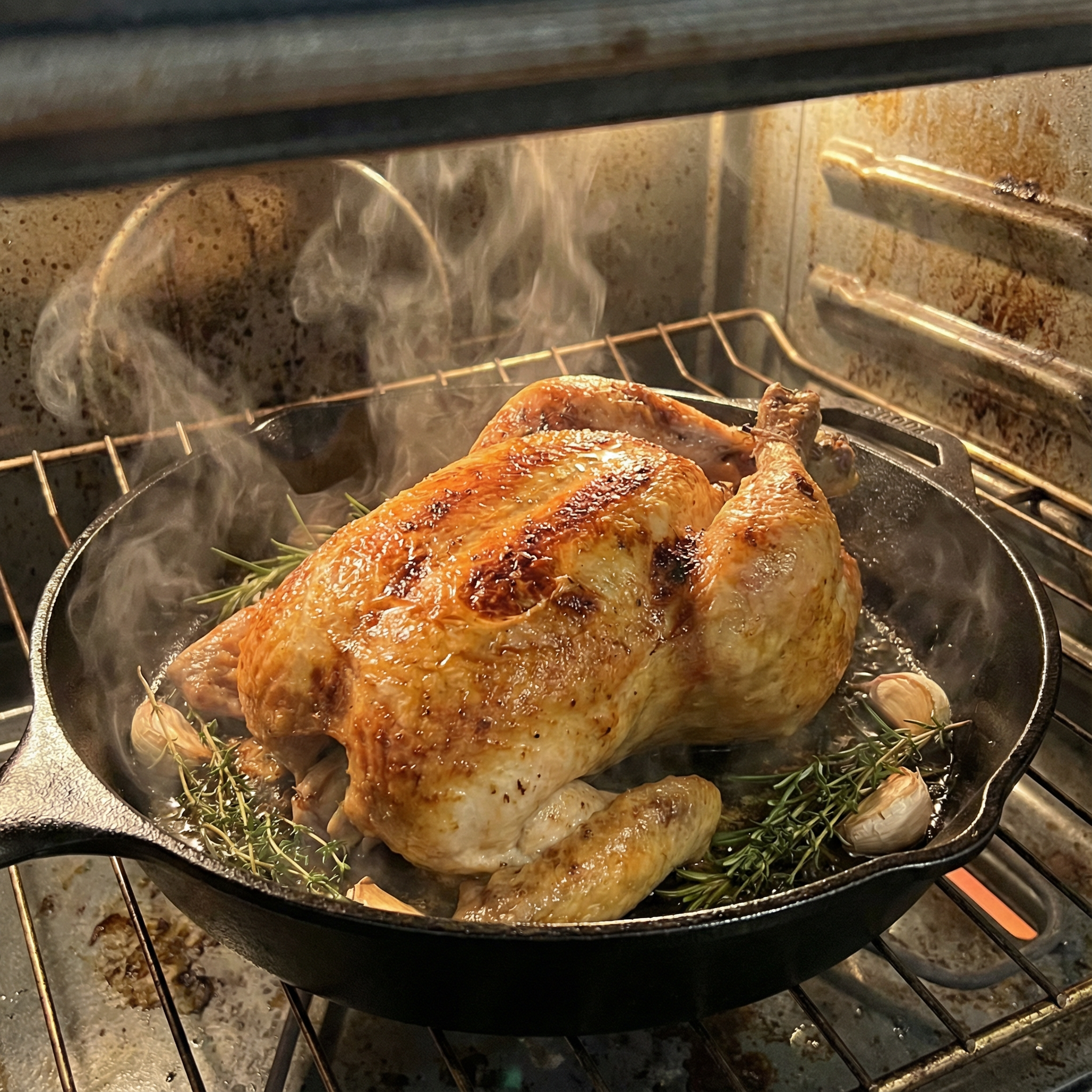
A few smart ingredients turn simple prep into deep, honest flavor. I start by choosing an air-chilled whole chicken around 4–5 pounds. That size gives predictable oven time—about 70–90 minutes at 425°F—and keeps the breast from drying out.
Whole bird and cuts: what to buy
For speed, pick bone-in, skin-on pieces; thighs and drumsticks forgive a missed minute or two. Smaller breast pieces cook faster—about 40 minutes at 350°F—so begin temperature checks early.
The herb core and seasoning
- Classic mix: rosemary, thyme, sage, oregano, plus garlic, kosher salt, and black pepper.
- I rub extra-virgin olive oil under and over the skin to help herbs stick and skin crisp.
- Generous seasoning outside pays off—season boldly for deep flavor.
Smart swaps and bright options
If you’re short on sprigs, use a quality Italian seasoning blend and add a teaspoon of extra garlic. Marjoram makes a sweeter stand-in for oregano. For brightness, tuck lemon slices in the cavity or scatter a handful of olives in the pan.
| Cut | Oven Temp | Approx Time |
|---|---|---|
| Whole 4–5 lb | 425°F | 70–90 min |
| Breast pieces (smaller) | 350°F | ≈40 min |
| Thighs / Drumsticks | 425°F | 35–45 min |
Gear that makes crispy skin and juicy meat easier
Good gear makes the difference between tired results and a golden, confident meal. I keep my kit simple: a heavy pan, a reliable thermometer, and a few small helpers that save time and stress.
Cast iron vs roasting pan vs sheet pan
I reach for cast iron because it holds heat and helps the skin brown beautifully while the drippings flavor vegetables. A roomy roasting pan gives space to breathe and makes carving less cramped for larger birds. A sturdy sheet pan works for spatchcocked or cut-up pieces; add parchment for easy cleanup and tidy vegetables.
| Tool | Best for | Notes |
|---|---|---|
| Cast iron | Browning, one-pan dinners | Great heat retention; holds vegetables and juices |
| Roasting pan | Whole birds | Roomy, catches splatter, helps with pan sauces |
| Sheet pan | Spatchcock or pieces | Fast cleanup; use parchment for veg release |
Thermometer, twine, parchment, and small tools that matter
An instant-read thermometer is non-negotiable. It takes seconds to confirm 165°F at the thigh and stops overcooking. Kitchen twine is optional; tying legs evens cooking, but you can skip it and check doneness a bit earlier.
- Choose a pan large enough to keep juices off the oven floor; that prevents smoke and flare-ups.
- Parchment is for vegetables, not the skin—direct metal contact helps better browning on the bird.
- Keep a thin metal spatula handy to lift and nudge pieces for even caramelization.
Invest once in solid iron cookware and a precise thermometer. They improve every dish and make the whole process more joyful and dependable.
Step-by-step: golden, crispy-skinned roasted chicken in the oven
Start by warming the bird briefly at room temperature. A few extra minutes out of the fridge helps it cook evenly and keeps the breast juicy while the thighs finish.
Prep like a pro
Pat the skin completely dry. Use paper towels and press gently so the surface is matte, not damp.
Slide your fingers under the skin over the breast and tuck in minced garlic, a little salt, and torn oregano leaves. This layers flavor right where it counts.
Seasoning and oiling
Rub a thin sheen of olive oil all over, including the underside. Season generously with salt and pepper.
Season the cavity too; add lemon or a rosemary sprig if you like brighter aroma.
Roast and monitor
- Set the oven rack in the lower third and preheat to 425°F. Use a rack so air circulates around the bird.
- Roast at 425°F. Basting is optional; the rendered fat self-bastes as it cooks.
- Check around 70 minutes. Insert a thermometer into the thickest part of the thigh (avoid bone). Look for 165°F and clear juices.
- If the skin darkens too fast, tent loosely with foil for the final minutes.
Rest and carve
Let the roasted chicken rest 15 minutes before carving. This lets the juices settle and makes slicing easy.
| Rack position | Temp | Check time |
|---|---|---|
| Lower third | 425°F | Start at 70 minutes |
| Use a rack | Consistent heat | Thermometer in thigh |
| Tent if dark | Final minutes | Rest 15 minutes |
roast chicken with herbs italian style for chicken pieces
Breaking the bird into parts lets me control timing and keep every piece juicy and golden. Pieces cook faster and demand a little less babysitting than a whole bird.
For thighs and drumsticks I use 350°F and baste 3–4 times. That gentler temperature keeps meat tender while the skin crisps near the end.
Thighs and drumsticks: juicy results at 350°F with basting
Lay thighs in a single layer on a preheated pan. Rub each piece with olive oil, salt, pepper, and torn rosemary or thyme under the skin.
Baste every 12–15 minutes and pull when an instant-read reads 165°F. Finish under the broiler 2–3 minutes if you want extra crackle.
Chicken breast pieces: how to avoid dryness
Small breast pieces bake at 350°F for about 40 minutes; start checking early. Thin or pound boneless breast to even thickness and brush with oil to protect the lean meat.
Remove the moment the thermometer hits 165°F and let rest a few minutes so juices redistribute.
Finish under the broiler for extra-crisp skin
Broil 2–3 minutes, watching closely. This quick blast browns skin without overcooking the interior.
- Give vegetables their own pan so they roast, not steam.
- Choose a good olive oil — its flavor matters.
- Always trust temperature over minutes; pieces vary.
| Piece | Oven Temp | Approx Minutes | Notes |
|---|---|---|---|
| Thighs / Drumsticks | 350°F | 35–45 minutes | Baste 3–4 times; finish under broiler 2–3 min |
| Small breast pieces (boneless) | 350°F | ~40 minutes | Check early; pull at 165°F; brush with oil |
| Vegetables (separate pan) | 350°F | 30–45 minutes | Toss in herb-oil; roast uncovered for crisping |
Time and temperature guide you can trust
A reliable clock and a good thermometer calm the whole process. I give clear ranges and simple cues so you can trust the results every time.
Whole birds at 425°F: typical times
For a 3‑pound bird, start checking at 55–60 minutes. A 4‑pound bird usually needs 70–80 minutes; 5 pounds often takes 80–90 minutes.
Target 165°F in the thigh and remember a little carryover heat during the 15‑minute rest. Use the thermometer in the thickest spot without touching bone.
Pieces at 350°F: breast, thighs, and mixed pans
Small breast pieces often take about 40 minutes; thighs can take longer based on thickness. If you cook mixed parts on one pan, plan to remove items in stages for even doneness.
Troubleshooting doneness and oven quirks
- If your oven runs hot, check earlier and drop the rack one level.
- Rotate the pan halfway to avoid hot spots and uneven browning.
- When skin is done but the meat is shy of 165°F, tent lightly to stop further color change while the interior rises.
- If juices look pink, add a few more minutes and recheck; time is a guide, temperature is the truth.
| Weight | Oven | Approx minutes |
|---|---|---|
| 3 lb | 425°F | 55–60 |
| 4 lb | 425°F | 70–80 |
| 5 lb | 425°F | 80–90 |
Pro tips from the test kitchen for Italian herb perfection
A small, patient tweak in advance makes the biggest difference at the table. These are the practical habits I use to boost flavor and keep the process calm.
Dry brine up to three days
I salt lightly and let the bird rest, loosely covered, for up to three days. This dry brine seasons deeply, improves texture, and helps the skin crisp.
Slip herbs under the skin
Gently separate skin and slide in torn sage, rosemary, or thyme so their aromatics melt into the meat. That keeps the top bright and the interior nuanced.
To truss or not to truss
Tying legs makes a tidy, even cook. Skip it for quicker browning—but check earlier, since an open cavity speeds things up.
Prevent smoke and manage fat
Pat skin bone-dry and use a roomy pan so rendered fat stays off the oven floor. Some days I skip oil; other days I rub a light sheen of olive oil to help the herb bits stick.
- Salt early: up to 3 days makes a better result.
- Fresh-cracked pepper at the last minute keeps aroma bright.
- Rest patiently after cooking; the dish rewards you.
| Tip | When to use | Why it helps |
|---|---|---|
| Dry brine | 1–3 days | Deeper seasoning, crisper skin |
| Loosen skin | Before seasoning | Herb aroma inside the meat |
| Large pan | Every roast | Less smoke, cleaner oven |
Flavor boosters the Italian way
I reach for bright citrus and briny olives when I want the flavors to pop.
Toss a handful of Castelvetrano or oil‑cured black olives around the pan. They give a savory, salty note that pairs perfectly with garlic and torn herbs.
Zest a lemon into your herb rub and tuck a few slices in the cavity. Drizzle a whisper of oil over the skin so the citrus lifts the whole dish as it cooks.
- Stir a pinch of ground fennel into oregano and rosemary for a porchetta-like aroma.
- Scatter cherry tomatoes on a sheet pan to create a caramelized, saucy bed you can spoon over the chicken.
- Add smashed garlic cloves to the pan; they mellow and sweeten the drippings.
- Use a store-bought herb blend if needed, but finish with fresh thyme or rosemary in the last minutes.
Fold chopped olives and herbs into a quick gremolata of lemon zest to sprinkle just before serving. Or whisk pan drippings with a splash of olive brine and a squeeze of lemon for a glossy spooning sauce.
| Add-in | When to add | Effect on flavor | Serving tip |
|---|---|---|---|
| Castelvetrano olives | Scatter at start | Bright, buttery salt | Spoon over pieces when serving |
| Lemon zest & slices | Rub and cavity | Citrus perfume, lifts fat | Finish with extra zest |
| Smashed garlic | Place in pan | Sweet, mellow depth | Use juices for a quick sauce |
| Fennel + oregano + rosemary | Under skin or rub | Porky, aromatic note | Pair with fresh thyme at the end |
Taste as you go and balance salt, acid, and herbaceous notes. That honest, bold approach keeps the result true to tradition and utterly satisfying at the table.
What to serve alongside: vegetables, salads, and simple sides
A handful of easy vegetables turns this dinner into a complete, homey spread. Keep sides simple so the main stays the star, but pick flavors that echo the pan drippings and bright lemon notes.
Roasted potatoes, carrots, and sheet-pan veg
Toss potatoes and carrots in part of your herb-oil mix, add garlic, salt, and a splash of olive oil. Roast uncovered on a separate pan for 45–60 minutes, spread out for crisp edges.
For crisper results, raise the oven to 400–425°F for the final 10–15 minutes. Keep pieces a uniform size so they finish together.
Bright salads and protein bowls
Serve a lemony kale salad or a simple chopped salad to cut richness. Both bring acidity and crunch that balance the plate.
Leftovers turn into easy protein bowls: sliced chicken, roasted potatoes, bitter greens, and a drizzle of pan juices make a relaxed, special dinner.
- Deglaze the pan with lemon and a splash of water for an instant sauce.
- Finish vegetables with a teaspoon of olive oil and a pinch of herbs before serving.
- If you want extra crisp, crank heat for vegetables only while the bird rests.
| Side | Prep | Oven Temp | Time |
|---|---|---|---|
| Potatoes & carrots | Toss in herb-oil, garlic, salt | 400–425°F | 45–60 min (spread out) |
| Brussels sprouts / squash | Toss in oil, halve dense veg | 400°F | 30–45 min (adjust for size) |
| Lemony kale salad | Toss kale, lemon, olive oil | Cold | Serve immediately |
Food safety and storing leftovers without losing quality
Safe handling makes leftovers just as lovely as the first serving. A few clear habits keep flavors bright and protect your family. I walk you through the simple steps I use at home.
Don’t rinse raw poultry
Never rinse raw chicken; splashes spread bacteria across your sink and counters. Proper cooking temperature is what kills pathogens, so focus on cooking, not rinsing.
Cool and store
Cool leftovers quickly, then transfer to airtight containers. Store in the fridge for 4-5 days so quality and safety stay high.
Freeze smart
For longer life, carve into pieces and freeze up to 3 months. Smaller portions thaw evenly and get you back to dinner faster.
Reheating tips
- Reheat on a pan in a 350°F oven for about 10–15 minutes until warmed through; finish briefly under the broiler to re-crisp the skin.
- Keep any sauce separate until the last minute so the exterior stays crisp.
- Use pan juices sparingly to moisten slices—just enough to add shine without sogging the exterior.
- Label containers with dates and never let cooked food sit out more than two hours.
| Action | Guideline | Why it matters |
|---|---|---|
| Do not rinse | Never rinse raw chicken | Prevents cross-contamination |
| Refrigerate | Airtight, 4–5 days | Keeps quality and safety |
| Freeze | Carve pieces, up to 3 months | Easier thawing and reheating |
| Reheat | 350°F oven, 10–15 minutes | Safe and keeps juices |
Keep raw and cooked foods separate and sanitize surfaces. A little care at the end of service turns one pan into several reliable meals.
Nutrition, protein, and fitting this dish into family dinners
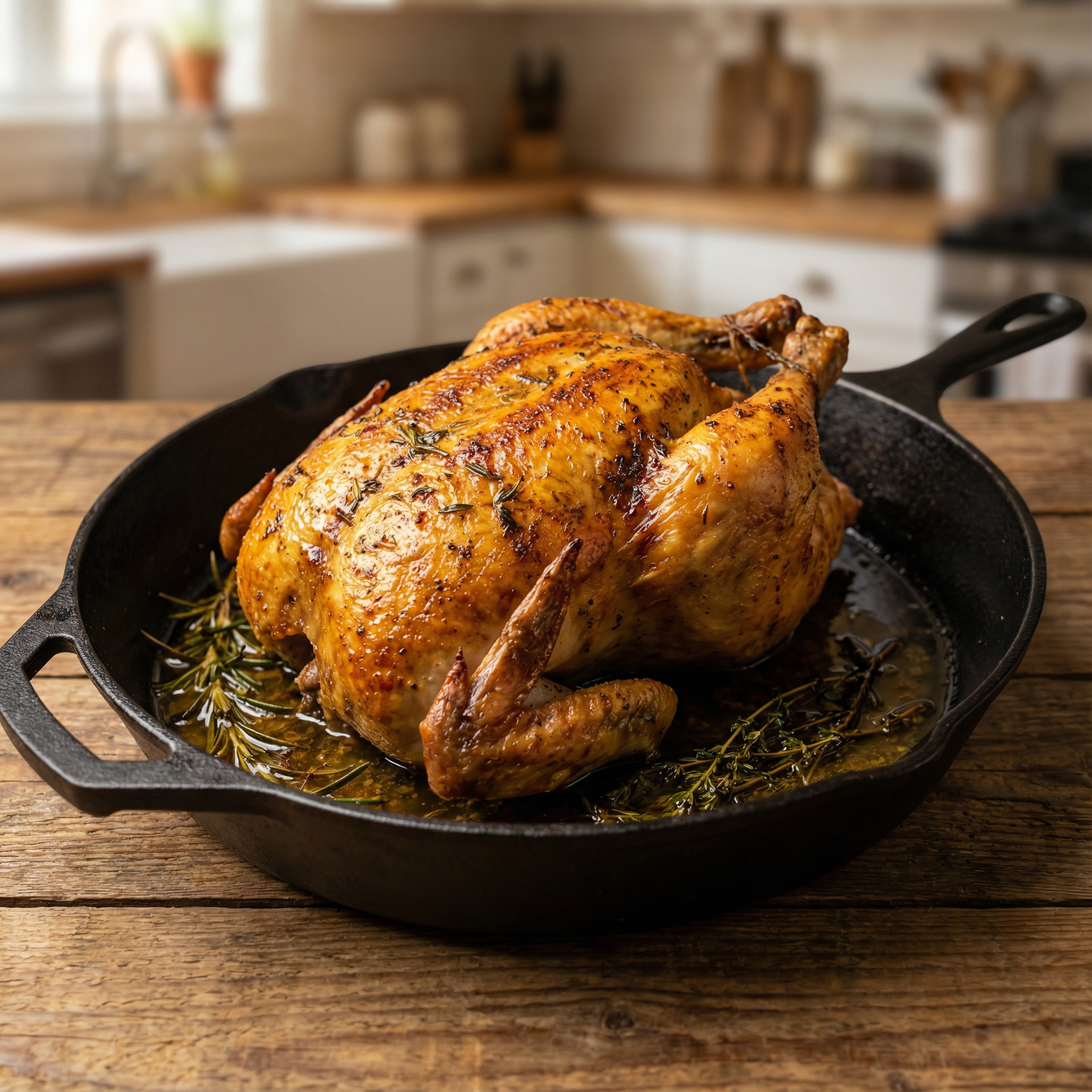
A single pan can supply dinner and tomorrow’s lunch with little fuss. I plan portions so one meal leads to easy leftovers, and la famiglia eats well across the week.
A serving delivers high-quality protein and satisfies hunger without heavy effort. The method uses minimal added fat, so the meat stays flavorful while the plate feels lighter.
- Balance the plate: plenty of vegetables and a bright salad make the meal feel fresh.
- For family nights, carve extra and turn leftovers into bowls or sandwiches the next day.
- Keep skin on for those who love it; offer lean slices for lighter plates so everyone wins.
| Serving | Protein (approx) | Suggested side / time |
|---|---|---|
| Adult plate | 25–30 g | Roasted veg, 30–40 min |
| Child portion | 12–18 g | Simple salad & grains, 15–20 min |
| Leftover pack | 20–25 g | Grain bowl or soup, ready next day |
If you track nutrition, use olive oil sparingly at the finish and favor breast slices for leaner servings. This approach stretches one recipe into many easy, nourishing meals.
Bring it to the table: your Italian roast chicken, your way
After the last minutes in the oven, there’s a calm moment that makes the meal feel earned. Let the bird rest 15 minutes on a warm pan so the juices settle and carving is easy.
Spoon a little of those shimmering juices over sliced breast and legs. Sprinkle a pinch of salt and a thread of olive oil to wake the crust and perfume the herb notes.
I like to serve this dish with roasted potatoes and a lemony kale or simple salad. If you cooked in cast iron, bring the skillet to the table for a rustic presentation that keeps heat and looks generous.
Use the recipe as a base: add olives, swap herb combinations, or lean into lemon for brightness. Save what you loved tonight and make it part of your rotation — minutes become instinct, and dinner turns into a ritual of joy. Buon appetito.
Explore a related variation here: pollo alla cacciatora recipe.
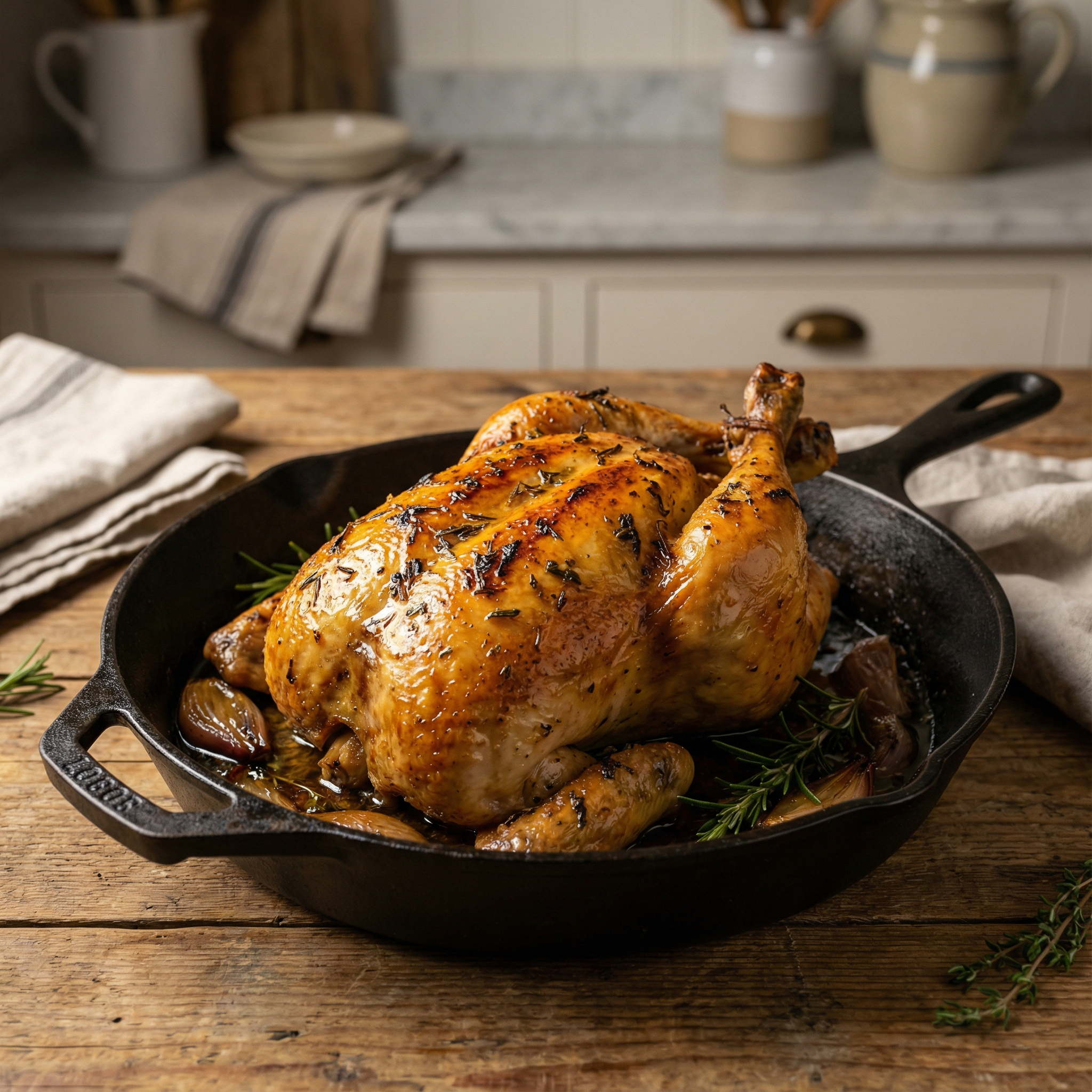
Italian-Style Herb Roast Chicken
Ingredients
Method
- Take the chicken out of the fridge 20–30 minutes before cooking.
- Pat the chicken completely dry with paper towels. Dry skin is key for crispiness.
- Set oven to 425°F (220°C). Place rack in the lower third.
- Gently loosen the skin over the breast. Add minced garlic, a pinch of salt, and torn herbs underneath.
- Rub olive oil all over the chicken. Season generously with salt and pepper, inside and out.
- Add lemon slices or a rosemary sprig for aroma.
- Place chicken breast-side up in a roomy pan or cast iron skillet. Roast for 70–90 minutes.
- Start checking at 70 minutes.
- Insert a thermometer into the thickest part of the thigh. It should read 165°F.
- If skin browns too fast, loosely cover with foil for the last 10 minutes.
- Remove from oven and rest 15 minutes before carving.
- Spoon pan juices over the meat and finish with a light drizzle of olive oil.
Notes
- Always trust temperature, not time.
- Dry brining with salt 24–72 hours ahead improves flavor and skin texture.
- Use a large pan to prevent smoking and splatter.
- Let the chicken rest—this keeps it juicy.
- Leftovers keep well for 4–5 days or freeze up to 3 months.