
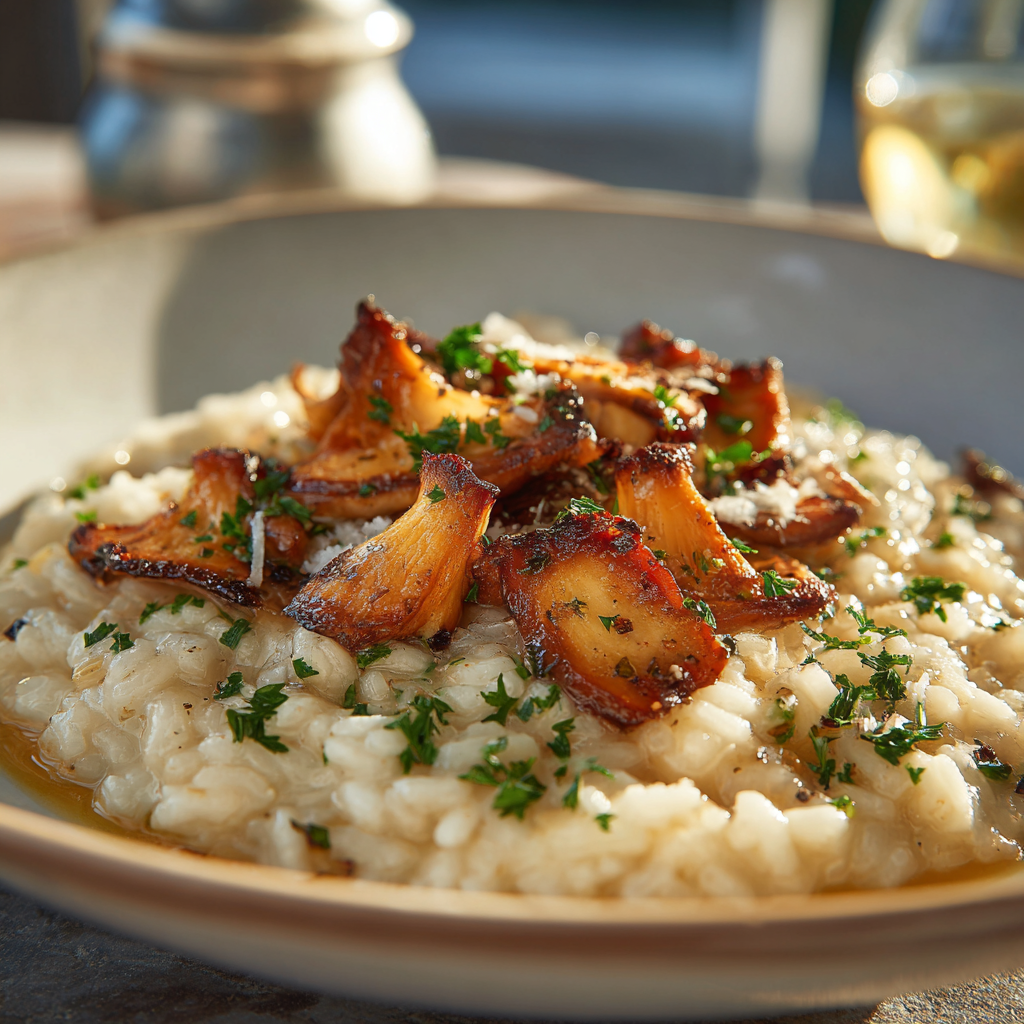
Jump to Recipe
The risotto con i funghi porcini autentico I learned at my grandmother’s table fills the kitchen with warm, wooded aroma the moment the pan hits heat. I clean each mushroom by trimming and gently wiping, and I refuse to rush the color you get when garlic and slices sear fast on high.
My method is simple: a patient soffritto of finely chopped onion in butter for 10–15 minutes, rice toasted until edges glow, then hot brodo added one ladle at a time. I reunite the sautéed mushrooms a few minutes before the end, remove from heat, and finish with butter, Parmigiano, and a splash to reach the perfect all’onda mantecatura.
This is a family ricetta built for real weeknights and small celebrations alike. I’ll show practical steps so your grains stay creamy yet distinct, and the mushroom sapore stays pure—grazie for trusting a recipe born of autumn woods and kitchen memory.
Key Takeaways
- Use fresh mushrooms when possible; wipe or briefly rinse and dry if needed.
- Sauté mushrooms on high with crushed garlic for color and meaty texture.
- Sweat onion gently for 10–15 minutes, then toast rice before adding hot broth.
- Add broth ladle by ladle and finish off-heat with butter and Parmigiano for mantecatura.
- Reintroduce mushrooms near the end to preserve aroma and texture.
Why this risotto matters in my kitchen today
Autumn turns my kitchen into a small forest when I cook this dish, and that scent guides every step. Cooking it marks a pause in the week, a way to honor season and the slow tempo that great food asks for.
Autumn abundance, woodland aroma, and a dish that feels like home
Fresh funghi porcini are the hallmark of the season, and I treat choosing them like a quiet ritual. Knowing the look and smell of good specimens saves time and deepens the sapore that ends up in the pot.
This piatto anchors our table. It is the cucina equivalent of a long, calm chat: simple ingredients, steady attention, and the small parte you play as a cook. Those steps—tasting, adjusting, stirring—are where comfort happens.
- I reach for it in autunno because the funghi are at their best and the house fills with woodland scent.
- It adapts to tempo: easy for weekdays, warm and welcoming for guests.
- The porcini flavor is deep yet gentle, a way to teach family palates without pressure.
Risotto con i funghi porcini autentico: ingredients that make it sing
A few precise ingredient choices turn a simple pan of rice and mushrooms into something unforgettable. I pick each item for its role: aroma, texture, or balance. This keeps the finished dish layered, not heavy.
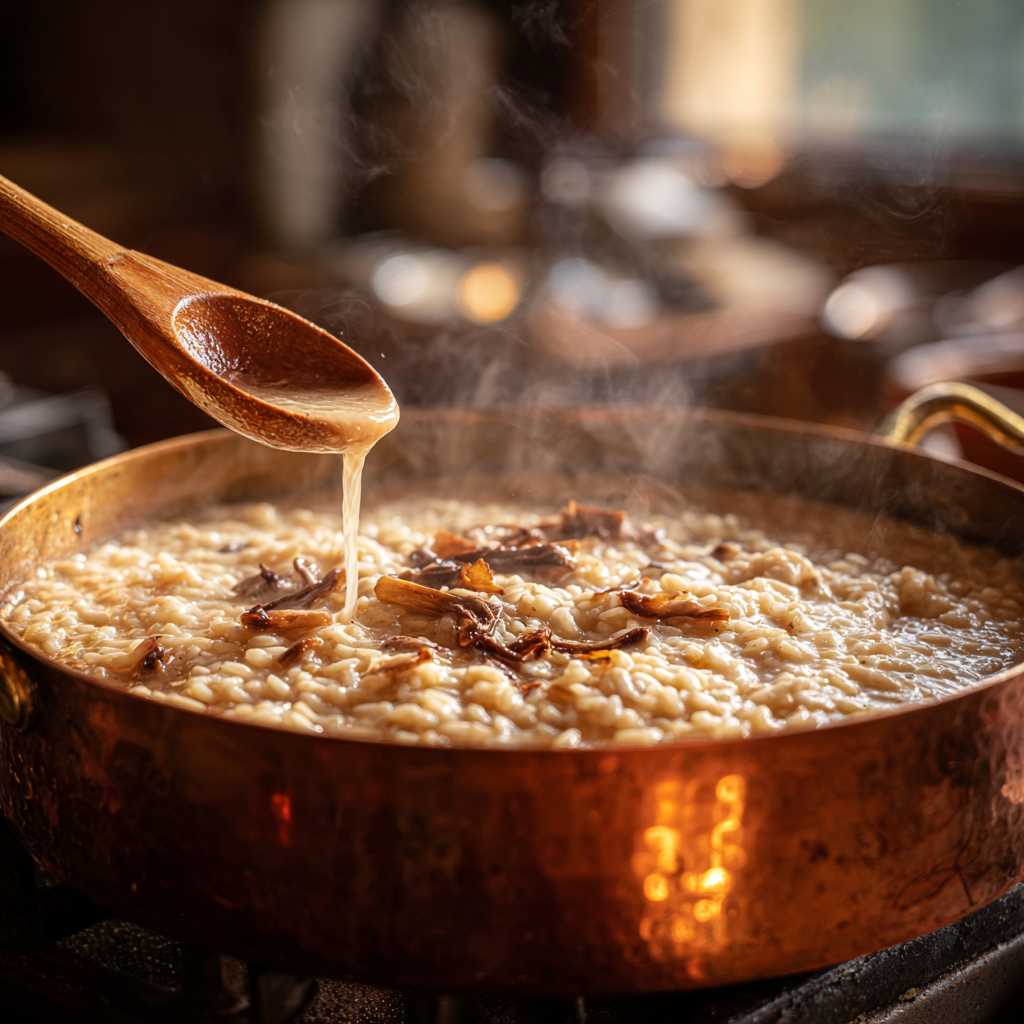
Porcini freschi vs. dried: how to choose for peak flavor and texture
Fresh porcini offer the best aroma and bite. Slice caps about 7–8 mm thick and dice stems so everything cooks evenly. If you only have dried, soak briefly in hot water, strain, and add the soaking liquid sparingly to the pot.
The right riso for creaminess: Carnaroli, Arborio, or Vialone Nano
Choose riso for its starch and resistance to overcooking. Carnaroli gives a forgiving, creamy finish. Arborio is easy to find and reliable. Vialone Nano makes a looser, more fluid all’onda texture.
Butter, Parmigiano, and prezzemolo: balance, not overload
Start mushrooms in good olive oil for color, then keep burro for the rice base and mantecatura. Finish with parmigiano to emulsify and a sprinkle of prezzemolo to lift the savoriness. Salt lightly at first—taste and adjust near the end.
- Main ingredienti: mushrooms define the dish; use fresh when possible.
- Keep brodo hot and neutral so the mushroom flavor leads.
- Sauté caps fast on high for color; finish rice off-heat with burro and parmigiano.
Prep with care: cleaning porcini and setting up your base
A careful preparazione at the sink sets the whole dish up for success—cleaning is where flavor begins. Take your time and work methodically so each step helps, not hurries, the cook.
How to clean properly
Trim the earthy base and scrape the gambo with a paring knife to remove grit. Wipe caps with a damp cloth so they do not soak up extra water.
If a mushroom is very muddy, a quick pass under running acqua is fine. Dry them immediately on paper so they will sauté, not steam.
Smart knife work for even cottura
Separate caps from stems. Slice caps about 7–8 mm thick and dice the gambo small. Even pieces mean even cooking and a consistent bite with each forkful.
Set the base and keep stock hot
Warm a pan with a little olio and a cracked aglio clove, then sear the mushrooms on high until colored. Don’t crowd the pan; give each piece space to brown.
In a separate wide pot, melt butter and sweat finely chopped cipolla for 10–15 minutes. Keep the brodo at a gentle simmer nearby so the riso never meets cold stock.
- Season mushrooms lightly and set aside to preserve texture.
- Organize mise en place so each parte comes together smoothly at the stove.
- Small acts of cura now make the final dish feel effortless.
From soffritto to all’onda: the step-by-step method
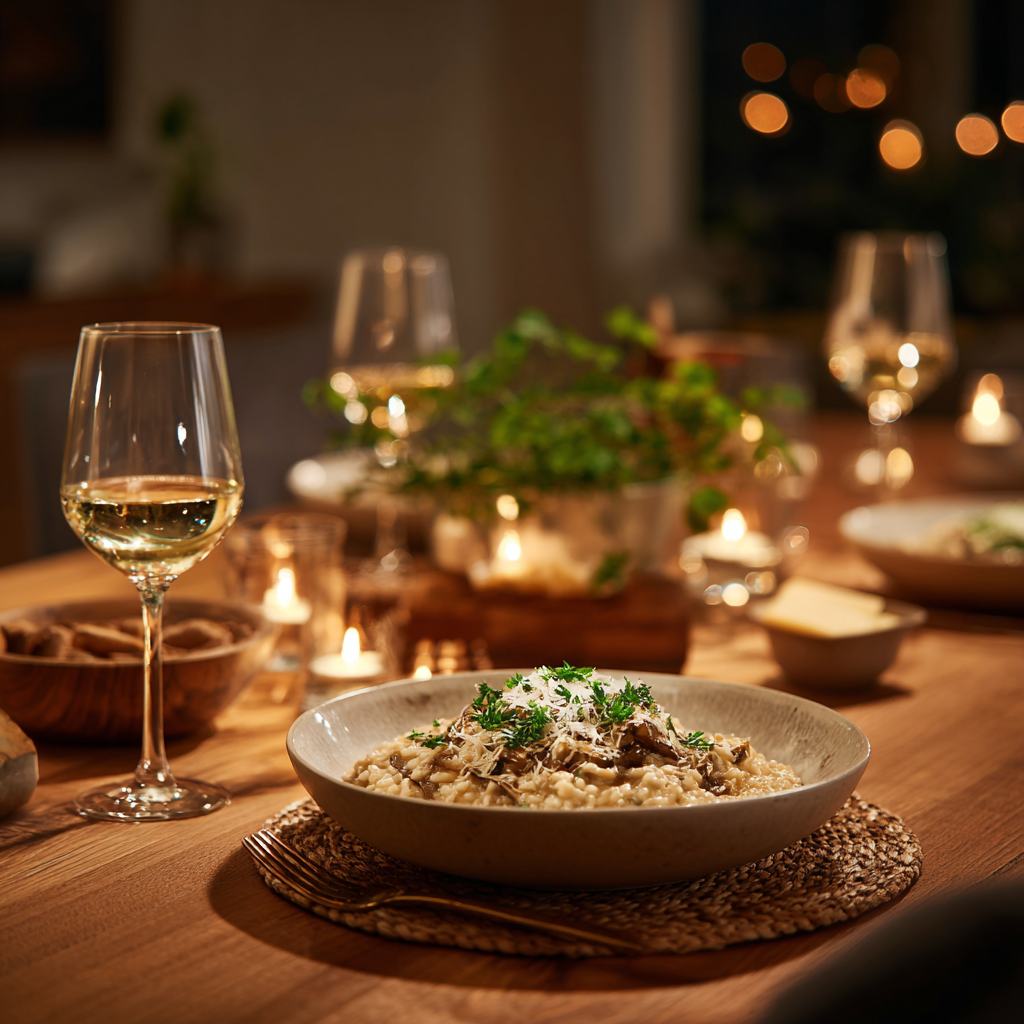
Begin at the stove: small, steady actions build a creamy finish that tastes of the woods. I guide each move so texture, aroma, and timing stay in your control.
Sear first, then rest
Give the mushrooms high fuoco and space in a hot pan. Add a little olio and a spicchio aglio cracked open to build rapido colore and aroma.
Season with a pinch of sale and a twist of pepe. When browned, slide them off the heat to rest while you make the base.
Low, patient base and toasted grain
In a wide pot, melt burro and sweat cipolla on low for 10–15 minuti. This gentle step keeps sweetness and balance without stealing the lead.
Add the rice and toast it until edges look nearly translucent. Toasting firms the grain so cottura stays even later.
Ladle by ladle to achieve all’onda
Begin adding hot brodo one mestolo at a time. Stir just enough to keep grains moving and release starch.
Keep a steady simmer—confident bubbles, not a rolling boil—so the sauce emulsifies naturally.
Final minutes and mantecatura
When the rice is very al dente, fold the mushrooms back in for the last few minuti. Finish off heat with a knob of burro and a rain of Parmigiano.
If you need more silk, one last mestolo brodo brings the dish to the perfect all’onda. Serve at once; at the first volta off the stove the texture is at its best.
- High heat sear with spicchio aglio for colore.
- Low sweat of cipolla in burro for 10–15 minuti.
- Add brodo by mestolo; steady bubbles, gentle stirring.
- Fold mushrooms back a few minuti before done; mantecatura off heat.
Pro tips, timing, and easy fixes
Mastering the final minutes is where flavor, silk, and texture meet in every plate. Keep your stock hot and the pan at a steady simmer; that steady heat is the foundation of good cottura.
Target texture
Aim for grains that resist gently at the core and sit in a flowing sauce—that’s the all’onda moment. Stir enough to coax starch, not to bruise the grain.
Seasoning like a pro
Taste the broth early and again as it reduces; salinity concentrates with time. Add most of your sale pepe near the end and adjust in parte so you don’t overshoot.
Too tight or too loose?
If the pot feels too tight, fold in a small mestolo brodo off heat and swirl to loosen the emulsion. If it’s too loose, let it rest 1–2 min over low heat to tighten.
Respectful twists
Bloom a whisper of zafferano in warm stock for color and perfume. When fresh mushrooms are scarce, mix varieties for depth and finish with a few slices of porcini to anchor the profile.
- Trust your senses over the clock; the rice decides when it’s done.
- Warm plates for dinner-party piatti so the emulsion keeps flowing.
For more technique and a tried family method, see this mushroom recipe.
Serving, pairings, and make-ahead notes
The final touch—herbs and a knob of butter—turns good cooking into a warm, shared moment. Finish the dish off heat with a small knob of burro and a scatter of parmigiano. Add one last ladle of hot stock only if you need the sauce to relax and reach that all’onda sheen.
Chop fresh prezzemolo and toss it through just before plating. That bright green lift keeps the aroma lively and the plate inviting. Serve immediately; this piatto is at its best the first volta off the stove.
What to pour and plate beside it
For wine, choose a crisp Pinot Grigio or Soave for freshness. If you prefer light reds, try a Nebbiolo or Pinot Noir for gentle tannin that matches earthy notes.
- Keep contorni simple: buttered green beans, a lemon arugula salad, or roasted carrots for natural colore.
- Warm shallow bowls so the emulsion stays glossy; hot plates make good piatti feel special.
Short make-ahead and leftovers
If you must wait a short volta, keep the pot slightly looser than perfect and tighten with a quick stir and a touch of hot stock before serving. For risotto funghi or risotto funghi porcini leftovers, cool flat and fast, then press into cakes and pan-crisp the next day—different, but wonderful.
I love setting this piatto at the center of the table and letting everyone help themselves. It makes the cucina feel generous—grazie to whoever brings the wine.
Conclusion
The last ladle and the final swirl are where technique and taste meet.
Keep the preparation simple: clean porcini freschi by trimming the gambo, scrape stems, and wipe caps—only a quick pass under acqua if needed. Slice caps about 7–8 mm and set them aside after a high-fuoco sear with a spicchio aglio.
Sweat cipolla in burro for circa 10–15 minuti, toast the riso, then add hot brodo vegetale by mestolo. Reintroduce the mushrooms a few minuti before the rice finishes, then off the heat mantecatura with burro and parmigiano.
Taste, adjust sale and pepe, plate with chopped prezzemolo, and serve at the first volta. Prepare risotto this way and the ricetta will reward your cura—grazie for cooking along.
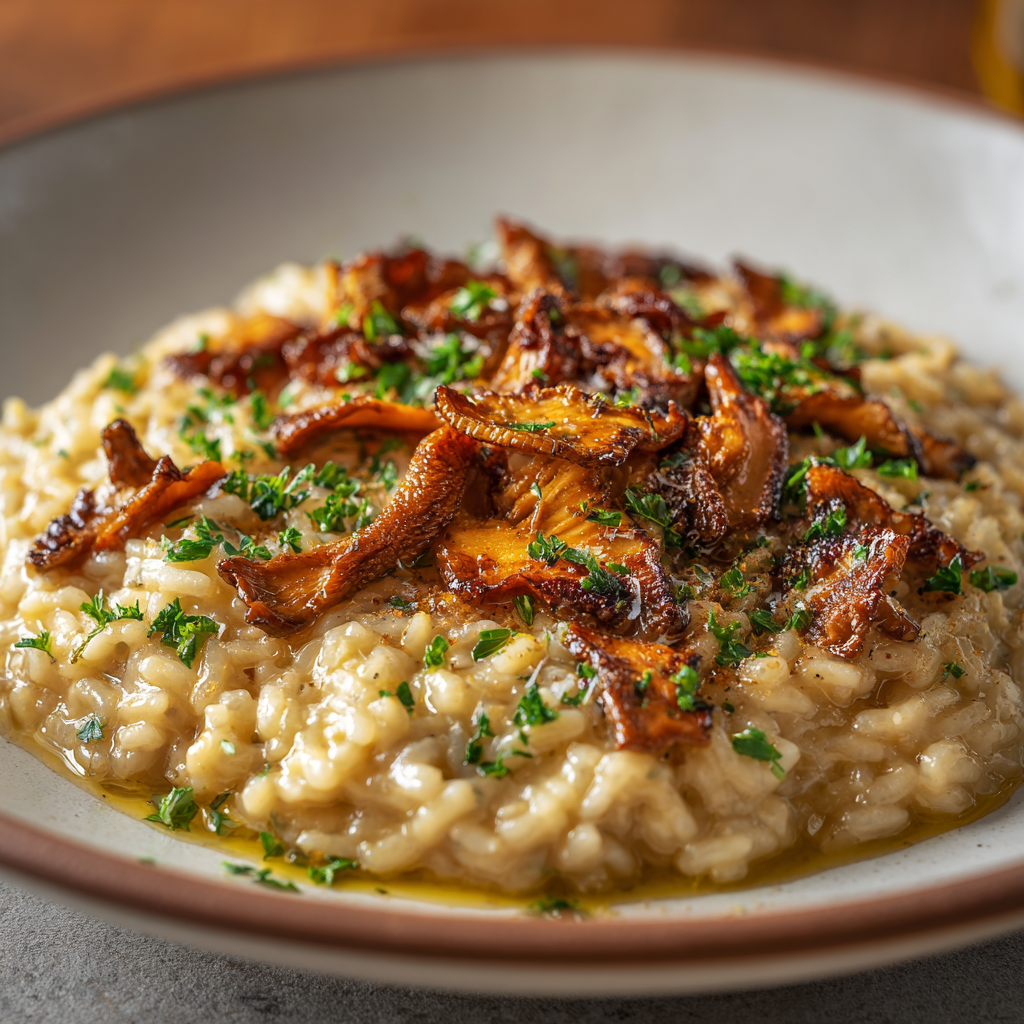
Risotto con i Funghi Porcini Autentico (Authentic Porcini Mushroom Risotto)
Ingredients
Method
- Trim the earthy base, scrape stems clean, and gently wipe caps with a damp cloth. Rinse only if muddy and dry immediately with paper towels. Slice caps (7–8 mm thick) and dice stems.
- In a large pan, heat olive oil and add the crushed garlic. Add mushrooms and cook on high heat until golden and lightly browned. Season with a pinch of salt and pepper, then set aside.
- In a wide pot, melt butter on low heat. Add chopped onion and cook slowly for 10–15 minutes until soft and translucent, not brown.
- Add rice to the pot and stir for 1–2 minutes until edges look shiny and slightly translucent.
- Begin adding the hot vegetable broth one ladle at a time. Stir gently after each addition and wait until most liquid is absorbed before adding the next ladle. Keep the broth hot at all times.
- When the rice is almost al dente (about 15–18 minutes in), fold the sautéed mushrooms back into the pot. Continue cooking for 2–3 minutes.
- Remove the pot from heat. Stir in a small knob of butter and the grated Parmigiano. Mix until creamy and silky, adding a final spoon of hot broth if needed for that classic all’onda (wavy) texture.
- Top with chopped parsley and a final sprinkle of Parmigiano. Serve immediately on warm plates.
Notes
- Use fresh porcini when in season for the best aroma and texture.
- Always keep the broth hot—cold broth ruins the creamy consistency.
- The mantecatura (final butter and cheese step) is key to the silky texture—never skip it.
- Risotto doesn’t wait—serve immediately while creamy and flowing.
- Leftovers? Cool flat and quickly, then form into small patties and pan-fry the next day for crispy risotto cakes.