Jump to Recipe
I learned my torrone morbido italiano recipe at my grandmother’s table, where the warm scent of honey and toasted almonds meant the holidays were near. I’ll show you how precise temperature and a steady stand mixer turn sugar, honey, and whipped egg whites into a soft nougat with a tender, chewy bite.
We start by toasting nuts and watching honey reach about 250°F while the sugar syrup hits roughly 300°F, then stream both into whipped whites. I explain why keeping the nuts warm matters, how to use edible paper so the slab releases cleanly, and when to expect a set time at room temperature.
This approach blends family memory with clear technique so you can trust the numbers and the feel—soft but stable, glossy but not grainy. With a candy thermometer and a calm pace, you’ll end up with neat cuts and a treat that feels both festive and thoughtfully simple.
Key Takeaways
- Use a candy thermometer to hit critical temperatures for sugar and honey.
- Warm, toasted nuts fold in best when added while still warm.
- Line the pan with edible paper to ensure clean release and neat slicing.
- A stand mixer provides stability during the hot-syrup pouring stage.
- Know the difference between soft and hard nougat—timing and ratios change texture.
What makes torrone morbido special—and how I learned this soft nougat the traditional way
I remember the day I learned to make soft nougat: the oven hummed, nuts toasted, and every step felt deliberate. That first lesson taught me that texture comes from balance: hot syrup folded into whipped whites, not overcooked sugar.
Soft vs. hard: understanding the “morbido” texture
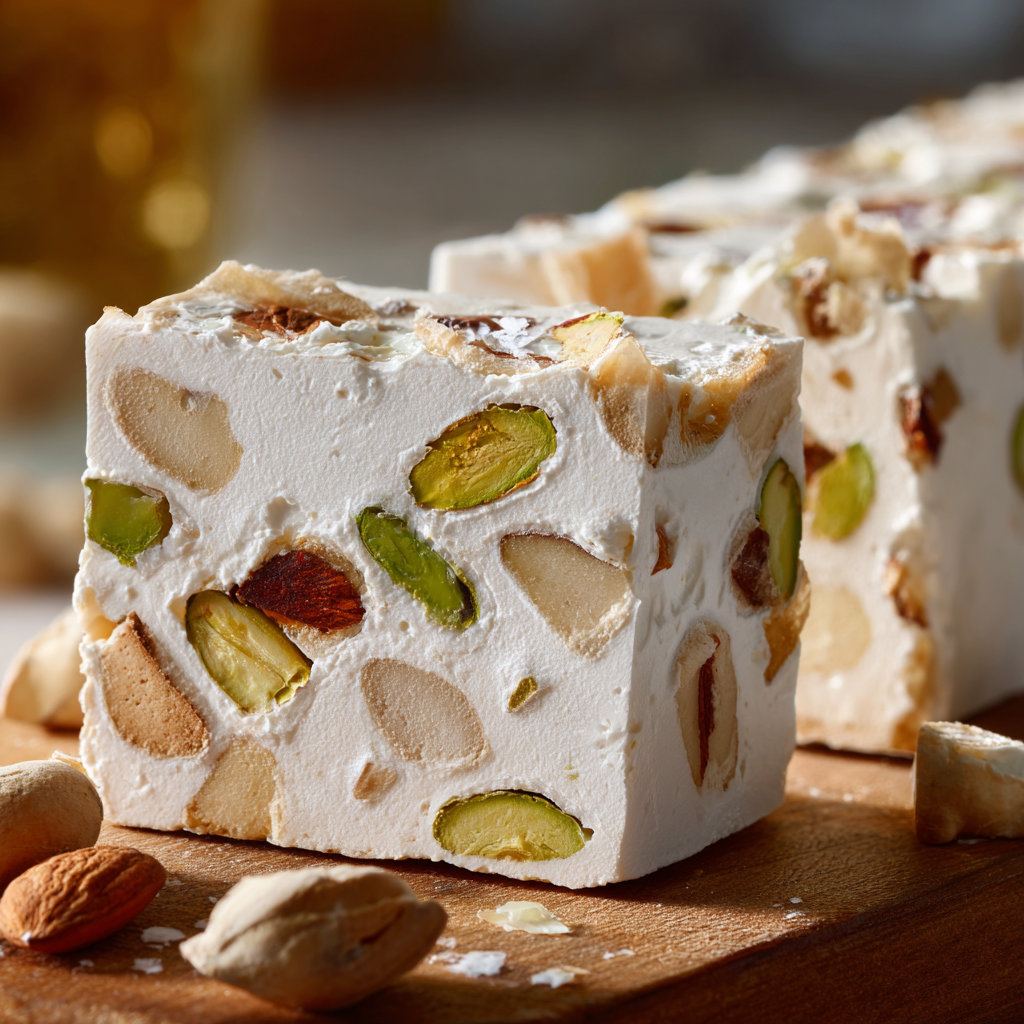
The soft style stays chewy and tender, rather than glassy and brittle. Duro is the hard kind with a snap; morbido yields gently when you bite. I watch the glossy meringue and fold in warm almonds and pistachios so the slab stays creamy, not crumbly.
When to make it: a holiday favorite that’s great year‑round
We make this for the holidays, but I’ll also make a batch for spring lunches or fall dinners. Timing matters — from oven‑warmed nuts to the precise moment syrups meet whites — and I keep the room calm so nothing seizes.
- Classic pairings: lemon zest, vanilla, or a thin chocolate shell.
- Historical note: enjoyed long in Italy and still sold at Christmas markets.
Ingredients, tools, and prep at room temperature for the best texture
I always stage ingredients and tools first; speed matters once syrup reaches temperature. Measure honey, sugar, and egg whites before you heat a thing. Once heat rises, weighing is risky and slow.
Classic base: what to have ready
Keep the whites at room temperature so they whip easily and hold volume. The base combines honey, sugar, and whipped egg whites with toasted nuts. I use toasted almonds and pistachios; warm nuts fold in cleanly and keep the nougat soft.
Wafer essentials and smart pan lining
Line the tray with edible rice paper or sheet wafer paper to prevent sticking and keep that delicate bite. If you can’t source sheet wafer paper, edible rice sheets or parchment paper work for staging and smoothing the top. Proper lining saves time when you cut the set slab.
Gear checklist and why each item matters
- Heavy-bottomed saucepan — even heat, fewer scorch spots.
- Candy thermometer — hit precise temperature without guesswork.
- Stand mixer with whisk (or a steady electric mixer) — stability while streaming hot syrup.
- Baking tray or pan lined and ready — move fast when the mixture is glossy.
- Parchment paper on hand for smoothing and extra nonstick support.
Prep the pan and tray first. Toast nuts and keep them warm. Set egg whites at room temperature. When everything is staged, the cooking and baking flow with confidence and control.
Torrone morbido italiano recipe: step-by-step with exact temperatures and timing
Start by warming the oven and toasting the nuts until they are just golden. I leave the door ajar and keep almonds and pistachios warm so they fold into the mixture without cooling it.
Heat honey in one saucepan to about 250°F and cook sugar with a splash of water or glucose in a second saucepan to 300°F. Watch the heat closely to avoid scorching; each syrup needs its own pan and attention.
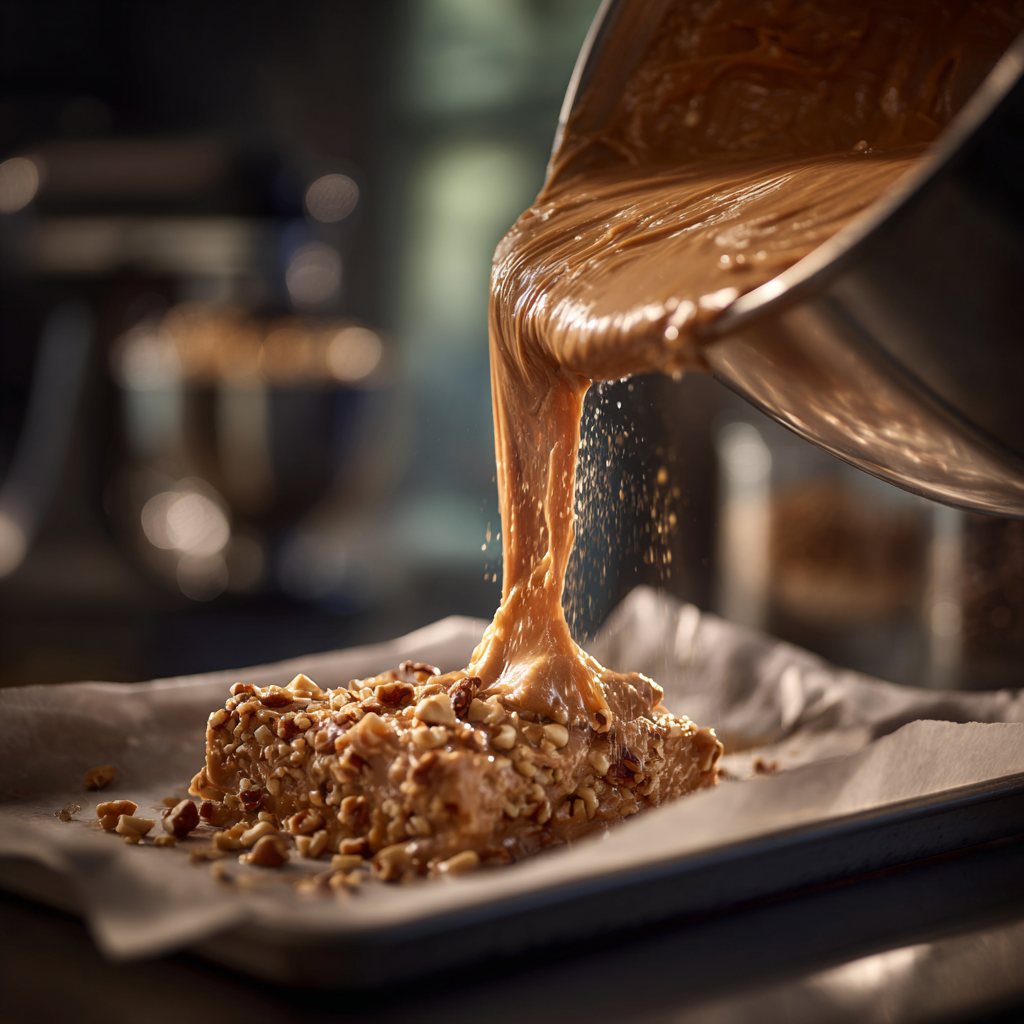
I whip egg whites to soft peaks, add a pinch of sugar, then bring them to stiff peaks so they hold hot syrup. With the mixer running, I stream in the hot honey first, then the 300°F sugar syrup in a slow ribbon.
Mix until the nougat brightens and thickens into a glossy, flowing mixture that takes a few minutes to form a ribbon. Fold in warm nuts quickly and evenly.
Line a baking tray with rice paper or sheet wafer paper, spread the mixture, then top with another sheet of wafer paper and press smooth. Let the slab set at room temperature—often overnight—then cut with a sharp, lightly oiled knife for clean edges.
| Step | Temperature (°F) | Timing | Checkpoint |
|---|---|---|---|
| Toast nuts (almonds, pistachios) | 350°F (oven) | 8–10 minutes | Light golden, warm to touch |
| Honey syrup (one saucepan) | 250°F | 5–7 minutes | Clear, bubbling |
| Sugar syrup (second saucepan) | 300°F | 6–8 minutes | Amber hue, hard-ball stage |
| Whip and combine | Room temperature | 5–10 minutes mixing | Glossy, thick ribbon |
For more background and tips on this method, see my detailed guide on making soft nougat at this page.
Pro tips, variations, and troubleshooting for soft torrone that actually sets
Over years at the stove I built a short list of fixes and upgrades that save a batch. These are hands‑on, sensory cues and safety tips to keep your mixture smooth and the slab even.
Flavor upgrades
Add lemon or orange zest for brightness, and a teaspoon of vanilla for depth. A thin chocolate top gives contrast without hiding the honey. Swap nuts—hazelnuts or pistachios change the crunch and aroma.
Wafer and lining alternatives
If wafer paper is scarce, use edible rice paper or parchment paper lightly oiled. I sometimes oil plastic wrap for quick staging. Press a second sheet on top and place a flat tray with a small weight so the slab sets evenly.
Troubleshooting quick fixes
- If the mixture looks grainy, warm gently and stir until smooth and well combined. Scrape any sugar on the pan sides first.
- If it weeps or stays too soft, the syrup likely missed target heat; take sugar and honey to proper temperatures and add extra mixing minutes until glossy.
- If it’s too hard, pull the syrup a few degrees earlier next time and fold nuts quickly to cut carryover heat.
| Problem | Quick fix | Sensory cue |
|---|---|---|
| Grainy mixture | Low, even heat; stir until smooth | Smooth, glossy ribbon |
| Too soft | Raise syrup temp next time; mix longer | Mixture holds shape when lifted |
| Stuck to pan | Use parchment paper or edible rice paper; oil liner | Clean edges on release |
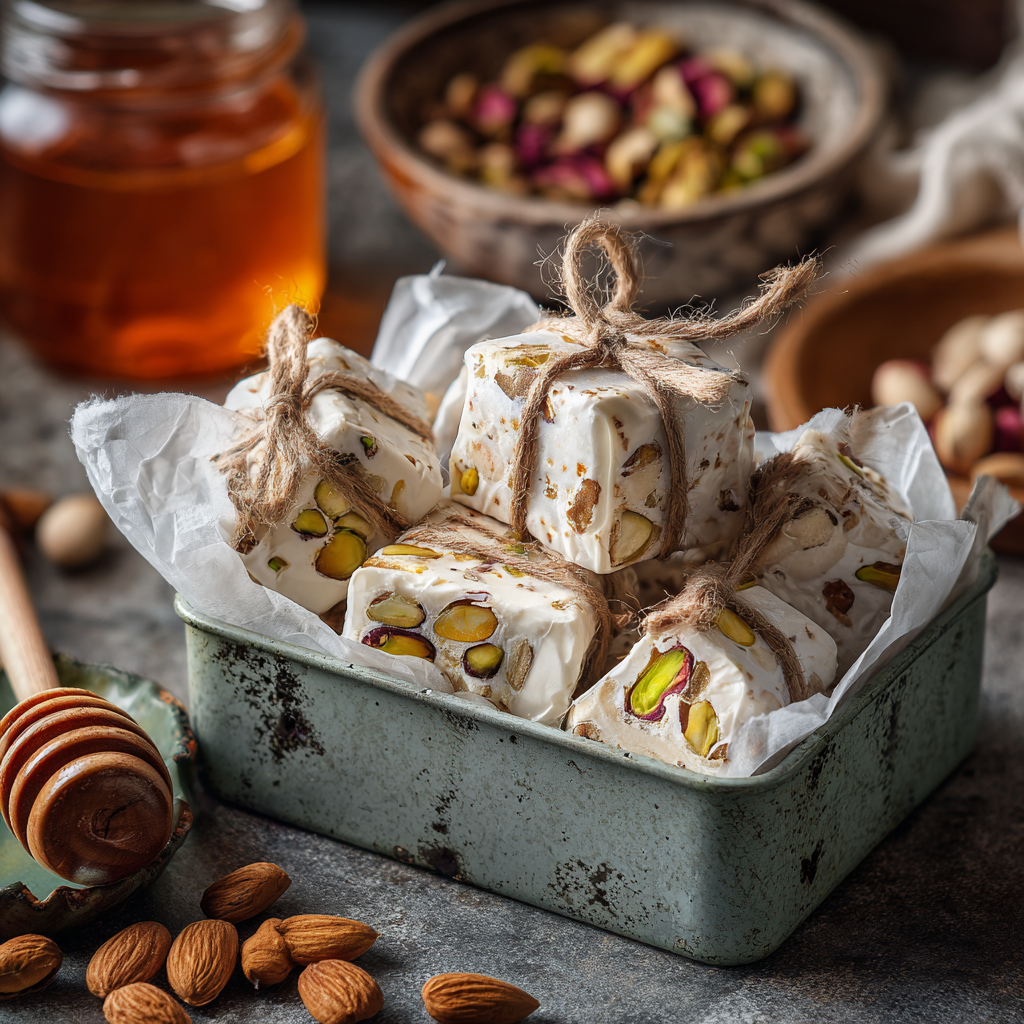
For slicing, oil a sharp knife or warm it briefly and cut along the edges pan first. Store bars airtight at cool room temperature with paper between layers for gifting. These small steps help your soft nougat set and look like a pro’s work.
Conclusion
Bring the slab to the table and watch how a few honest ingredients become a shared celebration. This recipe turns sugar and honey into a glossy nougat when egg and egg whites meet careful temperature and steady mixing.
Work calm and organized: line the pan with sheet or paper, keep ingredients at room temperature, and use a sharp, oiled knife for clean cuts. Setting can take a few hours or overnight depending on time and temperature.
If you like contrast, slice slim bars, dip one end in dark chocolate, and scatter finely chopped almonds pistachios on top. Use a mixer or electric mixer and a sturdy saucepan, take notes, and return to this torrone morbido recipe to explore new flavors.
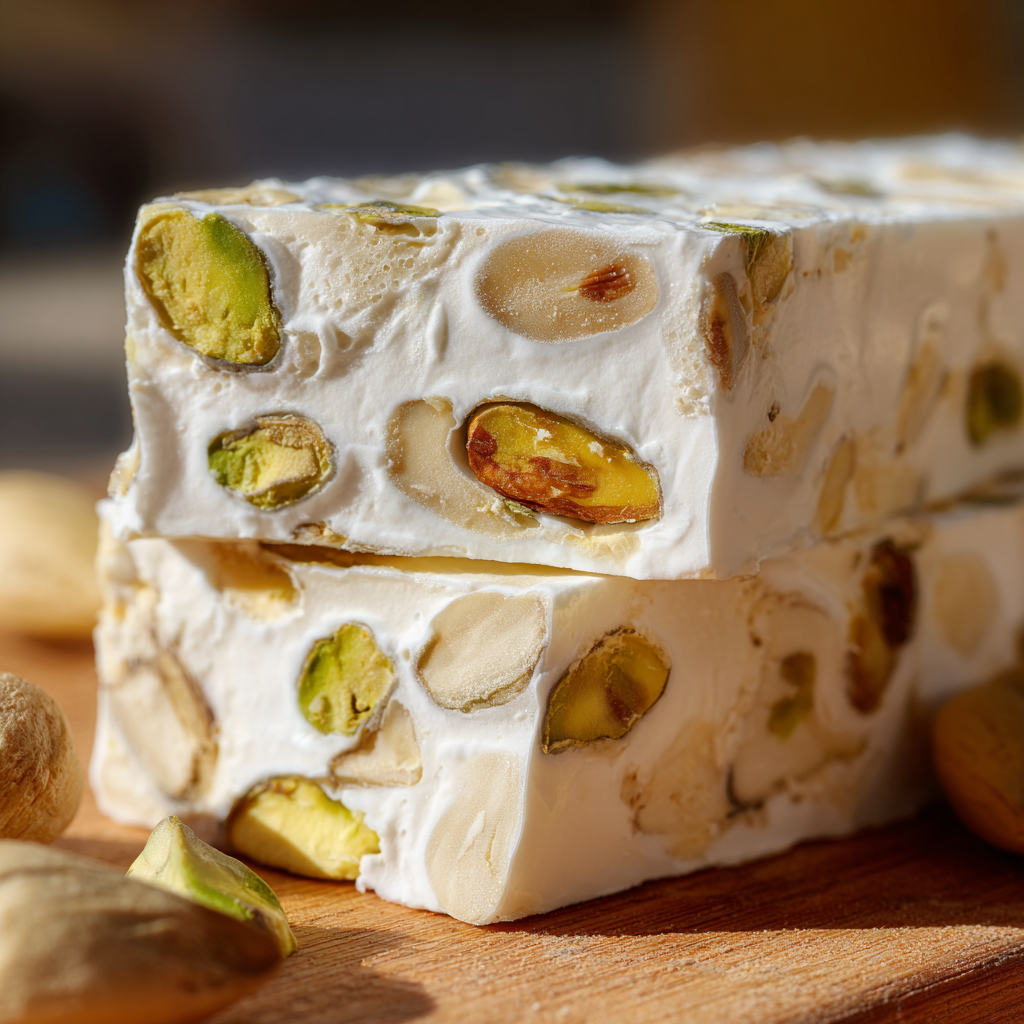
Torrone Morbido Italiano (Soft Italian Nougat)
Ingredients
Method
- Preheat oven to 350°F (175°C). Spread almonds and pistachios on a baking sheet and toast 8–10 minutes, until lightly golden. Keep them warm in the turned-off oven so they stay pliable for folding later.
- Line a baking tray with edible rice paper or wafer paper. Have another sheet ready for the top layer. Lightly oil parchment if you’re using it instead.
- In one heavy saucepan, heat honey over medium heat until it reaches 250°F (121°C).
- In another saucepan, mix sugar and water (or glucose) and heat to 300°F (149°C). Use a candy thermometer for accuracy and avoid stirring once sugar melts.
- While syrups heat, beat egg whites in a stand mixer until soft peaks form. Add a pinch of sugar and continue to stiff peaks—glossy and firm.
- With the mixer running on medium speed, slowly pour the hot honey into the egg whites in a thin stream. Then slowly add the hot sugar syrup the same way. Keep mixing until the nougat becomes thick, shiny, and forms ribbons (about 5–10 minutes).
- Remove the bowl from the mixer and gently fold in the warm toasted almonds and pistachios. Add vanilla or zest if you like. Mix quickly—before the nougat sets.
- Spread the mixture evenly into the lined tray. Press a second sheet of rice paper or wafer paper on top and smooth gently. Let the slab rest at room temperature for several hours or overnight until firm.
- Lightly oil a sharp knife or warm it slightly. Cut the slab into bars or squares. Serve plain or dip one end in dark chocolate and sprinkle with chopped nuts.
Notes
- Keep everything at room temperature before starting—especially the egg whites.
- Accuracy matters: if syrup temperatures are off, texture changes.
- Warm nuts prevent the nougat from seizing or turning crumbly.
- Use a stand mixer—it makes pouring hot syrup safer and more stable.
- For gifting, wrap each piece in wax paper or parchment and store in an airtight tin.