
Jump to Recipe
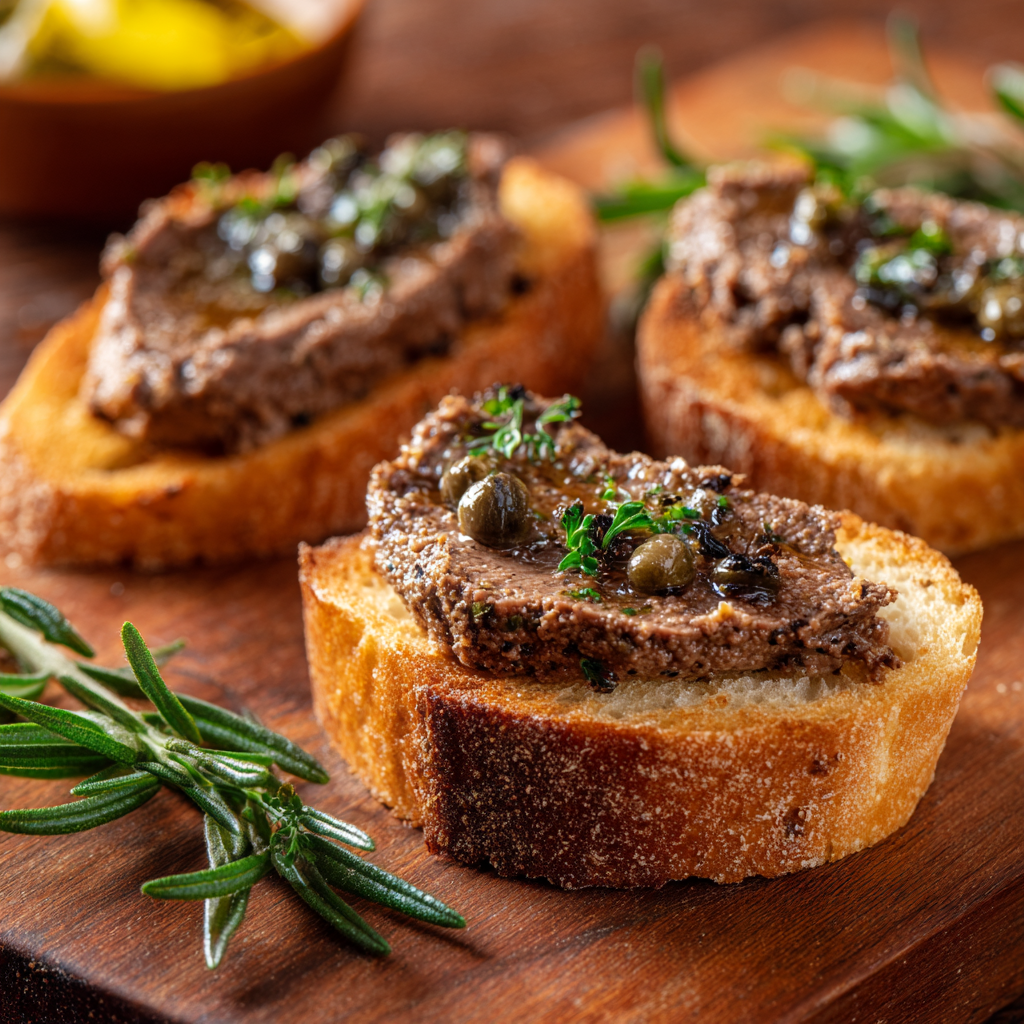
I learned this crostini di fegatini toscani recipe at a village table where day-old bread met a warm, savory chicken liver paste and felt like a small revelation.
Over years cooking with Tuscan nonne and chefs, I found that sage, garlic, and a pinch of crushed juniper lift the livers while a few anchovies and capers add calm, deep umami without any fishy note.
My method keeps the paste rustic: a gentle sauté, a brief simmer, then a short pulse so the texture spreads but still gives little bites of flavor.
For bread I prefer unsalted country loaves—toast when you want crisp contrast, or fry briefly in olive oil for a richer finish; both honor the way this food appears at feasts and family tables.
Along the way I’ll share timing, ingredient choices, and simple checks so you never end up with a gummy spread and always serve something that feels truly Tuscan.
.
Key Takeaways
- This version blends sage, garlic, and juniper for balanced depth.
- Keep the paste slightly coarse—pulse briefly to avoid gumminess.
- Use unsalted bread; toast for crispness or fry for extra richness.
- Anchovies and capers boost umami without tasting fishy.
- Simple timing and small adjustments make this an easy, reliable dish.
What Makes Tuscan Chicken Liver Crostini Iconic—and How This Version Honors Tradition
On an August afternoon in a hilltop village, a long table of neighbors taught me why this spread belongs at every antipasto. The scene made clear that a small pot of warm paste and good bread can speak louder than fancy plating.
A village table to your kitchen: real-life Tuscan context and why this antipasto matters
I watched women pass plates until nothing was left. That friendly rivalry over whose topping was best showed how tied this food is to community and season.
Here, a few livers stretched with pantry flavors feed many and still feel luxurious. That thrift and generosity are part of the way I cook today.
Crostini vs. bruschetta vs. crostoni: the bread, the topping, and the Tuscan way
Definitions matter in Tuscany. Crostini are small topped pieces, bruschetta is toasted and rubbed with garlic (our fettunta), and crostoni are larger slices meant for heartier bites.
| Type | Size | Typical use |
|---|---|---|
| Crostini | Small | Party platters, finger food |
| Bruschetta | Medium | Toasted, garlic-rubbed, olive finish |
| Crostoni | Large slices | Hearty toppings, rustic service |
Classic flavors, modern tweaks: anchovies, capers, juniper berries, and a chef’s influence
Sage and garlic bring perfume. A bit of anchovies and capers adds salinity without fishiness. Bugialli’s nod to crushed juniper gives an autumnal twist I often echo.
- Some cooks add a splash of wine or vin santo for depth.
- Others use a soffritto base for sweetness and roundness.
- Always finish with a light gloss of extra virgin olive to tie paste and bread together.
crostini di fegatini toscani recipe: Ingredients, Method, and Texture You’ll Love
I walk you through clear steps so the paste stays rustic and flavorful. Below are the key ingredients and smart subs, then a concise, cook-by-cook method you can follow at home.
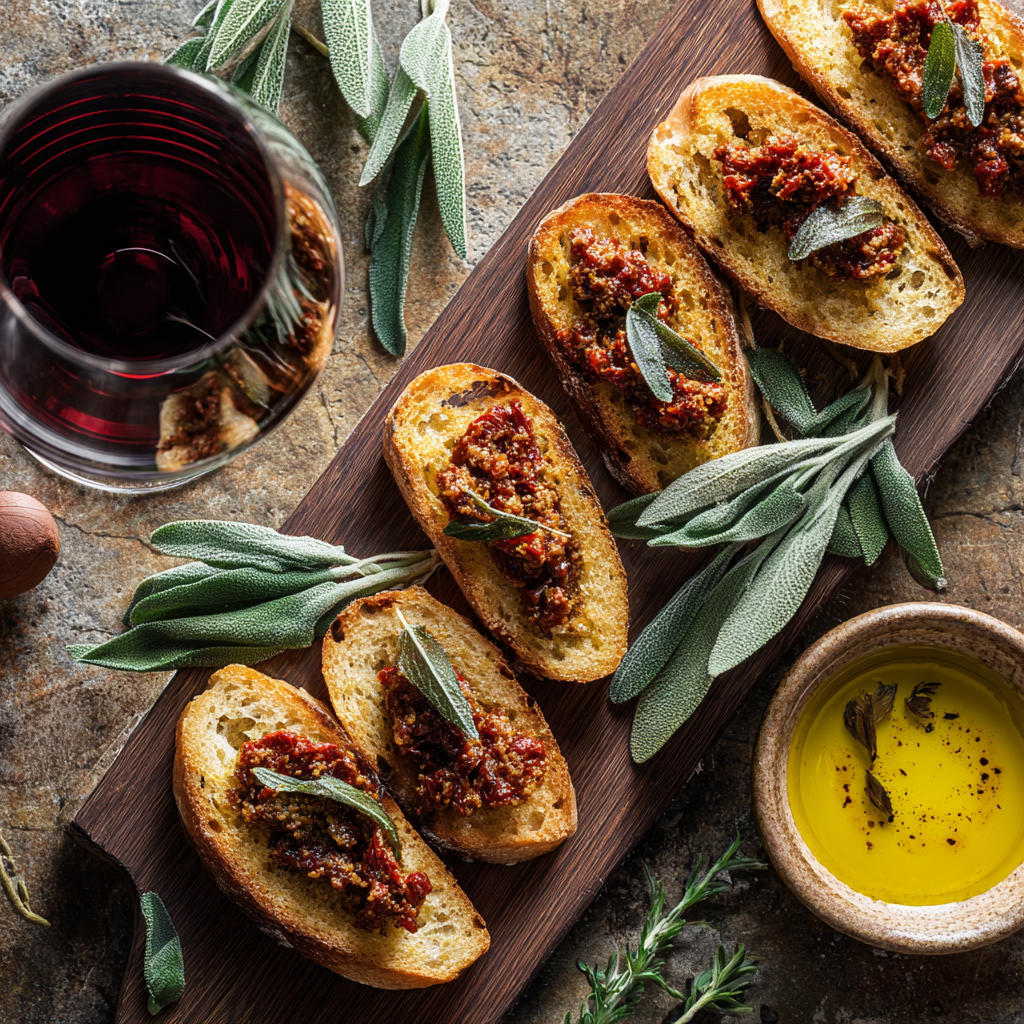
Ingredients you’ll need (and smart substitutions)
- Fresh chicken livers (trimmed) — butter and olive oil for flavor and browning.
- Sage, garlic; juniper berries optional; good anchovies and capers for umami.
- Broth or water; wine or vin santo as optional liquid; onion, carrot, celery if you prefer soffritto.
- Tuscan loaf or baguette — day-old bread or bread slices fried in extra virgin olive oil.
Prep essentials and skillet setup
Trim any green bits and connective tissue from the livers. Pat them dry so they sear, not steam. Keep the chicken chilled until the pan is hot.
Set a wide skillet over medium heat. Warm a splash of olive oil and a knob of butter. Add sage and crushed garlic to perfume the fat; do not let the garlic burn.
Step-by-step cooking
- Sweat a small soffritto first if using onion, carrot, and celery; season with a pinch of salt.
- Add chicken livers in a single layer. Sauté about 10 minutes, seasoning with salt, pepper, and crushed juniper.
- Deglaze with a ladle of broth, wine, or water. Simmer 15–20 minutes until juices reduce.
- Drain, discard sage and garlic, and reserve the cooking liquid.
- Pulse livers briefly in a food processor to a rough paste—few quick bursts only.
- Return paste to the skillet with reserved liquid. Stir over gentle heat until nearly absorbed, then fold in chopped anchovies and capers so the anchovy melts through.
Finish, bread choice, and texture tips
Taste and adjust salt and pepper. Keep the temperature moderate so the mixture is warm, not scorching. Hold back a bit of liquid to fix consistency at the last minute.
For bread, choose firm crumb slices. Toast for structure or fry slices in extra virgin olive oil for richness. Don’t overblend—the goal is a spreadable, slightly coarse paste that keeps a bit of bite.
Pro Tips, Variations, and Serving Ideas to Make It Unmistakably Tuscan
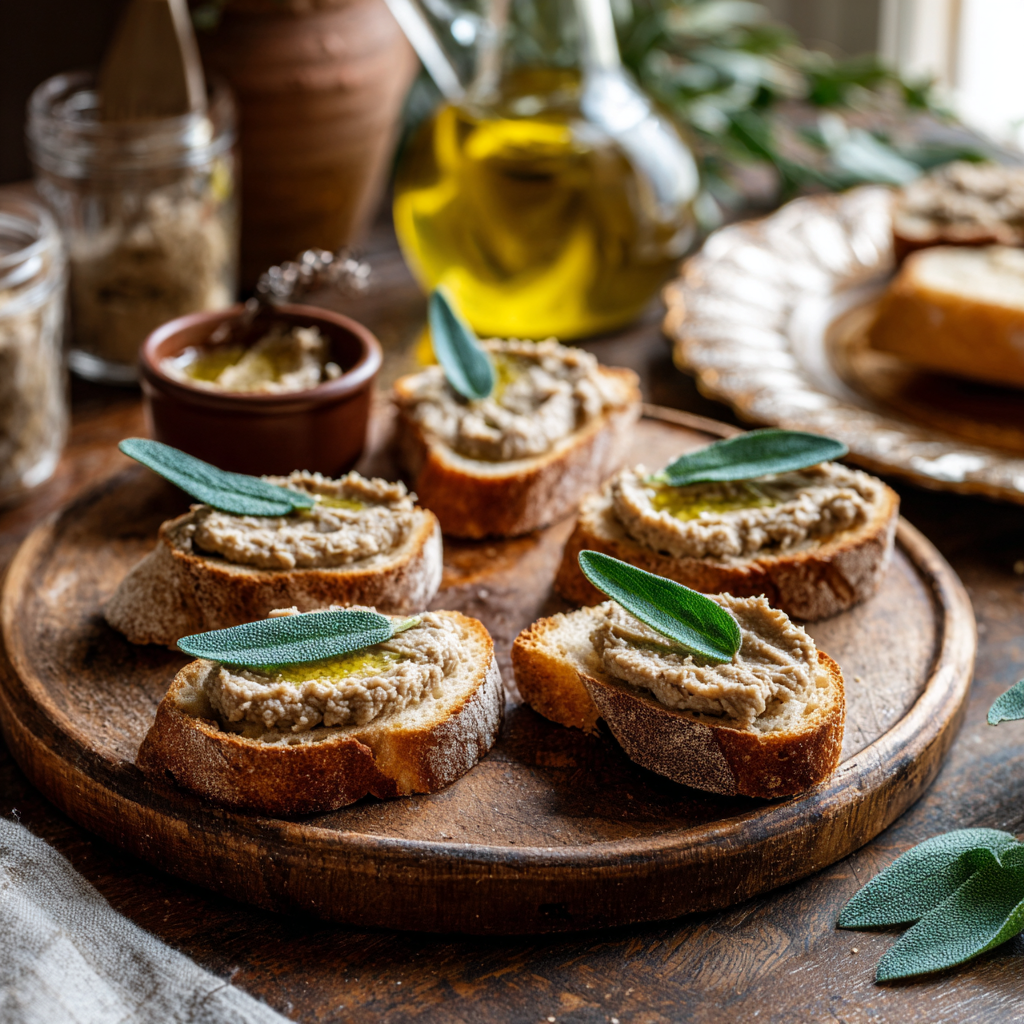
A handful of chef tips will keep the texture bright and the flavor balanced.
Flavor builders and liquid choices
Choose your liquid with intent. Broth keeps it savory and clean. A splash of wine adds bright lift. Vin santo lends a gentle sweetness that flatters chicken liver without making the paste overtly sweet.
Bloom crushed juniper with the fat for an autumnal note. Or start with a light soffritto of onion, carrot, and celery for roundness.
Make-ahead, reheating, and pairing
Make the paste hours or a day ahead—resting deepens the flavors. Reheat in a skillet over low heat with a little water or butter until just warm. Keep the temperature gentle so the fat stays emulsified and glossy.
- Watch salt early: anchovies and capers add salt, so season lightly and finish later.
- For color and texture, pulse a handful of walnuts with the paste in the food processor.
- Build a board: thin slices of prosciutto, finocchiona, wedges of pecorino, and crisp bread brushed with extra virgin olive.
| Choice | Effect | When to use |
|---|---|---|
| Broth or water | Clean, savory finish | Everyday cooking, lighter pastes |
| Red wine | Brightness and acidity | When you want lift and complexity |
| Vin santo | Soft, sweet charm | Special occasions, balanced with salt |
| Butter finish | Silky mouthfeel | When serving warm or for richer slices |
Serve warm in cooler months or at room temperature when the kitchen is hot. A few minutes on low heat with water or butter corrects texture. These small choices make this version feel undeniably Tuscan at the table.
Conclusion
Bring everything together in minutes and serve a warm, generous plate that feels like home. This is where the little choices earn their keep.
You now have the ingredients and timing to make a steady, reliable recipe. Trim and sear the chicken livers, pulse just enough, then finish so the paste keeps a bit of bite.
Make ahead if you like; it reheats gently and holds. Pick the right bread and don’t hesitate to fry a slice in olive oil for extra richness.
Whether you keep classic seasonings like sage, anchovies, and capers or add a splash of wine, this dish invites your touch. Make it, adjust, and share—it will become the crostini you reach for when friends arrive.
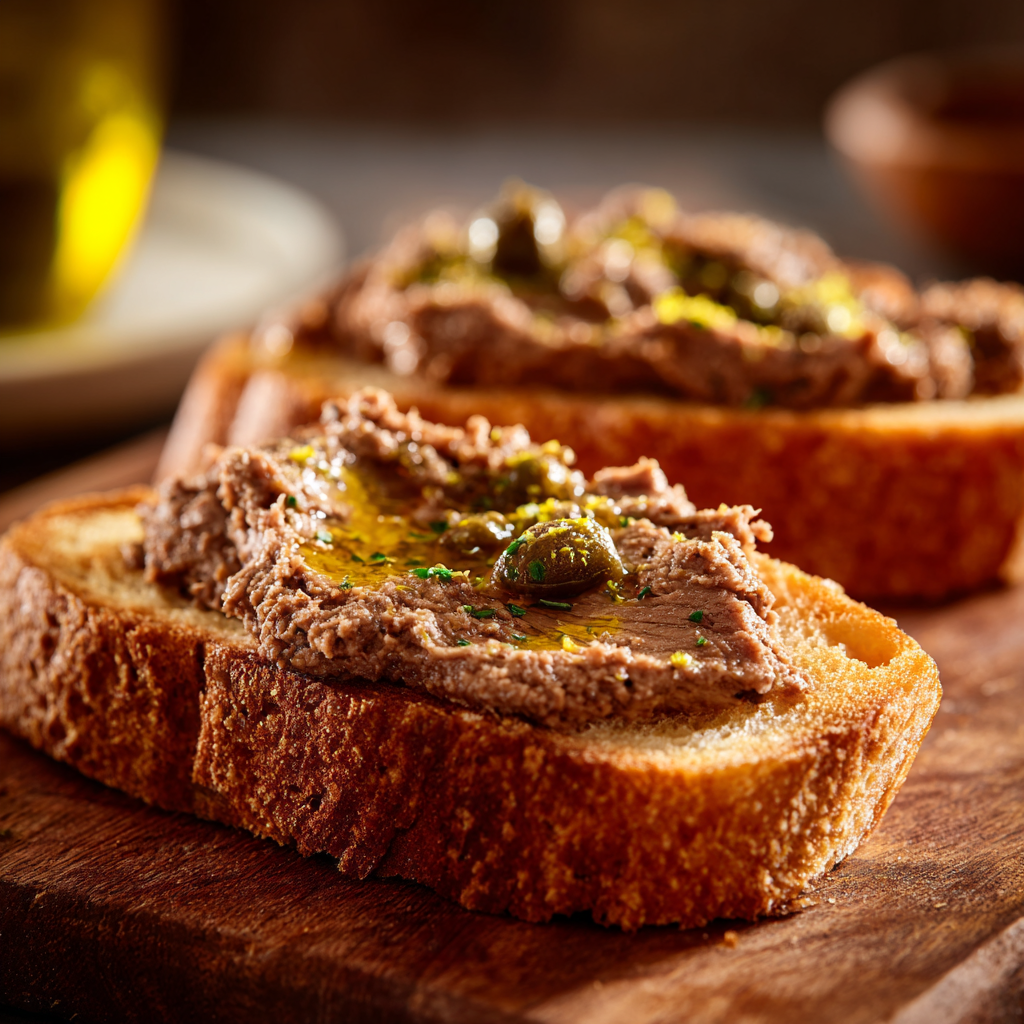
Crostini di Fegatini Toscani (Tuscan Chicken Liver Crostini)
Ingredients
Method
- Trim away green bits and connective tissue. Rinse briefly and pat dry with paper towels. Keep them chilled until the pan is ready.
- Heat olive oil and butter in a wide skillet over medium heat. Add sage and garlic, letting them perfume the fat. Don’t let the garlic burn.
- If using onion, carrot, and celery, sweat them gently until soft and translucent. Add a pinch of salt.
- Add the chicken livers in a single layer. Sauté about 10 minutes, turning once, until browned outside but still slightly pink inside. Season lightly with salt, pepper, and crushed juniper.
- Pour in broth, wine, or vin santo. Simmer 15–20 minutes until the liquid reduces and the livers are tender.
- Remove the sage and garlic. Drain and reserve a bit of the cooking liquid. Pulse the livers briefly in a food processor—just a few short bursts. You want a rustic, coarse paste, not a smooth purée.
- Return the paste to the skillet. Add chopped anchovies and capers. Stir gently until the anchovies melt into the mixture. Adjust seasoning and texture with the reserved liquid.
- Slice the loaf and either toast it or fry it lightly in olive oil until golden. For a richer version, fry slices in butter and olive oil.
- Spread the warm liver paste over the bread. Drizzle a little extra virgin olive oil on top if you like. Serve warm or at room temperature.
Notes
- Don’t over-blend the paste; the rustic texture is what makes it feel authentically Tuscan.
- Taste before adding more salt—anchovies and capers already add salinity.
- Make ahead and reheat gently in a skillet with a splash of water or olive oil.
- Pairs beautifully with Chianti, Vernaccia, or a dry Prosecco.
- Toast for crunch or fry for indulgence—both are traditional and delicious.