Jump to Recipe
I learned the risi e bisi venetian risotto recipe standing at my nonna’s stove, where steam smelled like sweet peas and butter and told me the rice was ready to roll all’onda.
This dish lives between soup and risotto: soft, spoonable, and bright with a green broth made from pea pods simmered 30–45 minutes. I use Vialone Nano when I can, a soffritto of onion and pancetta for aroma, and add broth all at once so the grains cook gently toward a creamy texture.
Timing matters: expect about an hour and ten minutes of active work plus broth time. Watch the color, listen for a gentle simmer, and fold in butter and Parmigiano at the end for a glossy mantecatura that balances sweet peas and savory pancetta.
Key Takeaways
- Make a pea-forward broth from pods, simmer 30–45 minutes for depth.
- Add all the broth at once; don’t stir like a classic risotto.
- Use short-grain rice (Vialone Nano if available) for spoonable texture.
- Finish with butter and Parmigiano for a glossy, creamy finish.
- Total active cook time is about an hour and ten minutes; plan broth time separately.
Why this Venetian rice and peas dish matters in my kitchen
Spring for me always begins with a pot of green, where fresh peas and short-grain rice steam until everything tastes like home.
This risi bisi has roots in Veneto history: it was once offered to the Doge and celebrates Lumignano’s prized peas. The name in peas venetian dialect says simply what it is, but the dish carries layers of place and ritual.
The method sets it apart from a tight risotto. It sits between soup and risotto, spoonable and generous. We shell peas, save the pods, and simmer those pods into a pale-green broth that defines the pot in just a few minutes of prep.
- I choose a regional variety of rice for texture, and I reach for Vialone Nano when I can.
- My soffritto is finely chopped so it melts into the background and lets peas sing.
- The balance of sweet peas and savory notes keeps this food light and comforting.
- Over the years I’ve tested many recipes, but the home version keeps tradition intact.
| Texture | Method | Time |
|---|---|---|
| Spoonable, all’onda | Broth-first, gentle simmer | About 60–75 minutes total |
| Green, pea-forward | Shell peas, use pods | Active prep: minutes for shelling |
This dish is my quiet Sunday comfort. Simple technique and good broth still anchor the best meals at home.
Ingredients, tools, and the right rice for authentic flavor
Pick the proper grain and fresh produce first; these decisions shape texture and flavor long before the pan heats. I always start with my shopping list and a clear plan for mise en place.
Vialone Nano vs. Arborio and Carnaroli
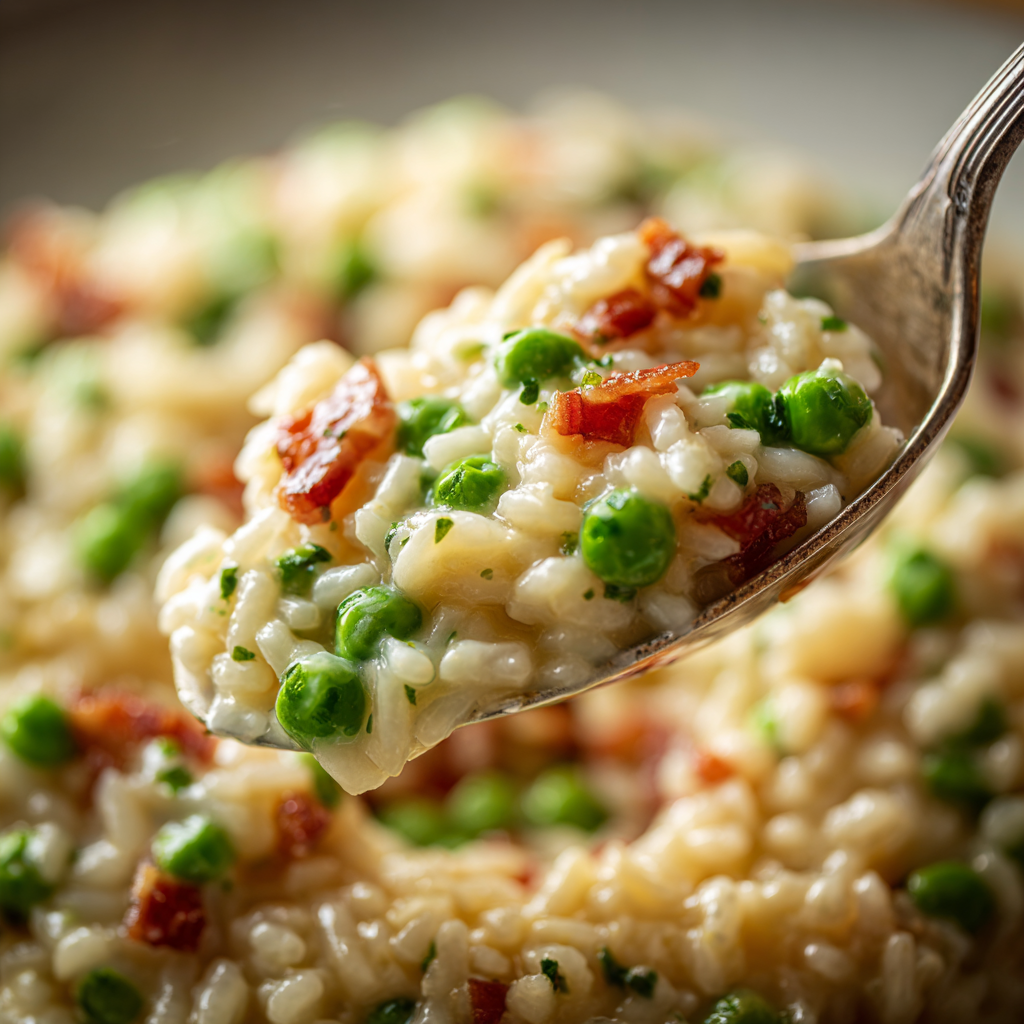
I reach for vialone nano because its rounded grains release starch steadily. That gives a soft all’onda texture while the grains stay intact.
If I can’t find it, Carnaroli or Arborio will do. With those, I watch simmering time and stir a touch more to coax creaminess from the rice.
Fresh peas, pods, and pantry staples
Buy fresh peas with firm, bright pods. Shell peas and simmer the pods into a pale-green broth—this concentrates pea flavor without heaviness.
- Onion, finely chopped
- Pancetta cut small; parsley and butter
- Olive oil and Parmigiano
- Light vegetable or chicken broth to round the bowl
Helpful tools
A stockpot for pods, a wide skillet for the rice, a ladle and an immersion blender matter. They help extract that green gold and control texture.
| Item | Why it matters | Amount for 4 servings |
|---|---|---|
| Vialone Nano (or Carnaroli/Arborio) | Steady starch release; keeps grain intact | 350 g rice |
| Fresh peas & pea pods | Pods make pea-forward broth; peas add sweetness | ~1 kg peas with pods |
| Broth (vegetable or chicken) | Rounds flavors without masking peas | 1 liter |
Build deep flavor first: broth and pea pod technique
A bright, green stock transforms simple peas into something memorable. Start by shell peas and rinse the pods to remove field grit. This small step preserves freshness and keeps the broth clean.
Pea pod broth 101: extracting the “green gold”
Cover the pods with just enough water. Add sliced onion and carrot. Simmer 30–45 minutes so the color and aroma steep without turning dull.
- Blend the pot and strain, pressing to capture every drop of liquid while discarding fibers.
- Keep the broth warm so when you bring boil the rice pot you can add broth without chilling the pan.
- If you lack fresh peas pods, purée some peas into hot vegetable broth to mimic color and depth.
Vegetable broth vs. chicken broth: what changes in the bowl
Vegetable broth keeps the pea perfume front and center. Chicken broth adds body and savory weight. Choose based on whether you want brightness or comfort.
| Method | Why it matters | Result in the bowl |
|---|---|---|
| Pod stock (30–45 minutes) | Full pea aroma, true color | Light, green, aromatic |
| Vegetable broth + pea purée | Quick, season-ready | Bright color, cleaner taste |
| Chicken broth base | Richer mouthfeel | Deeper savory finish |
Risi e Bisi Venetian Risotto Recipe: step-by-step, family-tested
Begin with a warm pan, olive oil, and half the butter so the finely chopped onion and pancetta can soften without browning. I keep the flame low and watch for translucence rather than color.
Make the soffritto
Add the chopped onion and pancetta and sauté gently about 5 minutes until the onion is soft and the fat has rendered. Stir in parsley to perfume the base; this should smell sweet and balanced.
Add peas and broth, then rice
Toss in the peas with two ladles of hot broth and cook about 5 minutes to wake their color. Pour the strained green pod liquid, season, bring to a boil, then lower the heat and add the rice in one go. This is why we add broth up front here.
Cook to all’onda and finish
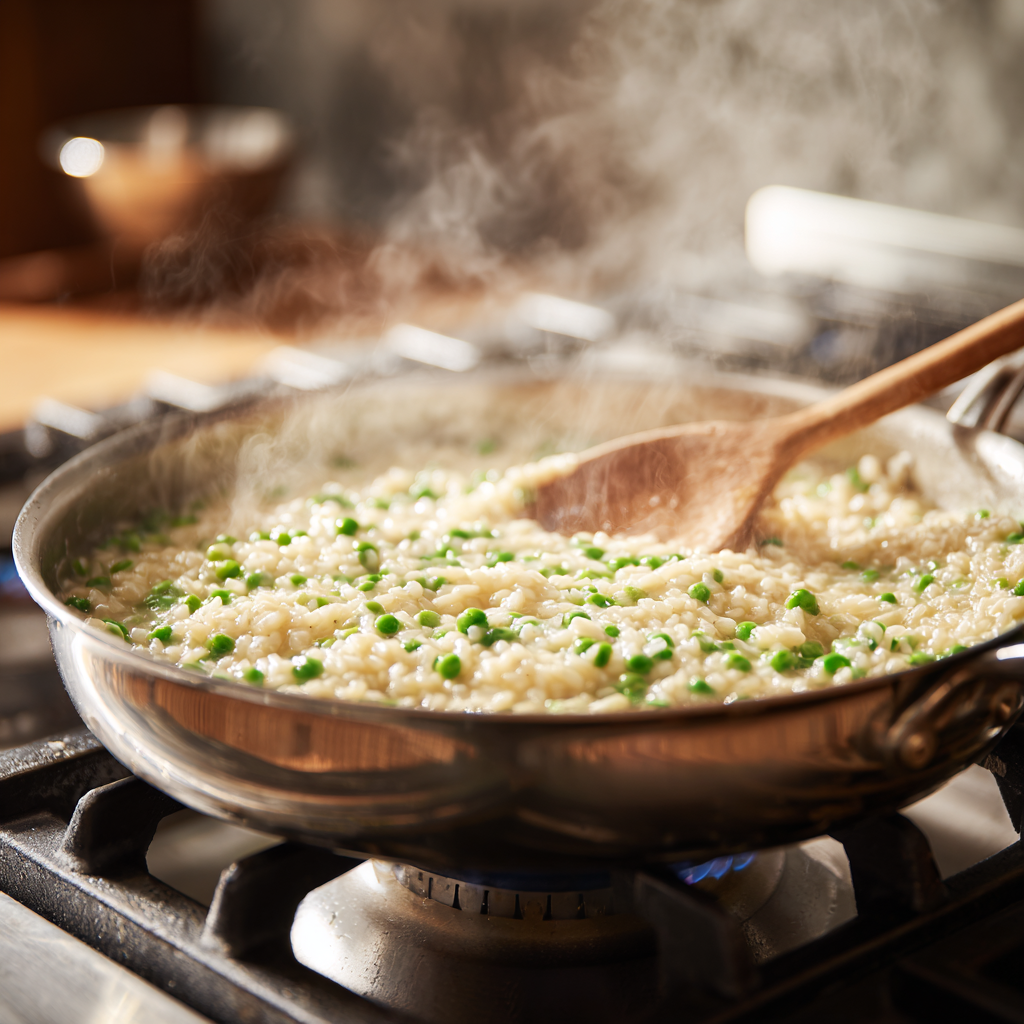
Simmer at a gentle bubble, stirring now and then so the rice cooked stays tender and the peas stay bright. If the pot tightens, add a splash of broth or water to reach a spoonable texture.
Mantecatura and serve
Off the heat fold in remaining butter and Parmigiano. Taste, adjust, and serve immediately in warm bowls so the texture lands perfect at the table.
| Step | Visual cue | Minutes |
|---|---|---|
| Sauté soffritto | Onion translucent, pancetta glossy | 5 |
| Cook peas with broth | Peas bright, color deepens | 5 |
| Simmer rice all’onda | Surface waves softly when tilted | 15 |
Variations and dietary tweaks that stay true to the spirit
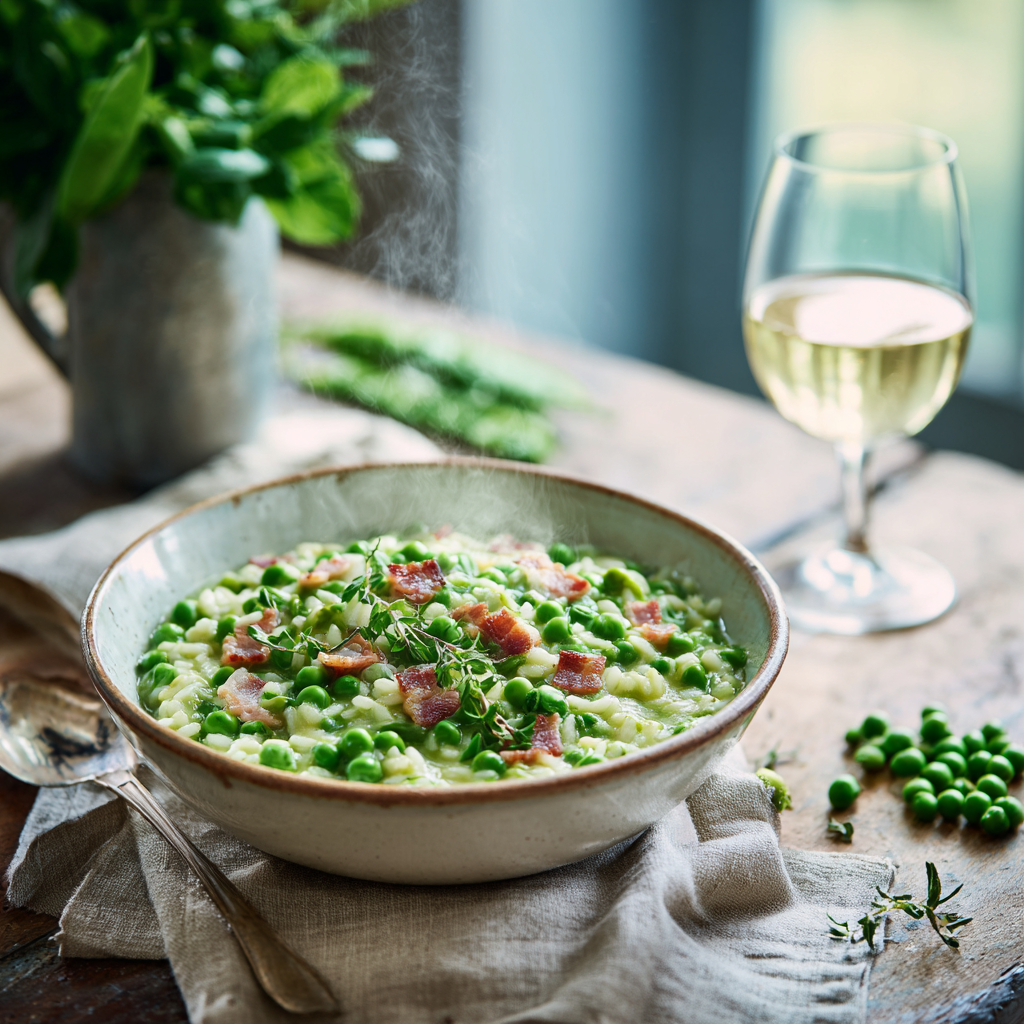
A few smart changes let you keep the same spoonable texture and bright pea flavor. I want a bowl that still feels like home, even when ingredients change.
For a lighter take, use vegetable broth and finish with a splash of olive oil instead of extra butter. This keeps the liquid loose and the texture all’onda without weighing the dish down.
Meat swaps and vegetarian options
If pork is off the table, prosciutto adds a delicate salt note. For vegetarian plates, skip pancetta entirely and rely on good broth and fresh herbs to lift flavor.
When fresh peas aren’t available
Frozen peas work well if you purée a portion with hot broth to rebuild color and depth that pods normally provide. Add frozen peas later in cooking so they keep a tender bite and bright taste.
- Use vegetable broth for brightness or chicken broth for more savor.
- Replace butter with olive oil for vegan versions; omit cheese and add extra parsley.
- Simmer saved pods, even from frozen, to boost aroma when possible.
| Variation | What changes | Result in the bowl |
|---|---|---|
| Lighter | Vegetable broth, olive oil finish | Brighter color, less richness; keeps spoonable texture |
| Vegetarian | Omit pancetta; keep broth vegetable-based | Pea-forward, cleaner taste; rely on herbs for depth |
| Frozen peas | Puree some peas with broth; add rest later | Restored color and flavor; peas stay tender |
| Vegan | Use oil throughout, no cheese | Different finish; balance with herbs and extra liquid |
Serving, storage, and expert tips for perfect texture
Serve immediately while the surface still moves in a soft wave and each spoonful carries broth and peas. I like warm bowls to keep the heat and the all’onda texture intact. Finish with a sprinkle of parsley and a thin thread of good olive oil.
How to plate and pair
Plate in shallow warm bowls so the rice and peas ripple. A single spoon shows the liquid and grain together.
Keep sides simple: a crisp salad, grilled vegetables, or a light white wine lets the dish lead. If you used pancetta and onion in the soffritto, choose light pairings that do not compete.
Leftovers and reheating
Cool quickly and refrigerate for up to two days. To reheat, warm gently over low heat for a few minutes and add broth or a splash of water. Use vegetable broth or chicken broth if you want extra body.
Stir patiently as the rice cooked loosens. Taste near the end; broth concentrates with time time, so adjust salt before serving.
- If the pot feels tight, add broth incrementally until it flows all’onda; do not let it mound like a firm risotto.
- If dinner is delayed an hour, hold the pot off heat and keep it loose with small additions of hot broth.
- Leftovers reheat best with a ladle of warm liquid rather than cold water; it preserves temperature and texture.
| Storage | Time | Best reheat liquid |
|---|---|---|
| Refrigerated | Up to 2 days | Vegetable broth |
| Reheat gently | Several minutes | Chicken broth or water |
| Last-minute loosen | Under an hour off heat | A splash of hot broth |
Conclusion
.
One pot and an hour can turn bright peas and good rice into a meal that feels like home. I keep to the pillars: fresh peas pods for a green broth, a gentle soffritto with pancetta, and the bold move of adding hot broth all at once so the pot cooks all’onda.
Finish with mantecatura and serve hot. Choose vegetable or chicken broth as you like. I favor Vialone Nano for texture, but other short-grain rice will do with care.
This risi bisi recipe brings venetian rice peas to your table. Cook, taste, adjust, and enjoy; the time time you spend rewards every spoonful.
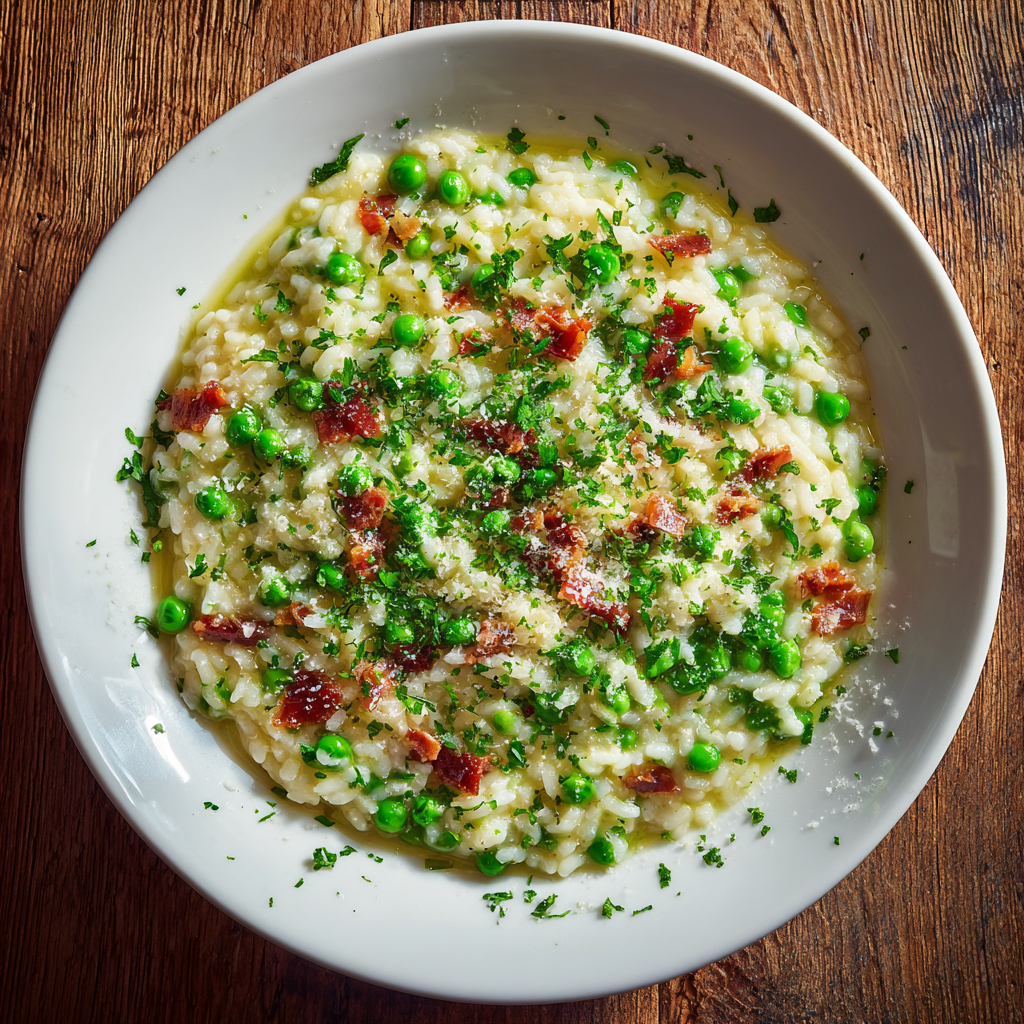
Risi e Bisi (Venetian Rice and Peas)
Ingredients
Method
- Shell the peas and rinse the pods.
- Add pods, onion, and carrot to a pot with just enough water to cover.
- Simmer gently for 30–45 minutes.
- Blend and strain to get a smooth, green broth. Keep warm.
- In a wide pan, heat olive oil and half the butter over low heat.
- Add finely chopped onion and diced pancetta.
- Cook until the onion is soft and translucent, not browned.
- Stir in parsley.
- Add shelled peas and a few ladles of hot broth.
- Simmer 5 minutes until peas turn bright green.
- Pour in the remaining hot broth all at once.
- Stir gently, bring to a low simmer, and cook until the rice is tender but slightly firm.
- Stir occasionally; add a splash of hot water if it thickens too much.
- Remove from heat.
- Add the remaining butter and grated Parmigiano-Reggiano.
- Stir briskly to create a creamy, glossy texture.
- Season with salt and pepper.
- The texture should be soft and flowy (all’onda).
- Ladle into warm bowls and finish with a drizzle of olive oil and chopped parsley.
Notes
- Rice Choice: Vialone Nano gives the best texture—soft yet structured. Arborio or Carnaroli also work with minor adjustments.
- Broth Tip: Use the pods for broth to get the signature green color and sweet pea aroma.
- Texture: The finished dish should move gently when you tilt the bowl—this is “all’onda.”
-
Vegetarian/Vegan Options:
- Omit pancetta for vegetarian.
- For vegan, use olive oil instead of butter and skip cheese.
- Reheating: Warm slowly with a bit of broth or water; don’t let it dry out.