Jump to Recipe
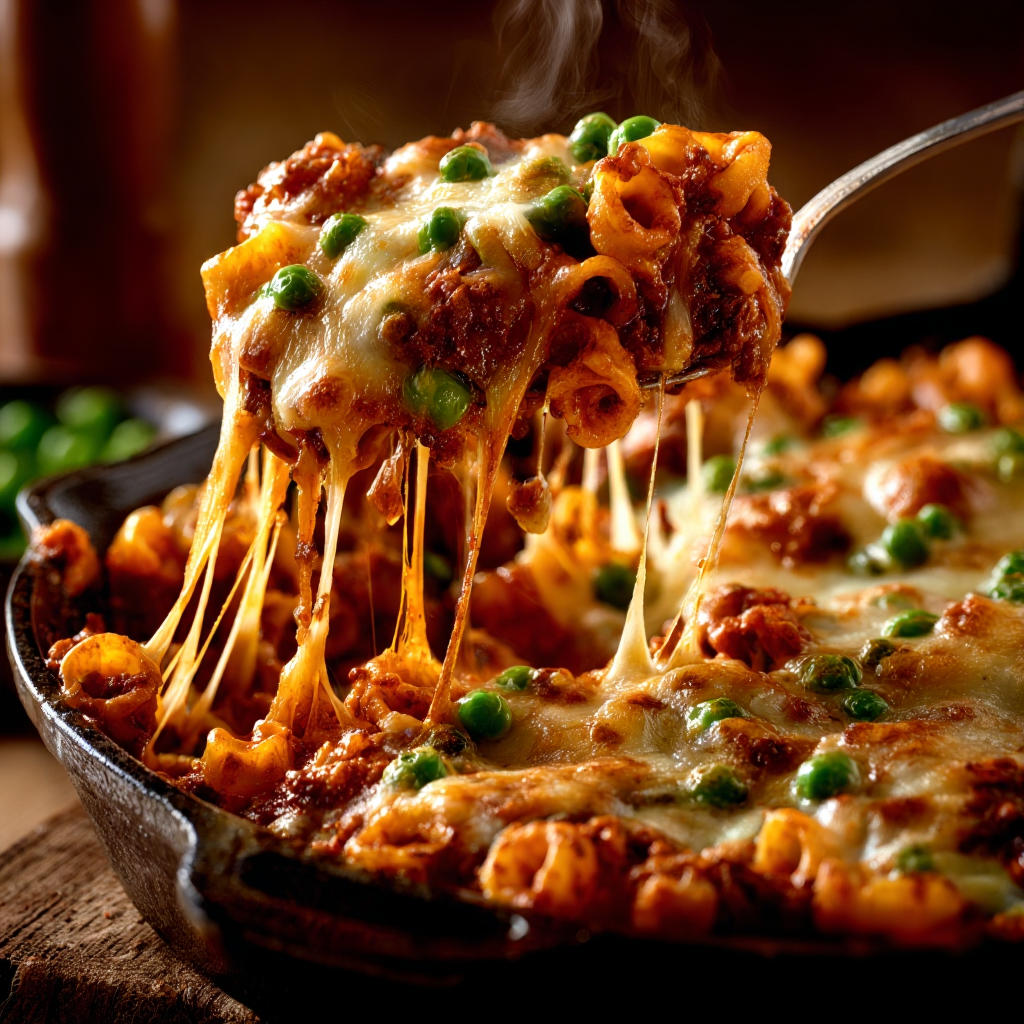
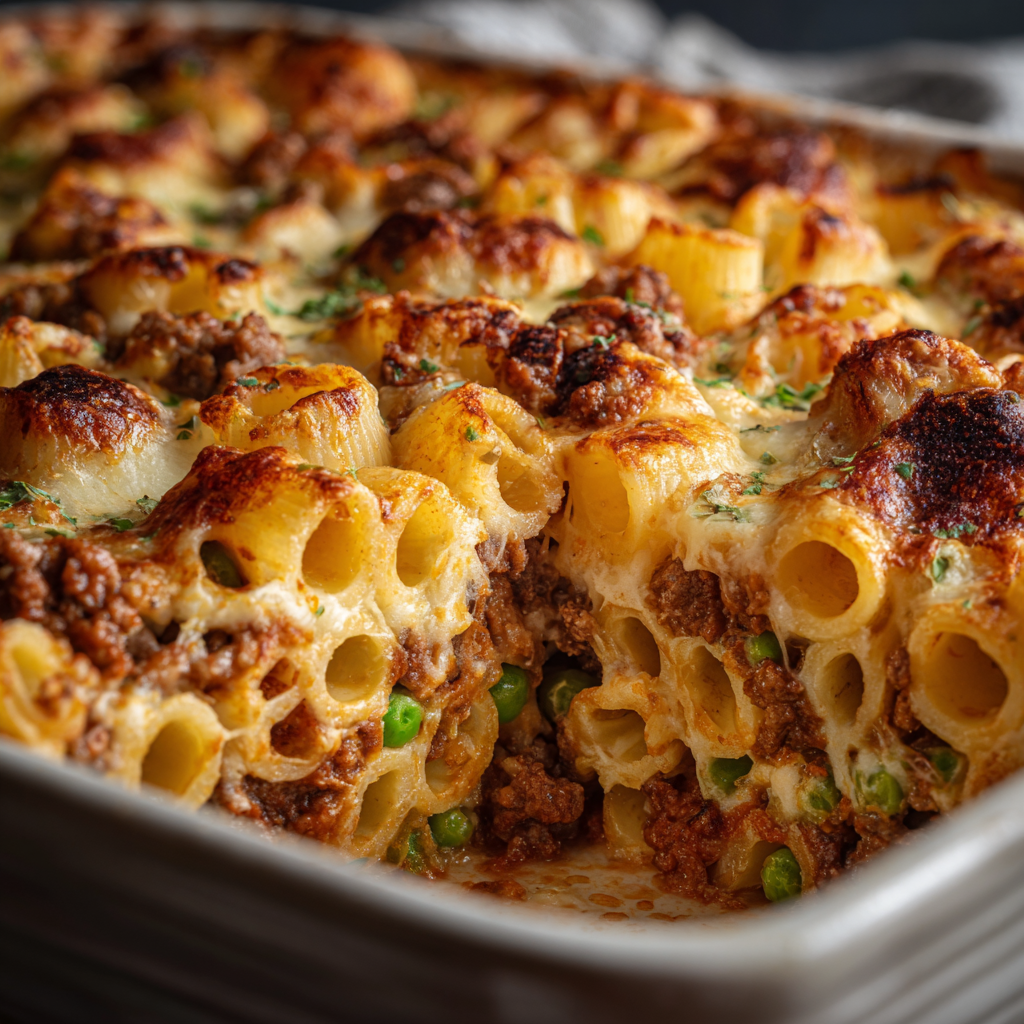
I slide a pan from the oven and the kitchen fills with a slow, tomato-scented warmth that always feels like home. The sauce clings to each curve of the little rings, and the top browns into a patchwork of cheese and caramelized edges that make the house quiet for a minute—everyone listening for the first cut.
This dish is the kind my mother would cut into neat squares for Sunday, the kind you find sold by the slab in Palermo’s bakeries and friggitorie. It travels well, feeds a crowd, and holds its shape if you undercook the pasta by a few minutes before baking. I favor a meat-and-pea ragù for depth, or a béchamel-plus-marinara path when I want a creamier finish that I can prepare a day ahead.
We’ll focus on humble ingredients—olive oil, passata, basil—and on timing cues that keep texture right, like precise minutes for boiling and a patient rest after baking. Small choices in cheese, from mozzarella to a spoon of ricotta or a sprinkle of parmesan, change the mood without complicating the shopping list.
For a related take on baked comfort, see this beloved variation at Savor Baked Pasta Alla Norma.
Key Takeaways
- Undercook the pasta by about three minutes so the casserole sets without becoming mushy.
- Choose between a meat-and-pea ragù or a béchamel-plus-marinara for different textures.
- Assemble ahead: the dish benefits from a day-ahead prep and a final bake before serving.
- Simple cheeses—mozzarella, ricotta, parmesan—alter the character without extra fuss.
- Salt generously and taste as you go; small seasoning changes echo through the whole dish.
What makes pasta al forno Sicilian style special right now
What makes this tradition sing now is its ease and its ability to travel well. This baked pasta works as a weekday rescue and as a generous weekend centerpiece. It holds up whether you serve it steaming from the oven or at room temperature after a long afternoon.
The small ring shape soaks up sauce like a sponge, giving each bite a balanced mix of tomato, cheese, and meat. That means a single forkful tastes complete, with no dry edges or lost flavors.
We love that you can streamline the process. Choose anelletti over a complex timballo and keep the spirit of Palermo in an easier version. Fold in sausage, ground pork, or tiny meatballs, or keep it meatless with extra cheese and basil.
- Assemble ahead and bake when you have a free moment.
- Uses less water in the sauce-to-pasta ratio to keep creamy cohesion without heavy cream.
- Travels and reheats well—perfect for sharing with neighbors or saving for the next day.
| Version | Effort | Best for |
|---|---|---|
| Anelletti with ragù | Moderate | Room-temp servings, family meals |
| Béchamel-marinara blend | Low to moderate | Make-ahead dinners, richer bites |
| Meatless with extra cheese | Low | Weeknights and lighter gatherings |
Ingredients that build real Sicilian flavor (and smart substitutions)
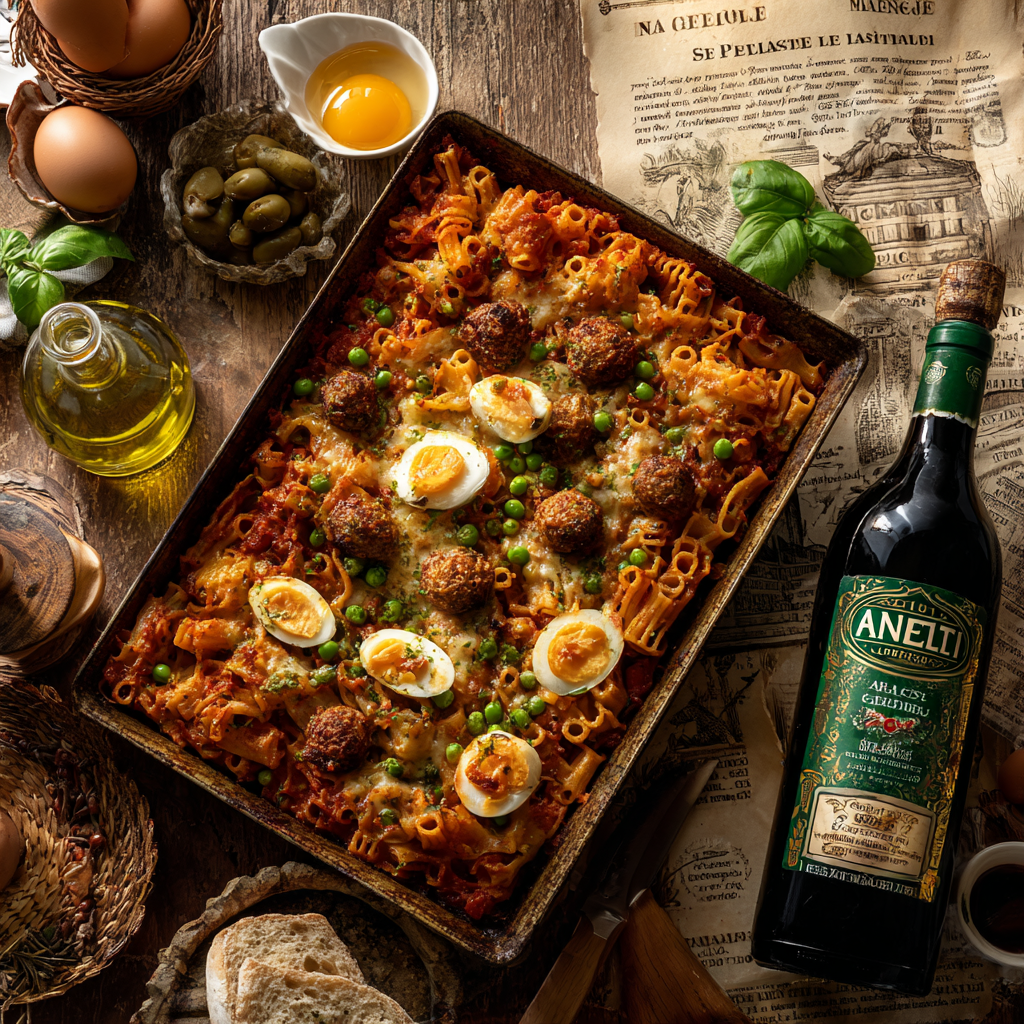
I start with a thick tomato passata—Mutti is my go-to—because it clings and sets a sturdy sauce. Heat good olive oil, soften onion, bloom garlic, then season with pepper and basil for brightness.
Core pantry
Use passata as a clean, seedless base. Softening onion first and browning ground pork with Italian sausage gives the meat sauce real depth. Simmer the passata about 30 minutes so flavors round out.
Cheeses that matter
Buy mozzarella and parmesan in blocks and grate them yourself. Freshly grated cheese melts and ties the casserole together better than pre-shredded blends. A spoonful of ricotta or a wedge of primosale changes the texture gently.
Meat and veggie add-ins
Fold in tiny meatballs and peas for little surprises. Palermo touches—hard-boiled eggs and fried eggplant—add richness and contrast. For a creamier finish, blend béchamel with marinara.
Pasta shapes and why rings shine
Anelletti trap ragù and peas so slices hold. If you can’t find them, penne, rigatoni, or ziti are solid backups; they offer surface area and tubes that catch sauce well.
- Reserve a cup of starchy cooking water to marry sauce and cheese.
- Undercook the noodles about three minutes from package time so the oven finishes them.
- Mind salt: balance cheese saltiness to avoid over-seasoning.
| Shape | Why it works | Best swap |
|---|---|---|
| Anelletti | Ring traps meat and peas for cohesive slices | Penne |
| Penne | Tubes hold sauce, easy to find | Rigatoni |
| Rigatoni | Large tunnels, hearty bite | Ziti |
Tools and pan size for a baked pasta that stays creamy
The gear you choose shapes the final bite. I reach for an 8×12-inch, 12-cup baking dish because its depth traps steam and keeps the center creamy while the edges brown slowly.
If your pan is too large the mixture spreads thin, the top cooks too fast, and moisture escapes. For this recipe it’s better to bake compact and tall than wide and shallow.
Skillet and pot basics
A heavy skillet gives steady heat for a rich sauce and good browning. A roomy pot lets you boil noodles in well-salted water so they have flavor before assembly.
- Lightly oil the baking dish to prevent sticking, especially with lots of mozzarella.
- If your skillet is oven-safe, you can bake in it—just be sure it’s deep enough to avoid bubbling over.
- Keep a heatproof measuring cup nearby to grab starchy water; a splash adjusts consistency at the last minute.
- Preheat the oven and place the pan on the middle rack for even heating; rest the bake for a few minutes before slicing so it sets.
| Item | Why it matters | Tip |
|---|---|---|
| 8×12-inch, 12-cup baking dish | Depth keeps steam, prevents drying | Use for 6–8 servings to keep height |
| Heavy skillet | Even browning and steady sauce simmer | Bake directly if oven-safe and deep |
| Large pot | Boils noodles in salted water without crowding | Reserve a cup of starchy water before draining |
| Measuring cup & thin coating of oil | Quick access to water; less sticking on serving | Oil the dish lightly when using lots of cheese |
pasta al forno sicilian style: step-by-step method for an authentic bake
A bubbling rim and a browned crust mean the dish will slice cleanly and serve warmly. Below are clear cues and exact minutes so you can follow confidently.
Make the meat ragù
- Heat olive oil, soften onion and a touch of garlic, then brown italian sausage and ground pork until well colored.
- Pour in passata, season with pepper, simmer about 30 minutes until the meat sauce tastes balanced.
- Stir in peas or tiny meatballs in the final five minutes.
Or build a béchamel-marinara blend
- Whisk a quick béchamel, fold in marinara, grated parmesan, and pepper.
- Add torn mozzarella so the sauce will bake into creamy pockets around the pieces later.
Boil and reserve
Bring a large pot to a rolling boil, salt it well, and cook pasta very al dente—about three minutes less than the package time.
Scoop out one to two cups of starchy water before you drain; that water helps make the sauce glossy when you toss everything together.
Assemble, bake, and rest
- Toss the drained pasta with enough sauce, mozzarella, parmesan, peas, and any eggs or meatballs so every piece is coated; loosen with reserved water if needed.
- Oil an 8×12, 12-cup baking dish, spoon a thin sauce layer, add half the mixture, scatter cheese, then repeat and finish with a generous top of cheese.
- Preheat the oven to 350–425°F and bake 20–30 minutes until edges bubble and the top is golden.
- Let it rest 20–30 minutes before slicing so the starches set and the slices hold like lasagna.
| Oven Temp | Minutes | Visual Cue |
|---|---|---|
| 350°F | 25–30 | Even bubbling, golden top |
| 400°F | 20–25 | Faster browning at edges |
| 425°F | 20 | Quick spotting, watch closely |
Pro tips to nail texture, seasoning, and that classic Sicilian bite
I treat the bake like a gentle finish rather than a final cook, and that small shift changes everything. Stop boiling about three minutes early so the oven completes the work and the rings keep a tender snap.
Salt the pot with two to three tablespoons so each bite tastes seasoned from the inside out. Before you drain the noodles, scoop out one to two cups of cooking water; later it will emulsify sauce and cheese into a glossy, creamy coating without heavy cream.
Pick an 8×12-inch, 12-cup pan that fits the volume snugly. Too much surface area dries edges before the center sets. When you toss ingredients, look for a thin pool of sauce at the bowl’s bottom—that tells you there’s enough moisture to survive baking.
- Layer pepper in stages and taste the sauce before assembly; cheeses add salt fast.
- Brown sausage or ground meat well to add depth, then simmer to marry juices.
- Start with a small swirl of garlic in oil to build aroma without harshness after baking.
- After baking, let the dish rest so starches set and slices hold cleanly.
Regional riffs and family variations you’ll see across Sicily
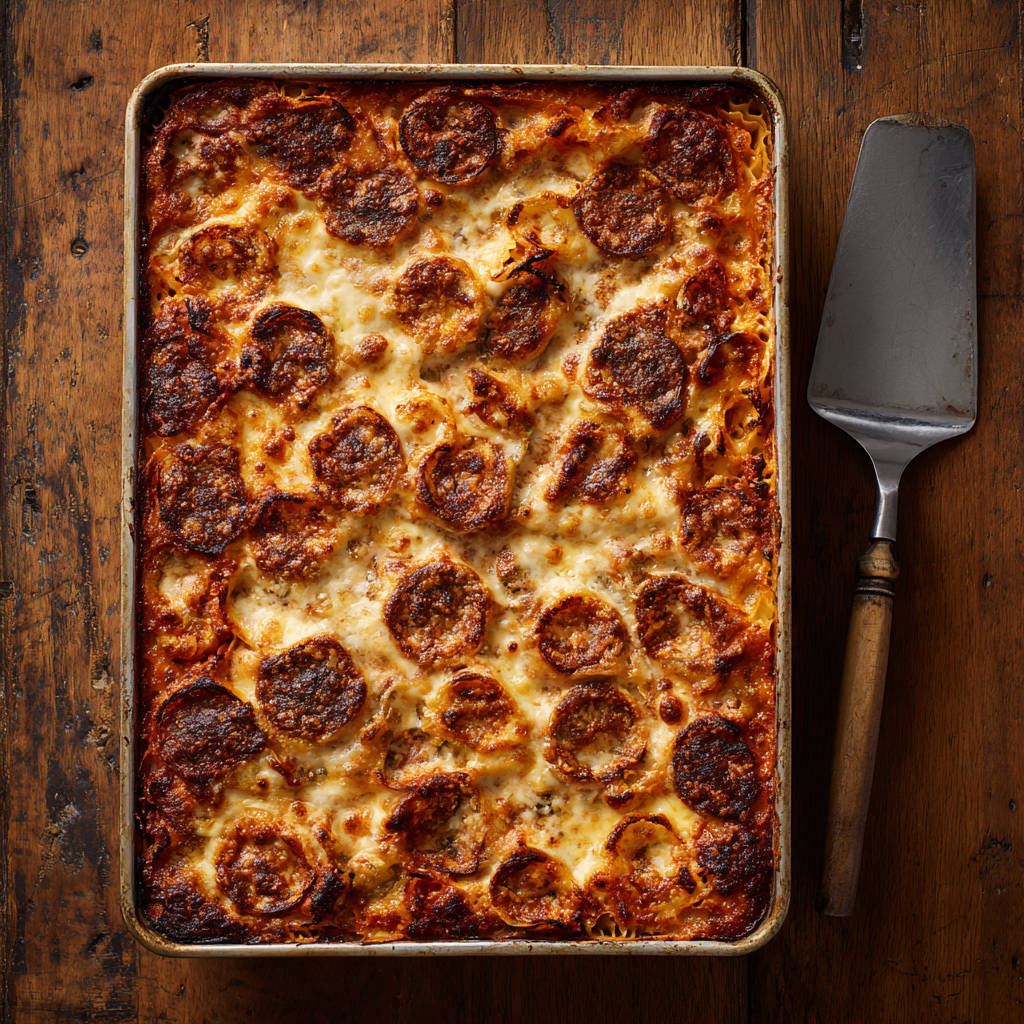
I love how a single change—smoked cheese or tiny meatballs—can send a familiar tray in a new direction. Families here keep the base steady and riff with a few trusted ingredients.
Palermo’s anelletti with peas, eggs, and eggplant
In Palermo you’ll find rings folded with a meat-and-pea ragù, hard-boiled eggs, and fried eggplant. A finish under primosale makes the top salty and milky—perfect for a Sunday share.
Béchamel layered with marinara for silkier texture
Spread a light béchamel between strata and the sauce becomes lusher without weighing the tray down. It’s my go-to when I want creamy pockets that melt into the cheese.
Meatless, bold, and allergy-friendly options
- Meatless: double mozzarella, torn basil, and bright tomatoes keep the dish abundant.
- Bold swap: crumble spicy sausage or melt smoked scamorza for a smoky note.
- Gluten-free: use a reliable GF short shape and GF sausage; the baking method stays the same.
| Variation | Key additions | Why try it |
|---|---|---|
| Palermo anelletti | Peas, eggs, fried eggplant | Classic, layered textures |
| Béchamel blend | Béchamel + marinara, ricotta | Silky sauce, make-ahead friendly |
| Kid-friendly | Tiny fried meatballs, mild mozzarella | Surprise bites kids love |
Make-ahead, storage, and serving: weeknights to Sunday lunch
Make-ahead comfort starts with a calm evening of assembly and a plan for the next day. I often build the dish up to 24 hours ahead, cover the baking dish, and chill. Baking from the fridge adds a few minutes—watch for bubbling edges and a hot center.
Assemble a day ahead and bake from the fridge
Pull the tray from the fridge 30 minutes before it goes into the oven when you can. That rest lets the cold center warm slightly so the edges don’t overcook while the middle heats through.
Refrigeration and freezing pointers
Leftovers keep well 3–4 days in the fridge. Freezing a whole pan often yields a soggy result after thawing, so I freeze single portions in airtight containers instead. Remove excess air and label with the date; portions keep up to two months.
Reheating without drying out
Reheat covered in a 325–350°F oven until the center reaches 160°F, about 15–25 minutes for single portions and 25–35 minutes for a chilled pan. In a pinch, microwave in short bursts with a spoonful of reserved cup of pot water to revive the sauce and protect the cheese.
What to serve
I serve slices with a crisp green salad and warm garlic bread. A bold Mt. Etna red stands up to mozzarella and parmesan and ties the meal together. For crowds, make a split version: italian sausage on one side and a meatless corner on the other, marked with foil tabs.
| Storage | Best practice | Timing |
|---|---|---|
| Refrigerate whole | Cover tightly, rest 30 minutes before baking | Up to 24 hours before baking; leftovers 3–4 days |
| Freeze portions | Airtight containers, remove air, freeze flat | Up to 2 months |
| Reheat tips | 325–350°F covered; microwave with a splash of pot water | 15–35 minutes depending on size |
Conclusion
Pulling the tray free and waiting those quiet minutes is where texture and memory meet.
You now have a clear way to a pasta that bakes up tender and saucy, the kind of dish that holds its shape yet feels generous with every bite.
Remember the small disciplines: undercook the noodles a few minutes, season the water well, and save a little sauce for the bottom so slices stay clean when served.
This is food rooted in home and in the traditions our mother and family passed down. Treat the recipe as a map—tweak it gently, pass it on, and enjoy how simple cheese and good technique can make a tray worth sharing.
Pasta al Forno Sicilian Style (Anelletti al Forno)
Ingredients
Method
- Heat olive oil in a heavy skillet.
- Soften the chopped onion, then add garlic and cook briefly.
- Add sausage and ground pork. Brown well until deep and caramelized.
- Pour in the passata. Season with pepper and salt to taste.
- Simmer 30 minutes, stirring sometimes.
- Add peas (and tiny meatballs if using) in the last 5 minutes.
- Melt butter in a pot. Stir in flour and cook 1 minute.
- Whisk in milk until smooth and slightly thick.
- Stir in marinara, Parmesan, pepper, and mozzarella pieces.
- Bring a large pot of water to a boil. Salt it well.
- Cook pasta 3 minutes less than the package time.
- Scoop out 1–2 cups of starchy cooking water.
- Drain pasta.
- Toss the pasta with your chosen sauce.
- Add mozzarella, Parmesan, peas or meatballs, and any optional egg or eggplant.
- Add a splash of pasta water if the mixture looks dry—you want a thin pool of sauce at the bottom of the bowl.
- Lightly oil an 8x12-inch (12-cup) baking dish.
- Spread a thin layer of sauce on the bottom.
- Add half the pasta. Sprinkle mozzarella and Parmesan.
- Add the rest of the pasta and finish with more cheese.
- Preheat oven to 350–425°F.
- Bake 20–30 minutes, until bubbling and golden on top.
- Rest 20–30 minutes before slicing so it sets cleanly like lasagna.
Notes
- Undercooking the pasta is the single biggest factor for a clean slice and a soft but not mushy bite.
- Don’t skip the rest time after baking—it lets everything set.
- Freshly grated cheese melts better than pre-shredded.
- The dish travels well and tastes great warm or at room temperature.
- You can build the whole tray a day ahead and bake when needed.