
Jump to Recipe
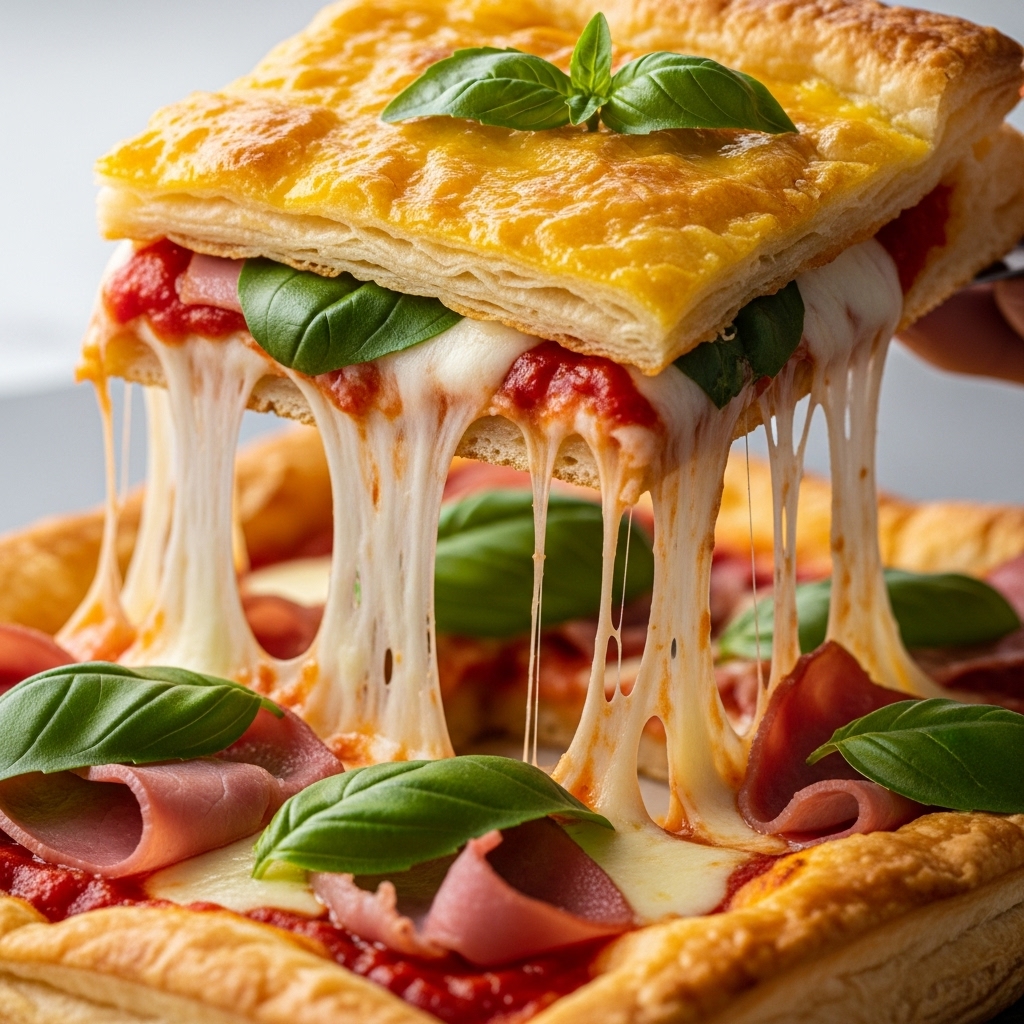
Golden, flaky pastry layers pull apart to reveal melted cheese stretching between tender dough and savory ham. Tomato-scented steam rises up, transporting you to a bustling street corner. Families gather for comfort food that feels like a warm hug.
This cooking doesn’t need fancy techniques—just honest ingredients and a little love.
I’m excited to share this authentic parigina pizza with you. It’s a Neapolitan street food treasure that surprised me near Napoli. Despite its name, this creation is thoroughly Italian, born in family-run bakeries.
Tradition meets practicality in these beloved spots.
This pizza parigina recipe italian style offers a beautiful contradiction. You get crispy puff pastry on top and soft dough underneath. Prosciutto cotto and provola cheese melt into tomato goodness between the layers.
It’s perfect warm from the oven or at room temperature the next day. This dish is versatile, forgiving, and absolutely delicious.
Key Takeaways
- This Neapolitan specialty combines two types of dough for a unique texture—crispy puff pastry top with tender base underneath
- The filling features traditional Italian ingredients: San Marzano tomatoes, prosciutto cotto (Italian cooked ham), and melty provola cheese
- Despite its French-sounding name, this dish is completely Italian and originates from Naples street food culture
- It’s incredibly versatile—enjoy it hot, warm, at room temperature, or even the next day without losing quality
- This rustic creation sits somewhere between a stuffed sandwich and traditional flatbread, making it perfect for any meal
- The preparation is forgiving and practical, ideal for home cooks wanting authentic Italian flavors without restaurant complexity
What Makes Parigina Pizza a Neapolitan Classic
Parigina pizza captures something essential about Naples. This is a city where innovation and tradition meet on every corner. This distinctive creation offers an enclosed treasure rather than an open-faced slice.
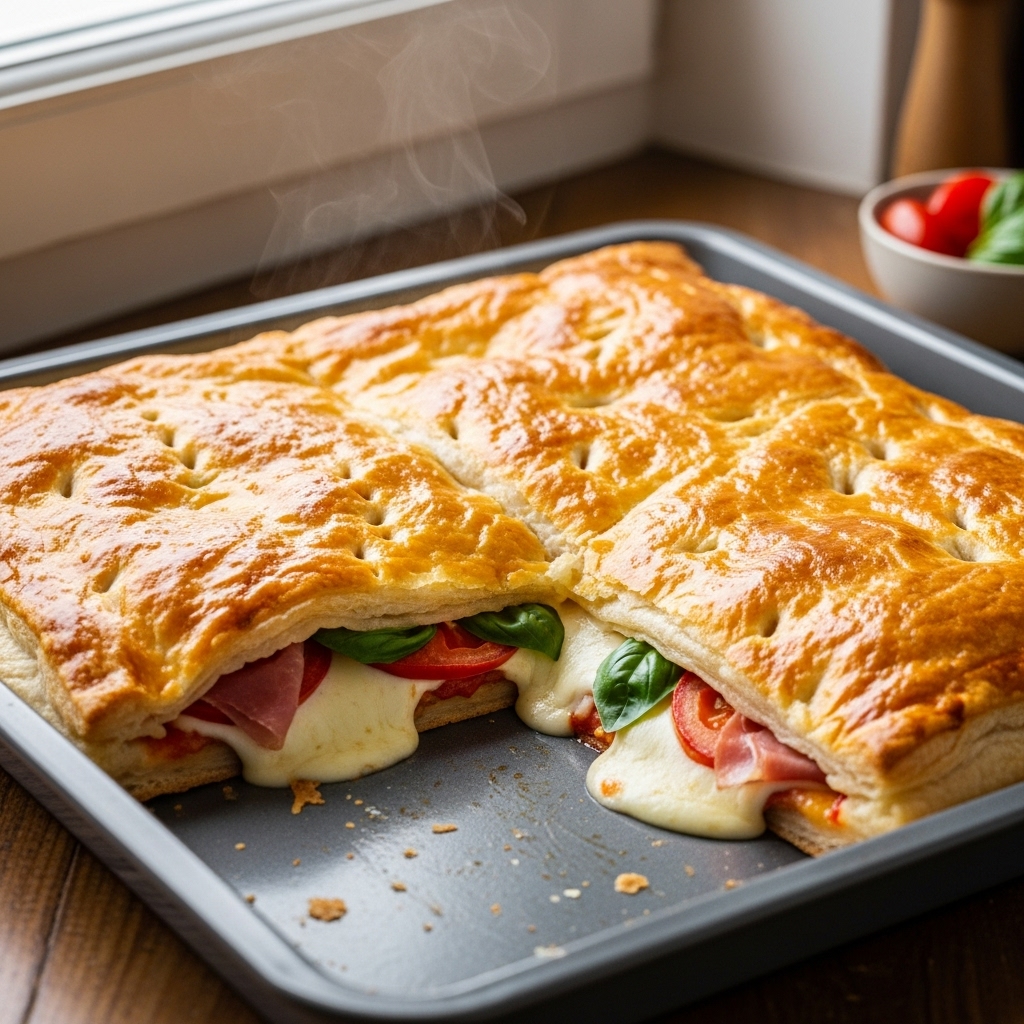
The structure alone sets it apart immediately. Most pizzas display their toppings proudly on top. Parigina keeps its secrets hidden between two layers.
The bottom layer stays true to classic pizza dough. The top features flaky, golden puff pastry. This transforms each bite into something wonderfully unexpected.
This unique design wasn’t created by accident. It emerged from the practical needs of working families and busy street vendors. They needed food that traveled well and satisfied hunger thoroughly.
That’s the beauty of authentic Neapolitan cooking. Necessity sparks innovation, and innovation becomes tradition.
Origins of Pizza Parigina in Naples Street Food Culture
Two compelling origin stories surround this beloved pizza rustica parigina. The more recent account places its creation in the 1970s. An innovative pizzaiolo at a small deli in Afragola experimented with new combinations.
He combined traditional pizza elements with French-inspired puff pastry. This created something entirely new yet deeply rooted in local tradition.
The older, more romantic version takes us back centuries. According to this tale, a French queen consort exclaimed “pe’ ‘a reggina.” These words translate roughly to “for the queen” but sounded like “parigina.”
Whether this story holds historical truth or represents culinary folklore remains unclear. Yet it reveals how deeply food and culture intertwine in Neapolitan life.
Parigina became essential naples street food pizza for working people. Street vendors could prepare these enclosed pizzas in the morning. They kept them warm throughout the day and sold them to workers.
The enclosed design meant no messy toppings sliding off. No sauce dripped on work clothes. Workers enjoyed pure, satisfying nourishment wrapped in golden pastry.
The typical filling provided protein and richness that sustained laborers. Ham, cheese, and mushrooms fueled bodies through long shifts. This was honest food created for real people with real hunger.
How Parigina Differs from Margherita and Other Traditional Napoli Pizza Styles
Understanding the differences between parigina and other Neapolitan pizzas helps us appreciate each style. The contrast goes far beyond simple toppings. It’s about philosophy, structure, and purpose.
| Pizza Style | Structure | Primary Ingredients | Best Serving Method |
|---|---|---|---|
| Parigina | Enclosed with pizza dough base and puff pastry top | Ham, mozzarella, mushrooms, tomato | Warm or room temperature, portable |
| Margherita | Open-faced with exposed toppings | Tomato sauce, mozzarella, fresh basil | Immediately after baking, seated |
| Marinara | Open-faced, no cheese | Tomato sauce, garlic, oregano, olive oil | Immediately after baking, seated |
| Calzone | Fully enclosed with folded dough | Ricotta, mozzarella, salami, tomato | Warm, can be portable |
The iconic Margherita celebrates simplicity and purity. Its open face showcases the quality of each ingredient. You see vibrant red tomato, creamy white mozzarella, and fresh green basil.
You eat Margherita immediately after it emerges from the oven. The cheese stretches and the basil releases its aroma.
Parigina takes a completely different approach. The puff pastry top creates a protective layer. This seals in moisture and flavor.
The pizza stays delicious even after cooling to room temperature. This makes it perfect for the naples street food tradition. Vendors needed food that remained appealing for hours.
A calzone also encloses its filling. However, it uses pizza dough for both top and bottom. This creates a denser, bread-like experience.
Parigina’s combination creates textural contrast. The foundation is chewy below, while the crown is crispy and flaky above. This dual texture makes every bite interesting.
The heartier filling distinguishes parigina from lighter traditional options. Marinara offers a lean, simple meal. Margherita provides moderate satisfaction.
Parigina delivers substantial nourishment. The ham adds protein and savory depth. The cheese provides richness and binding.
The mushrooms contribute earthy flavor that grounds the entire creation. This practical innovation reflects the genuine wisdom of Neapolitan food culture.
Working families needed affordable meals that filled stomachs. Parigina answered that need while maintaining delicious standards. It’s part pizza, part savory pie, and entirely representative of Naples.
Essential Ingredients for Authentic Parigina Pizza
The right ingredients bring your kitchen closer to Naples. Quality matters deeply with simple components. Each ingredient creates layers of flavor and texture.
Authentic Parigina honors tradition while using available ingredients. You don’t need Italian imports for spectacular results. Smart substitutions and focus make all the difference.
Building Blocks of Perfect Pizza Dough
Exceptional dough starts with understanding each component. Assemble ingredients before mixing at proper temperature. This preparation step sets you up for success.
The foundation requires just a handful of ingredients. You’ll need 3 cups flour, 1¼ cups lukewarm water, and 1 teaspoon yeast. Add 1 teaspoon sugar, 1 tablespoon olive oil, and 1 teaspoon fine sea salt.
Caputo 00 Flour or King Arthur Bread Flour
Flour choice dramatically impacts your final texture. Italian pizzaiolos traditionally use Caputo 00 flour. This silky, finely-milled flour creates incredibly tender dough.
King Arthur Bread Flour delivers wonderful results. It’s available at most American supermarkets. The protein content gives dough strength while maintaining chewy texture.
Fresh Yeast Versus Active Dry Yeast
Both yeast types work beautifully in this recipe. I typically use active dry yeast for convenience. Fresh yeast offers slightly more complex flavor from specialty markets.
Active dry yeast delivers consistently excellent results. It stores much longer in your pantry. Dissolve it in lukewarm water with sugar and wait 5 minutes.
Sea Salt and Filtered Water
These details truly matter in bread making. Quality sea salt enhances flavor without chemical taste. Fine sea salt dissolves easily and distributes evenly.
Filtered water ensures no chlorine interferes with yeast. High chlorine levels can slow or kill yeast. Let tap water sit uncovered for an hour if needed.
The Glorious Filling That Defines Ham Cheese Parigina
The filling transforms this into something spectacular. Generous layers of tomato, ham, and cheese create balanced richness. Prepare filling ingredients before stretching dough for quick assembly.
Traditional ham cheese parigina uses authentic ingredients. These choices honor Neapolitan street food heritage. Understanding each component helps you make informed substitutions.
San Marzano DOP Tomatoes and Fresh Basil
San Marzano DOP tomatoes represent the gold standard. Grown in volcanic soil near Mount Vesuvius, they offer perfect balance. The DOP designation guarantees authenticity and quality control.
You’ll need one 28-ounce can of whole peeled tomatoes. Drain tomatoes thoroughly in a sieve for 10 minutes. Excess liquid turns crust soggy instead of golden and crispy.
Fresh basil leaves add aromatic brightness. Use whole leaves rather than chopped basil. The heat releases essential oils, infusing the entire pizza.
Prosciutto Cotto and Fior di Latte Mozzarella
Authentic prosciutto cotto provides the ham component. This Italian cooked ham delivers delicate flavor. You’ll need about 12 ounces, sliced thin.
Quality deli ham works as a substitute. Look for minimally processed ham without added water. The ham should taste clean and slightly sweet.
The recipe calls for 11 to 12 ounces of sliced provolone. Provolone melts beautifully and provides nutty, tangy notes. Fior di latte mozzarella offers milder, creamier flavor.
Seek out Caciocavallo cheese at Italian specialty shops. This stretched-curd cheese has nutty, tangy notes. It melts into stretchy, flavorful pools.
The final touch uses two sheets of all-butter puff pastry. I strongly recommend all-butter varieties for superior flavor. Pre-rolled sheets save time without sacrificing quality.
Preparing Traditional Neapolitan Pizza Dough from Scratch
Creating traditional pizza dough at home transforms your kitchen into a little piece of Naples. This process honors generations of Italian bakers who perfected the art of crafting neapolitan pizza dough. I’ve made this dough countless times, and each batch reminds me that patience creates something extraordinary.
Mixing and Kneading by Hand or Stand Mixer
Both hand mixing and stand mixers produce exceptional results when you understand the fundamental principles. I personally reach for my stand mixer fitted with a dough hook on busy evenings. There’s something deeply satisfying about hand kneading that connects you to the craft.
Start by combining lukewarm water (around 100-110°F) with yeast and a pinch of sugar. Let this mixture rest for five minutes until it becomes foamy. Add your olive oil, sea salt, and about two cups of flour.
Here’s where patience becomes your best friend. Add the remaining flour gradually, just a few tablespoons at a time. You’re looking for dough that cleans the sides of the bowl and wraps smoothly around the hook.
If you’re working by hand, turn your dough onto a lightly floured surface. Push the dough away from you, fold it back, turn it, and repeat for eight to ten minutes. The dough will gradually become smooth and elastic, developing the gluten structure that gives authentic Neapolitan pizza its characteristic chew.
Key steps for successful mixing include:
- Use water that feels warm to the touch but not hot—too much heat kills the yeast
- Add flour incrementally to avoid creating dough that’s too dry or stiff
- Knead until the dough springs back when you press it with your finger
- Trust your touch more than exact measurements—humidity affects flour absorption
Cold Fermentation for Maximum Flavor Development
The secret to restaurant-quality neapolitan pizza dough lies not just in your ingredients, but in time. You can use the dough after a three-hour room temperature rise. Cold fermentation overnight unlocks flavors that simply cannot be rushed.
After kneading, form your dough into a smooth ball and place it in a large, well-oiled bowl. Cover tightly with plastic wrap and let it rise at room temperature for about an hour. Then transfer your covered bowl to the refrigerator and let the dough ferment overnight.
This extended cold fermentation allows enzymes to break down proteins and starches, developing complex flavors. The cool temperature slows yeast activity while encouraging flavor development. You’ll get dough that tastes like it came from a generations-old pizzeria.
The next day, remove your dough from the refrigerator about an hour before you plan to shape it. This allows the dough to come back to room temperature and complete its final rise. The dough should look puffy and feel airy when you gently press it.
Dividing and Shaping Dough Balls for Crispy Thin Crust
Proper shaping technique makes all the difference between a soggy base and that coveted crispy thin crust. The goal is stretching rather than rolling, which preserves the precious air bubbles created during fermentation.
For a rectangular parigina pizza, you’ll typically use the entire dough batch rather than dividing it. Gently deflate your risen dough by pressing it with your fingertips. Transfer it to a well-oiled baking sheet or rectangular pan.
Using your fingertips, press and stretch the dough from the center outward toward the edges. Work patiently, allowing the dough to relax if it keeps shrinking back stubbornly. This resistance means the gluten needs a ten-minute rest—cover the dough loosely and walk away.
This gentle handling ensures your bottom crust bakes up tender inside with a satisfying crispy exterior. The dough should be thin enough to see your hand through it when held up to light.
Essential shaping tips include:
- Oil your hands lightly to prevent sticking while maintaining control
- Work from the center outward in a circular or outward motion
- Let the dough rest whenever it resists stretching—never force it
- Aim for even thickness throughout to ensure uniform baking
- Create a slightly thicker edge to contain your toppings and prevent overflow
Once shaped, your dough is ready to become the foundation for your crispy thin crust parigina. It carries forward centuries of Neapolitan pizza-making tradition right in your home kitchen.
Complete Parigina Pizza Napoli Recipe with Step-by-Step Instructions
I’ll guide you through each step of making your parigina pizza. This parigina pizza napoli recipe turns simple ingredients into something amazing. Patience during assembly creates those perfect golden, flaky bites.
After your dough rests, it becomes easy to work with. The relaxed gluten stretches easily without fighting back. Set up your well-oiled 10×15-inch baking sheet before you start.
Stretching Dough to Proper Dimensions
Move your rested dough to the center of your oiled sheet. Use your fingertips to press outward from the center. Work steadily toward the edges and corners for even thickness.
Press with all ten fingertips in a gentle walking motion. The dough should reach all four corners without thin spots. If the dough resists, cover it and let it rest ten more minutes.
You need even coverage of your rectangular pan, not a perfect circle. Aim for consistent quarter-inch thickness across the entire surface. This creates a crispy thin crust parigina that bakes evenly.
Cover the pan completely with plastic wrap after stretching. Let the dough rest twenty minutes at room temperature. This final rest prevents shrinkage when you add toppings.
Building Layers: Tomato Basil Base and Ham Cheese Topping
Remove the plastic wrap and get ready to build layers. Each ingredient creates the perfect bite of pizza rustica parigina. Lay out all ingredients before starting for smooth assembly.
Spread your prepared tomato sauce evenly across the entire dough. Use a large spoon or small offset spatula. Don’t hold back—you want good coverage for flavor.
The tomatoes should form an even one-eighth inch layer. Proper distribution gives every portion that bright tomato flavor. Make sure crushed tomatoes are well-drained to avoid sogginess.
Next comes the prosciutto cotto or quality Italian deli ham. Distribute the meat evenly across the tomato layer. Tear larger slices into smaller pieces for balanced coverage.
Tuck whole fresh basil leaves between the meat pieces. Steam during baking releases their aromatic oils throughout the pizza. Use about eight to ten leaves scattered across the surface.
Crown everything with overlapping slices of provolone cheese. Cover the entire surface as a protective moisture barrier. This cheese adds creaminess while keeping the puff pastry flaky.
Lightly roll your thawed puff pastry sheets to smooth creases. Drape the pastry over your filled pizza naturally. Trim excess pastry, leaving about a half-inch overhang.
Press the edges gently to seal pastry to dough. Mix one egg with one tablespoon of water. Brush this egg wash generously across the entire pastry surface.
The egg wash creates that gorgeous golden sheen. Use a fork to prick the pastry ten to twelve times. These vents let steam escape and prevent excessive puffing.
Baking in Home Oven or Pizza Stone
Your home oven can produce Neapolitan bakery results. I’ve tested this parigina pizza napoli recipe in various ovens. Each method works with slight technique variations.
Position one oven rack in the center for your pizza. Place a second baking sheet below to catch bubbling juices. This protective measure prevents smoky kitchen incidents.
Optimal Temperature Settings Between 475-500°F
This pizza rustica parigina needs a moderate temperature approach. Preheat your oven to 390°F using regular bake setting. This temperature cooks both dough base and puff pastry properly.
Moderate heat lets the bottom crust set and develop golden color. Meanwhile, the puff pastry gradually bronzes to flaky perfection. Higher temperatures would char the pastry before the dough finishes.
If using a pizza stone, preheat it forty-five minutes at 390°F. The stone’s heat helps crisp the bottom crust beautifully. Regular baking sheets also achieve excellent results.
Achieving Restaurant-Quality Char and Bubble Formation
Home oven success comes from understanding visual cues over timers. Look for deep golden color on the puff pastry. Some bubbling indicates proper steam development.
The puff pastry should show layers separating and lifting. These crispy layers develop when moisture turns to steam. Watch for even browning across the entire surface.
If your pastry browns too fast, loosely tent with aluminum foil. This protects against over-browning while the base finishes cooking. I usually do this around the forty-minute mark.
Timing for Pizza Rustica Parigina Texture
Total baking time runs forty-five to fifty minutes. Start checking at the forty-minute mark since ovens vary. Visual cues tell you more than any timer.
Lift one edge with a spatula to inspect the bottom. You want it set and golden rather than pale. The bottom should show light brown spots and feel firm.
The filling should bubble slightly around visible edges. This bubbling indicates everything heated through properly. The cheese inside will be melted and meats warmed completely.
Let your pizza rustica parigina rest ten to fifteen minutes. This resting period lets the filling set slightly. It prevents cheese from running when you slice.
The rest also cools the temperature for better flavor tasting. I use this time to prepare a simple salad. Anticipation makes everything taste better.
Cut your finished pizza into generous squares. I typically get twelve substantial portions from a full pan. Serve warm or at room temperature—both are authentically Italian.
This pizza keeps beautifully for several days refrigerated. Reheat leftovers covered with foil in a 350°F oven. Frozen portions require forty-five minutes, though thawing overnight works best.
You can use store-bought pizza dough if time is short. Look for about 650 grams or 1.5 pounds of quality dough. The rest of the technique remains exactly the same.
Serving Your Homemade Parigina Pizza Like True Neapolitans
Authentic parigina pizza offers remarkable flexibility in how you serve it. In Naples, people enjoy this rustic dish warm from the oven or at room temperature. I love cutting it into generous squares with a simple arugula salad.
This traditional napoli pizza sits somewhere between pizza and sandwich. It’s perfect for make-ahead meals. You can assemble everything in the morning, refrigerate it unbaked, then bake it later.
Just add five to ten minutes to the baking time since you’re starting cold.
Reheating brings everything back to life beautifully. Place your parigina on a baking sheet and cover loosely with aluminum foil. Warm at 350°F for twenty to twenty-five minutes from the refrigerator.
From frozen, plan for forty to forty-five minutes.
For casual gatherings, I bake parigina a few hours ahead. Let it cool to room temperature. Cut into smaller squares, it makes a wonderful addition to any antipasto spread.
Cold parigina straight from the refrigerator for breakfast might be one of life’s underappreciated pleasures. The flavors deepen overnight, creating something truly special.
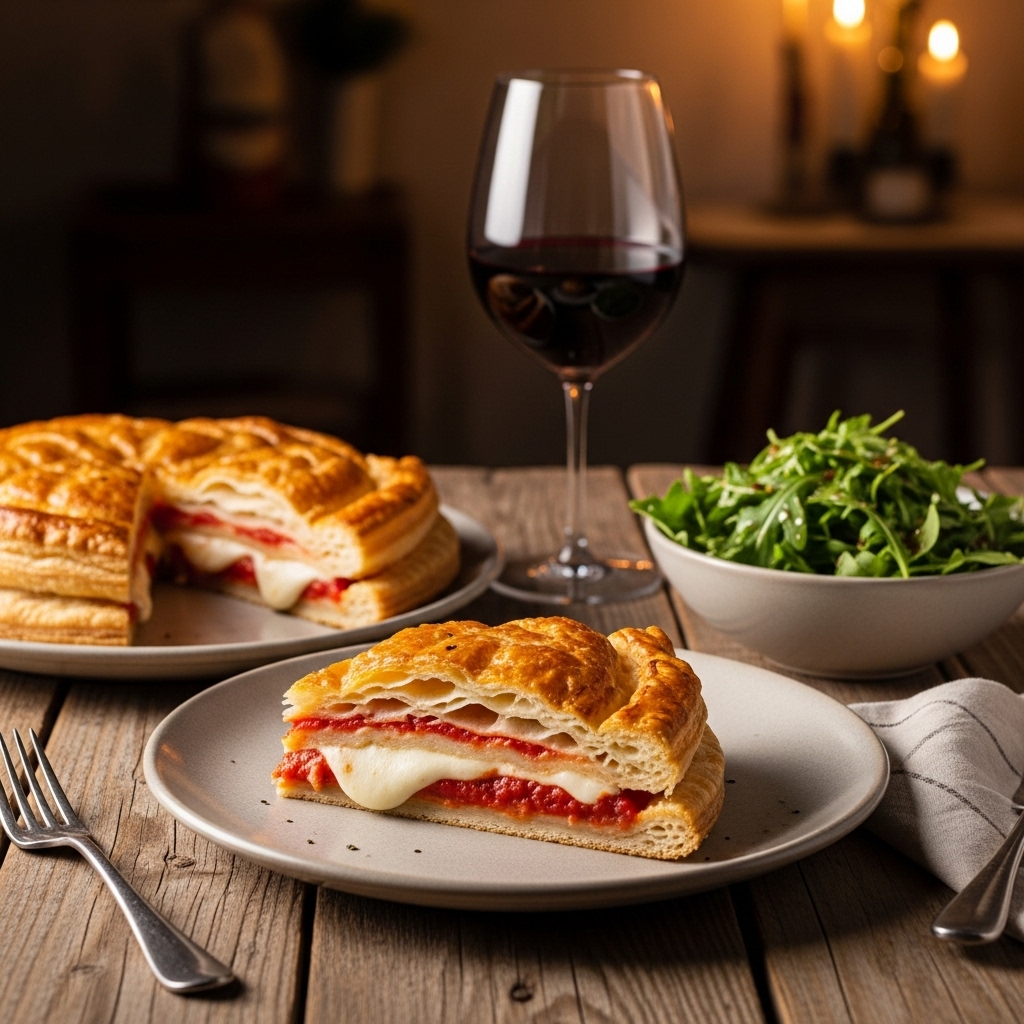
True Neapolitans would serve this with good wine and conversation. The rustic, honest flavors speak for themselves. You’re sharing something real that connects us to Italian food culture.
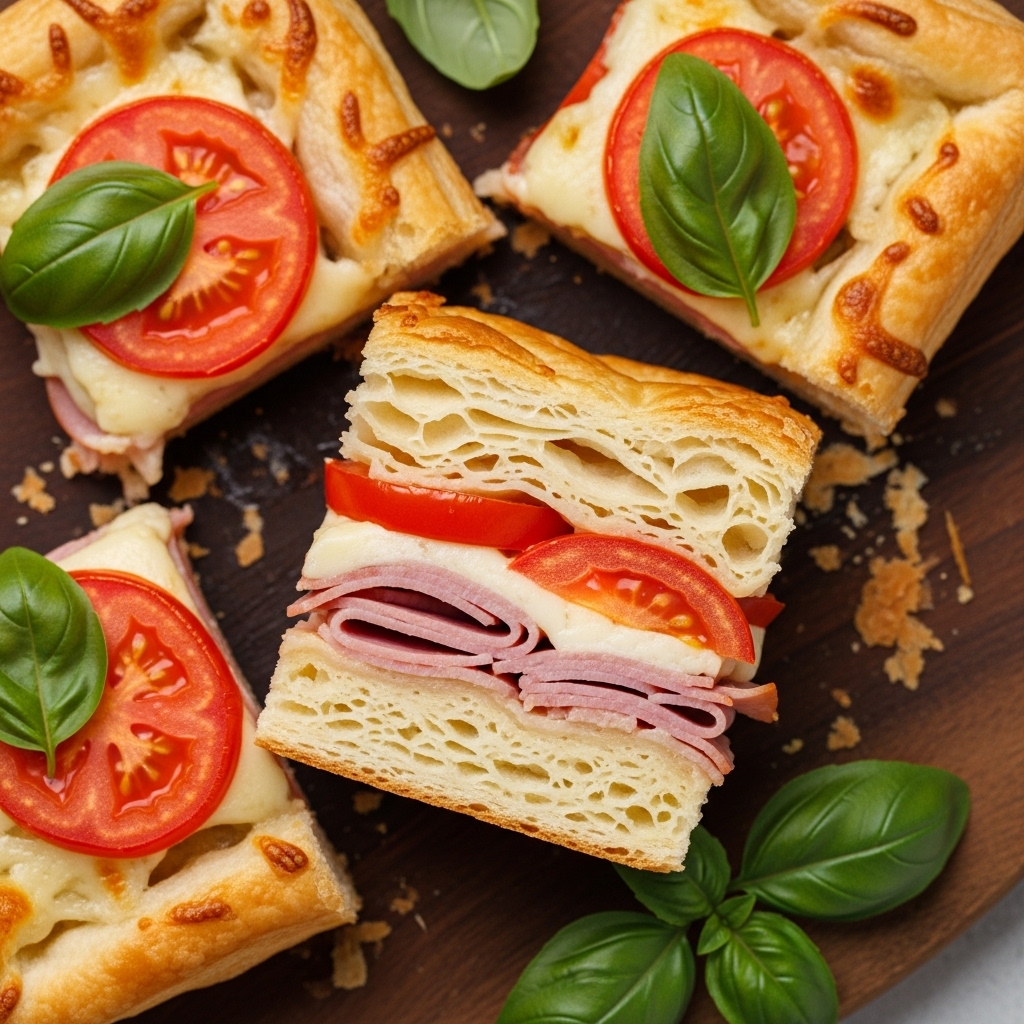
Parigina Pizza (Neapolitan Ham & Cheese Stuffed Pizza)
Ingredients
Method
- Mix lukewarm water, yeast, and sugar in a bowl. Let it sit 5 minutes until foamy.
- Add olive oil, salt, and 2 cups of flour. Mix well.
- Add the rest of the flour a little at a time until a soft dough forms.
- Knead by hand for 8–10 minutes (or with a mixer for 5 minutes) until smooth and elastic.
- Place the dough in an oiled bowl, cover, and let rise for 1 hour at room temperature.
- For better flavor, refrigerate overnight. Take dough out 1 hour before shaping.
- Drain the San Marzano tomatoes in a sieve for 10 minutes.
- Break them gently with a fork. You want a thick, not watery, sauce.
- Keep basil, ham, and cheese ready.
- Oil a 10×15-inch baking sheet.
- Place the dough in the center and stretch it gently with your fingertips toward all corners.
- If the dough resists, cover and rest for 10 minutes, then continue.
- Once stretched, cover with plastic wrap and let rest 20 minutes.
- Spread the drained tomato evenly over the dough (thin layer).
- Add pieces of prosciutto cotto evenly over the tomatoes.
- Tuck basil leaves in between.
- Cover the entire surface with slices of provolone (this protects the puff pastry from moisture).
- Roll the puff pastry sheet slightly to smooth creases, then lay it on top.
- Trim any excess pastry, leaving a small overhang.
- Press edges gently to seal the pastry to the dough.
- Brush the top with egg wash.
- Prick the pastry 10–12 times with a fork to release steam.
- Preheat oven to 390°F (200°C).
- Bake for 45–50 minutes, until the puff pastry is deep golden and the bottom crust is cooked and lightly browned.
- If the top browns too quickly, tent loosely with foil.
- Remove from oven and cool for 10–15 minutes before cutting.
- Cut into squares and serve warm or at room temperature.
Notes
- Make sure the tomatoes are really well drained. Too much liquid will prevent the bottom from crisping.
- The cheese layer is important—it acts as a moisture shield so the puff pastry stays flaky.
- This tastes great warm, room temperature, and even cold.
- Leftovers reheat best covered with foil at 350°F.
- You can assemble the entire pizza ahead, refrigerate, and bake later. Just add 5–10 minutes to the baking time.