
Jump to Recipe
I learned this panzerotti pugliesi fried pockets recipe the Apulian way, during aperitivo hours in Taranto where the oil sizzles and the aroma of tomatoes and melting cheese fills the bar.
I’ll walk you through the dough, shaping rounds, sealing edges so nothing leaks, and clear times and temperatures that take the guesswork out of frying or baking.
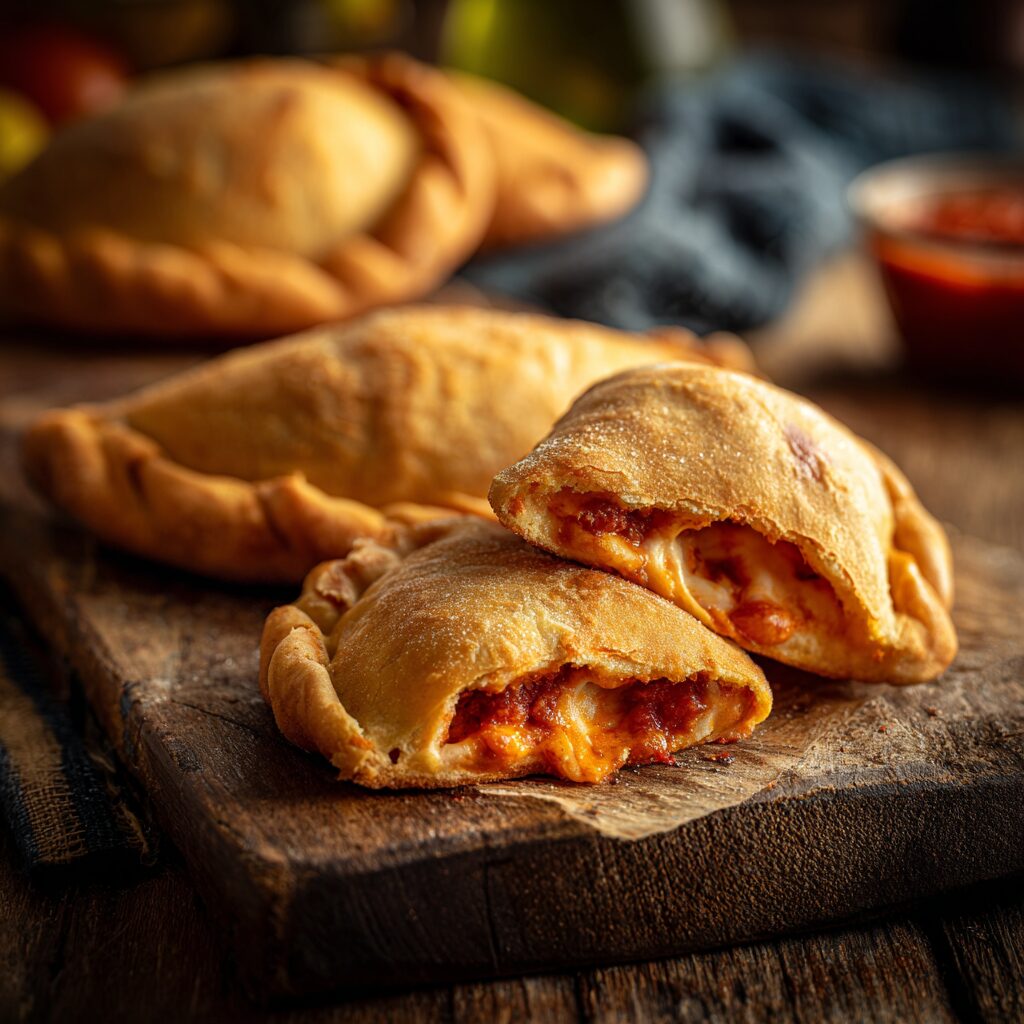
These crescent-shaped pockets sing of street food culture: a crisp shell that gives to a steamy, saucy heart of tomatoes and mozzarella, with optional ham or capers for lift.
Along the way I share US-friendly swaps like all-purpose flour and a lighter bake option, plus tactile cues so you know when the dough is ready and when it’s safe to take that first hot bite.
Key Takeaways
- A trusted recipe learned in Taranto with step-by-step dough and shaping advice.
- Classic filling: tomatoes and stretchy cheese, with room to riff safely.
- Practical times and temperatures for frying or baking to suit your kitchen.
- Simple ingredient swaps for U.S. pantries without losing authentic flavor.
- Safety tips for the first bite to handle hot steam and molten filling.
The Pugliese street-food classic you can master at home
You can master this street classic at home with simple technique and a few timing cues I picked up from market stalls. The goal is a thin, crisp shell that breaks to reveal molten tomato and ribbons of mozzarella.
What makes them special: crispy outside, melty cheese inside
The magic is contrast. A quick cook seals the outside so it crisps and blisters. Inside, the sauce and cheese steam until they pull into strings.
Panzerotti vs. calzone: size, cooking method, and why frying matters
These are smaller than a calzone, handheld and made for quick cooking. A calzone is usually baked and larger, so it stays breadier inside.
- Frying sets the crust fast, trapping steam so the center stays tender.
- Expect just a few minutes in hot oil, so sealing and portion size matter.
- Classic fillings are simple: tomato and mozzarella, or mortadella with provolone.
- Bake at 180°C/350°F for about 20 minutes if you prefer a leaner finish.
Ingredients for authentic panzerotti dough and filling
The base starts simple. Quality flour and reliable yeast set texture and flavor. A small amount of sugar wakes the yeast, while salt controls fermentation and helps the dough stretch thin without tearing.
I use finely milled 00 flour for tenderness. In the United States, trusted all-purpose flour works well. For liquids, water yields a lean, lighter crumb; milk adds softness and color. Add a tablespoon or two of extra-virgin olive oil for suppleness and a hint of fruitiness.
- Tomato passata or well-seasoned canned tomatoes make the filling bright and saucy.
- Use drained mozzarella cut into small pieces to avoid sogginess; blot excess moisture first.
- Optional ham or mortadella adds savory depth; keep fillings modest—about a couple tablespoons each—so seals hold.
- Have a clean bowl ready for proofing; a light oil coating prevents sticking and helps you read the rise.
Smart swaps and practical notes
Instant yeast is convenient; fresh yeast works if you prefer traditional baking. If you want a lighter finish, bake at 180°C / 350°F. For frying, choose a neutral oil with a high smoke point.
| Ingredient | Why it matters | US-friendly swap |
|---|---|---|
| 00 flour | Tender crumb and easy shaping | All-purpose flour |
| Yeast | Leavens and adds flavor | Instant or active dry yeast |
| Olive oil | Improves texture and aroma | Extra-virgin olive oil (or neutral high-heat oil for frying) |
| Mozzarella & tomato | Classic melty center and bright sauce | Low-moisture mozzarella; canned tomatoes or passata |
Panzerotti Pugliesi Fried Pockets: step-by-step method with pro tips
Start by waking the yeast in warm milk with a pinch of sugar. Once it foams, mix it into the flour and salt to form a tacky dough.
I knead until smooth and elastic: about 10–20 minutes by hand or 5–10 minutes in a mixer. A finger poke should spring back. If tight, add a tablespoon of liquid. If sticky, dust flour sparingly.
First rise and timing cues
Lightly oil a bowl, set the dough inside, cover, and proof in a warm place. In about an hour to two hours it should double and feel airy, not dense.
Portion, shape, and fill
Divide into 10–12 pieces and form each into a smooth ball. Rest briefly, then roll to 3–4 mm thick rounds about 14 cm wide.
Add a spoon of seasoned tomatoes and a few mozzarella cubes. Keep fillings modest to avoid leaks.
Seal the edges like a pro
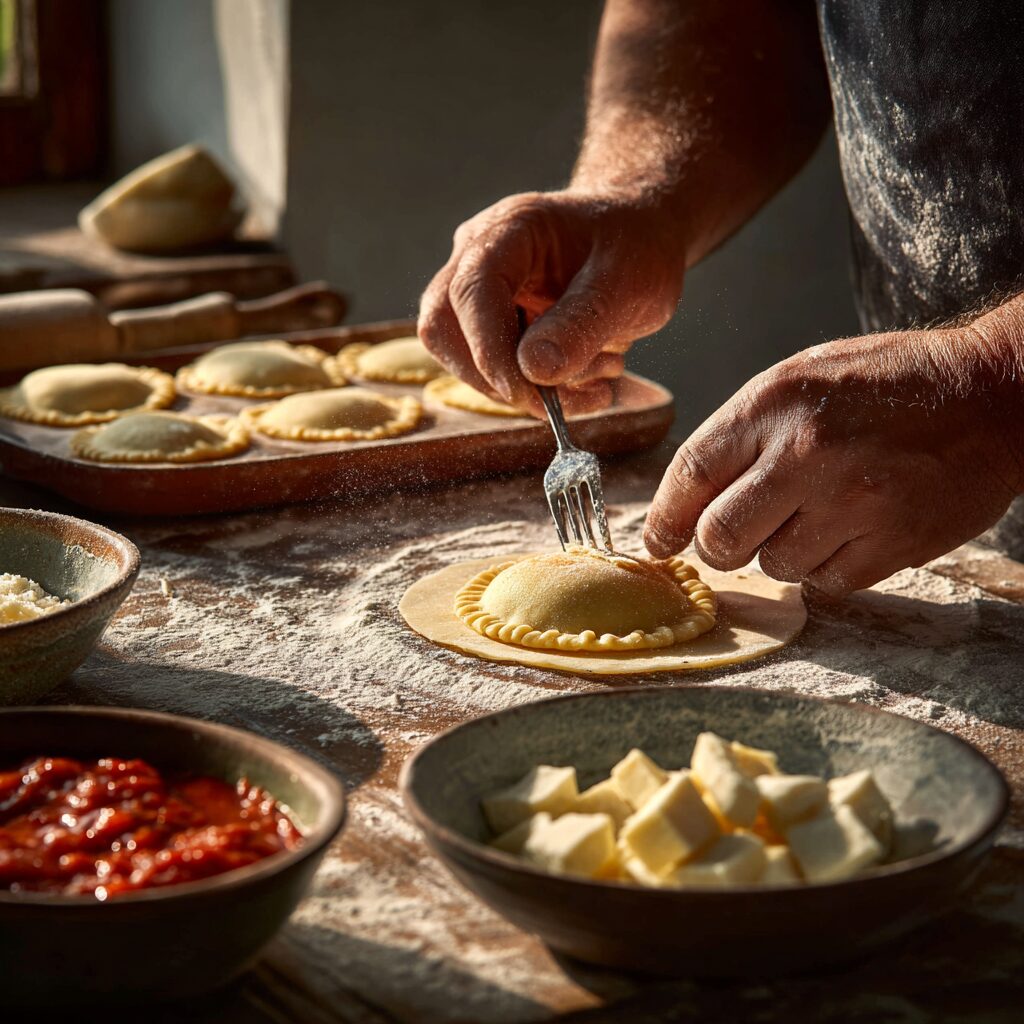
Press the edges firmly with your fingers, brush a little water if needed, then crimp with a fork. That double seal saves time and nerves during frying.
Fry or bake to finishing color
Heat oil to 350°F and test with a scrap of dough; it should bubble steadily. Fry in a shallow pan in batches, about 1–2 minutes total, turning once when golden.
Drain on a paper towel or wire rack. For a leaner finish, brush with olive oil and bake at 350°F for about 20 minutes.
| Step | Temp / Time | Tactile cue | Troubleshoot |
|---|---|---|---|
| Mix & Knead | 5–20 minutes | Smooth, elastic; poke springs back | Add tablespoon of liquid if tight |
| First Rise | 1–2 hours | Doubled, airy | Move to warmer spot if slow |
| Shape & Fill | 10–15 minutes | Rounds 3–4 mm thick | Too thin tears; too thick won’t puff |
| Fry / Bake | 350°F; 1–2 minutes or 20 minutes bake | Golden, crisp outside | Oil too hot: browns fast; too cool: soggy |
Fillings, variations, and serving ideas inspired by Puglia

Fillings shape the whole experience. I favor a restrained approach: a thin smear of tomato and a few cubes of mozzarella gives a clean, melty center that cooks fast and stays tidy.
Go savory with mortadella and provolone, or add capers for briny lift when your tomatoes run sweet. Keep salt light—cured meats and cheese bring enough. Small portions protect the edges and make sealing easier.
Street food wisdom and the first bite
Choose a medium size, about 14 cm wide, so cooking time is even. When you fry panzerotti, it takes roughly 2 minutes at 180°C/350°F; drain on a towel or rack and serve within minutes.
Always warn guests: crack the top slightly on the first bite to let steam escape. That saved me more than once at a lively aperitivo.
Make-ahead, freezing, and reheating
- Portion dough into balls, chill on a tray, then allow a short second rise at room temperature before rolling.
- Freeze raw balls or par-fried turnovers. Reheat par-fried pieces in a hot pan or oven until the crust re-crisps and the center warms through.
- For a party, set a simple station: rolled rounds, small bowls of filling, and a pan at temperature for quick, fresh cooking to order.
| Make-ahead | Storage | Reheat |
|---|---|---|
| Raw dough balls | Freeze up to 1 month | Thaw, second rise, then cook |
| Par-cooked | Freeze after cooling | Oven or hot pan, a few minutes |
| Fully cooked | Refrigerate 1–2 days | Warm briefly to crisp the top |
Serve aperitivo style with olives, taralli, and a drizzle of extra-virgin olive oil. Small touches—good olive oil and warm bread—make all the difference.
Conclusion
Here are crisp, practical takeaways to help you turn dough into a golden, melty treat at home.
Keep the dough supple and elastic so it rolls thin without tearing. Choose 00 flour or all-purpose and trust the yeast—give it an hour or two in a warm bowl for the double rise. Use water or milk sparingly, a pinch of sugar, and a little olive oil and salt for structure and flavor. Portion into balls, rest, then shape into rounds so each piece cooks evenly.
Measure minutes, not guesswork: heat oil to 180°C/350°F and fry about 1–2 minutes, turning once, then drain well. Fill modestly with tomato and mozzarella, seal edges with your fingers and a crimp, or brush and bake until the top is colored. Take care on the first bite—let steam escape—and then enjoy this simple, joyful food with confidence.
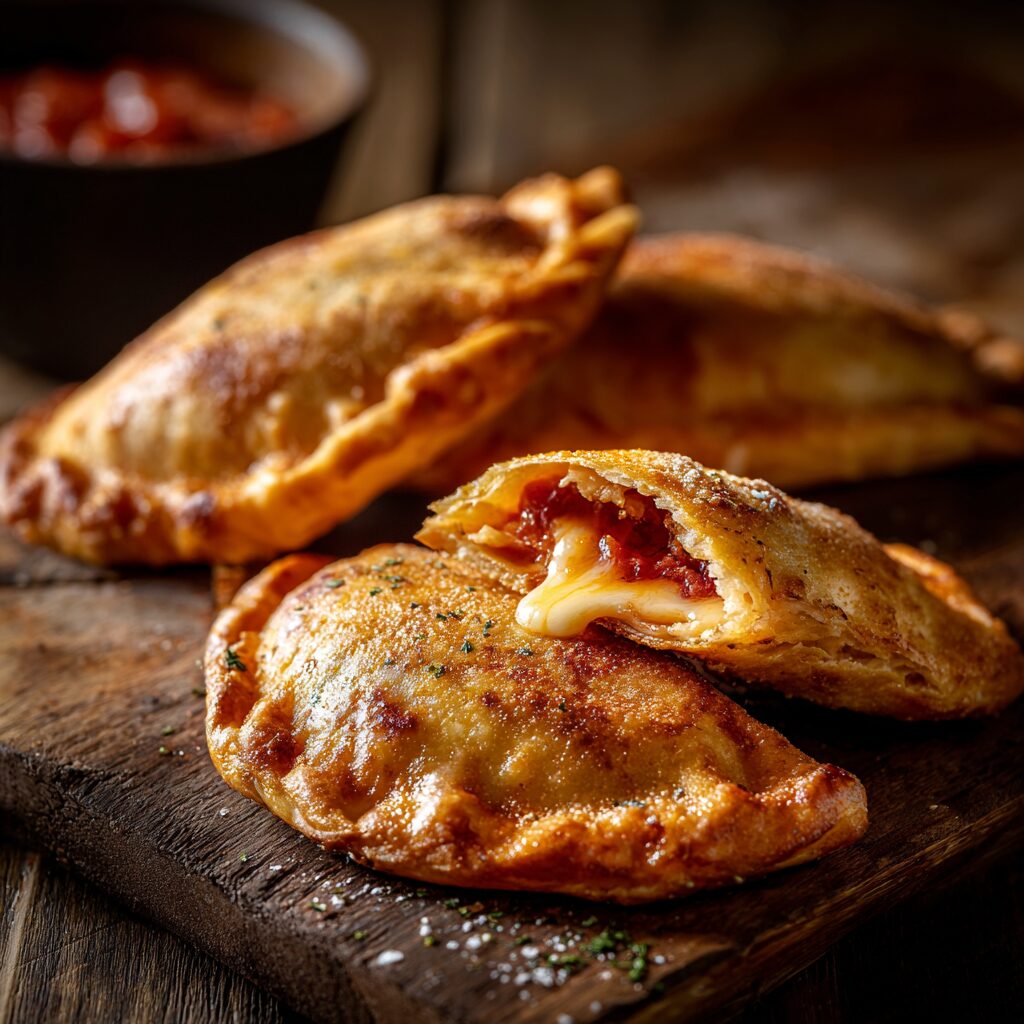
Panzerotti Pugliesi (Fried Italian Pizza Pockets)
Ingredients
Method
- In a bowl, mix warm milk (or water) with sugar and yeast. Let it foam for 5–10 minutes.
- Add flour and salt, then olive oil. Mix until a tacky dough forms.
- Knead for 10–15 minutes until smooth and elastic. The dough should spring back when poked.
- Lightly oil a clean bowl, place the dough inside, cover, and let rise for 1–2 hours, until doubled.
- Once risen, punch down the dough and divide it into 10–12 equal balls.
- Roll each ball into a 5–6 inch (14 cm) circle, about 3–4 mm thick.
- Place a spoonful of tomato sauce and a few mozzarella cubes in the center. Don’t overfill.
- Brush the edges with a little water or beaten egg.
- Fold the dough over the filling to form a half-moon shape.
- Press the edges firmly with your fingers, then crimp with a fork to seal.
- To Fry: Heat oil to 350°F (180°C). Test with a scrap of dough — it should bubble.
- Fry 1–2 minutes per side until golden and crisp. Drain on paper towels.
- To Bake: Preheat oven to 350°F (180°C). Brush each panzerotto with olive oil and bake for 20 minutes until golden.
- Let them cool slightly before biting — the filling will be very hot. Serve with olives, taralli, or a drizzle of good olive oil.
Notes
- For the best seal, keep fillings light — too much sauce can leak during frying.
- Drain mozzarella well before using to avoid soggy pockets.
- Always test one piece first to check oil temperature.
- If baking, brush with olive oil for a nice golden crust.
- Let them rest a minute before biting — the filling stays piping hot!