
Jump to Recipe
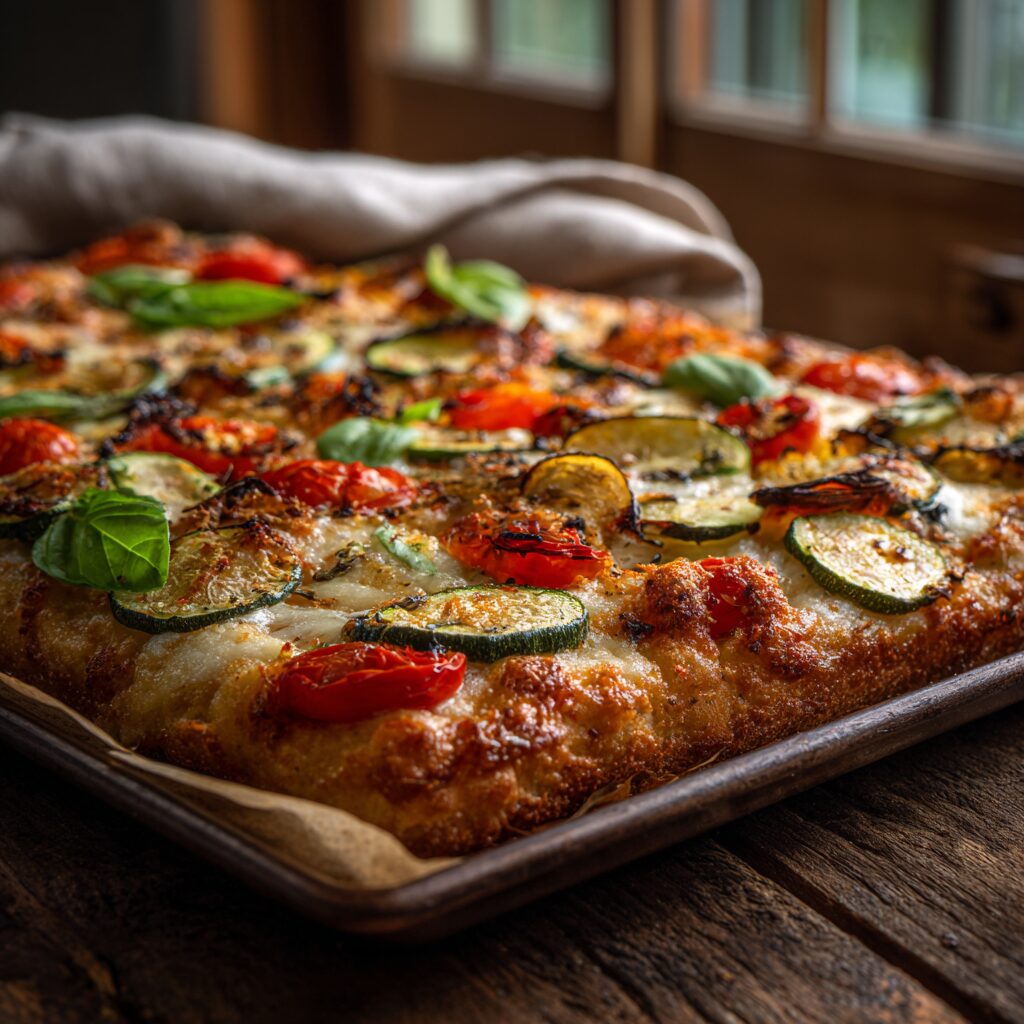
I reach for this pizza al taglio with seasonal vegetables whenever I want bakery-style texture at home—tall, airy crumb and a crisp-edged crust that holds up under bright produce.
My method is simple: a wet, sticky dough proofed straight in an oiled 13-by-18-inch sheet pan, baked very hot (450–500°F) so the edges blister and the interior stays light. A thin swipe of tomato sauce—about half a cup from a 14-ounce can—keeps the base bright, not soggy.
Top sparingly with fresh mozzarella, basil or arugula, and a restrained drizzle of olive oil just before serving. I’ll share timing cues, handling tips (oiled fingers are your friend), and the tiny adjustments that protect the bottom while coaxing big bubbles up into the crumb.
Key Takeaways
- Use a well-oiled 13×18 sheet pan and a wet dough for that Roman bakery texture.
- Bake at 450–500°F to get crisp edges and a tall, airy interior.
- Keep sauce light—about 1/2 cup from a 14-oz can—to avoid soggy crust.
- Finish with fresh cheese, greens, and a small drizzle of olive oil for bright flavor.
- Proof in the pan and use oiled fingers to handle the sticky dough easily.
Why this Roman sheet‑pan classic belongs in your weeknight rotation
A single oiled sheet and a hot oven turn simple dough into something bakery-worthy. In Rome, “al taglio” means sold by the cut: large rectangles sit under glass, you point, they slice, and you leave with warm bread craft in a paper wrap.
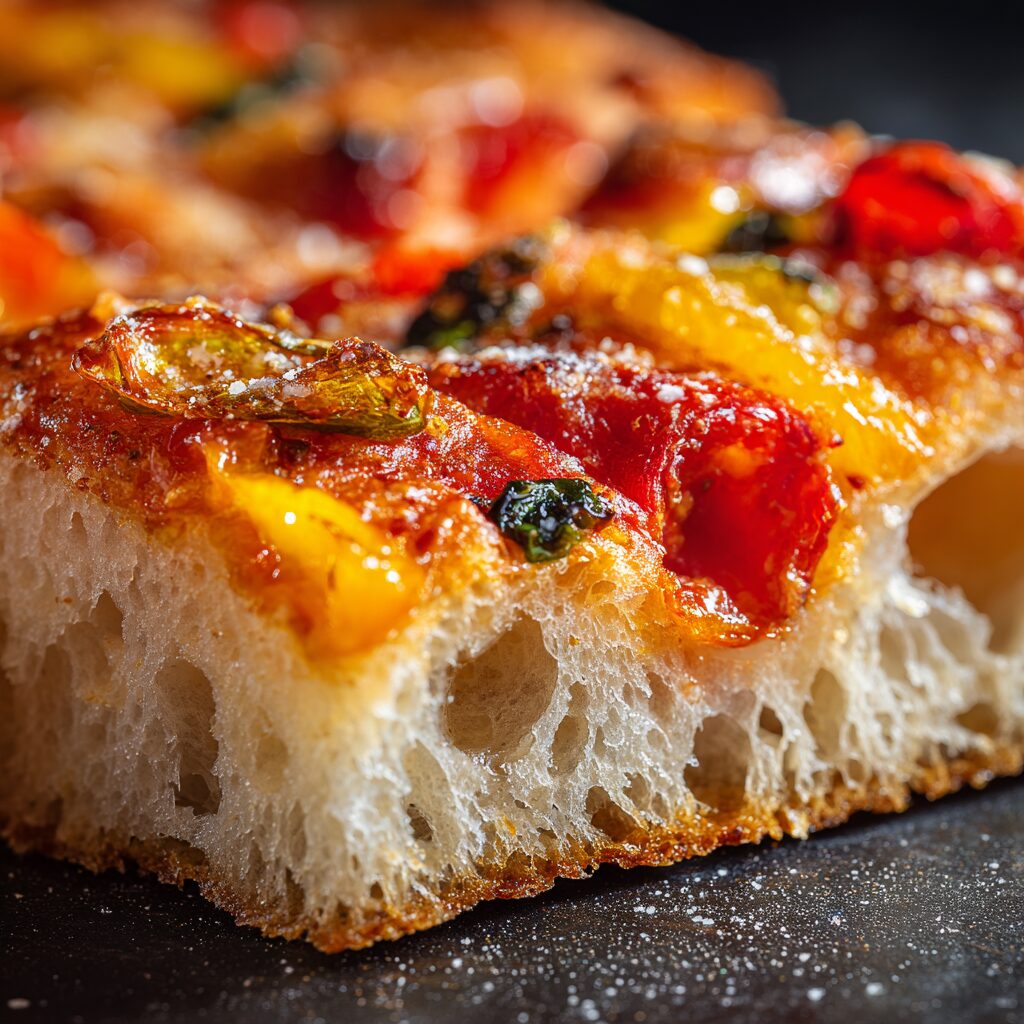
At home, the rectangular format makes sense. One pan gives even edge-to-edge heat and easy slicing. A light swipe of sauce protects the airy crumb so the top browns while the interior stays tender.
Proofing at room temperature until the dough looks puffy—often about an hour for the second rise—builds the structure that gives a tall crumb. A well-oiled surface and a very hot oven encourage lift and a delicate shatter at the corner.
- Fast to serve: neat slices for dinner or lunchboxes.
- Forgiving method: simple shaping, no peel needed.
- Reliable results: hot oven + oiled pan = golden top and crisp underside.
Pizza al taglio with seasonal vegetables: the step-by-step recipe
My method is straightforward and forgiving. Start by gathering ingredients and tools so you move confidently through each phase. Small sensory cues help: the dough should feel sticky and lively; the sauce should look bright, not heavy.
Ingredients you’ll need
Combine bread flour, lukewarm water, active yeast, and fine sea salt in a bowl. Use a pinch of sugar if your yeast is slow. The wet dough yields that open crumb and light crust.
Tools and pan size
Use a 13-by-18-inch sheet pan lined with parchment and generously oiled. Preheat a spare overturned baking sheet or a stone beneath the pan to set the bottom fast.
Mix, rest, and proof
- Mix water, yeast, and sugar until foamy, then add flour and salt. Stir until elastic; the dough will be sticky.
- Scrape into the oiled sheet pan, cover, and let dough relax at room temperature for about 1 to 2 hours until puffy.
- Gently press to the corners with oiled fingers just before baking.
Simple tomato sauce and baking
Drain a 14-ounce can of plum tomatoes, chop, and season with extra-virgin olive oil and salt. Spread about 1/2 cup lightly. Bake in a 450–500°F oven for 22–30 minutes until the top is golden and the bottom is well colored. Add fresh mozzarella, return briefly to melt, then finish with torn basil and a drizzle of oil.
| Item | Temp | Time |
|---|---|---|
| Sheet in oven | 450°F | 22–30 minutes |
| Finish under heat | 500°F (optional) | 2–4 minutes |
| Rest before cutting | room temperature | 3–5 minutes |
Seasonal topping playbook, pro tips, and smart swaps
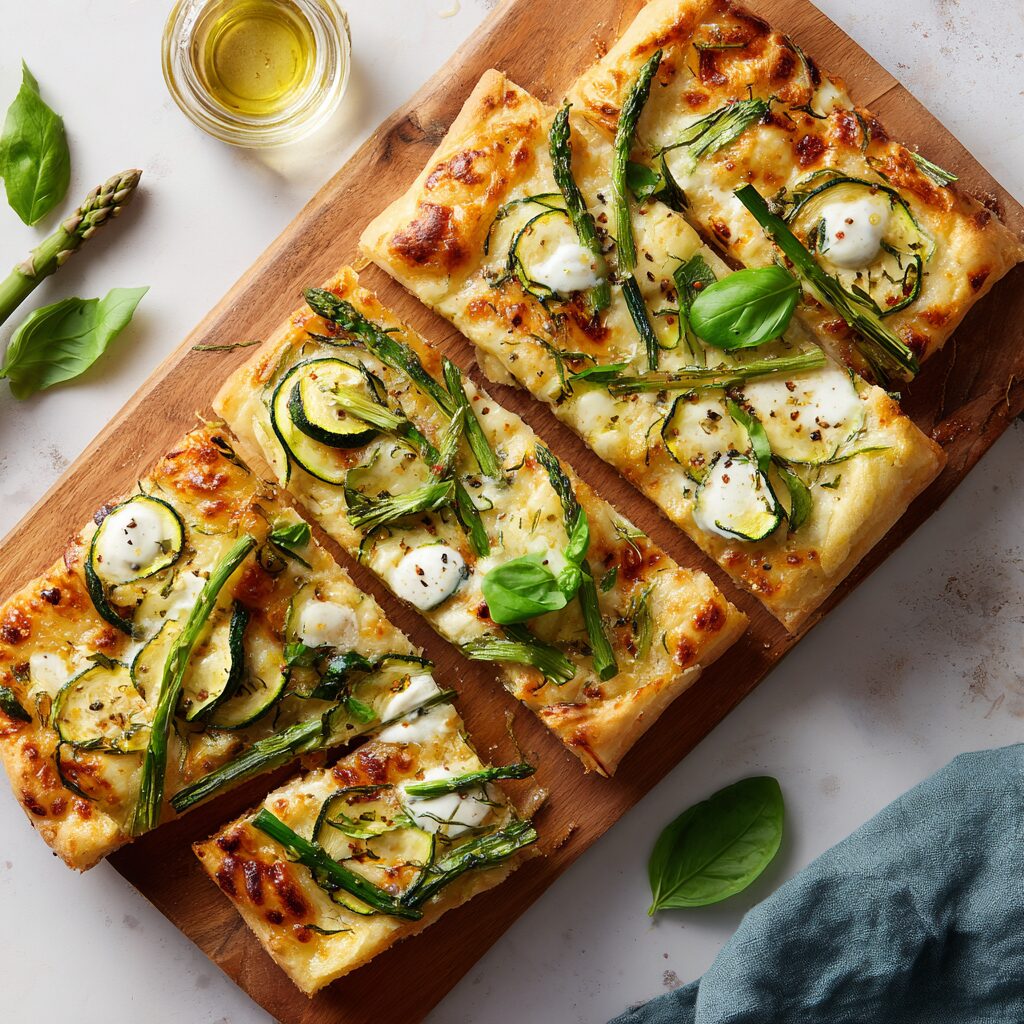
Small changes in toppings and heat management make a huge difference to crust color and crumb texture. I aim for a thin tomato sauce layer, then build contrast with bright or roasted produce so the base stays crisp.
Spring to winter pairings that shine
Spring: asparagus tips, peas, and zucchini ribbons. Finish with lemon zest and basil for lift.
Summer: roasted eggplant, cherry tomatoes, and fresh mozzarella added after baking.
Fall: thinly sautéed mushrooms with thyme and a light brush of olive oil to avoid steam. Winter: roasted squash, caramelized onions, and a pinch of chili for balance.
Pro tips for sheet-pan success
- Coat the pan and dough surface with a film of oil to encourage edge frying and even browning.
- Preheat a baking sheet on the rack and set your sheet pan on it; the hot bottom sets the base fast.
- If the bottom looks pale, lower the rack or add a few extra minutes under steady heat.
Smart swaps, make-ahead, and storage
Swap in a bit of whole-grain flour for nuttiness but keep bread flour dominant for structure. Use cheeses that melt cleanly to avoid extra moisture.
Par-bake 12–15 minutes, cool, then sauce and finish later. Store cooled slices wrapped in the fridge and re-crisp on a hot pan for 8–10 minutes.
| Goal | Method | Timing | Result |
|---|---|---|---|
| Firm bottom | Preheat baking sheet under pan | Preheat 30 minutes | Crisp base, airy crumb |
| Less sogginess | Blot or roast wet produce first | Roast 10–15 minutes | Dry surface, neat slices |
| Quick weeknight finish | Par-bake then top later | Par-bake 12–15 minutes | Finish in minutes |
Quality matters: a good extra‑virgin olive oil and a pinch of fine sea salt sharpen flavor so you use less salt overall. When dough fights back, rest it at room temperature and try again; patience keeps the process joyful.
Conclusion
You can make a bakery-worthy pizza at home by focusing on hydrated dough, high heat, and a hot 13-by-18 pan set on a preheated sheet. Let the dough rest at room temp so it becomes lively before you press and top.
This recipe asks for a light swipe of tomato, modest ingredients, and a final scatter of fresh mozzarella and basil. A little olive and a pinch of salt on the top sharpen flavor while protecting the crumb and the bottom from steam.
Slice into neat rectangles and serve right away. Leftovers do well in the fridge; a quick blast on a hot surface for a few minutes brings back the crisp undercrust. Try it tonight — small adjustments will make this your family’s go-to tray.
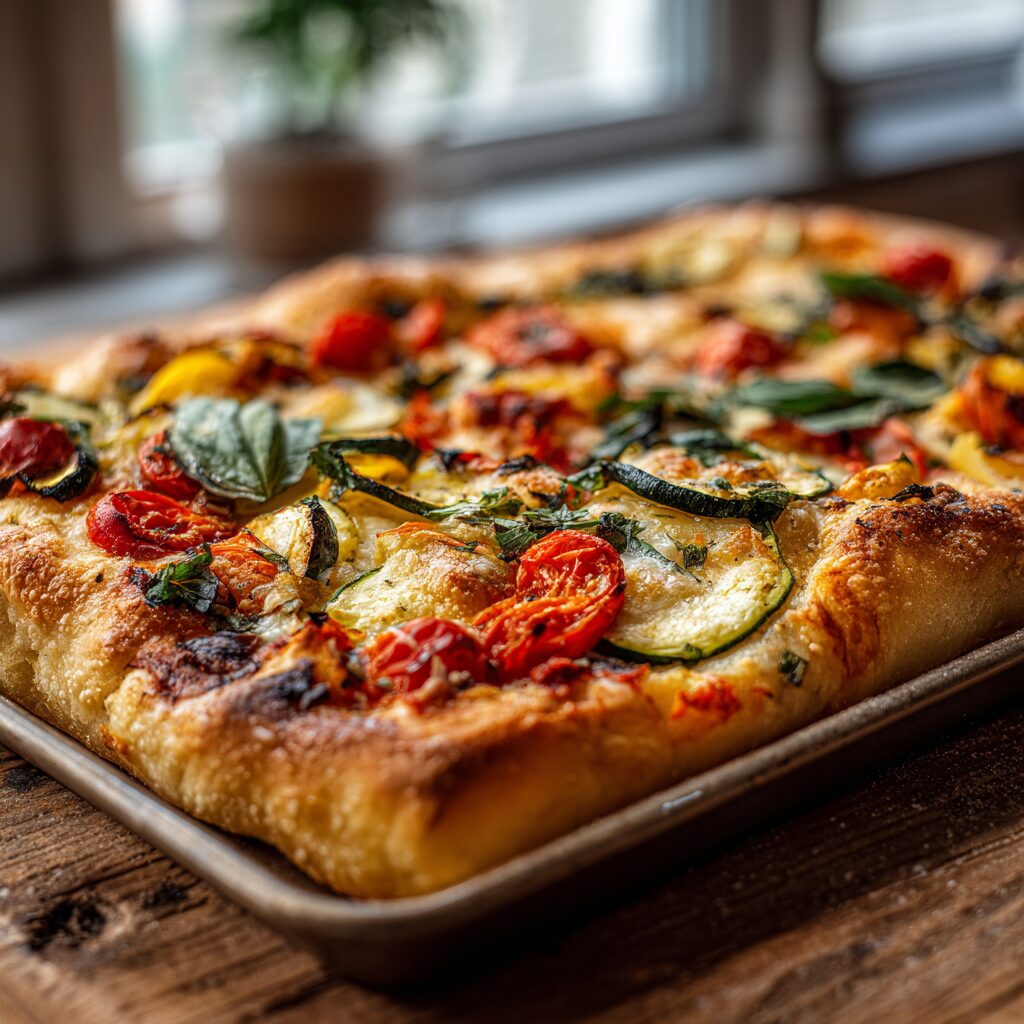
Pizza al Taglio with Seasonal Vegetables
Ingredients
Method
- In a large bowl, stir yeast, sugar, and lukewarm water until foamy (about 5 minutes). Add flour and salt, mix until sticky and elastic. Add olive oil and stir again until combined.
- Let the dough rest for 20–30 minutes. This helps the gluten develop without kneading.
- Over the next hour, do 2–3 gentle stretch-and-folds to strengthen the dough. It should feel wet but lively.
- Cover the bowl and let it rise at room temperature until doubled and bubbly, 1–2 hours depending on temperature.
- Oil a 13x18-inch sheet pan generously. Scrape the dough onto the pan and coat your fingers with oil. Gently press the dough toward the corners—don’t force it. If it resists, rest it for 10 minutes and continue.
- Let the dough rest in the pan for 45–60 minutes until visibly puffy.
- Crush the drained tomatoes by hand or with a fork. Add olive oil and salt. No need to cook—keep it bright and fresh.
- Set the oven to 450°F (232°C). Place an empty baking sheet or pizza stone on the rack while it heats to help crisp the bottom.
- Spread about ½ cup of tomato sauce lightly over the dough. Arrange a few seasonal vegetables evenly. Drizzle a little olive oil on top.
- Place the pan on top of the preheated sheet. Bake for 22–30 minutes, until the crust is golden and the bottom looks well colored.
- Add torn mozzarella, then bake for another 2–4 minutes at 500°F just until melted. Remove and top with basil or arugula and another drizzle of olive oil.
- Cool for 3–5 minutes, then cut into rectangles. Serve warm.
Notes
- Use a well-oiled pan—oil encourages a golden, crisp underside.
- Keep toppings light; too much sauce or cheese will make the crust soggy.
- Par-bake for 12–15 minutes if you want to prepare ahead and finish later.
- Reheat leftovers in a hot oven (400°F) for 8–10 minutes to bring back the crisp base.
- Good olive oil and sea salt make a big difference in flavor—don’t skip them.