
Jump to Recipe
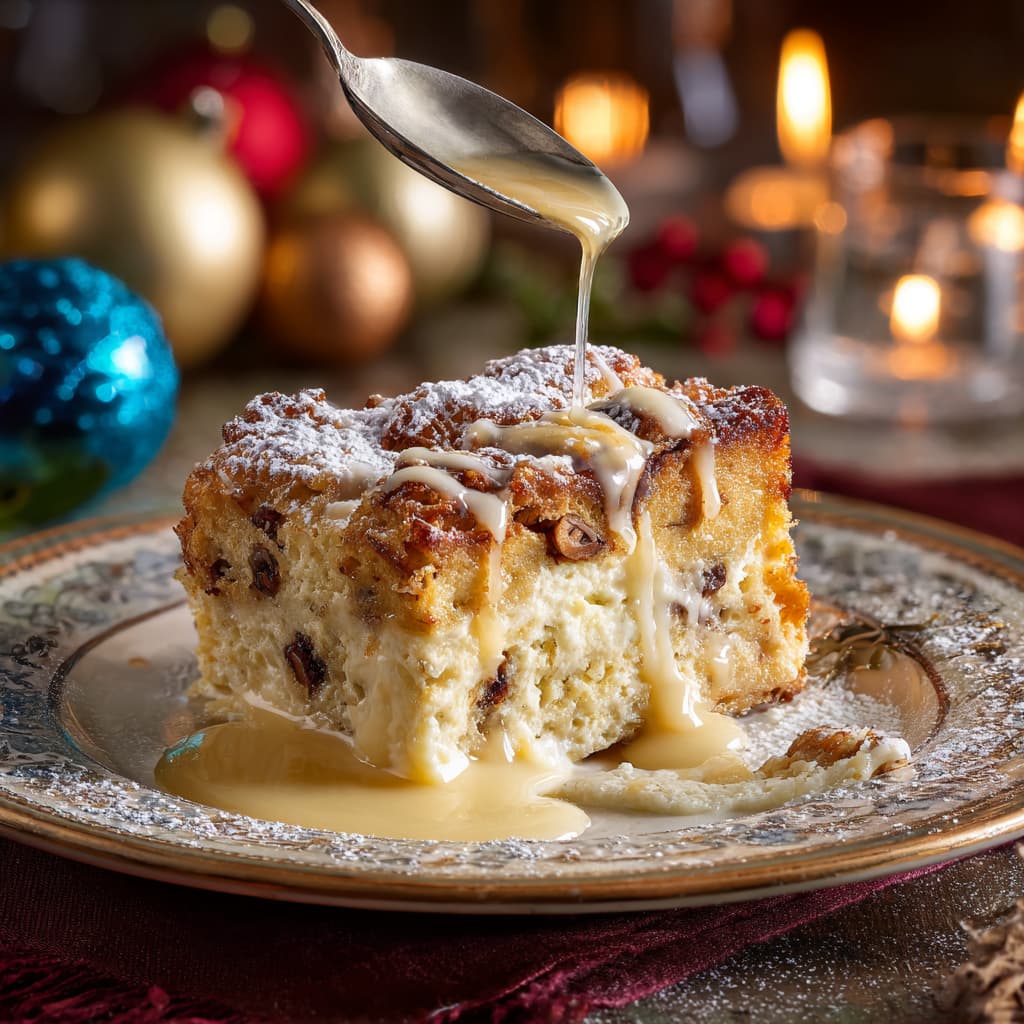
I pull a warm loaf from the oven and the kitchen fills with a citrus-raisiny scent that instantly feels like home. I love the way the custard slips into each cube, turning soft and spoonable with bronzed edges that you can almost hear crackle under a serving spoon.
At my table I share simple, honest tips: how long to soak so the center is creamy but not soggy, which milks make the custard silkier, and the bake cues that tell you it’s perfectly set. A few humble ingredients and a steady oven at 350°F give a reliably cozy finish every time.
Serve it warm with a dusting of powdered sugar, a scoop of vanilla, or a drizzle of amaretto for grown-up comfort. Leftovers keep well in the fridge and freeze nicely, so this becomes an easy, repeatable favorite for holidays or a quiet Sunday.
Key Takeaways
- Use 350°F for a balance of set center and bronzed top.
- Soak 30–45 minutes for tender, never soggy texture.
- Lean on built-in candied fruit for flavor; keep custard simple.
- Choose dairy or dairy-free milk based on richness you want.
- Reheat gently to preserve silkiness; freeze for up to 1 month.
- Small tweaks—chocolate, lemon curd—change the mood easily.
Why this cozy bake wins the holidays
I love how one simple approach turns a familiar loaf into something celebratory. Prep takes about 10 minutes, and soon the kitchen fills with cinnamon, citrus, and vanilla—an aroma that feels like Christmas in Italy. That quick start matters when the calendar is full.
Warm, custardy comfort with effortless prep
The tall, airy crumb of panettone soaks custard fast. That means less fuss and more time with guests. Its citrus-vanilla notes and built-in raisins or chocolate add depth without extra steps.
Great for after-dinner or a festive breakfast
This bake moves easily from dinner to brunch. Serve warm with coffee on Christmas morning, or offer slices after a meal. It’s rich but not heavy, familiar yet fresh.
- Scales up for a crowd without stress.
- Works with fresh, toasted, or slightly stale sweet bread.
- Perfumes the house while it bakes—instant holiday atmosphere.
| Occasion | Best Serving | Why it works |
|---|---|---|
| Holiday dinner | Warm with a liqueur drizzle | Comforting, recognizable flavors that feel special |
| Breakfast or brunch | Sliced with coffee or tea | Luscious but light, easy to reheat |
| Gatherings | Two pans feed a party | Scales without more effort; forgiving to prep |
Ingredients that make the custard sing
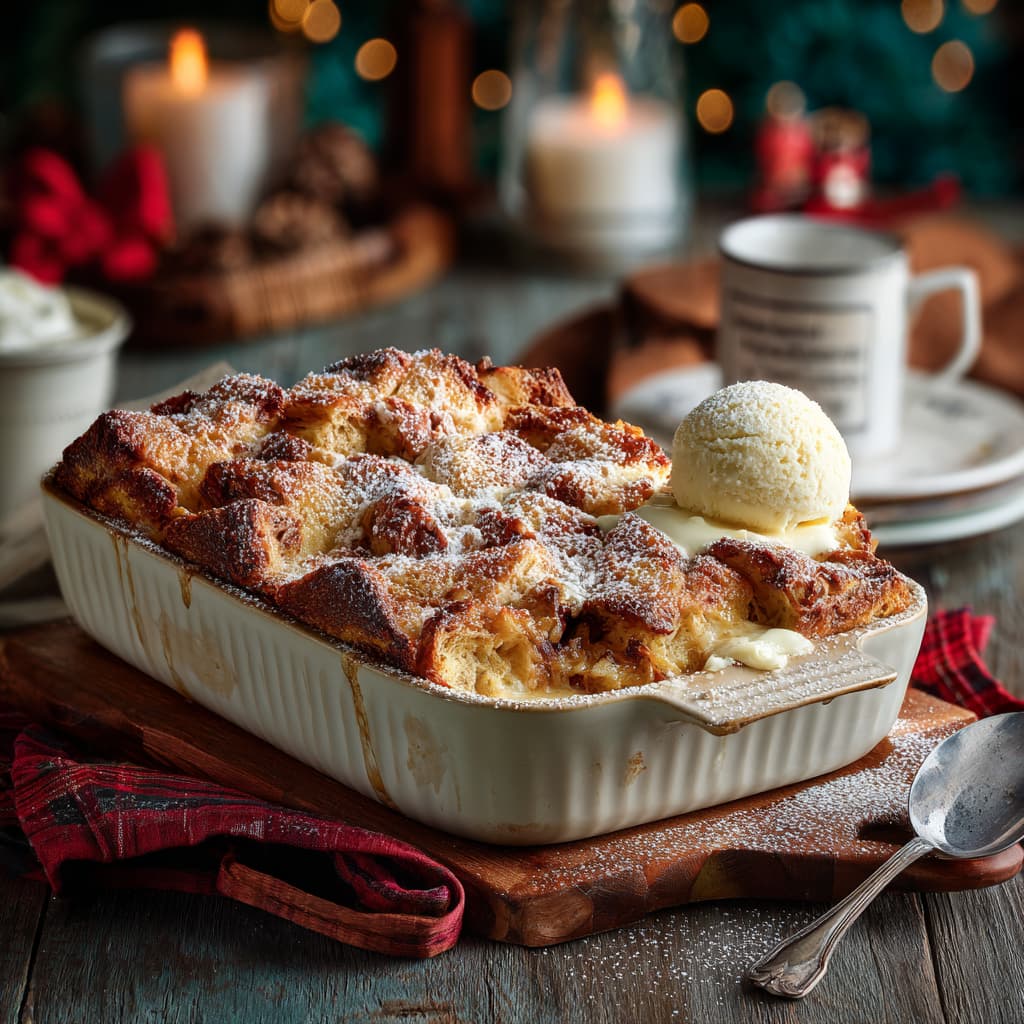
I start by choosing a quality Italian panettone for its airy crumb and citrus-vanilla aroma. That loaf soaks custard quickly without turning dense, and built-in raisins or candied fruit add gentle sweetness.
Panettone picks
Classic raisin-citrus loaves are reliable. Chocolate chip or pistachio versions give a modern twist. If the loaf is very sweet, cut back on added sugar so the loaf’s flavor leads.
Eggs, milk, and richness
Eggs give structure; two large eggs per cup of dairy keeps the custard stable. Whole milk yields a lighter finish. Half-and-half or heavy cream makes it silkier. For dairy-free, almond or oat milk work well.
Flavor boosters and toppers
Use a teaspoon of vanilla and a pinch of cinnamon. A teaspoon of orange zest or a splash of Grand Marnier brightens fruit notes. Scatter sliced almonds or coarse sparkling sugar on top for crunch.
- Whisk custard in a roomy bowl to ensure smooth texture.
- Add a small pinch of salt to lift vanilla and spice.
| Milk | Texture | Use |
|---|---|---|
| Whole milk | Light, tender | Everyday |
| Half-and-half | Rich, silky | Special occasions |
| Almond/oat | Bright, dairy-free | Allergies |
Pan size, tools, and prep at a glance
Choosing the right dish shapes the texture you’ll serve. I decide between a shallow pan for crisp surface or a taller loaf pan for a deep, custardy slice. That choice sets bake time, serving style, and how the flavors concentrate during baking.
Choose your dish
I reach for a 9×13 pan when I want more caramelized top and faster service; it bakes evenly and feeds a crowd. For bakery-style slices, a 9×5 loaf pan gives a softer middle and a taller cross-section that feels indulgent.
Quick prep checklist
- Grease the pan lightly with butter or mist with oil so the loaf releases cleanly and edges caramelize.
- Cut the panettone into generous cubes; varied sizes create pockets of creaminess beside toasty tops.
- If the loaf is very fresh, toast cubes 10 minutes so they absorb custard without falling apart.
- Preheat oven to 350°F — the correct temperature helps the custard set and the top brown evenly.
- Use a large mixing bowl to whisk custard without splatter and a spatula to press cubes gently under the liquid.
- Line the counter with a dish towel to keep your mise en place tidy and save time at cleanup.
| Pan | Depth | Bake Time |
|---|---|---|
| 9×13 casserole | Shallow | 45–55 minutes |
| 9×5 loaf pan | Taller | 40–50 minutes |
| Key temp | 350°F | Predictable set and golden top |
Panettone bread pudding dessert recipe
Cutting the loaf into 1–2 inch cubes is the quiet trick that balances soak time and structure. If the loaf is very soft, toast cubes 10 minutes; if stale, use them as-is for quick absorption.
Cubing and drying
Slice into hearty cubes so each piece keeps shape in the custard. Light toasting gives crisp edges that become golden brown in the oven.
Whisk the custard
In a large bowl, whisk 6–8 eggs with sugar until glossy. Add milk or half-and-half, a splash of heavy cream if you like, vanilla, cinnamon, and orange zest for brightness.
Soak and submerge
Scatter cubes in your dish or pan, pour the mixture evenly, and press so every cube is kissed by custard. Rest 30–45 minutes; this soak is the difference between dry pockets and a plush set.
- Optional: a teaspoon of orange liqueur for depth.
- Dot with butter for extra browning before baking.
Bake to golden brown
Preheat oven to 350°F. Bake shallow pans 30–35 minutes; deeper pans 45–55 minutes, until center is set and the top is golden. Let stand 5–10 minutes before slicing. Serve warm with powdered sugar, vanilla ice cream, or your favorite sauce.
| Pan | Depth | Bake Time |
|---|---|---|
| 9×13 | Shallow | 30–35 min |
| 9×5 loaf | Tall | 40–50 min |
| Deep casserole | Rich custard | 45–55 min |
Doneness, texture, and troubleshooting
A gentle jiggle and a moist crumb on a tester are the honest signals of readiness. I bake at 350°F until the top puffs and the surface turns golden brown. Then I check: a toothpick should pull free with wet crumbs, not a ribbon of loose custard.
Set but custardy: simple cues
I look for a wobble like set gelatin in the center while the edges feel firm. If the tester shows streaks of liquid, give it a few more minutes and watch the color. Resting the pan at room temperature helps the custard finish and slice cleanly.
Prevent soggy middles and dry edges
- If the center lags, tent loosely with foil to protect the edges while the middle catches up.
- Soggy middles often mean under-soaking or too-short baking; ensure the cubes absorb the mixture evenly before baking.
- Dry edges point to over-baking or poor soak near the sides—press cubes into the custard so corners soak well.
- For extra crunch, sprinkle a thin layer of coarse sugar on top before baking.
| Problem | Cause | Fix |
|---|---|---|
| Soggy center | Under-baked or uneven soak | Extend bake; tent with foil if edges brown |
| Dry edges | Not enough custard at sides | Press cubes into mixture; reduce bake time slightly |
| Too rich, curdled look | High fat or too-hot oven | Lower temperature; bake a bit longer; rest before slicing |
Flavor twists and smart swaps
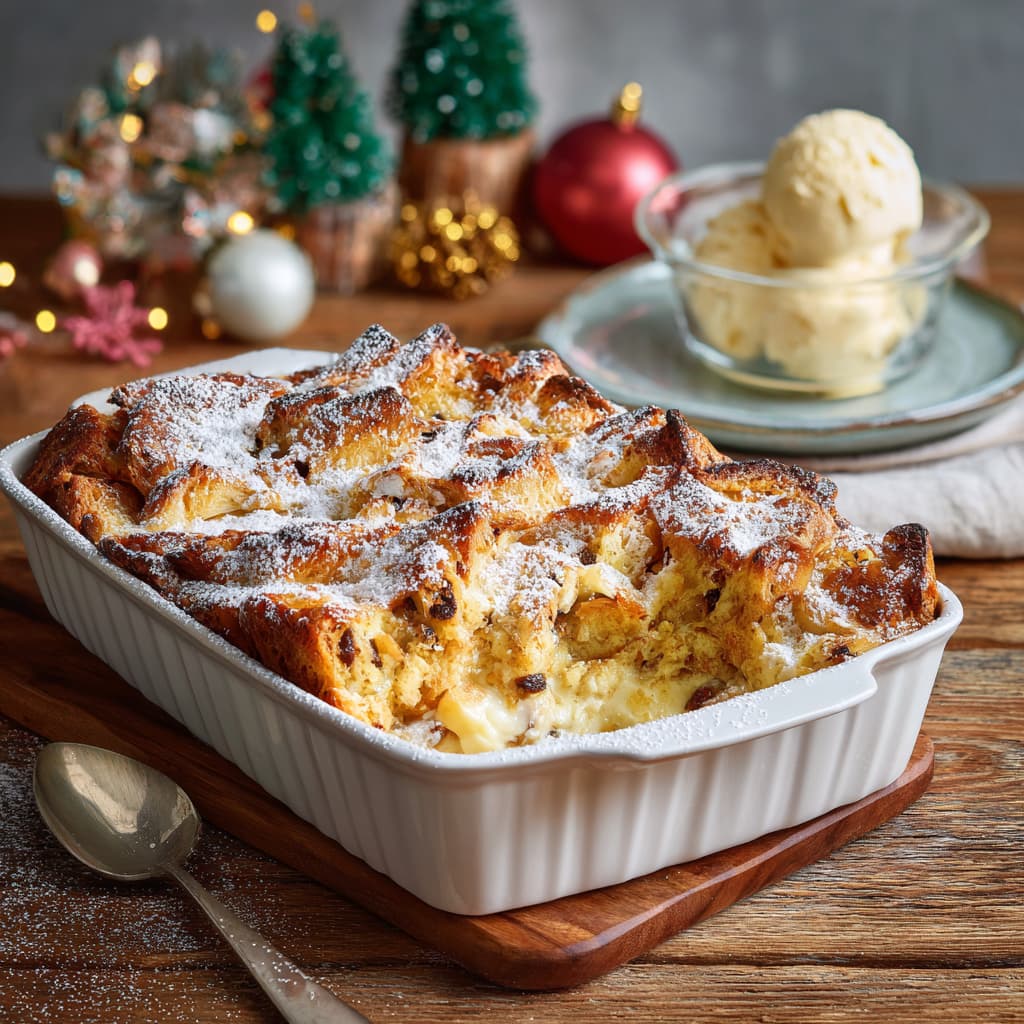
A handful of smart additions makes the final dish sing, without more fuss. I like to keep the base method the same and let small changes shape the mood. That way texture stays reliable and flavors shine.
Chocolate, orange, and a splash of liqueur
For chocolate lovers, fold semi-sweet chips into the custard-soaked cubes so they melt into pockets of richness. Add a little orange zest to brighten those pockets.
Stir in a teaspoon of Grand Marnier or another orange liqueur for a grown-up lift. If the loaf is very rich, a splash of cream softens the mix so the finished bake stays plush, not dense.
Lemon curd ribbon for a bright surprise
Try dolloping lemon curd between layers before baking. It bakes into a silky ribbon that cuts sweetness and adds a tangy note. Use small spoonfuls so the curd becomes a ribbon, not a runny pool.
Short on panettone? Use brioche or holiday leftovers
No panettone on hand? Substitute sweet brioche or slightly stale holiday bread and add raisins, cinnamon, or chopped candied fruit to echo classic flavors. Press cubes into the custard so corners soak evenly.
- Fold chocolate chips into soaked cubes for melty pockets of flavor.
- Add orange zest + a teaspoon of Grand Marnier to amplify fruit notes.
- Layer lemon curd midway for a tangy ribbon that balances sugar.
- Swap in brioche with added spices and raisins if you lack panettone bread.
- Top with sliced almonds for party-ready crunch without extra effort.
| Substitute | Why it works | Best for |
|---|---|---|
| Brioche | Enriched crumb soaks custard well | Silky, rich slices |
| Stale holiday loaf | Absorbs custard evenly; echoes seasonal flavors | Large crowds |
| Extra raisins or candied fruit | Adds chew and bright notes | Fruit-forward way |
Serve it your way: toppings and pairings
When I serve it, I aim for contrasts: warm, yielding custard against cold, silky ice cream. Small finishes lift the whole plate and make a humble pan sing at the table.
Powdered sugar, vanilla ice cream, whipped cream
A snowfall of powdered sugar reads classic and clean. A scoop of vanilla ice cream melts into the warm center and creates a glossy, cool ribbon.
Lightly whipped cream adds billowy softness. Stir a little vanilla into the cream to echo the custard without overpowering it.
Maple, caramel, amaretto and hot chocolate
Drizzle warm caramel or an amaretto sauce for a nutty, citrus-leaning finish. Maple syrup is great at breakfast for a familiar, cozy aroma.
For dipping, serve with thick Italian-style hot chocolate — deep, glossy, and utterly inviting.
Coffee, tea, and after-dinner liqueurs
Pair slices with espresso, cappuccino, or a robust tea. For after-dinner, a small glass of Amaretto or Frangelico complements almond and citrus notes.
- Serve warm, chilled, or at room temperature; each reveals different textures.
- Brush a whisper of melted butter on top before dusting with sugar for shine.
- Reheat leftover portions gently; fresh toppings make each plate feel new.
| Serving | Ideal Pair | Why it works |
|---|---|---|
| Warm | Vanilla ice cream | Temperature contrast and melting cream add silkiness |
| Breakfast | Maple syrup & coffee | Familiar sweetness and bright roast balance |
| After-dinner | Amaretto or Frangelico | Nutty liqueurs echo almond-citrus notes |
Make-ahead, storage, and reheating
A little overnight patience rewards you with a silkier, more even bake. I assemble the dish the night before so the cubes fully hydrate and flavors knit together.
Assemble ahead: chill overnight, bake when ready
Cut, soak, cover, and refrigerate. Leave the pan chilled and bake straight from the fridge; add a few extra minutes if the center feels cold when it goes into the oven.
If the custard thickens while cold, press the top gently so the mixture redistributes before baking.
Leftovers: refrigerate 3–5 days, freeze up to a month
Store leftover slices in an airtight dish in the fridge for 3–5 days. For longer keeping, wrap single portions tightly and freeze up to one month; thaw in the refrigerator overnight.
Reheat gently: oven or microwave; also tasty at room temperature
Warm slices in a 300–325°F oven until heated through, or microwave in short bursts to avoid drying. Deeper pans will need a few more minutes so the center warms evenly.
It’s also lovely at room temperature, especially with a spoon of vanilla ice cream or a drizzle of syrup. A splash of milk can refresh slightly dry leftover portions.
- Assemble the night before for better soak and less bake time stress.
- Label frozen portions with date and any flavor notes (chocolate or lemon curd).
- Keep a small packet of sugar or a cup of heavy cream on hand to touch up toppings when serving.
| Storage | Duration | Reheat |
|---|---|---|
| Refrigerator | 3–5 days | 300–325°F oven, a few minutes |
| Freezer | Up to 1 month | Thaw overnight, warm gently |
| Room | Short serving time | Serve at room temperature or with ice cream |
Make-ahead is more than convenience; it improves texture and frees you to enjoy the room and company. For other make-ahead cream desserts and tips, see my quick make-ahead panna cotta.
Bake it, share it, and savor the season
A single pan, a short bake time, and a few simple choices can make an ordinary morning feel celebratory. I jot down my preferred pan and minutes so the texture repeats predictably each year.
This kind of baking brings people to the table: simple steps, soulful flavors, and a slice that feels like a celebration. Share it warm with neighbors or bring a pan to brunch for an easy holiday lift.
Try a new way each season — chocolate one weekend, lemon curd the next — and make this your family tradition. Above all, savor the quiet moments: the first spoonful, the smiles, the stories. That is why I bake.
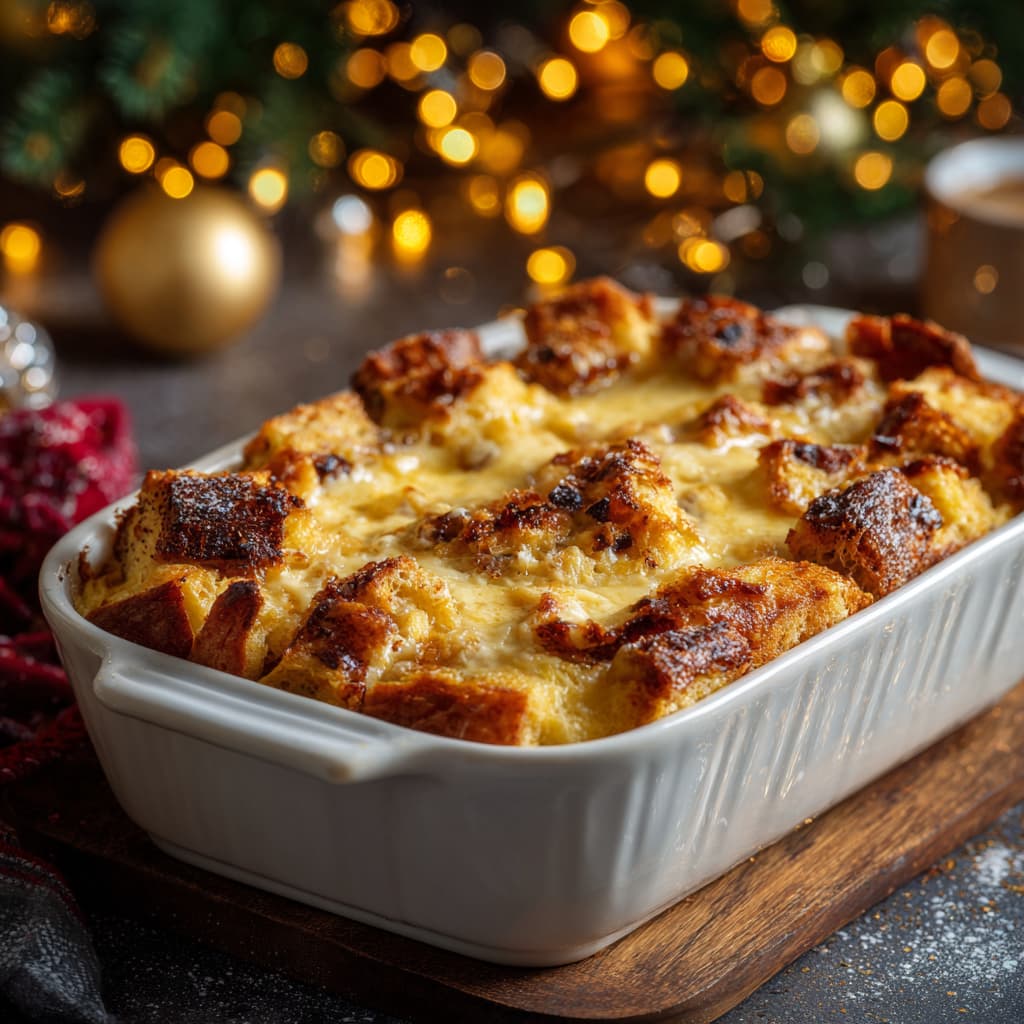
Panettone Bread Pudding
Ingredients
Method
Notes
- Make-Ahead Tip: You can assemble this dish the night before and refrigerate it overnight for the custard to fully soak in. Bake it the next morning for a quick holiday breakfast or dessert.
- Flavor Twists: Add chocolate chips for a richer dessert or a dollop of lemon curd between layers for a tangy contrast.
- Serving Suggestions: Pair with a cup of coffee, tea, or after-dinner liqueurs like Amaretto for a cozy treat.