Jump to Recipe
I learned the fave e cicoria puglia recipe at my nonno Lorenzo’s table, where the steam smelled of olive oil and slow-simmered beans that felt like a warm hand on a winter night.
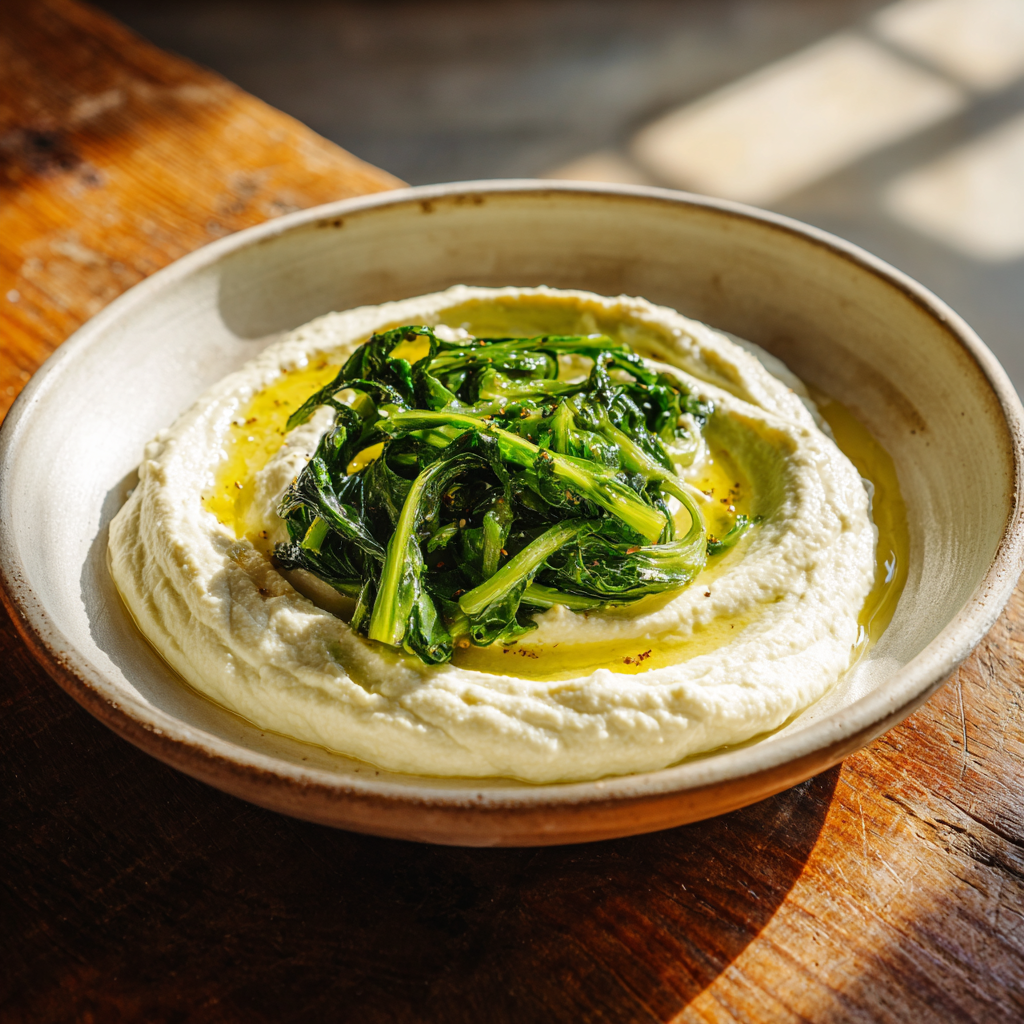
This is cucina povera at its most honest: dried, peeled fava beans cooked until silky, then whipped with fruity oil, and topped with bright, slightly bitter greens like chicory. The contrast between the creamy purée and the snap of boiled greens makes this food feel both humble and elegant.
I write from years of practice and family tips—how to source peeled dried beans in American markets, when to soak, and the texture cues that tell you to stop mashing. Expect clear timing, simple seasoning notes, and the small rituals my nonno swore by so this dish keeps its soul in a busy kitchen.
Key Takeaways
- This classic balances a silky legume base with bitter greens for depth.
- Use peeled dried fava beans and soak or source ready-peeled for ease.
- Boil greens in well-salted water until tender, then drain and dress.
- Finish with generous fruity olive oil to brighten and bind flavors.
- Follow texture cues: smooth purée, distinct green bite for best results.
Why this humble Puglian dish endures: cucina povera with real soul
The kind of food that lasts is the kind that tells a story with just two or three ingredients.
At my table that story is simple: nutty puréed beans meet assertive greens, and the balance sings. This is cucina povera—craft that trusts nature, not heavy sauces. A whisper of olive and a cautious touch of onion or garlic are all you need.
From nonno’s table to yours: the flavor logic of beans and bitter greens
The beans bring a gentle, warm base. The greens supply a clean, pleasant bite. Together they create contrast, not clutter. In practice you swipe a leaf through the purée and taste both land and sea in one mouthful.
What “cicoria” really is in the U.S.
When I say cicoria, I mean the leafy, bitter chicory greens common across Italy. This is not chicory coffee from the root, nor is it witloof (Belgian endive). In American markets you may find dandelion relatives or escarole labeled as chicory; they work if they keep that snap of bitterness.
- Keep aromatics light—too much sweetness will dull the greens.
- Serve as a modest main or as a side with roasted fish or grilled meats.
- Simplify to reveal the landscape in each bite; that was my lesson from nonno.
| Ingredient | Flavor | Common U.S. Labels |
|---|---|---|
| Leafy cicoria | Bitter, green, crisp after brief cook | Chicory, dandelion greens, escarole relatives |
| Chicory (root) | Roasted, coffee-like, earthy | Chicory coffee, roasted root |
| Witloof (endive) | Milder, slightly bitter, tender | Belgian endive |
Fave e cicoria puglia recipe: ingredients, timing, and the step-by-step you can trust
The night before, soak dried fava beans in cool water for about 12 hours. If you found unpeeled dried fava, slip the skins off after soaking for the smoothest purée.
Drain into a sturdy pot and add fresh water to water cover the beans by about a finger’s width. Season lightly with salt, bring to a gentle simmer, and expect roughly 1 to 1.5 hours of cooking time.
Cook the bean purée
Stir often so beans don’t stick. Top up with hot water if the pot runs low while you allow some reduction. Test for softness; tender beans mash easily.
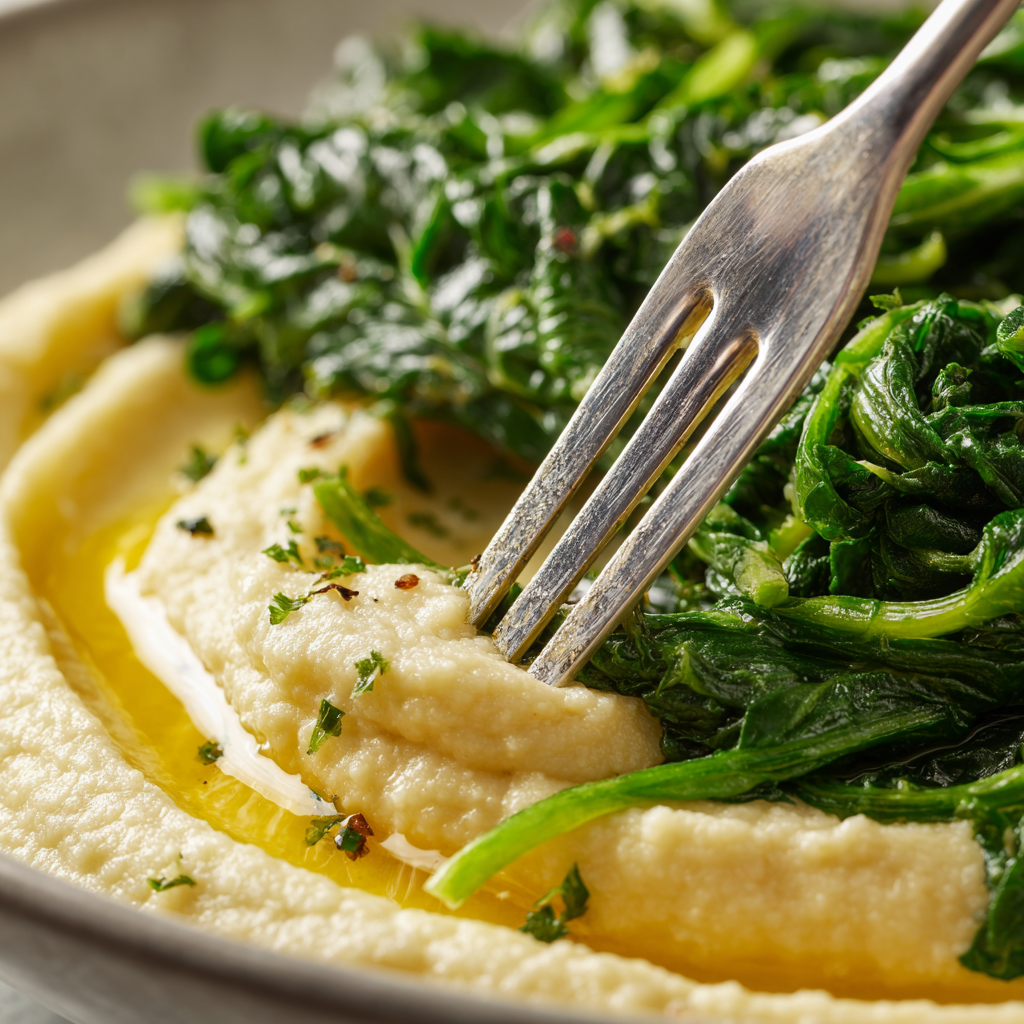
Mash with a spoon, pass through a food mill, or blend for a silkier bean puree. Beat in generous extra-virgin olive oil until the purée reaches a mashed-potato texture and can hold a small canal.
Prepare the greens
Boil the greens in well-salted water for 4–15 minutes until bright and tender. Drain thoroughly to avoid a watery top.
For more flavor, warm olive oil in a pan, add chopped garlic and a pinch of chili, then toss the greens briefly to infuse.
Plate and finish
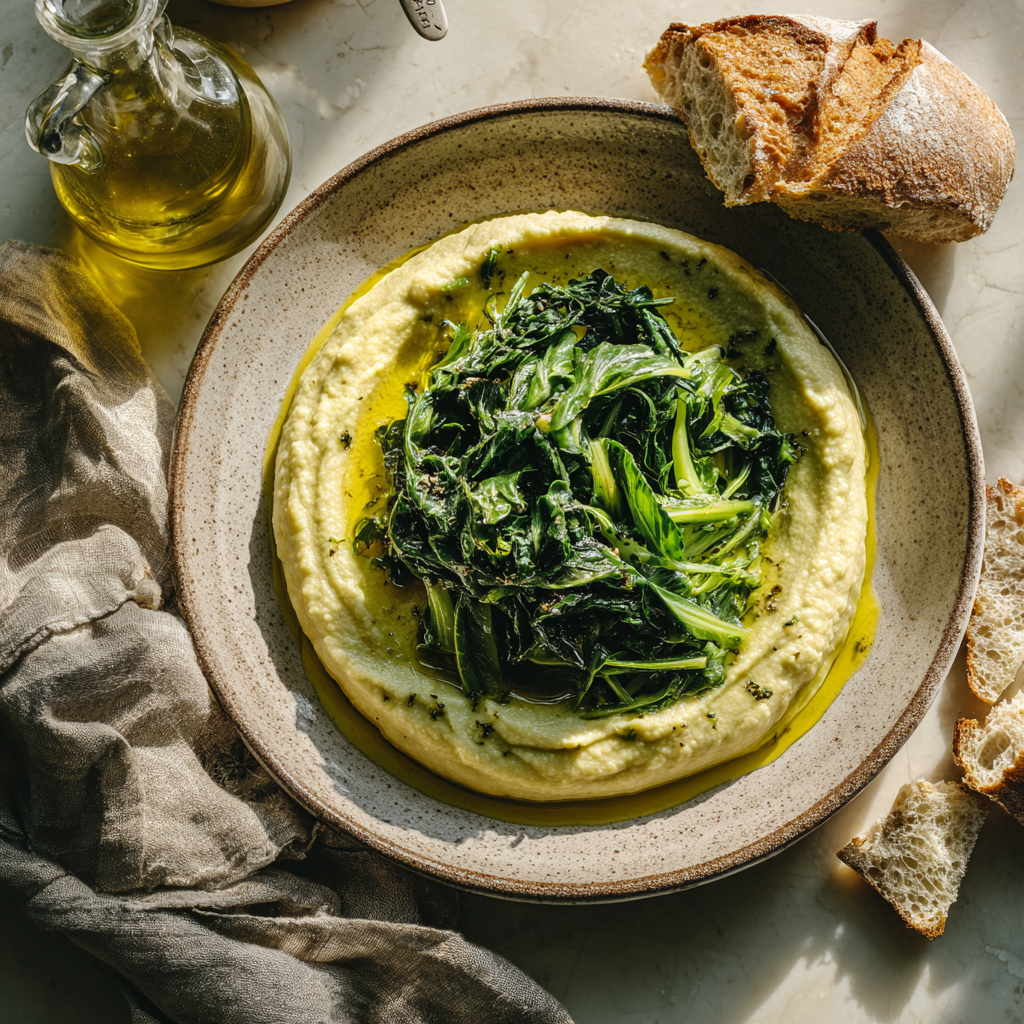
Spoon the purée onto the bottom of the plate, mound the greens on top, and finish with a generous ribbon of fruity olive oil. A grind of pepper is optional.
Watch texture cues: the purée should hold a spoon for a second and show a slight canal when dragged—that signals you’ve hit the right time and texture.
| Step | Timing | Key Cue |
|---|---|---|
| Soak beans | ~12 hours | Beans plump and skins loosen |
| Simmer in pot | 60–90 minutes | Beans mash easily; liquid reduced |
| Boil greens | 4–15 minutes | Bright color and tender bite |
| Mash & finish | 5–10 minutes | Purée glossy, holds a canal |
Make it yours without losing authenticity
I shop where the product matches the story. In the U.S. I look for peeled dried fava beans at Latin markets (Goya), Whole Foods bulk, or Italian shops that stock southern staples. In the UK, Italian delis and Greek groceries often carry split, skinned dried fava that cook evenly.
Choose fresh, perky greens. Cultivated cicoria and similar chicory or puntarelle give the right bite. Wild greens are traditional, but good market bunches work well.
Traditional variations and quick fixes
Add a thin slice of potato for body, or a little onion or garlic for perfume. A pinch of peperoncino or a quick padella toss in a pan with olive and garlic brings heat and shine.
If the purée tightens, stir in small ladles of very hot water and beat until glossy. If it’s too loose, fold in torn stale bread to mend texture. Salt the greens while boiling in salted water and finish with pepper and a generous ribbon of virgin olive oil to balance bitterness.
| What to buy | Where | Why it helps | Notes |
|---|---|---|---|
| Peeled dried fava | Latin markets, Whole Foods, Italian shops | Cooks evenly; no extra skin removal | Look for even color and dry storage |
| Cultivated cicoria / chicory | Farmers markets, delis, grocers | Reliable bitterness; tidy bunches | Puntarelle or escarole are good substitutes |
| Fruity extra-virgin olive | Specialty stores, online | Brightens flavors and ties elements | Use as finishing oil, not for long frying |
Conclusion
Finish simply: creamy beans on the plate, greens piled on top, and a bold drizzle to bind them. This layout highlights texture and flavor in one confident bite.
If you soak your beans, watch the water and trust the texture cues while cooking. Keep fresh greens ready and finish boldly on top with a fruity oil. Rewarm leftovers with a splash of hot water to keep the silkiness intact.
Cook this dish often. Each time you make it, timing and balance sharpen, and the food will start to taste like your home—reliable, honest, and full of warmth.
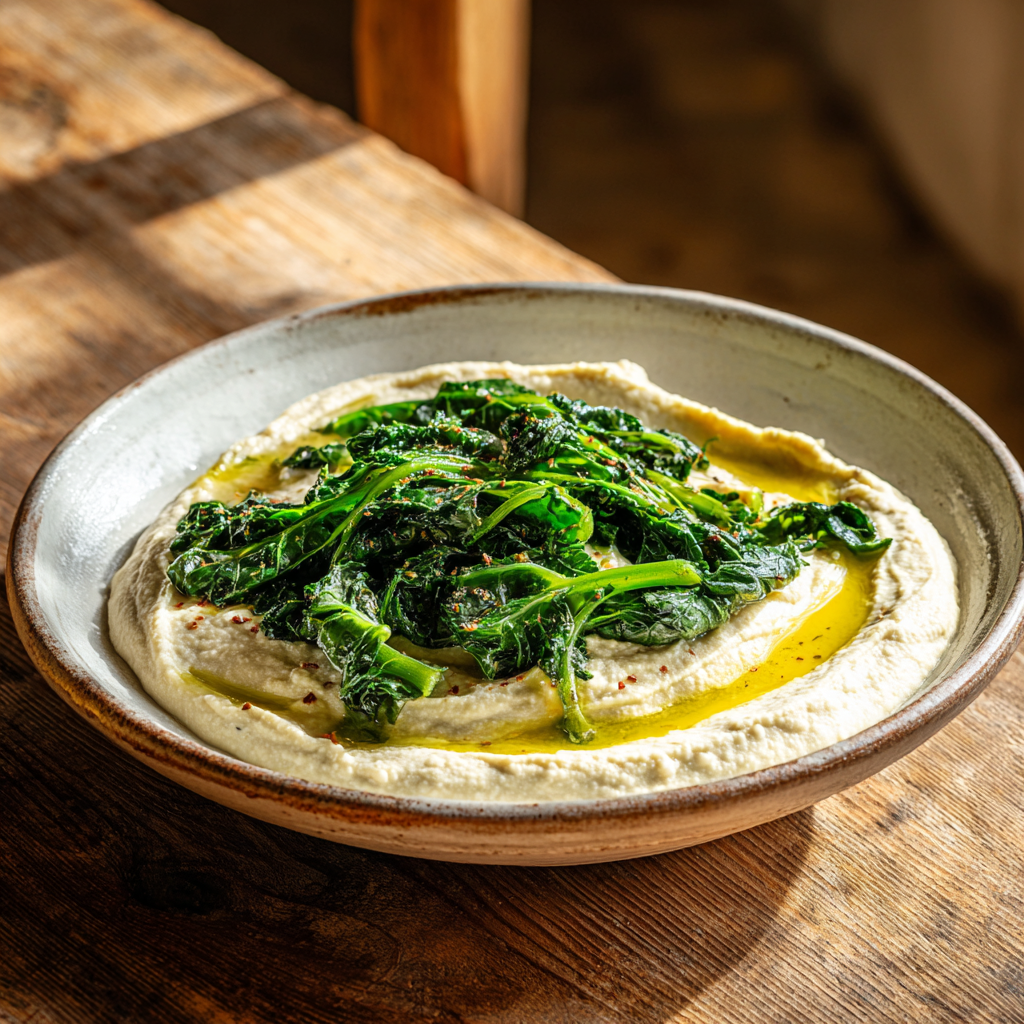
Fave e Cicoria Puglia (Fava Bean Purée with Chicory Greens)
Ingredients
Method
- The night before, soak the dried peeled fava beans in cool water for about 12 hours.
- If they’re unpeeled, remove skins after soaking.
- Drain and place in a sturdy pot. Add fresh water to cover by about 1 inch.
- Add a pinch of salt and bring to a gentle simmer.
- Cook for 60–90 minutes, stirring often. Add hot water as needed.
- When soft, mash with a spoon, food mill, or blender until smooth.
- Beat in ¼ cup olive oil slowly until the purée is creamy and glossy.
- Season with salt to taste. The purée should hold a small “canal” when you drag a spoon through.
- Bring a pot of well-salted water to a boil.
- Add chicory greens and cook 4–15 minutes until bright and tender.
- Drain well.
- In a pan, warm olive oil, garlic, and chili flakes. Toss greens briefly for flavor.
- Spoon the fava bean purée onto plates.
- Mound the greens on top or to one side.
- Finish with a generous drizzle of olive oil and a crack of pepper.
Notes
- Texture cue: When the purée holds a small “canal” when you drag a spoon through, it’s perfect.
- Oil matters: Use a fruity, peppery extra-virgin olive oil to bring the dish alive.
- Greens substitute: If chicory isn’t available, use dandelion greens or escarole for a similar bitter note.
- Make ahead: The purée reheats beautifully with a splash of hot water and fresh olive oil.
- Serving tip: Serve warm, with crusty bread or grilled fish on the side.